


Dear readers: The previous parts of this journal can be found at the following links: I, II, III, IV, V, VI, VII, VIII, VIX, X, XI, XII, XIII, XIV.
There was, or is, a license-plate slogan: “Wild, Wonderful West Virginia.” I think “Wild, Wonderful Sicily” would do too.
***
“To have seen Italy without having seen Sicily is not to have seen Italy at all, for Sicily is the clue to everything”—said Goethe.
***
Sometimes, when you travel down the eastern coast from Messina, the train hugs the water—which is pleasant.
***
Bear with me a second: I think of the phrase “timelessness-plus.” In Sicily, there are olive groves and goats, plus Wi-Fi.
***
On a train, I meet an older couple who have long lived in Venice but are from here in Sicily. Interesting, kind, and knowledgeable people. The man says, “Have you read Goethe on his travels in Italy?”
I have read about that book; I have not read it. I can say that about far too many books …
We also talk about the popularity of Taormina among tourists. The lady says, “It’s a mystery why some places become popular and other places don’t. Capri is another example. A lovely island, yes. But there are so many …”
***
In Catania, I stay on Claudio Monteverdi Street. Monteverdi was more or less the father of opera (and he lived from 1567 to 1643). The next street over is named for Francesco Cilea, a composer who lived from 1866 to 1950.
But Catania is really Vincenzo Bellini’s town. He was born here in 1801. He was known as the “Swan of Catania.” Richard Wagner called him “the sweet Sicilian.”
He stands in the middle of town:
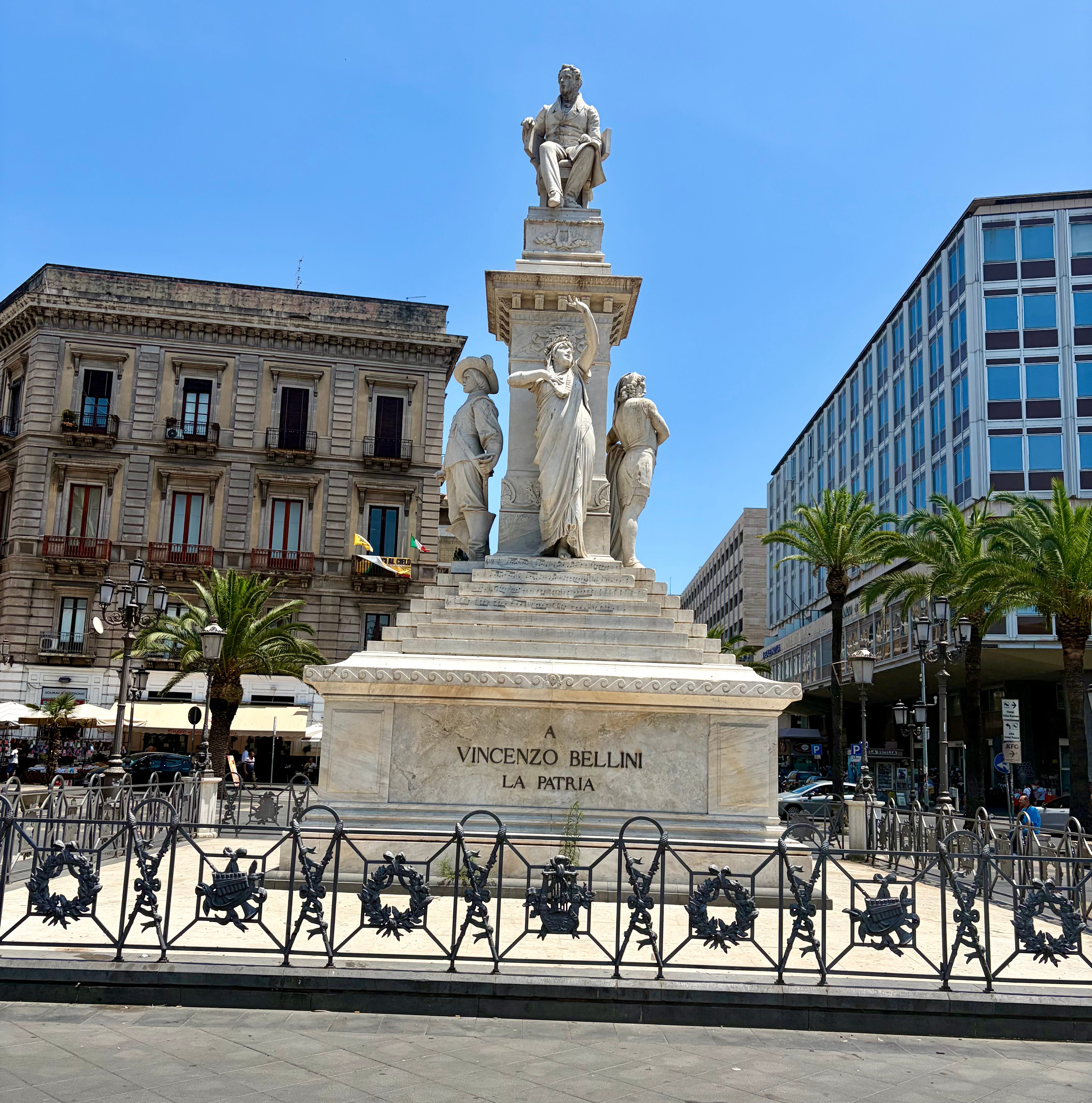
Bellini died at 33. Mozart died at 35. It has often been asked, “What would Mozart have gone on to do?” The same question can be asked of Bellini.
He did so much, in his time here …
***
At home, do we honor our composers? I have lived in New York for many years. I have never seen a statue of Aaron Copland or George Gershwin, both of them New York–born. Maybe I have missed them …
(I should mention that there is a statue of Verdi out my window. In New York, I mean.)
***
One barbershop in Catania is called “Il Barbiere di Sicilia”—“The Barber of Sicily.” (Rossini’s opera, you remember, is called “Il Barbiere di Siviglia,” “The Barber of Seville.”)
***
In Catania, there’s a lot of life. What do I mean, “life”? Vitality. Energy. People bustling, animated conversations, kids kicking balls around …
***
On Saturday, the market is really bustling. It is an outdoor market, with tons of produce, plus clothes and other needs.
Let’s look in on one stand:
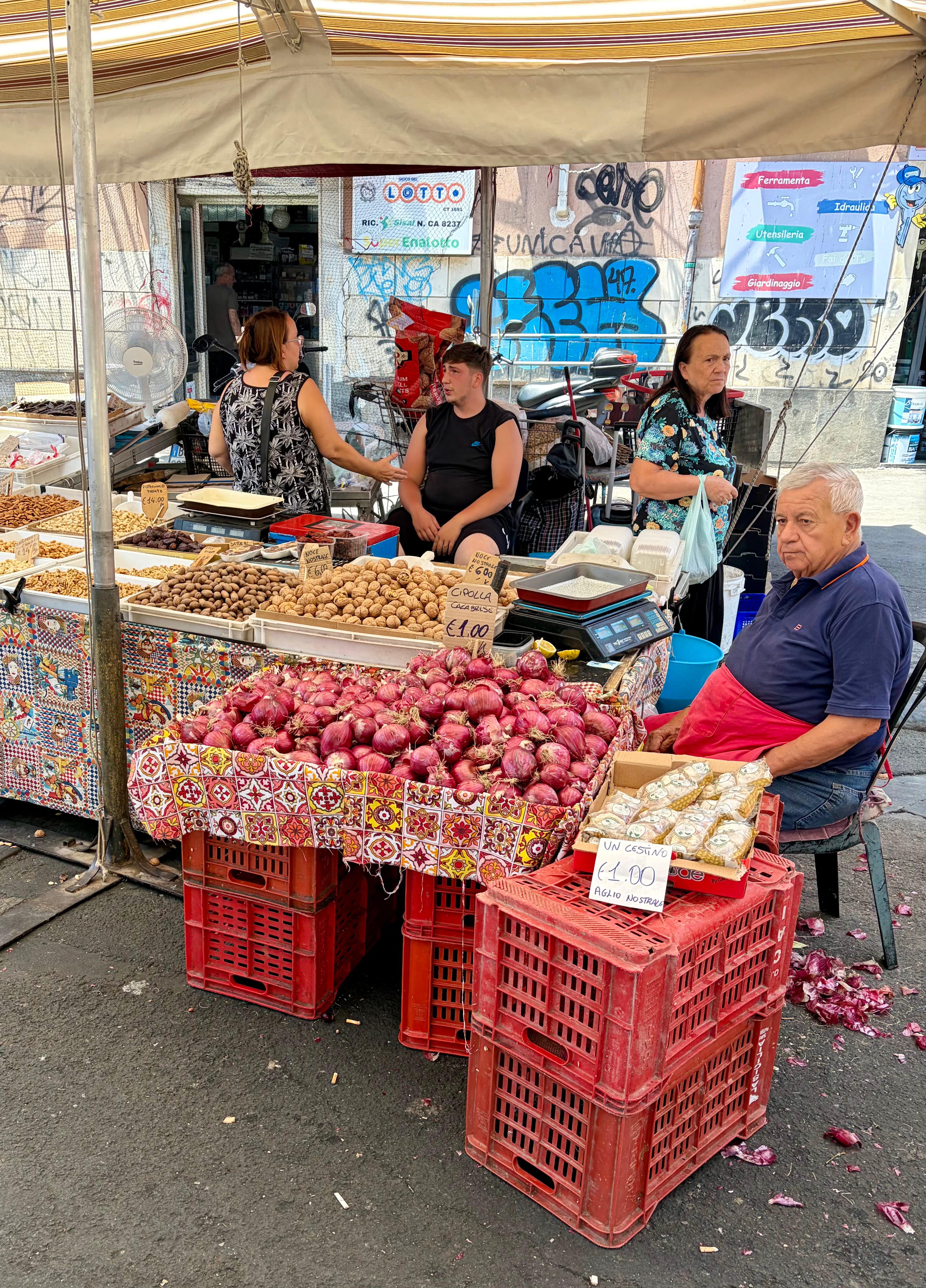
You may have noticed the graffiti on the wall behind them. If there is a wall in Italy free of graffiti, I have not seen it. A blight, nationwide.
***
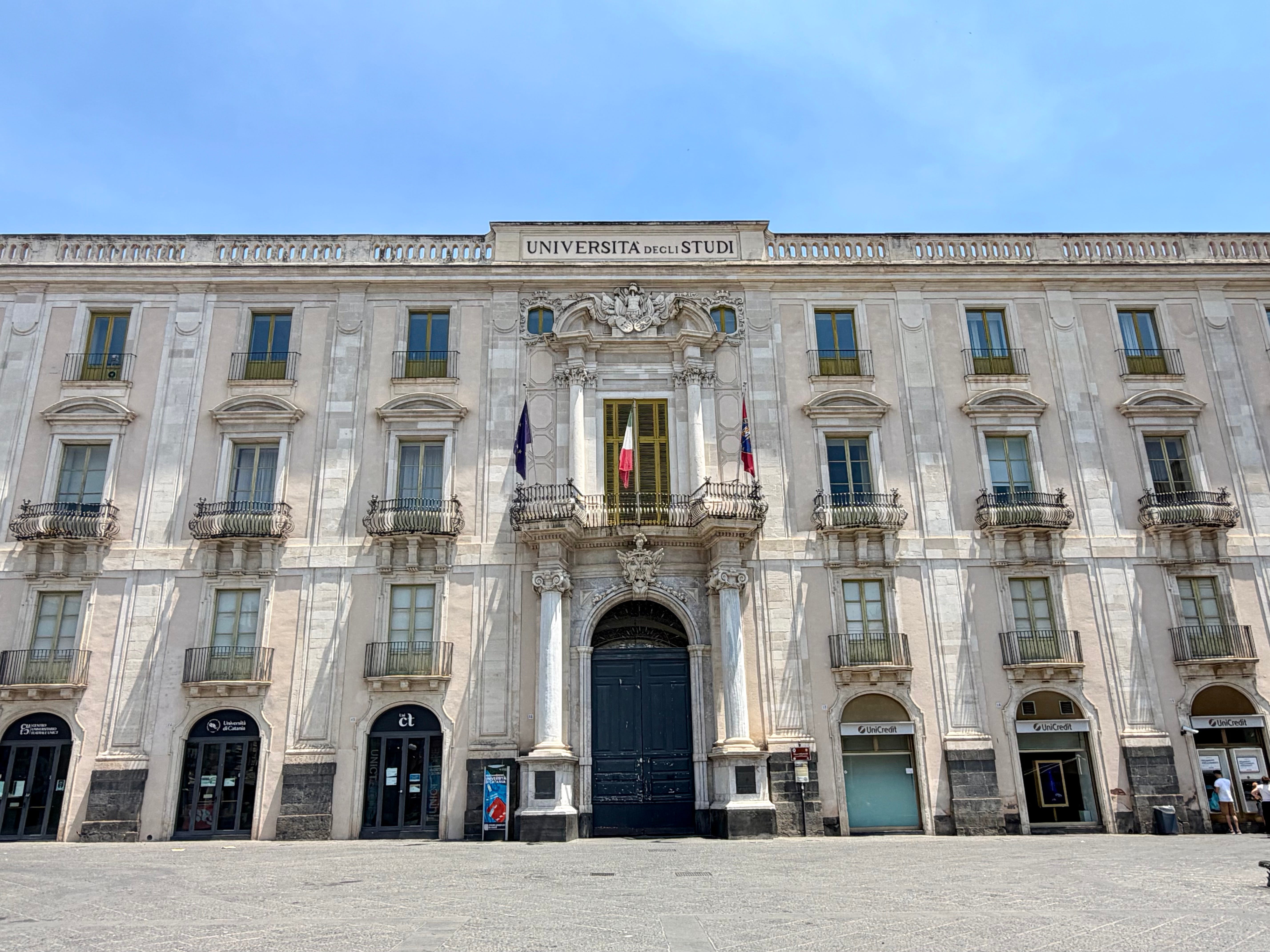
The university here is called the “Università degli Studi”—the “University of Studies.” To me, that is a redundancy and a curiosity, but it must ring differently in Italian.
Handsome place, regardless:
***
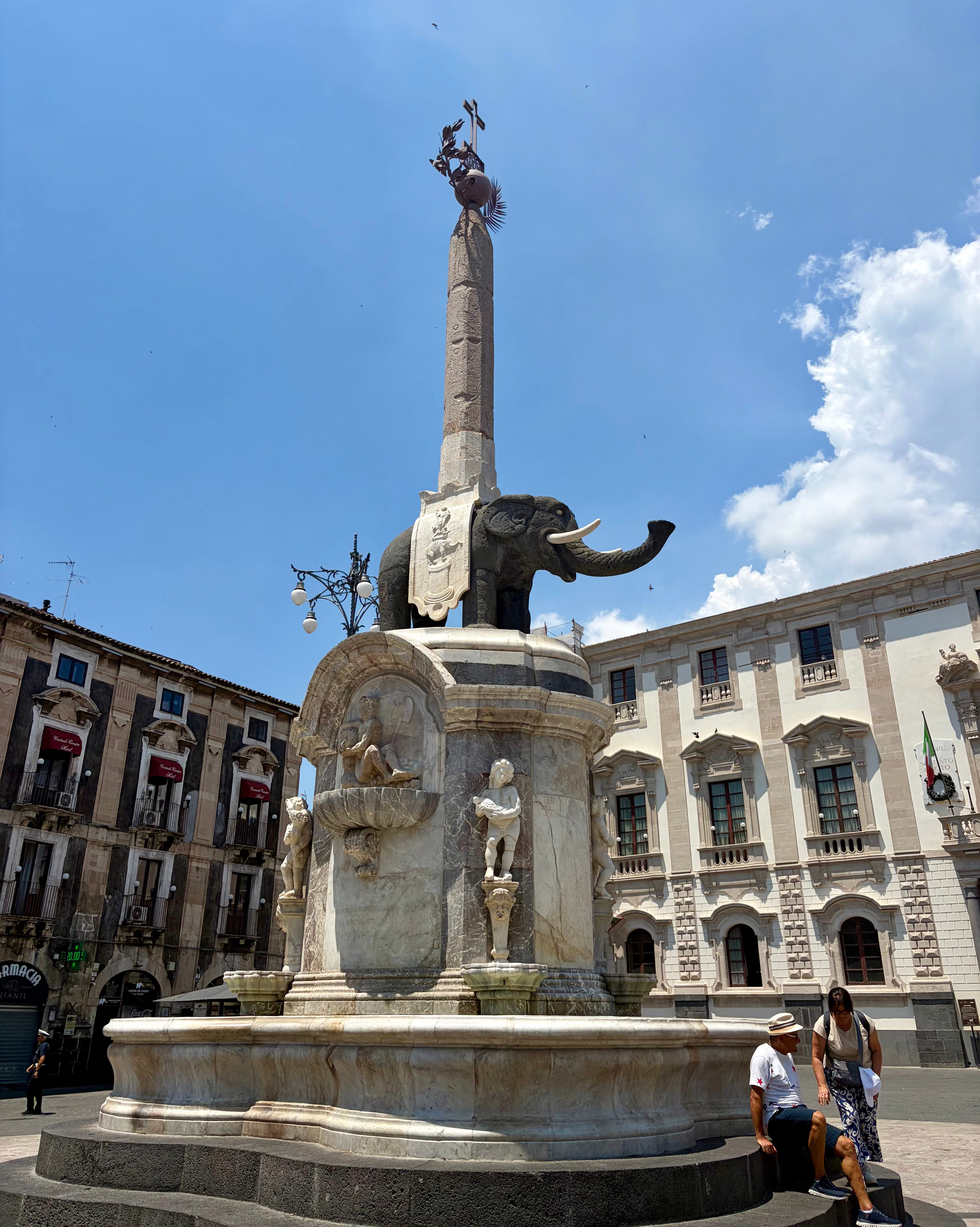
The symbol of Catania? Not a swan—not Bellini—but an elephant. An elephant on a fountain. There are stories and explanations concerning this elephant, but let’s just show him instead (and if the elephant is not a “him,” my apologies):
***
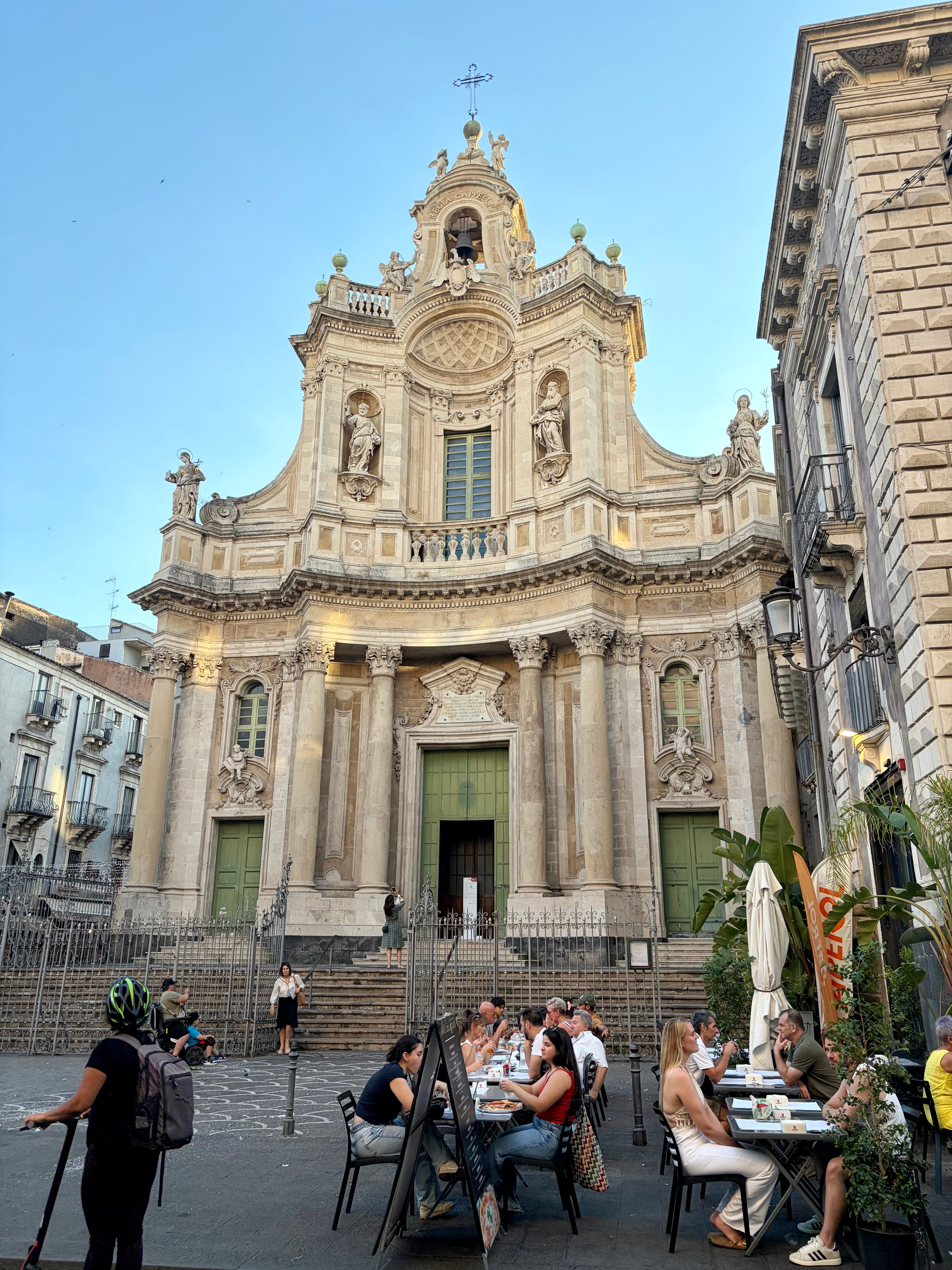
A typical scene:
***
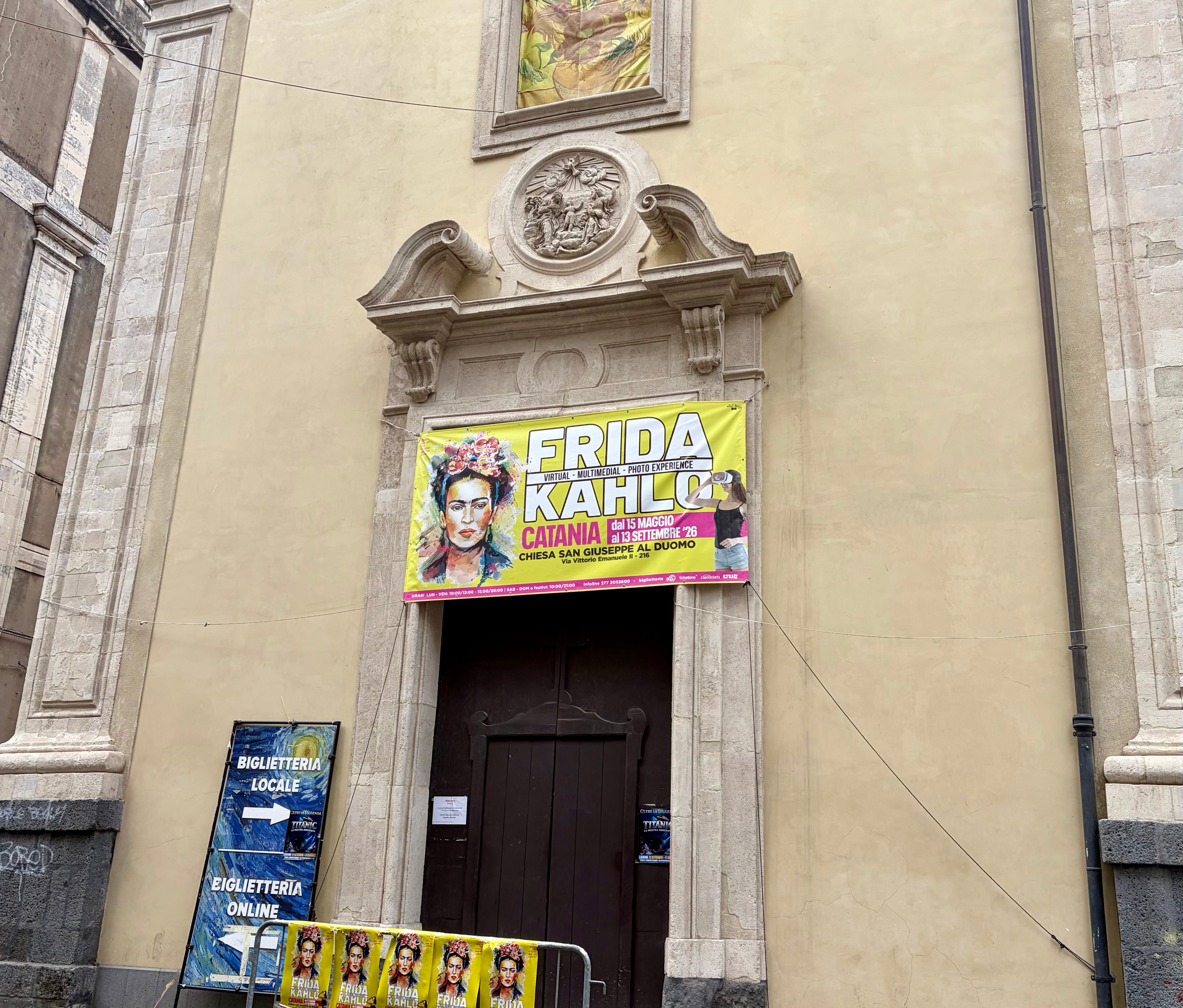
Remember I was saying earlier in my journal that Frida—Frida Kahlo—is everywhere? Everywhere I go, on whatever continent? Well …
***
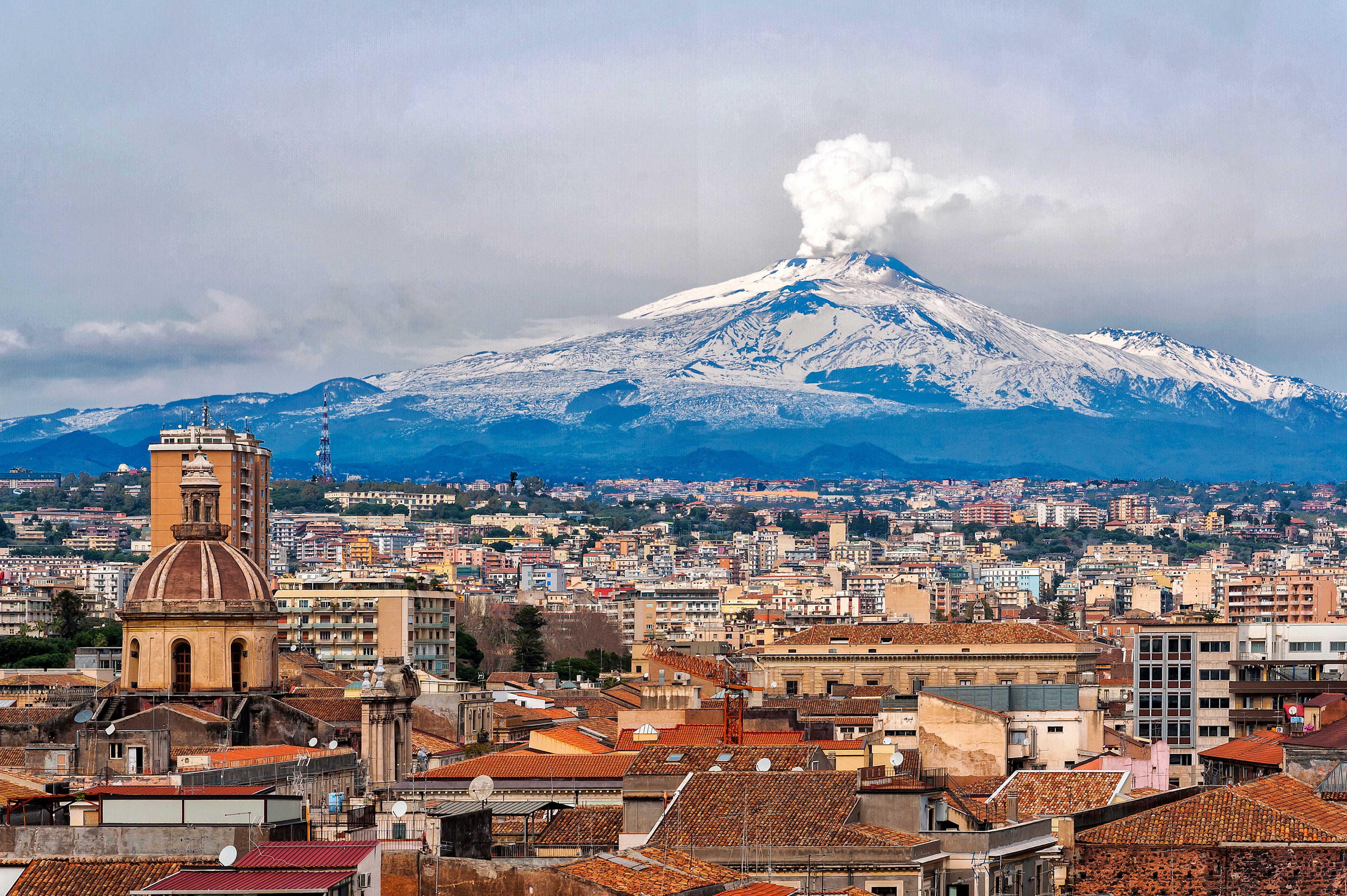
Catania is in the shadow of Mount Etna. “Shadow” can sound ominous—and I mean it to. Sucker’s liable to blow at any moment.
***
One hotel in this city is called “Gattopardo House.” The first word surely alludes to Giuseppe Tomasi di Lampedusa’s classic novel of 1958, Il gattopardo, or The Leopard.
The author himself was Sicilian but not from Catania. He was from Palermo—where we will be in due course.
***
For all the traffic, there are not many stoplights here in Catania. There are crosswalks. Drivers practice a weave-and-dodge method.
At one crosswalk, I hesitate—a motorcycle gang is coming. The lead biker slows and calls out to me, “Prego”—“Please, go ahead.”
A courteous gang. Not the Hell’s Angels.
***
A couple of little girls, with their mother, want to practice their English. More like show it off. I don’t blame them—it is impressive English, adorably intoned.
We talk about a great Disney trilogy: The Little Mermaid, Beauty and the Beast, and Aladdin.
When we part, the girls wanna high-five me. So, it’s high fives all around.
***
I can’t say there’s a Chinatown—a proper Chinatown—here. But there are Chinese families and a number of shops …
***
There are also Sri Lankans. One sign says “Voice of Sri Lankans” (in English). It is a community association. Next to it, a shop is labeled—in Italian—“Ceylon Foods International.”
***
But let’s talk Catanian cuisine—and in particular, pasta alla Norma, which has gone all around the world. Eggplant, tomato sauce, ricotta, maybe a touch of basil …
A delicious plate is set before me. The ingredients could not be fresher.
Does fresh ’n’ local make a difference? Believe the hype (most of it): it does.
***
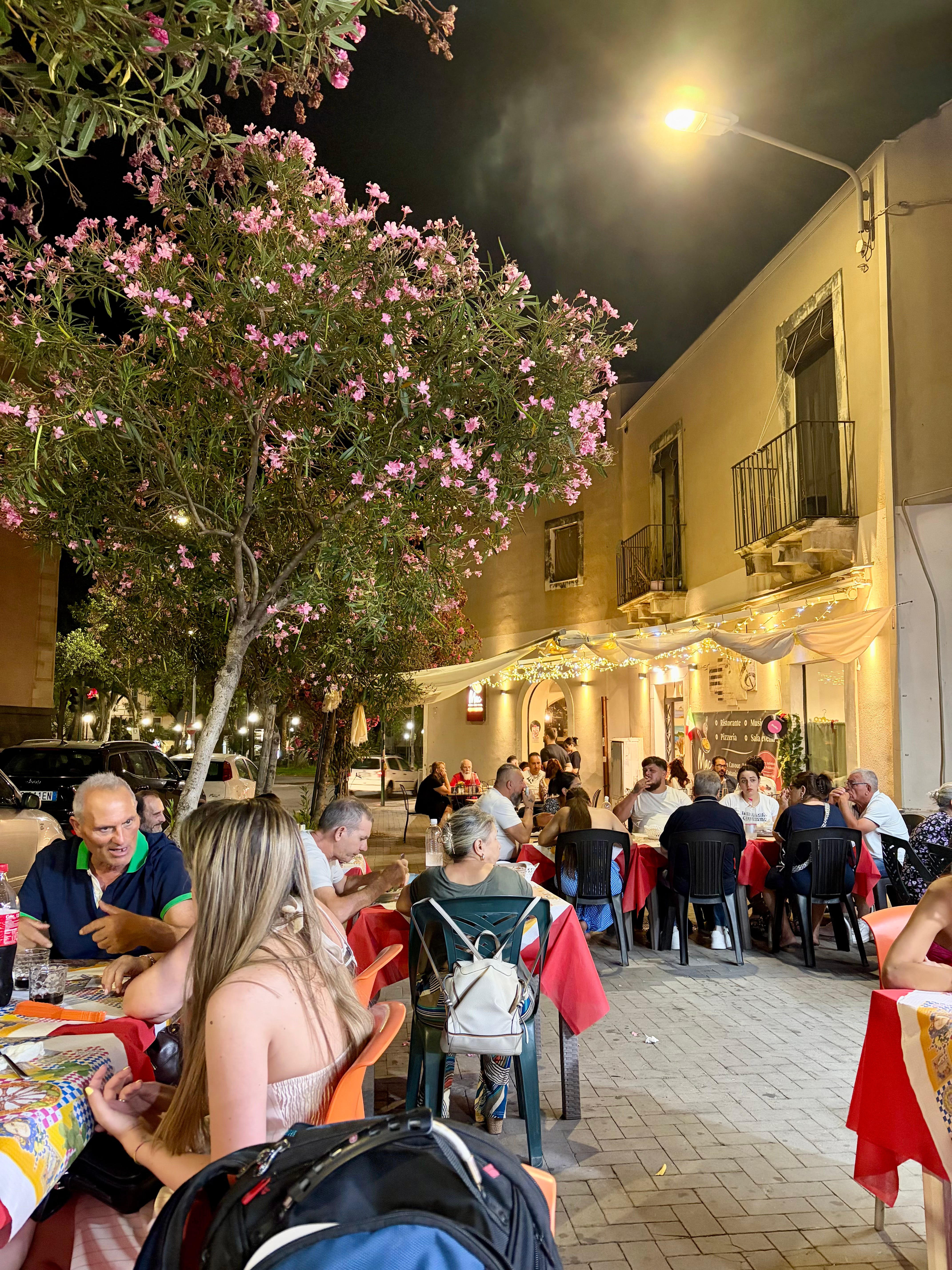
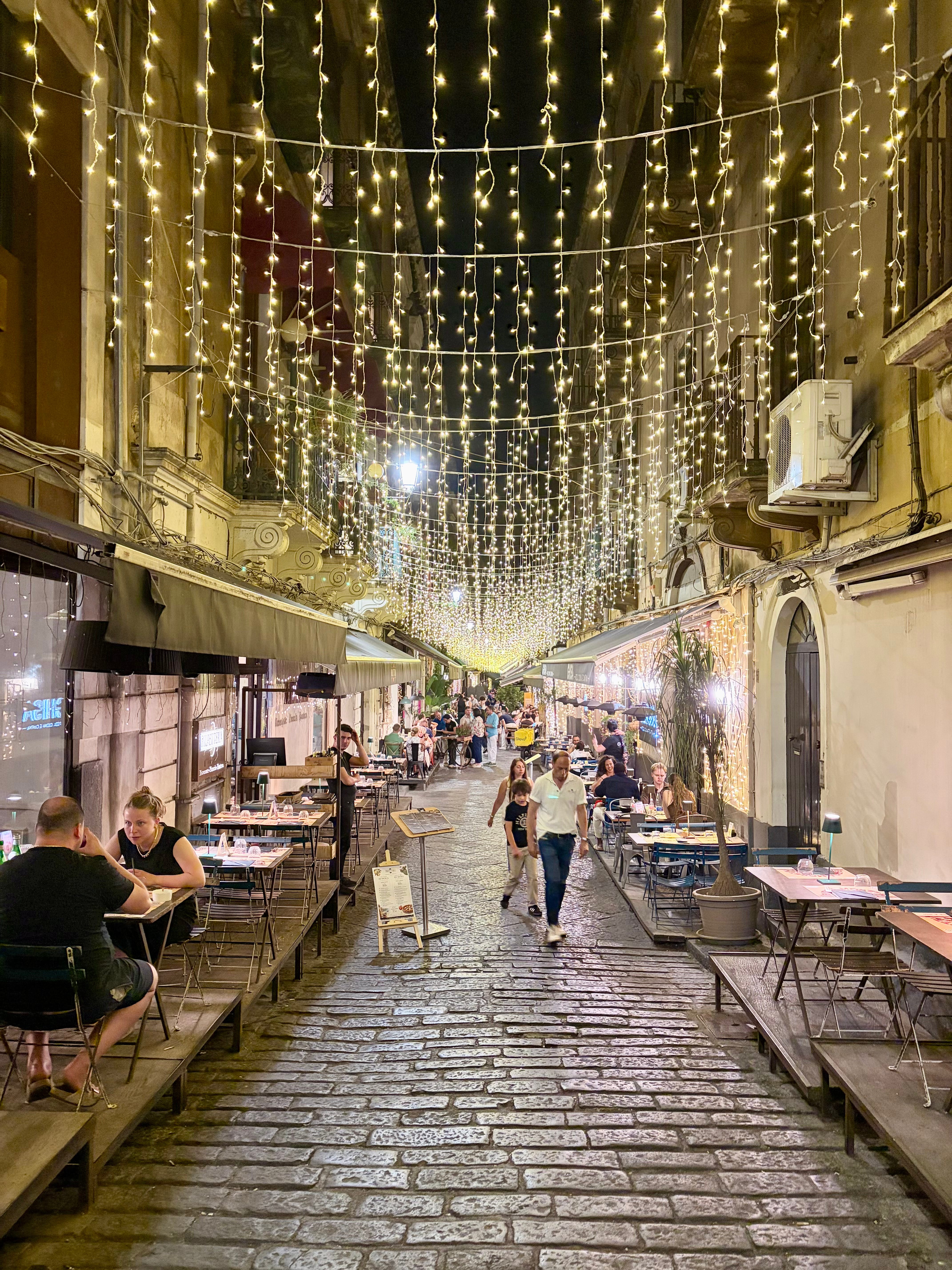
Catanians, Sicilians, other Italians—they eat late. Where I’m from, the Midwest, 7 is late. Here, we’re talkin’ … 10:30?
Anyway, some diners-out:
And a winding-down, even later, when the streets are serene but still hummin’ a bit:
Should I just hum my way out of here and let you get on with your day? Thank you for joining me, everybody. Appreciate it.
I visited New York City (from Texas) in the early 70s. Gangland graffiti had just broken out and was being celebrated as a new urban art form.
I called it a blight. I was accused of Texan provincialism. Of which I am still proud. And graffiti is still a blight.
New York City composers. Statues for Barry Manilow and Billy Joel.