


Dear readers: Part I of this journal is here, and Part II, here.
Hard by the train station, there is an amusing sculpture of a string instrument—which lets us know we’re in Cremona.
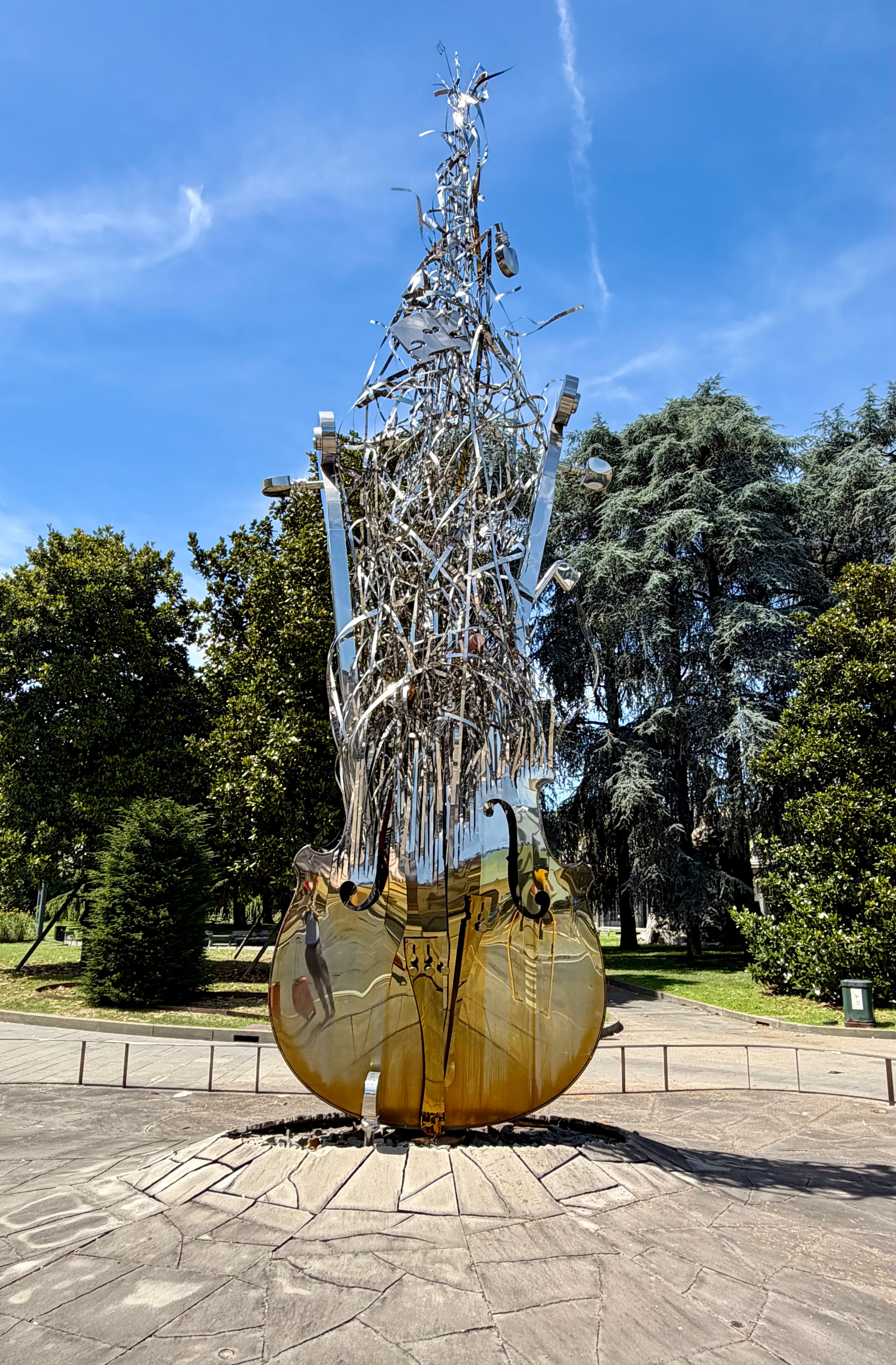
Now, why would a string instrument let us know we were in Cremona? This is the home of Antonio Stradivari (Antonius Stradivarius) and other famous luthiers (such as Giuseppe Guarneri).
Cremona is synonymous with violin-making and the like.
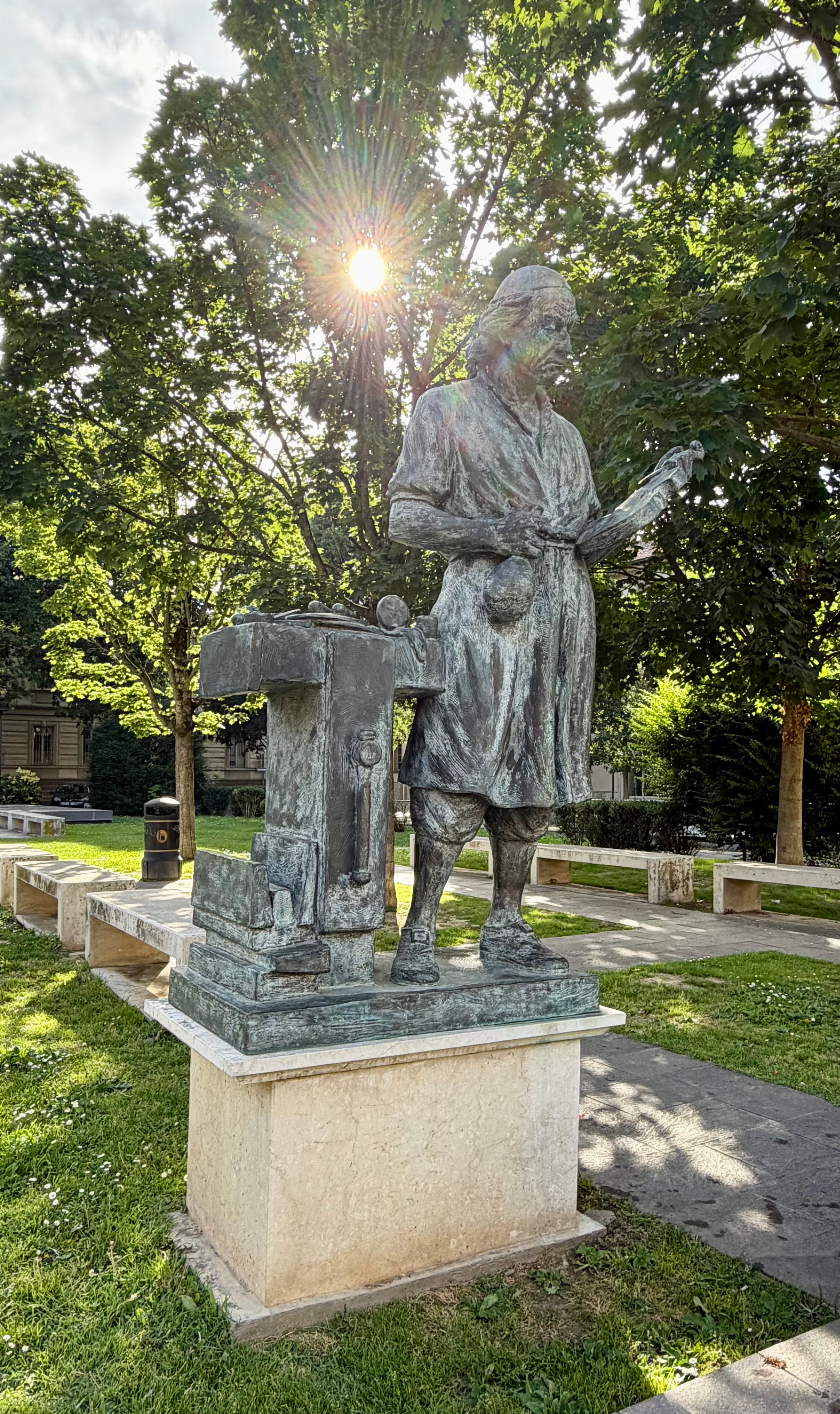
Would you like a glimpse of Antonio?
***
On a Sunday afternoon, there is hardly anyone on the streets. This is a tranquil town. Others may want to describe it as … sleepy.
***
There is, however, a young African man, who asks me for money. He gives me the kind of spiel I’m used to hearing in New York. I know that not a word of it is true.
This kind of thing—panhandling—is going to be bad for all African immigrants. Better that they worked their tails off, assimilating ASAP.
Maybe most of them do. We ought to spend a lot of time on this subject, and I will spend a little time on it later in my journal …
***
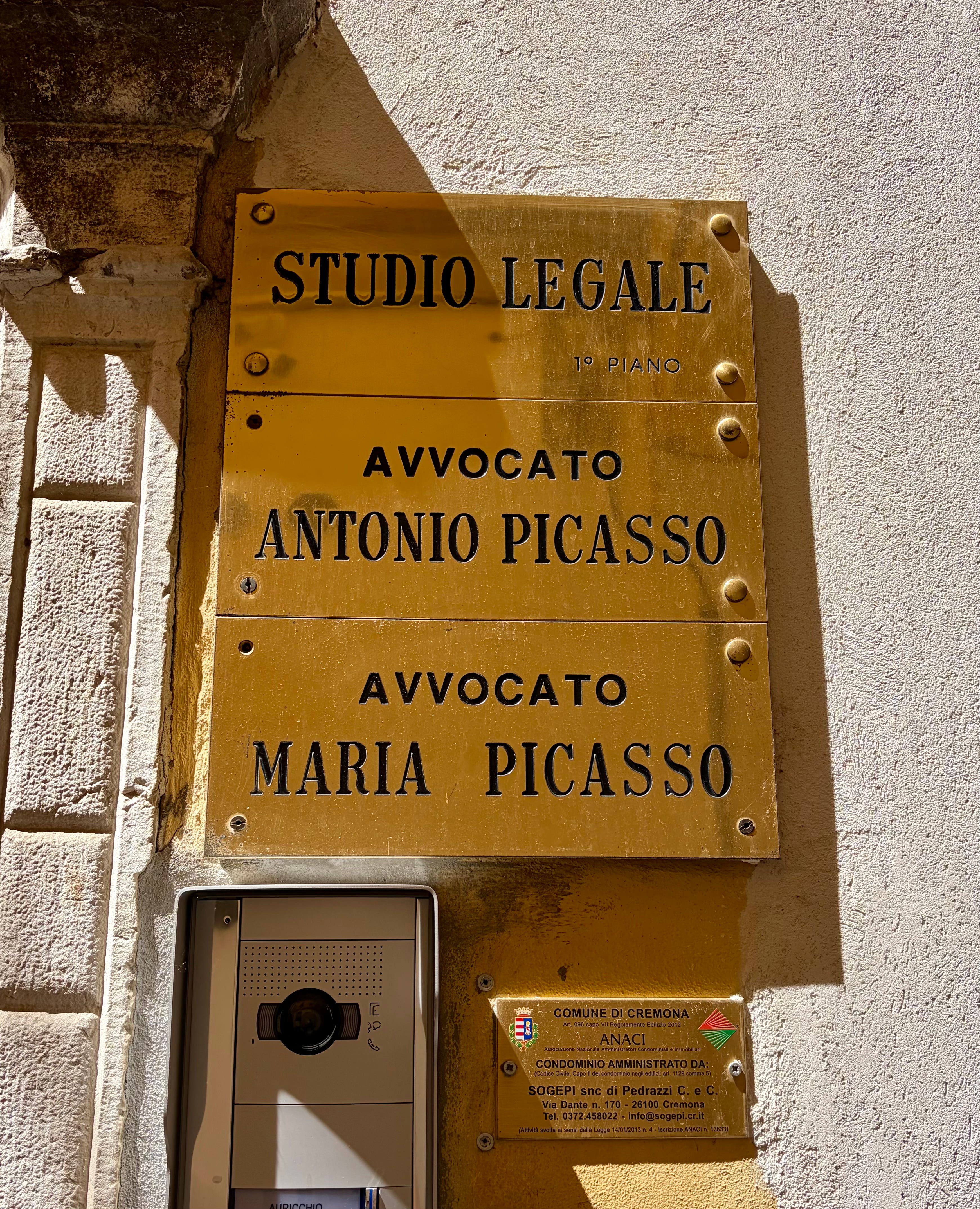
You see these lawyers, Antonio and Maria? I bet they’re real (legal) artists.
***
I meet a young woman, on the staff of a hotel, and say how pretty I find Cremona. She gives me kind of a sullen look. “Boring,” she says. “Well, maybe Sunday afternoons are a little slow,” I hazard. “No,” she says. “It’s like this every day.”
I hope she can get out and live elsewhere. (So does she.)
***
A main street in this town is Via Solferino. That is a name to send a shiver down one’s spine. Do you mind if I quote from my history of the Nobel Peace Prize? The very first prize, in 1901, was shared by Henry Dunant, the Swiss businessman and writer who was the primary founder of the Red Cross.
It was in June 1859 that the pivotal event occurred. For a North African business venture, Dunant needed water rights, and he needed them from the emperor of France, Napoleon III, himself. The emperor happened to be in the field at the time, in Lombardy, near the town of Solferino. So Dunant went to him. He never gained an audience with the emperor, but he saw one of the most horrific battles of the entire 19th century.
This was the Battle of Solferino, an event of the Second Italian War of Independence. It pitted an alliance of Napoleon’s army and the Sardinian army against the Austrian Empire. The Franco-Sardinian alliance proved victorious, and the casualties proved high: over 30,000 dead, thousands more wounded or missing. Dunant was traumatized—but not so traumatized as to fail to do anything. He organized relief efforts, calling on the women and girls of the area. They tended to the wounded, heedless of which side they were on. The soldiers, said the women, were “tutti fratelli,” all brothers.
Three years later, Dunant wrote a book, A Memory of Solferino, which he published at his own expense. It caused a sensation, going around the world in its many translations.
Anyway, the Red Cross was soon born.
***
In Cremona’s main square, a band and chorus are performing. (Strange for Cremona to be without strings!) I’m in time to hear the final chorus from Puccini’s Turandot, in its completion by Franco Alfano. (Puccini died before he finished this opera.)
My heart swells.
***
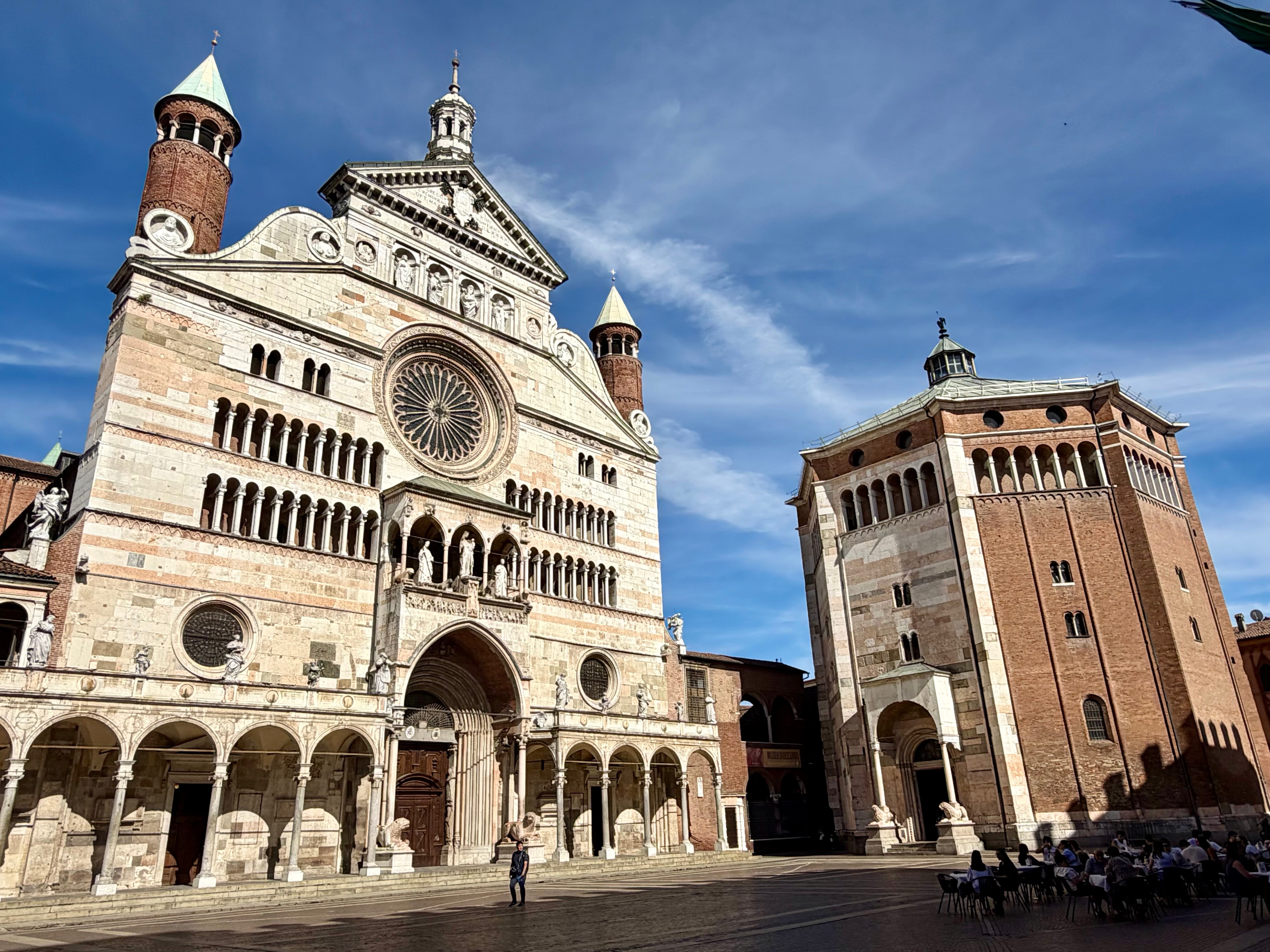
Speaking of that which makes the heart swell: can I show you a photo of this glorious square?
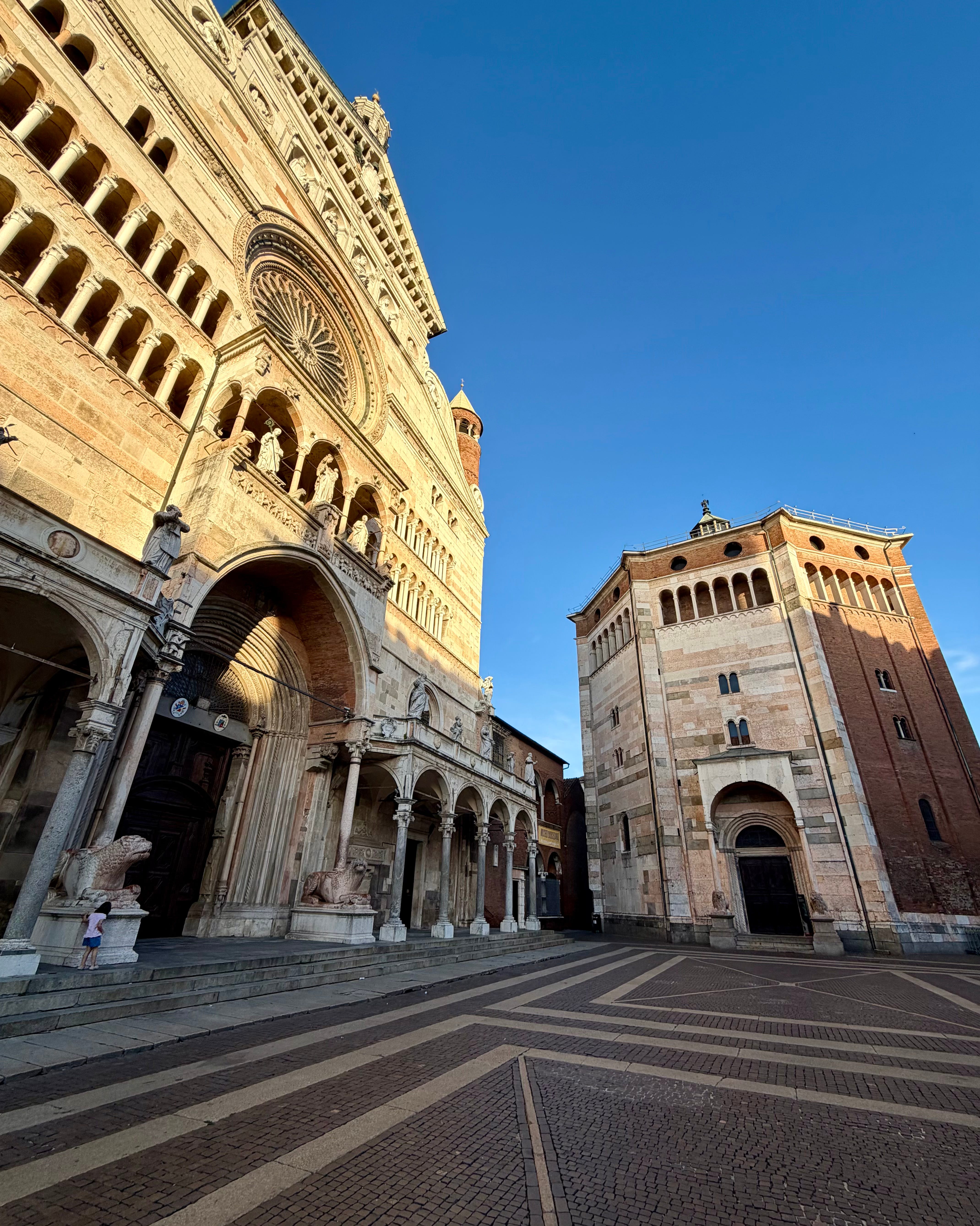
***
In the square, there are plaques, remembering the war dead. They are moving, in what they say—and in the names that are listed.
Also moving is the kind of plaque, the kind of memorial, I have never seen before. Here is a translation:
In memory of the citizens of Cremona who died from COVID-19
Of the courage of their families
Of the care of the health professionals
Of the work of many, many people in confronting the pandemic togetherSo as not to forget the passion to have a stronger community and, after so much pain, to build new paths for the future
The attitude in my environment was very different—more along the lines of blasting public policies and minimizing the danger of the virus.
Some of the blasting was justified, no doubt. Anyway, this is the subject of a long essay, or books …
***
In Italian towns—in many European towns—there’s a pedestrian lane and a bike lane, and, if you’re on foot, you’d better be in the right one …
***
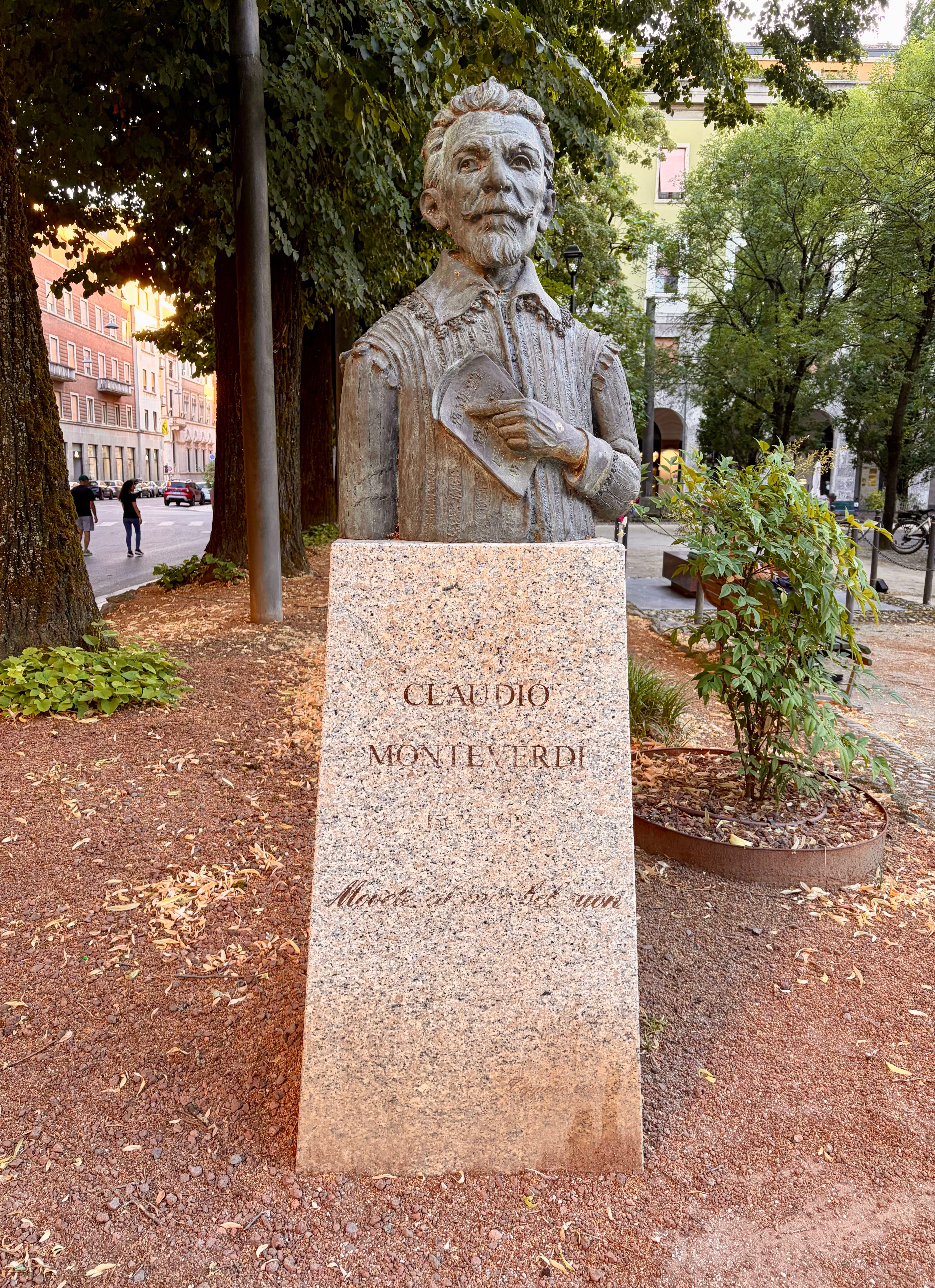
Claudio Monteverdi, the great composer, a father of opera, is associated with the Republic of Venice, where he made his career. But do you know that he was born in Cremona, in 1567? Here he is:
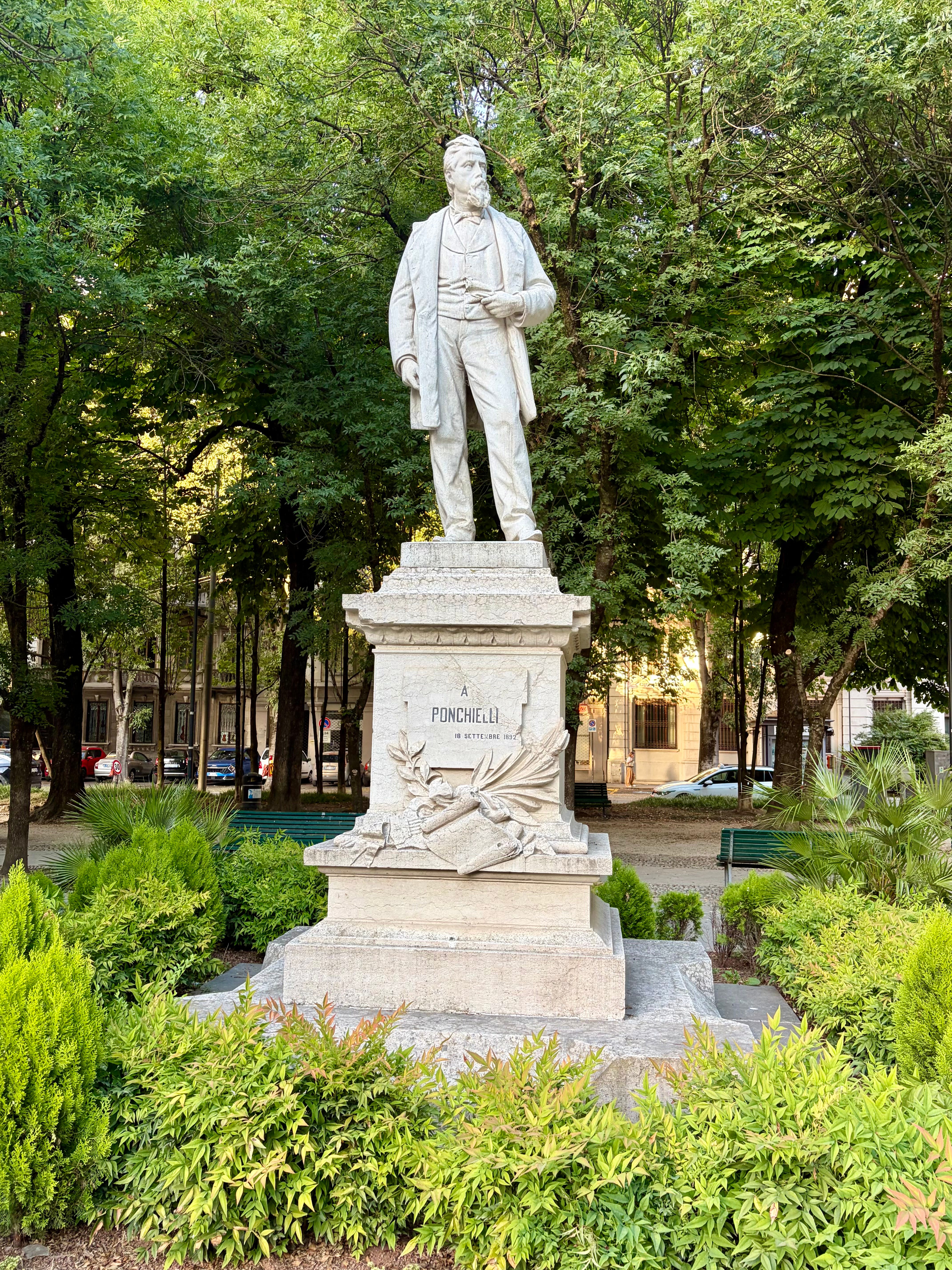
Amilcare Ponchielli was born nearby, in 1834. People tend to know the “Dance of the Hours,” from his opera La Gioconda.
***
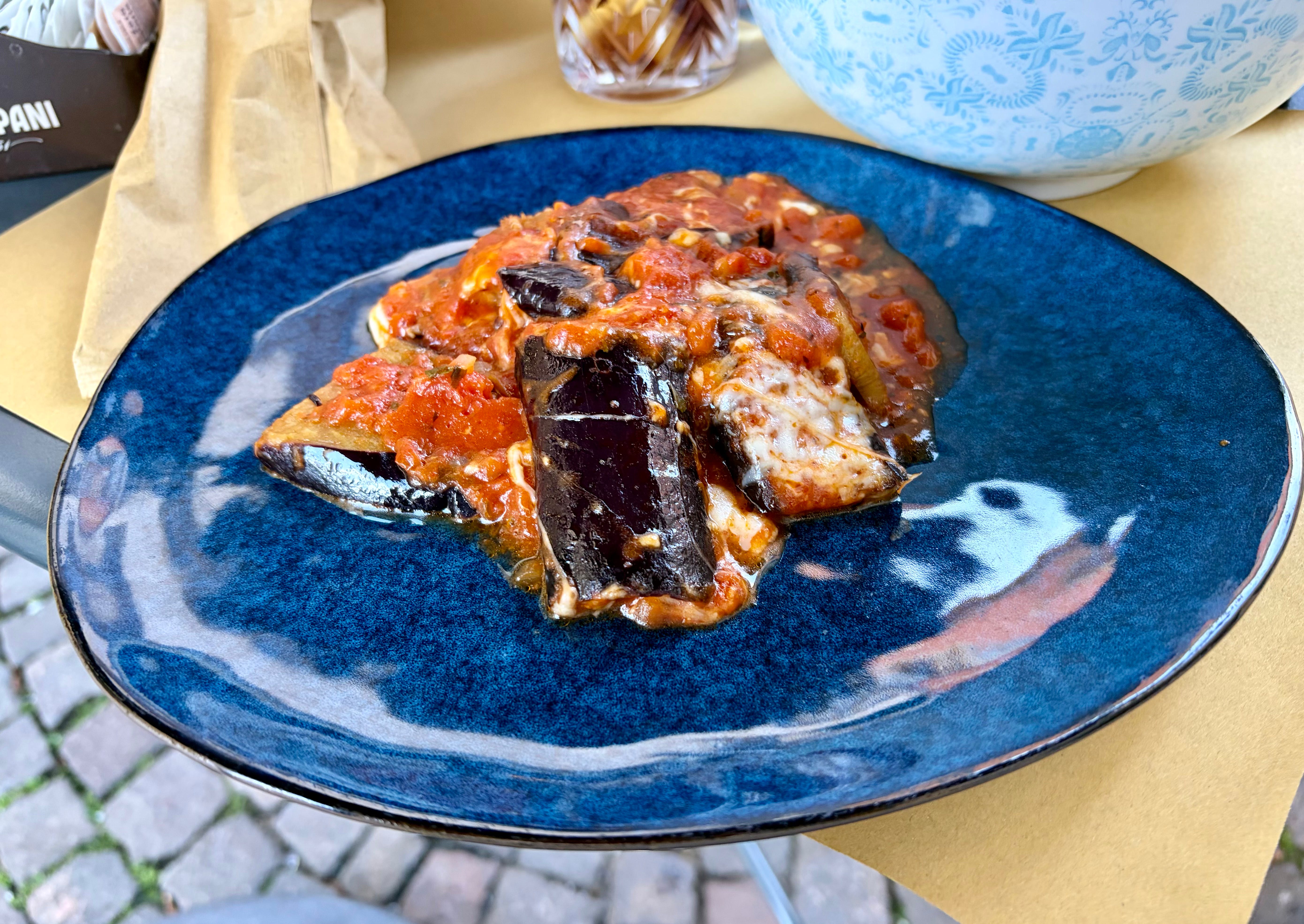
What could be better than eggplant parmesan? Not much. When I sent this photo to my mother, she replied, “Now that’s a blue-plate special!”
***
In the reception area of my little hotel, which doubles as a breakfast room, they have a cake available all day. Today, there is an apple one—moist and delicious. What a civilized practice, the offering of a cake.
***
An observation about Italian staircases: they tend to be handsome, thoughtful things, of stone and such. Care is taken in their construction, even in modest places.
***
A receptionist in this hotel likes country-and-western music. I hear “Achy Breaky Heart” a couple of times. But her real favorite is Elvis: “He won me over when I was 15.”
She loves America, a country she has never been to. “I even learned the national anthem,” she tells me. “Let’s hear it,” I say. “I can’t sing,” she says. “Don’t worry,” I say.
She turns off the radio—or whatever is playing the country-and-western music—so she can concentrate.
She sings every word, without missing a syllable—even the tricky, semi-archaic constructions such as “o’er the ramparts we watched.”
When she finishes, I tell her how impressed I am. “Brava!” I say. She grins and says, “Whitney Houston.” (The late singer made a famous, cherished recording of our anthem, and this Cremonese lady must have listened to it many times.)
What a pleasant, affirming encounter.
Thank you for reading, my friends.
I loved this. Thank you so much--vicarious travel is a joy
Glad you’re having fun! In your Italy travel posts, you mention that you were there as a college youngster. As you may know from my previous comments, you and I are roughly the same age and both of us attended UM. In the summer of 1977, after my freshman year, I signed up for the UM-Sarah Lawrence summer semester in Florence. It changed my life. In fact, I bought an old farmhouse in Italy (Le Marche), and my wife and I have been slowly renovating it since 2010. I’m writing this comment from there. Today was an exciting day - we’re about to get connected to municipal water! The house is in a regional park, and as you can imagine, there were considerable bureaucratic hurdles, as well as getting the trenching and tube-laying done. But I’m very happy today. What I wanted to ask you: Did you ever have an English class taught by Ralph Williams? He was certifiably sui generis; he was also head of that program in Florence. I thank my lucky stars for having had the good fortune to know him and arrange my life along the inspiration he provided.