


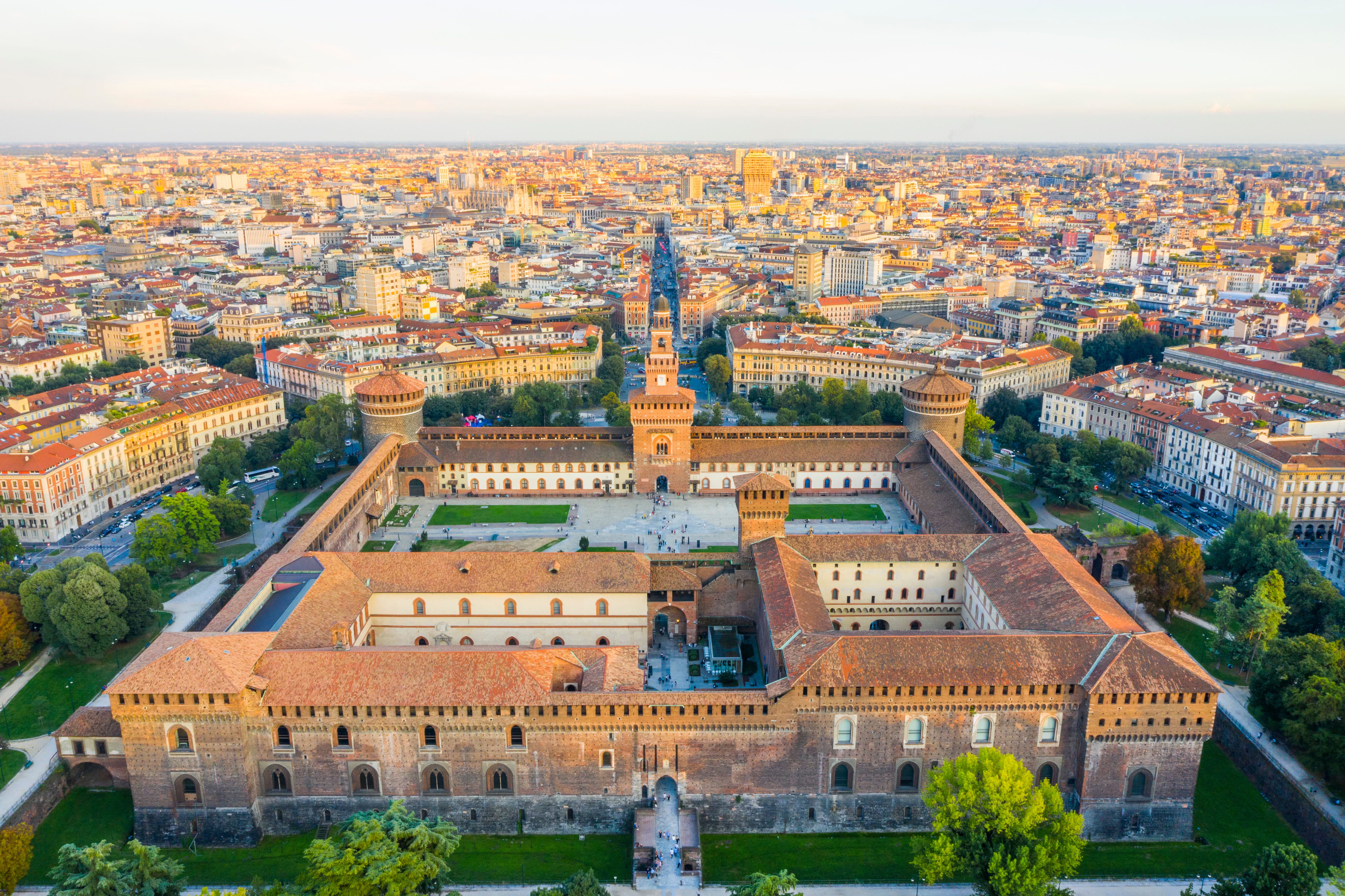
“Malpensa” is a curious name for an airport. It means, in essence, “bad thinking.” How did the airport get its name?
I am speaking of the airport in Milan—Italy, not Michigan. (My home state has a Milan. We pronounce it to rhyme with “stylin’.”)
The origins of “Malpensa” are fairly complicated, but I’ll give the nub. Long ago, people decided to farm in this area. But the soil turned out to be very poor. Therefore, the decision was badly thought out.
Is there an airport name, anywhere, stranger than “Malpensa”?
***
In Italy—at least at Malpensa—bulky luggage is known as “bagagli fuori misura.” That’s what the sign says. “Bags outside of measure,” or “beyond measure.”
I like that phrase.
***
One of the most interesting words in Italian is the simple “eh.” It has a thousand meanings, uttered in a thousand tones …
***
Sorry to be a bit crude, but—the heights of urinals, in various countries, would make for an interesting study. There must be thinking behind it. It can’t be random.
Or can it?
***
I am greeted in classic Italian style: the rail workers are on strike. Therefore, I can’t take the express into the city. We all line up for buses.
***
The day is warm—even hot—but the mountains are capped in snow. Such beautiful mountains, they are.
***
At home, bus drivers tend to drive gently. Con misura. Maybe there is a fear of litigation? The driver of my bus into town, however—drives like an Italian. He might as well be in a Ferrari.
***
We get off at Central Station—Milano Centrale. It is vast, the biggest train station in Europe. You can put two Milan Cathedrals inside it. Davvero. Honestly.
***
Ah, pay toilets. When I was a student in Italy—back in the 1980s—you had to have exact change. That could be … a problem. There were times when you would have given 50 dollars for 25 cents (or the equivalent in liras).
These days? You can pay with your phone. Just tap. Even a conservative like me has to admit that things can get better, in various ways.
***
In 2017, I did a Milan journal, in two parts: here and here. I hope not to repeat myself this year. But if I do—who will know or care?
***
One of my favorite street names is “Via Fatebenefratelli.” There was an order of monks. They’d collect alms for the poor. They would call out, “Fate bene, fratelli!” “Do good, brothers!”
***
You want proof of globalization? At the end of my block in New York, there is a Venchi ice-cream parlor. At the end of the block where I’m staying in Milan, there is a Venchi ice-cream parlor.
***
You know what’s a minefield, for us americani, and others? “Signora” vs. “signorina.” When to use one, not the other? Same with “madame” and “mademoiselle,” and “señora” and “señorita.”
Beware! Rules and customs shift from country to country. I believe they shift in regions within countries.
Then we have the formal “you” vs. the informal “you.” “Tu” vs. “Lei” in Italy. “Tu” vs. “vous” in France. And so on.
The second you think you know—you don’t. And you can give offense either way. Minefields.
***
A young Milanese and I are chatting in English. “All good,” she says at one point. I teach her the expression “All good in the ’hood”—which she loves and immediately adopts.
***
I am staying on Metastasio Street. Many streets in this area are named for writers. Virgil, Leopardi, Eco (who died only in 2016).
There is even a street named after one of our own, an English poet: Milton. “Giovanni Milton”!
***
Giacomo Leopardi, that divine being, wrote the poem that Italian schoolchildren traditionally commit to memory: “L’infinito.” I myself memorized that bad boy a couple of years ago. I have refreshed it in recent days.
***
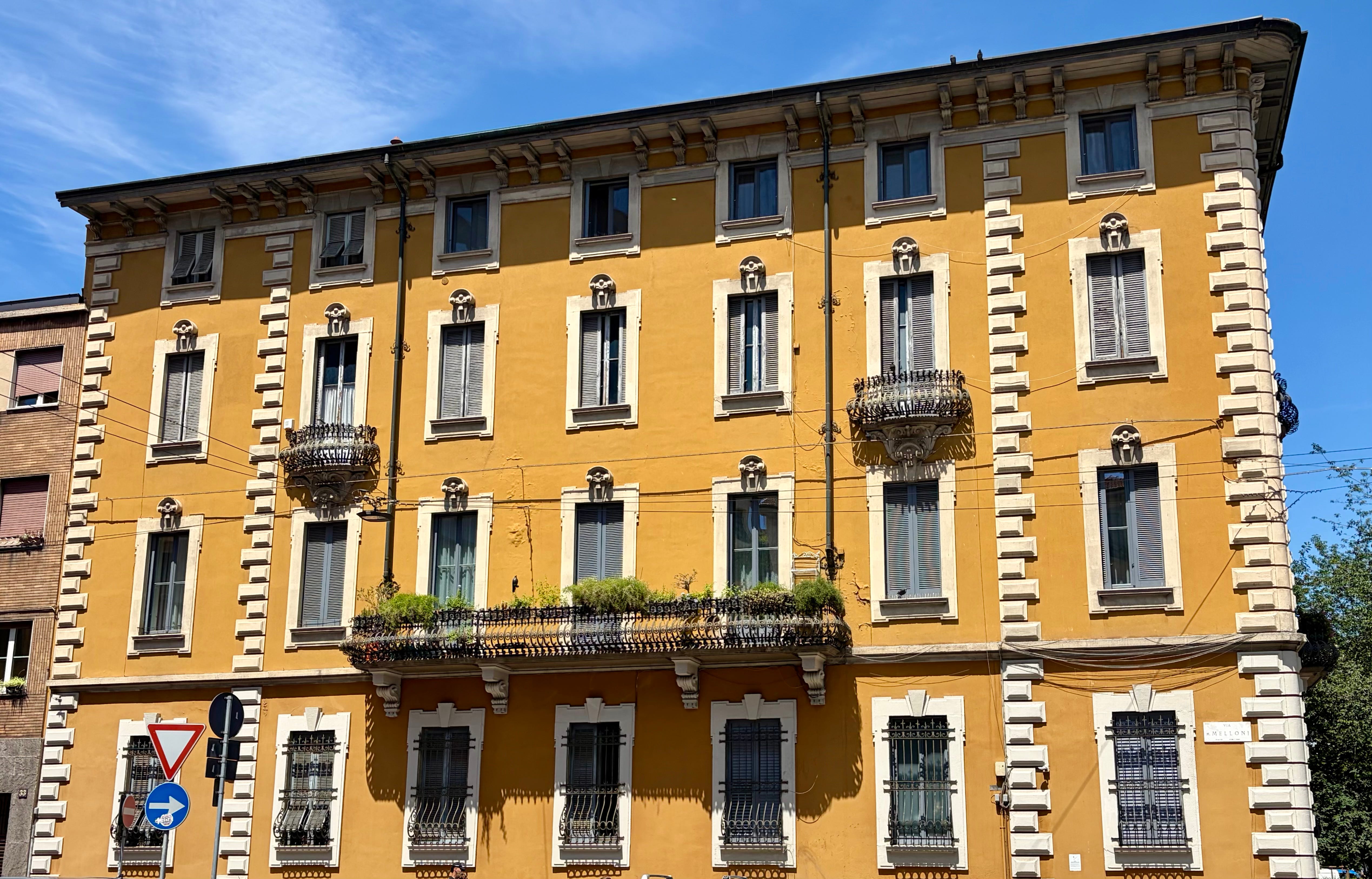
I really like this color. I see it in Europe—in a number of countries. I don’t see it at home (though I may not be looking in the right places).
***
In a neighborhood well off the beaten track, a young Milanese is having a slice of pizza. She has French fries on top of that slice.
Well, I never …
***
There is a chain of sandwich places here called “Panino Giusto”—“The Right Panino.” At home, we order “a panini.” In Italy, panini is plural, strictly. Two panini, one panino.
***
Earlier, I noted a difference between Italy now and Italy in my student days. There are many such differences (obviously).
As in other European cities, many, many service-industry workers in Milan are immigrants. I saw none of that, or little of it, in the 1980s.
Italy used to be known for big families—think of the traditional Sunday dinner, attended by scads of cousins.
For a long time now, Italy has been below “replacement level.”
Here in Milan, I buy a panino from a young woman whose parents must come from East Asia. She speaks in snappy, northern Italian—those familiar inflections. To see that face, paired with that speech—it is a new experience, for me.
***
I was thinking: Who are the greatest Italians in history? And let’s not count Rome. Let’s leave antiquity off the table.
The roster that comes to mind is Dante, Galileo, Verdi, and Garibaldi.
Incidentally, Galileo was not merely one of the greatest scientists in history (“merely”!). He stands as a shining example of conscience: of the refusal to surrender right for wrong.
I recite my roster to my friend Franco Debenedetti. He adds Manzoni, the writer and general cultural-political leader.
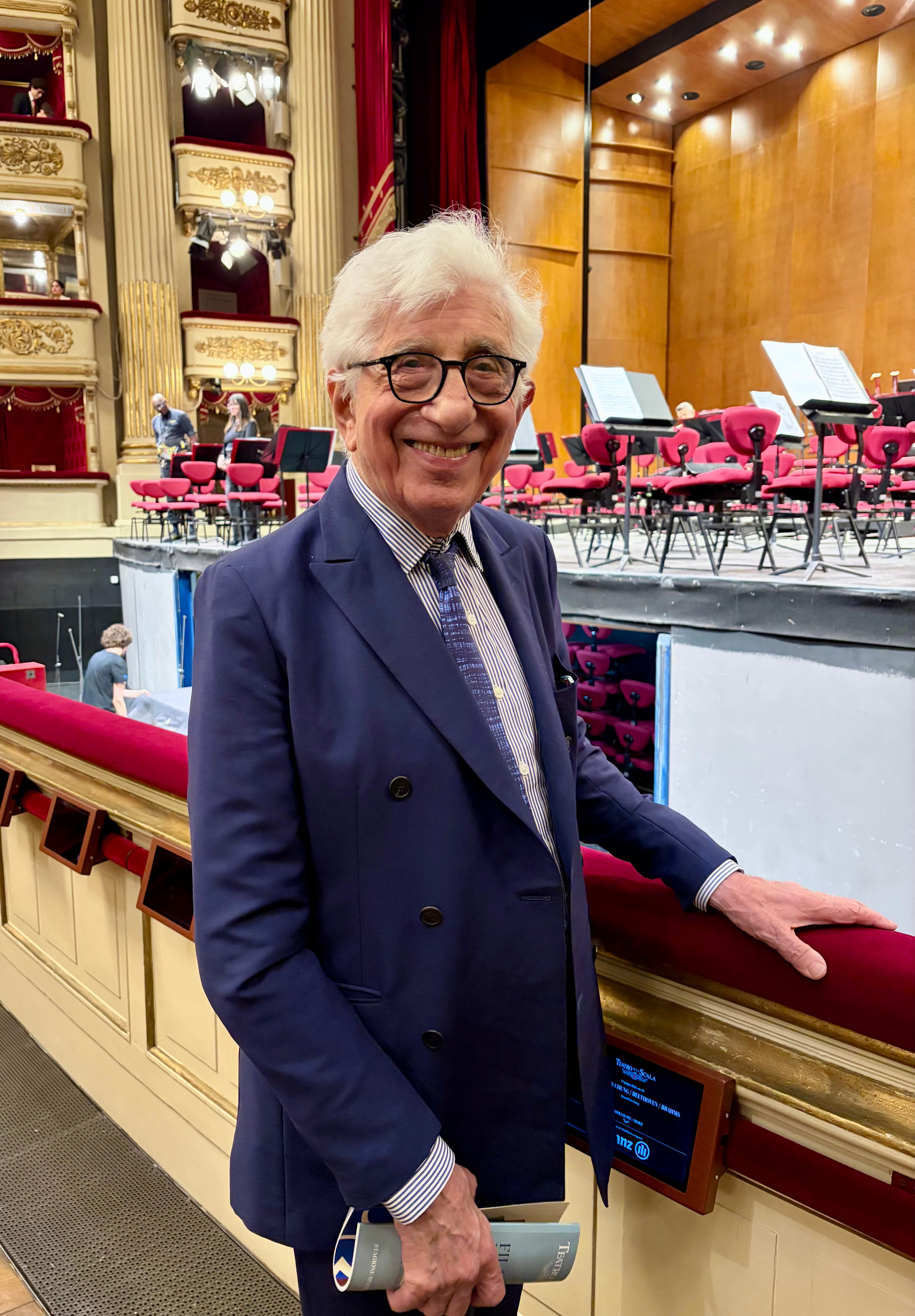
Franco Debenedetti is quite an Italian himself. Born in 1933, he is a businessman, a writer, a patron of the arts—many things.
When he was a boy in the war, and Holocaust, he took refuge in Switzerland. Two years ago, he wrote a memoir of this period: Due lingue, due vite (“Two Languages, Two Lives”).
We have dinner in his Milan apartment. I am sitting in front of a large Hockney—a painting by David Hockney, the British artist. The next day, I will read in the news that Hockney has died, at 88.
Would you like to see Franco at La Scala, the opera house that is virtually his living room?
***
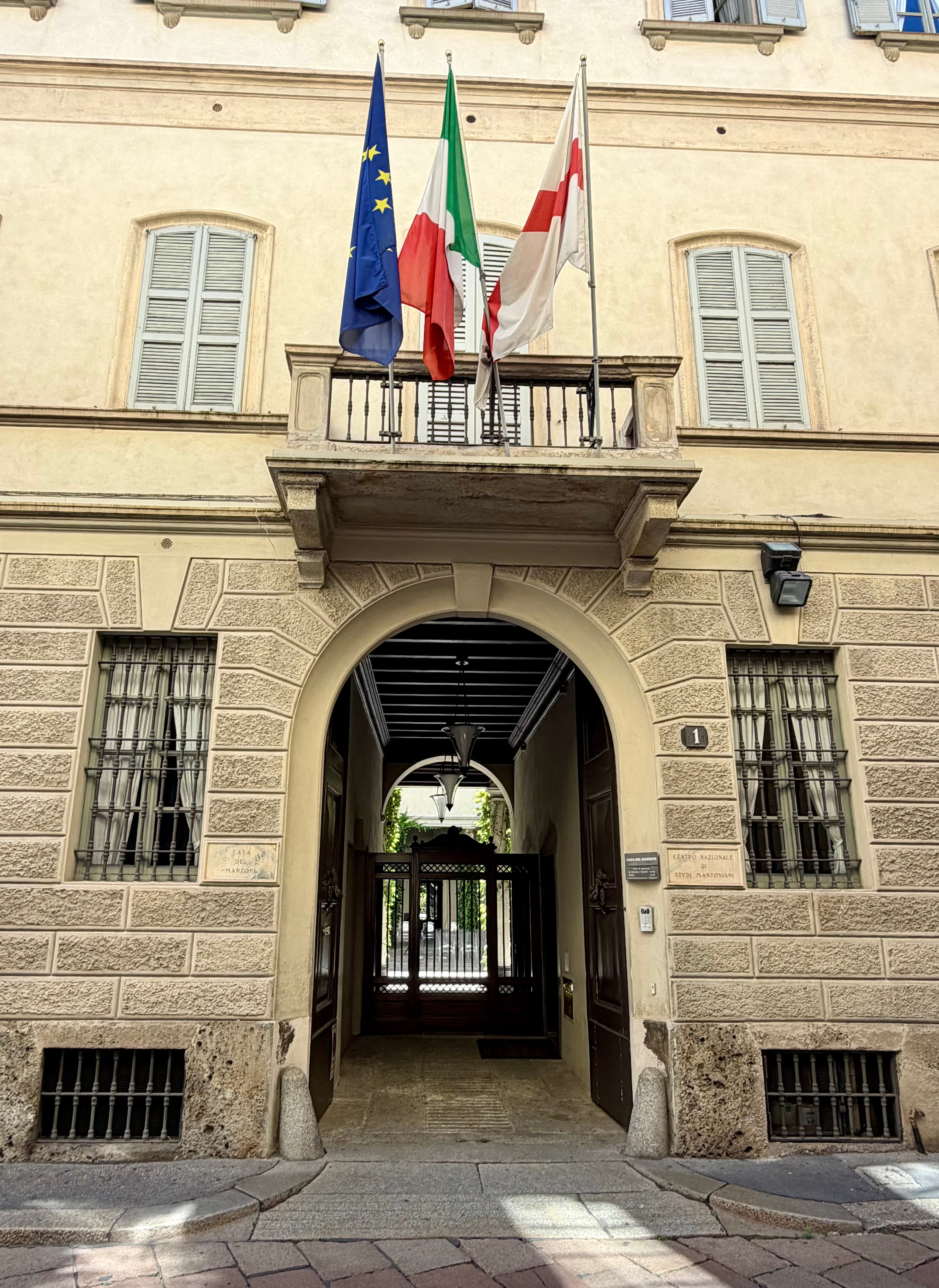
Well, let’s look at Manzoni’s home too—one entrance of it. It houses the National Center of Manzonian Studies.
***
Who is this beautiful young woman? She is in front of her house—her family home—next to Manzoni’s. She is Cristina Trivulzio di Belgiojoso, a writer and aristocratic heroine of the Risorgimento (i.e., the Italian unification in the 19th century).
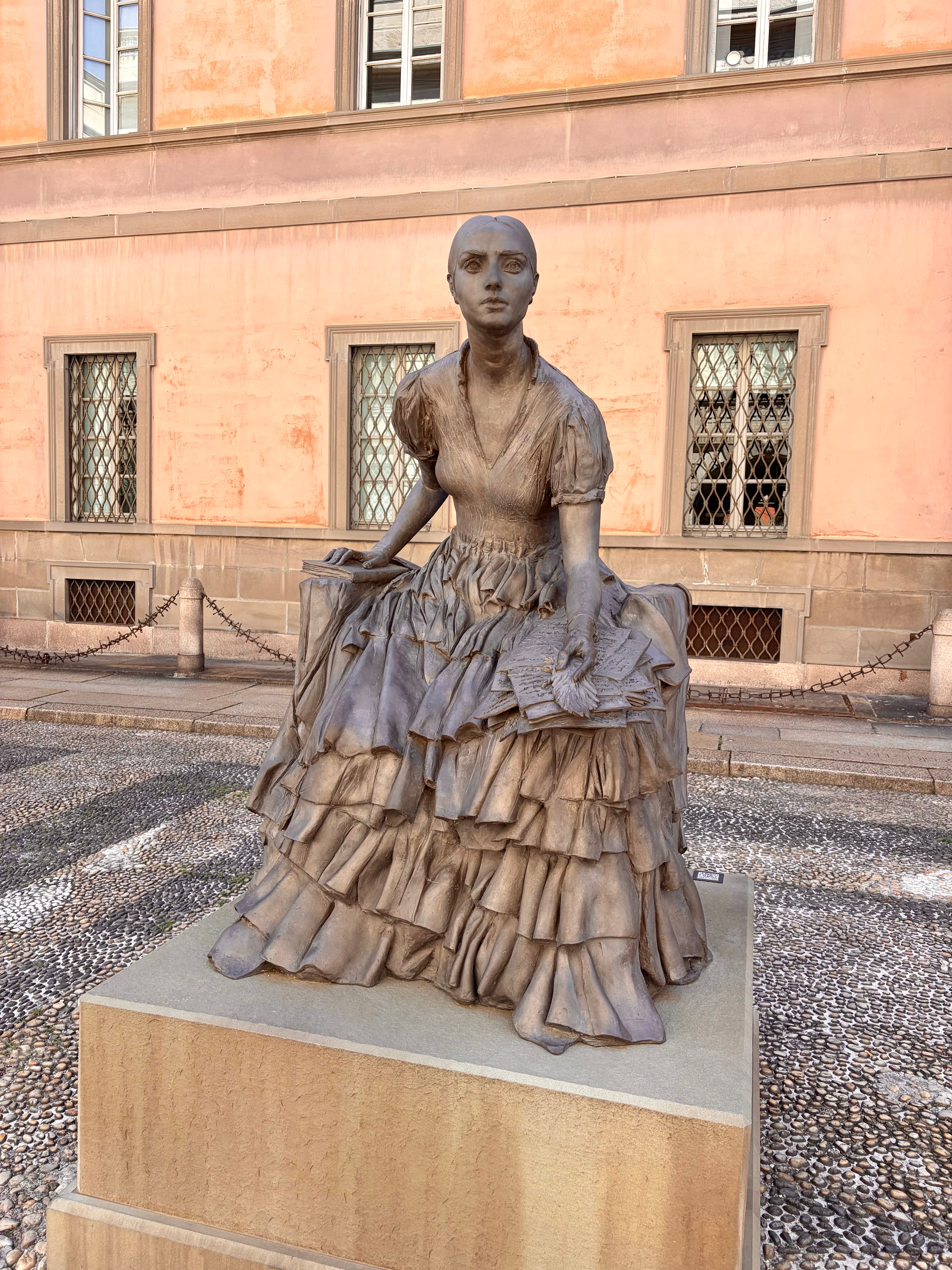
Brava, Cristina.
***
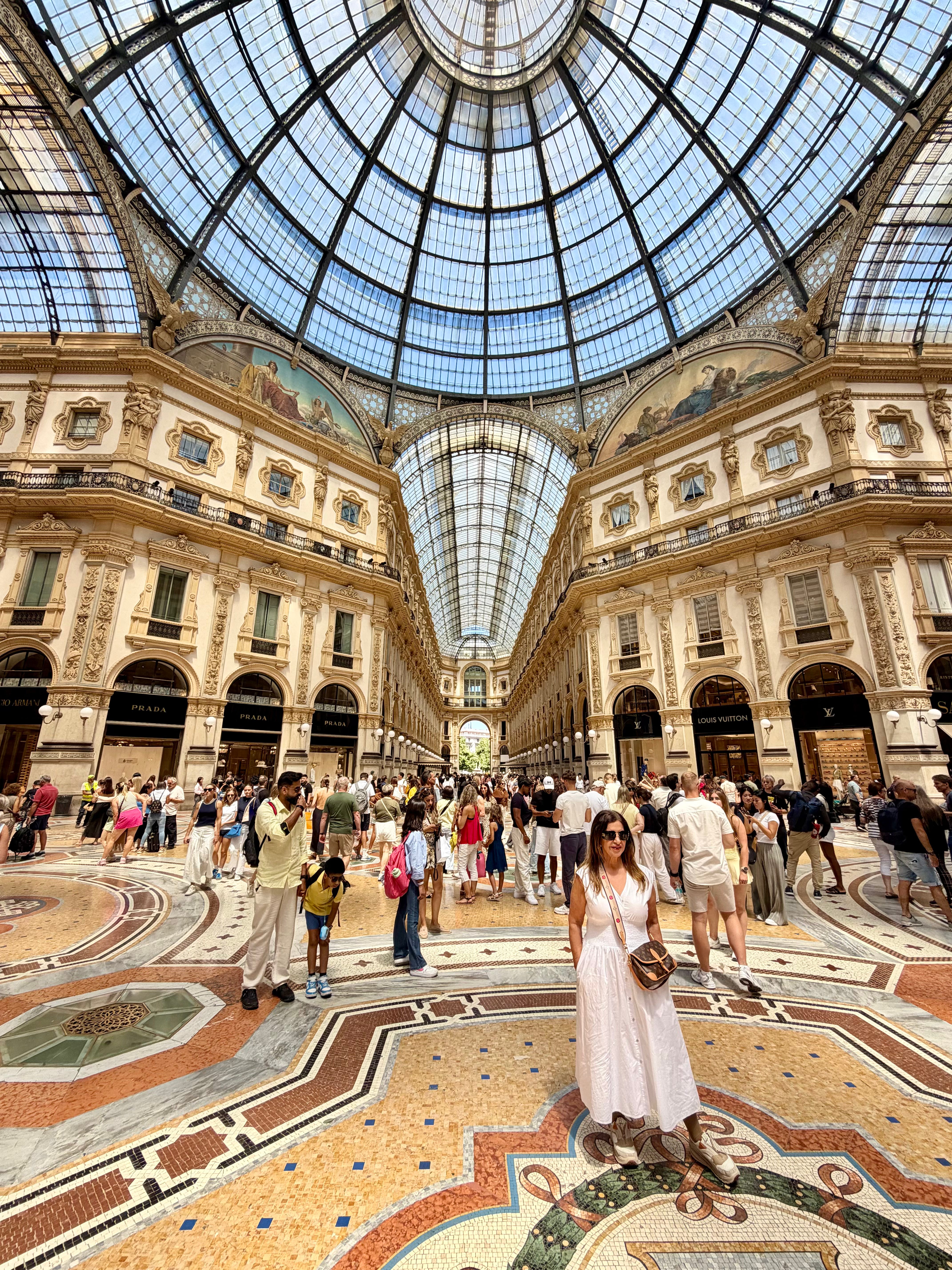
I have long marveled at the top of the Galleria—its roof. But don’t forget to look down. The floor is something too (and everything in between).
***
Pretty swanky store, for pinkos:
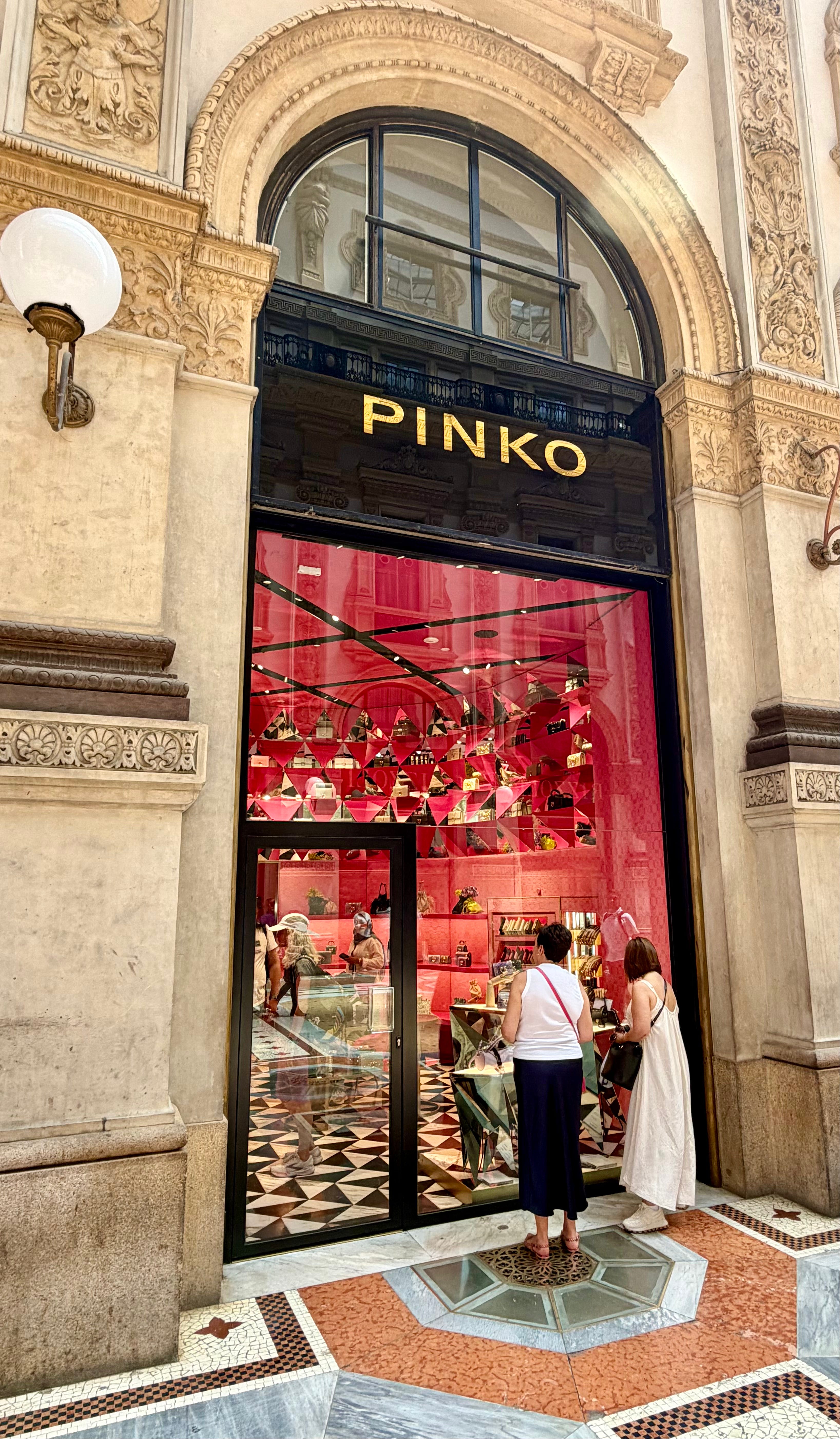
(Maybe I had better explain. We used to call leftists—those who were not quite commies—“pinkos.”)
Oh, I’ve barely begun. But maybe you have had enough for one day? I’ll see you soon for Part II. Thanks for reading (and subscribing). Grazie and arrivederci.
You're a great tour guide, Jay. Maybe you missed your calling; though I'd hate to miss your columns.
So many smiles elicited on a day chock-full of dreary chores . . . grazie mille.