


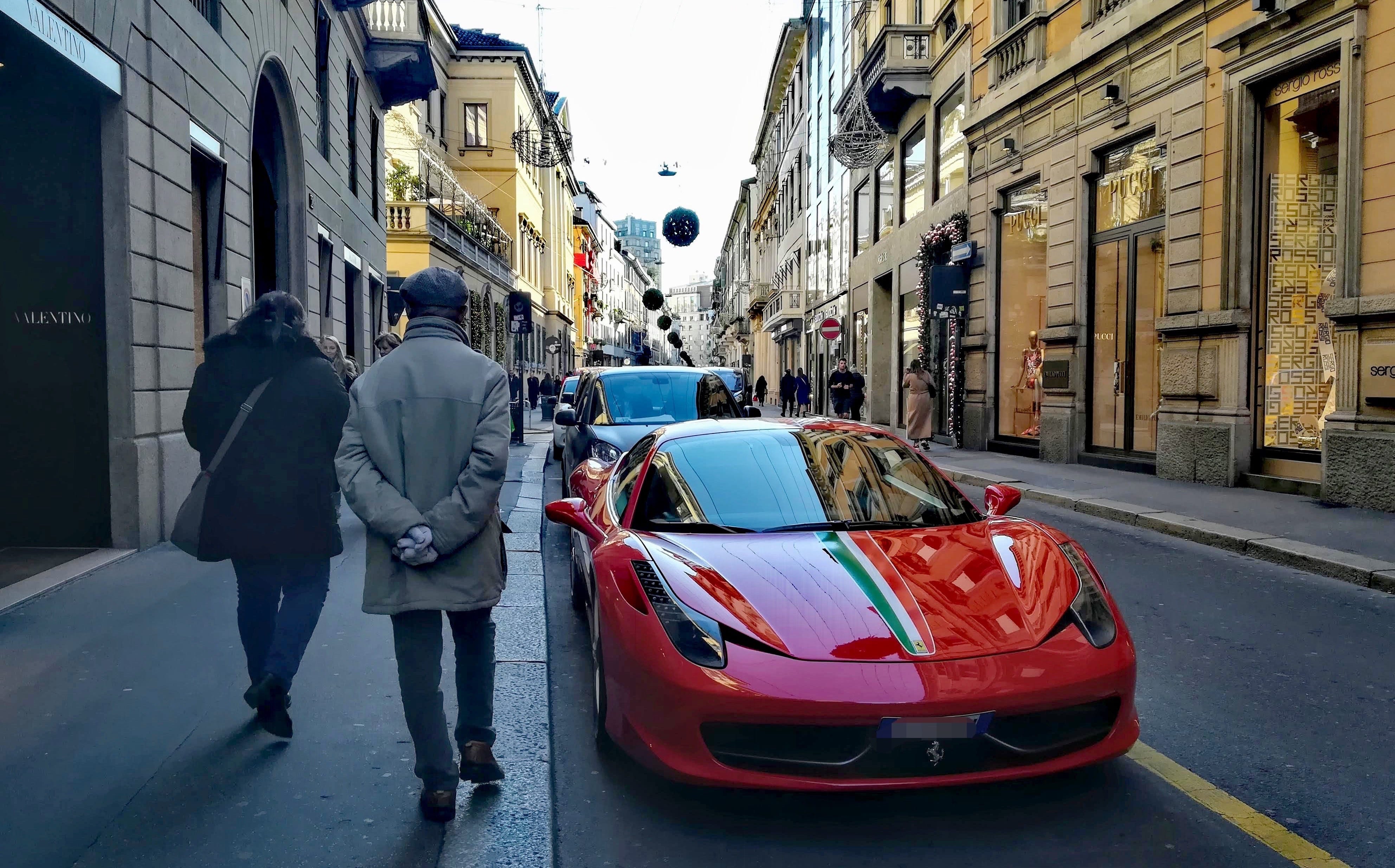
Dear readers: Part I of this journal is here. It dealt with Milan, as this one does.
I keep seeing street names that relate to the Risorgimento, i.e., the effort to unify Italy in the 19th century.
There’s Viale dei Mille, which refers to the “Expedition of a Thousand.” There’s Corso Plebisciti, which refers to the plebiscites, the referenda, throughout the peninsula. There’s Via XX Settembre. What happened on September 20?
That’s the day the unifying troops took Rome—their destined capital.
Hang on, what about Piazza della Conciliazione? Ah, that refers to something a bit later: when the Italian state and the Vatican reconciled.
In Italy, perhaps more than in most places, street names and the like are replete with history.
***
Guys, am I missing something here?
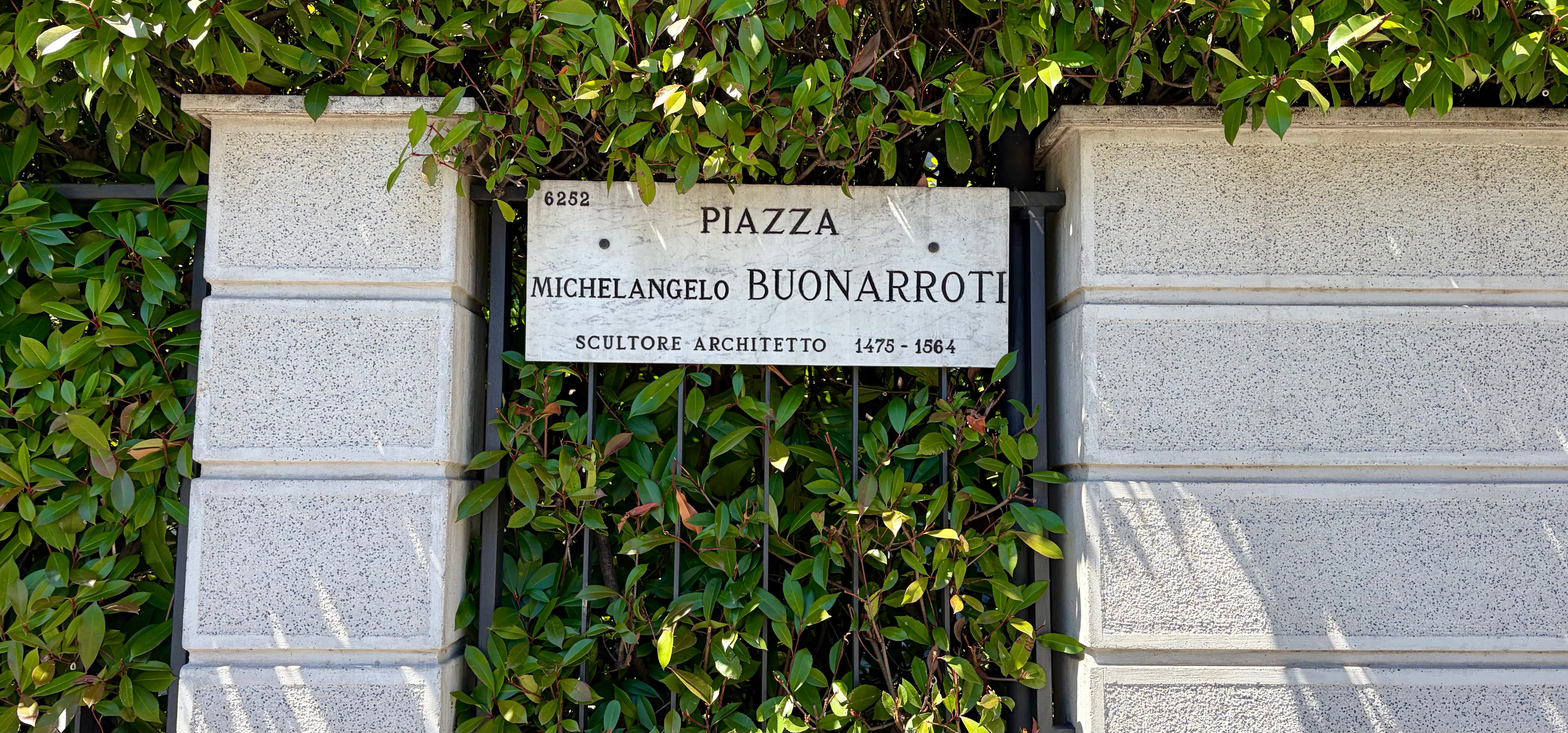
Michelangelo is identified as a sculptor and an architect, and he was certainly those. But … not too shabby a painter?
This must be left out for a reason, which I cannot discern.
***
As a bus idles beside me, I think of something. I hear a dog not barking. Milan is so … clean now. Big cities were not like this when I was a student in Italy, in the 1980s. Buses and trucks belched exhaust.
Sometimes, when you blew your nose, your Kleenex would be black.
We’ve come a long way, baby (to quote an old cigarette ad). (We’ve come a long way from cigarettes, too, come to think of it.)
I have always said, as a conservative, “You can’t separate conservation from conservatism. They go together. The words are almost identical.” At the same time, I have always opposed the “hard greens,” the extreme environmentalists, who tended to dominate the public square.
(In 2000, Peter Huber published a book called “Hard Green: Saving the Environment from the Environmentalists: A Conservative Manifesto.”)
Here and now, I would like to credit the environmentalists. I would like to give at least two cheers for them. Where is the soot and grime in Milan? It is nowhere. Where is the black and gray stuff pumping out of buses and trucks? It is nowhere, so far as I can tell.
Sometimes, in some ways, things get better.
***
I overhear a boyfriend and girlfriend—American—as they walk down the street. This is what I hear, as they pass me, going the other way:
Him: “You bought it!”
Her: “Just carry it for a little bit!”
***
In a little park, boys and girls play ping-pong. City kids need parks more than other kids do. I wonder how many apartments have ping-pong tables.
***
Milan honors not only poets and artists and statesmen—it also honors journalists, by naming parks, streets, and other things after them. I see the name of Italo Pietra. And of Alberto Vigevani.
And I think of Moneta—Ernesto Teodoro Moneta. I became familiar with him when I wrote a history of the Nobel Peace Prize. He shared the prize in 1907, the seventh year of the Nobel prizes. I would like to quote my book at length, where Moneta is concerned.
But I realize I’m supposed to be doing a breezy lil’ journal here, and I’ve already discoursed on environmentalism …
***
I should not say this, because it makes me a bad guest, a bad visitor—a chauvinist or something. But when I’m walking through Milan’s Sempione Park—a very large park, and a perfectly fine one—I realize how great Central Park, back home in New York, is.
How beautiful, how interesting, how intelligently conceived and brought to fruition.
I have taken Central Park for granted …
***
A warm, smiling, polite young African asks me for money. His name is Theophilus. I have never met one. I know the name from the first verse of Acts: “The former treatise have I made, O Theophilus, of all that Jesus began both to do and teach …”
Finding out where I’m from, he asks, “How’s Donald Trump doing?” I say something about looking forward to the post-Trump era (should it ever arrive).
***
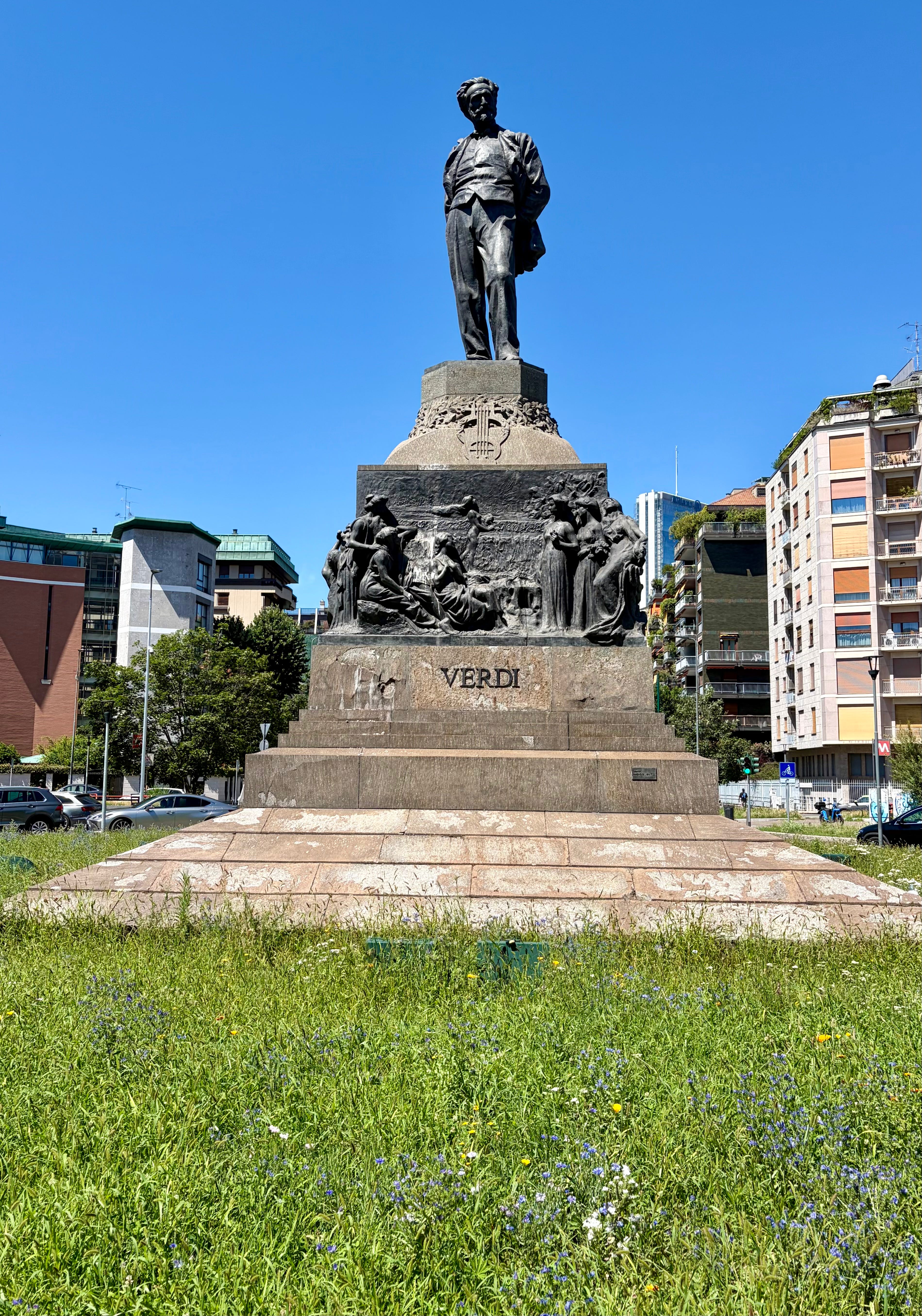
Here’s my man—our man—Verdi. The statue could be better taken care of, and so could the grounds around it.
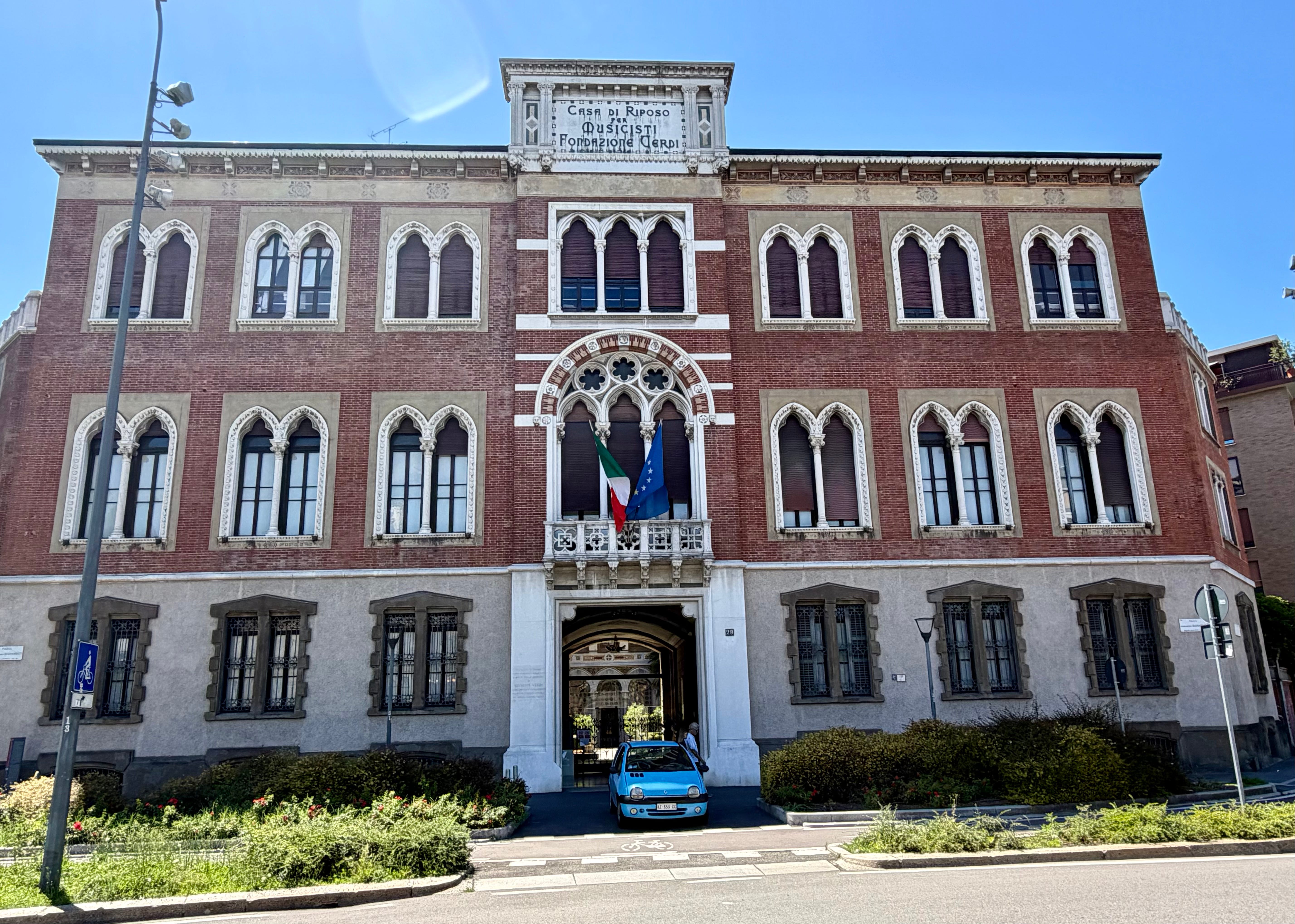
Verdi takes care of people in the building across the street. It is the Casa di Riposo per Musicisti, or the “Rest Home for Musicians,” better known as “Casa Verdi.”
This is what the composer said in a letter to a friend:
Of all my works, that which pleases me the most is the Casa that I had built in Milan to shelter elderly singers who have not been favored by fortune, or who when they were young did not have the virtue of saving their money. Poor and dear companions of my life!
***
Before we leave music—which we’re kind of on—do you want a review? Whatever your answer, here is a review of the Filarmonica della Scala, in a concert of Beethoven and Brahms. I have published it at The New Criterion, my artistic home, so to speak, for 25-plus years …
***
You can take the boy out of America but—this boy still likes butter with his bread (and ice with his drinks). A particular restaurant here in Milan—a good one (inexpensive)—has no butter at all. For bread or anything else.
***
But you know what this restaurant does have, as so many places on this continent do? Good paper napkins—thick, large, sturdy. Damn near washable.
I’ve seen our napkins at home get flimsier and flimsier, waxier and waxier …
***
Here’s an idea that had crept up in my head: the food in Italy is not as special as it once was, because people all over the world—certainly in the United States—have learned how to do it. You can get good Italian food pretty much anywhere, rendering a visit to Italy less special on this score.
Let me say: my current visit has disabused me of this idea.
***
I’m not saying this is the best ice cream I’ve ever had; I’m not saying it’s not:
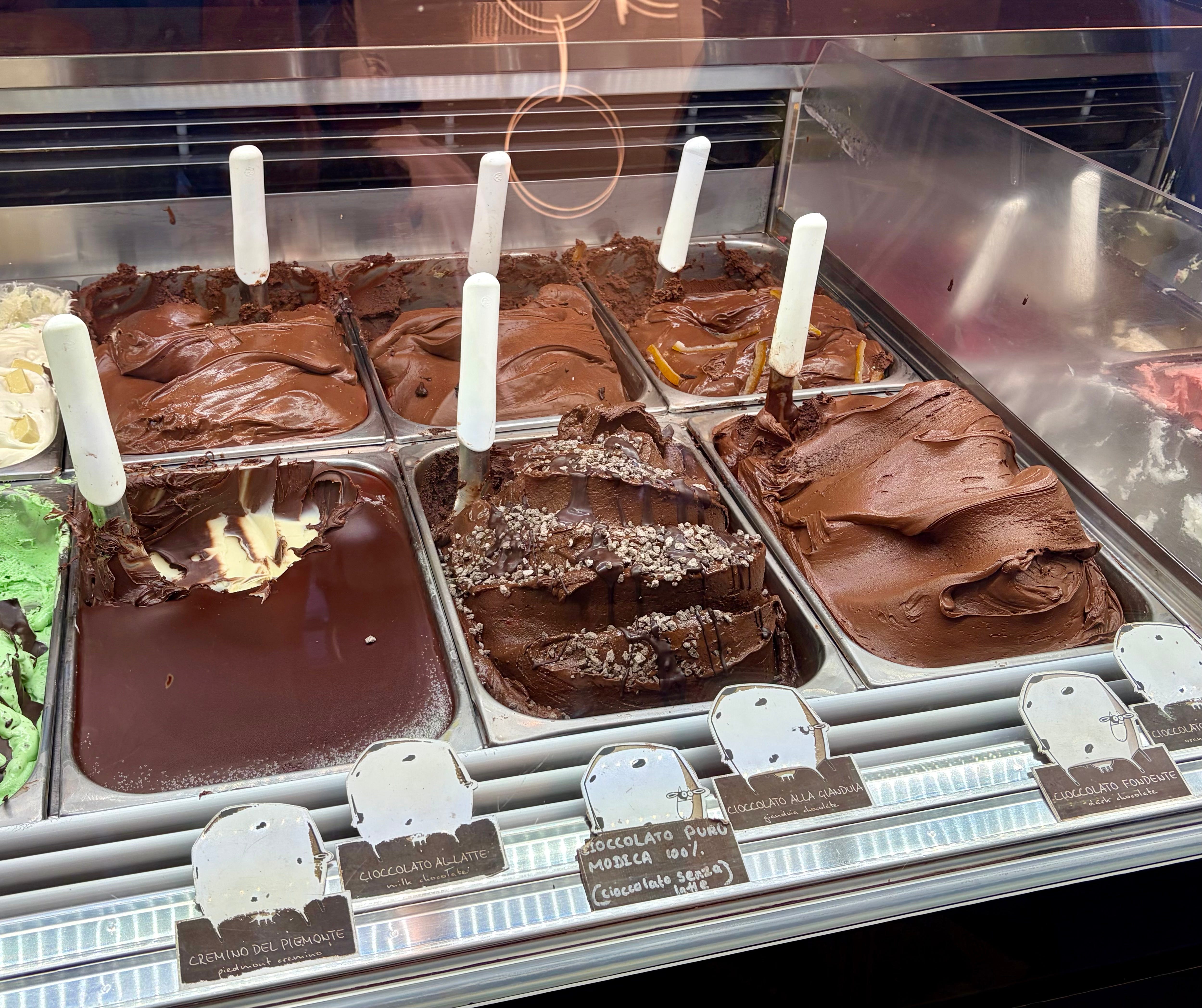
(The parlor in question is Chocolat Milano, Via Giovanni Boccaccio 9.)
***
The subway in Milan? I can’t speak for all trains, but the train I’m on at the moment is so clean and even pretty, it might as well be Japanese.
***
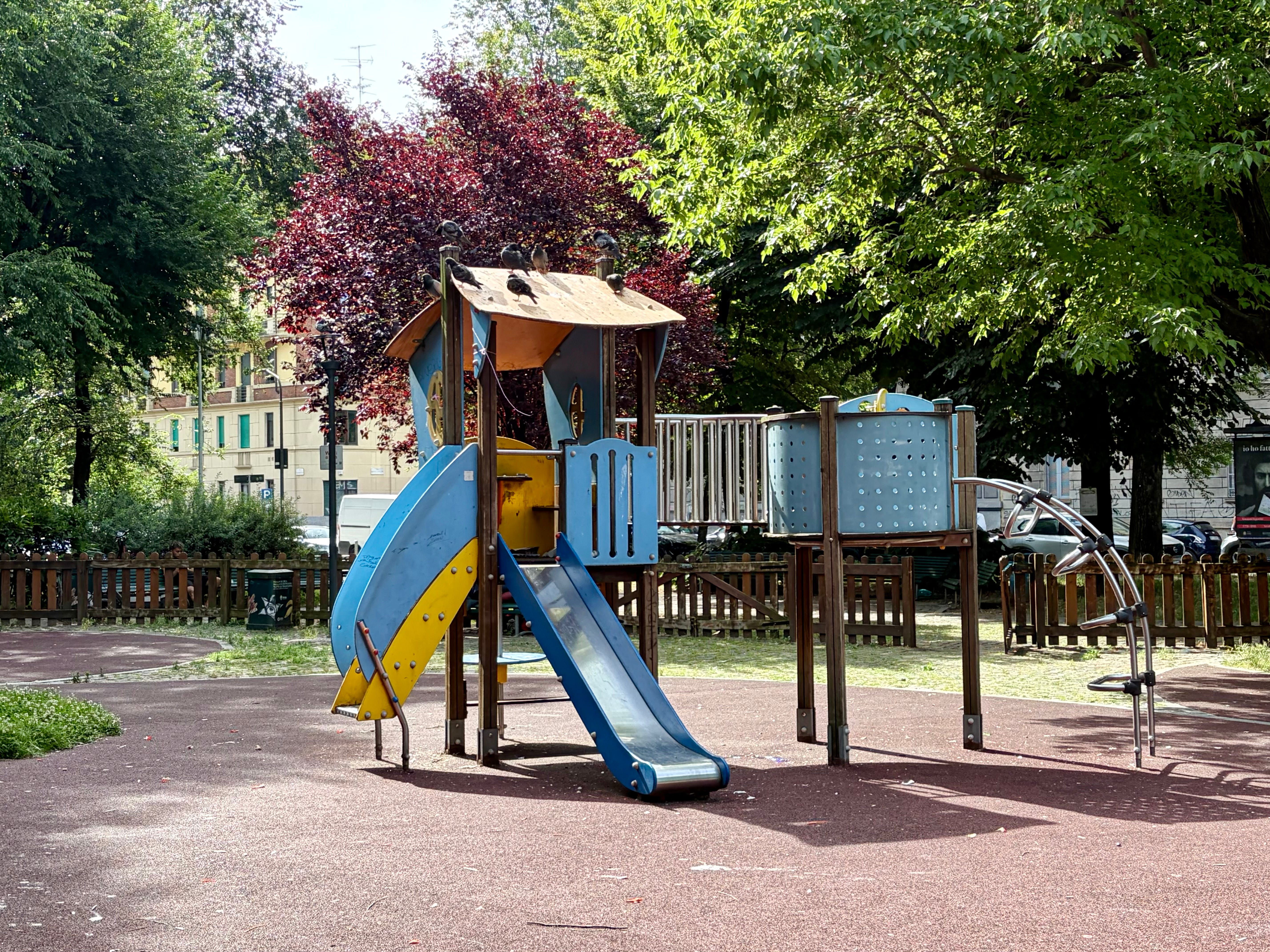
Scene from a playground, early in the morning. I kind of liked those birds atop that little roof.
***
I like the word, or phrase, for “escalator”: “scala mobile,” or “mobile staircase.”
***
A man at a lunch place handles the sandwiches with his bare hands. This startles me a little, because we stopped doing that in America. But it had been perfectly normal before, and no one ever thought to object.
***
When my train to Cremona leaves Central Station on time, I think, “Insert Mussolini joke here.”
The cleaner air is noticeable in America too. When I was a boy, in the 50s, we lived in a small farming town about 45 miles from Houston. My mother would take my sister and me into the city for a day's shopping now and then. This was before air-conditioning was common in cars. Inevitably, a few hours of breathing the gray air reeking of leaded gasoline exhaust (and cigarette smoke everywhere) would have both of us nauseous. The air in Houston isn't exactly clean, even now, but it is much, much better (and the cigarettes aren't missed).
Enjoying this travel journal, as usual. I seem to remember reading somewhere that Michaelangelo didn't want to paint the Sistine Chapel, but that the Pope insisted. So maybe it resembles Jefferson's grave. No mention that he was President.