


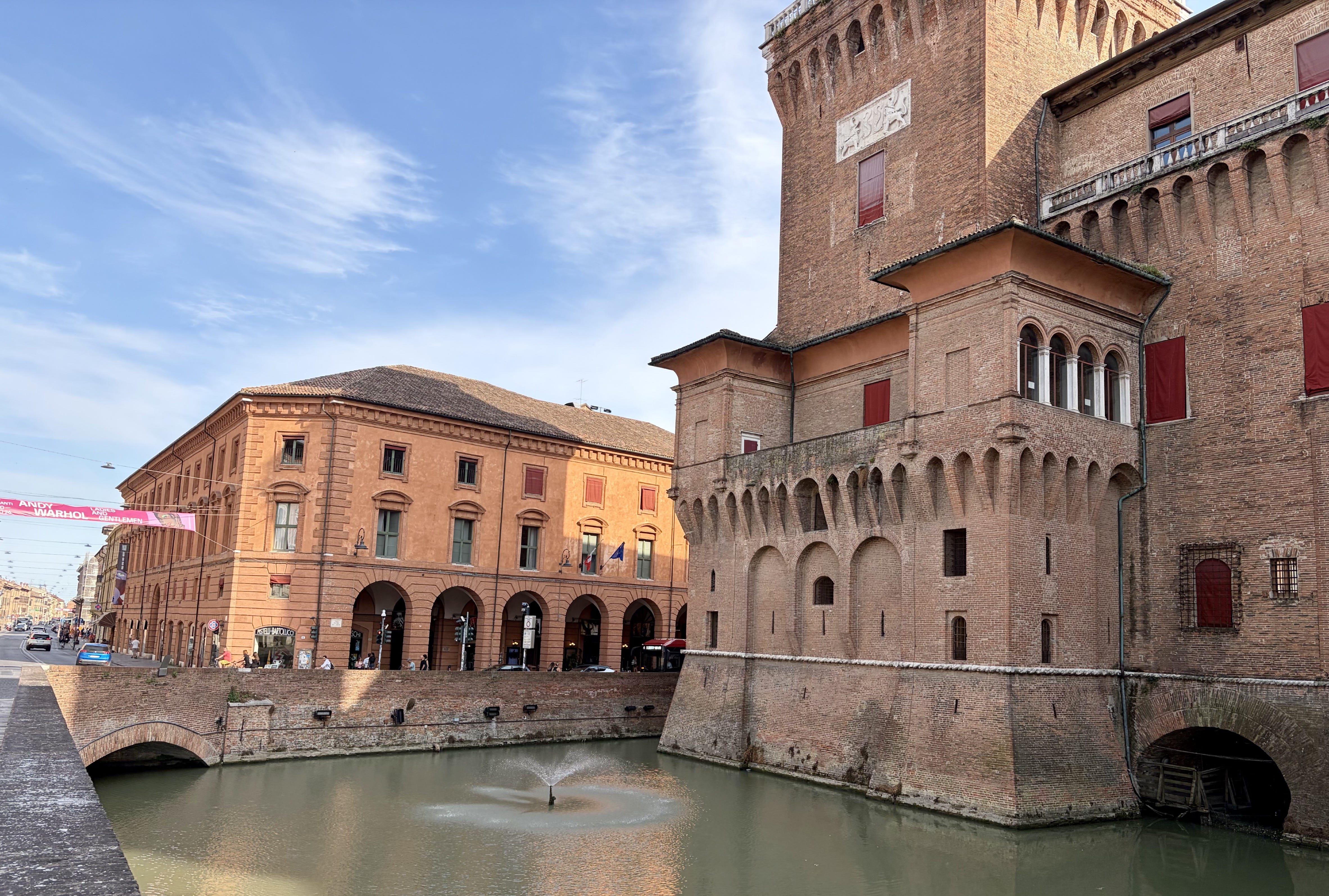
Dear readers: The previous parts of this journal can be found at the following links: I, II, III.
I have come to Mantua, as we call this town—and we pronounce it “Manchua.” The Italians call their town “Mantova.” Same with “Padua”/“Padova.”
You remember the song from Kiss Me, Kate, don’t you? “I’ve come to wive it wealthily in Padua.”
***
Across the street from the train station is the Hotel Rigoletto—which makes sense. Mantua is the setting of Verdi’s opera, Rigoletto.
***
That notwithstanding, I see a poster for someone else’s opera—an opera by Rossini, set over in Spain:
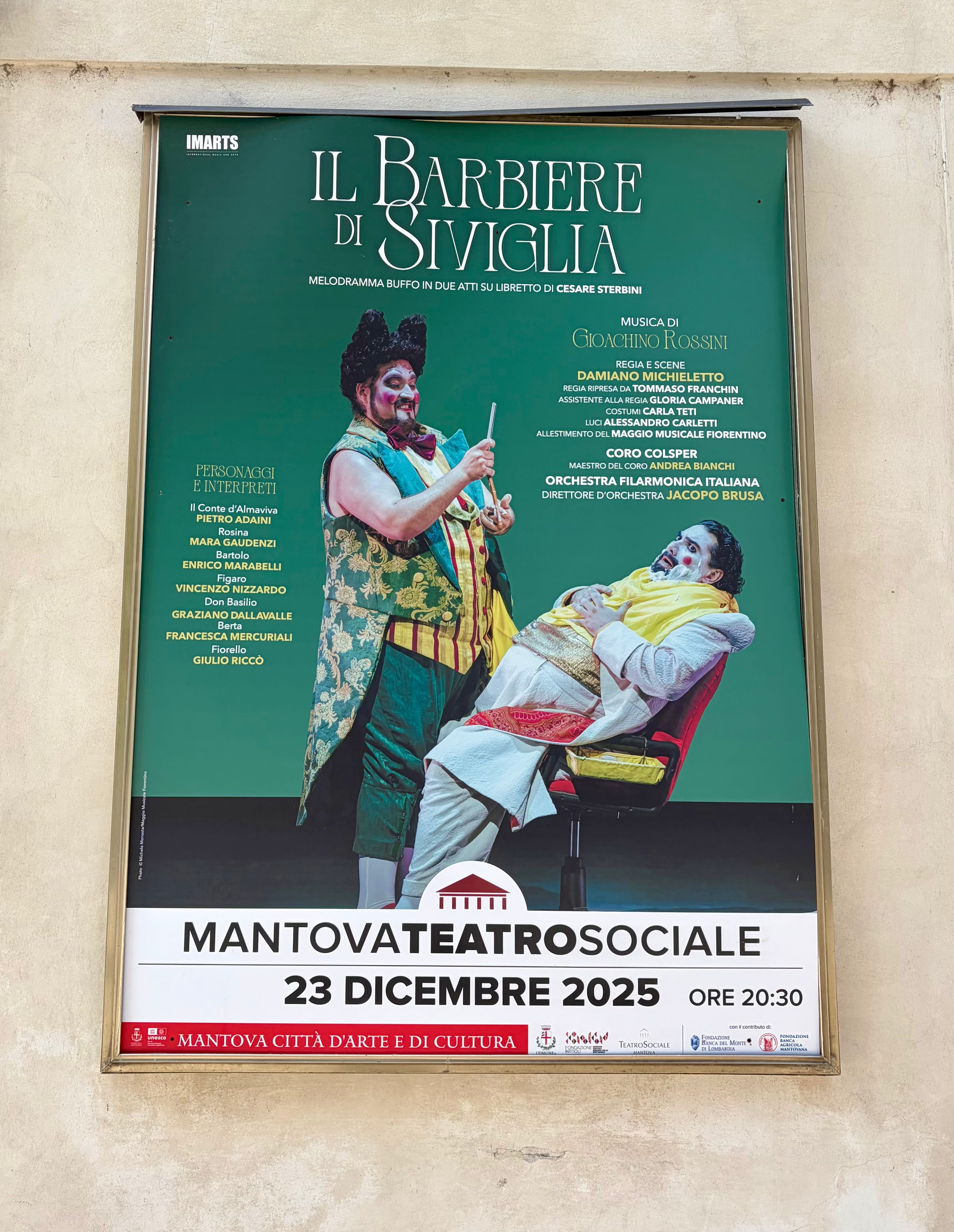
(According to the poster, The Barber played here in December.) (That’s our English-language shorthand for The Barber of Seville: “The Barber.”) (Not to be confused with works by America’s own Samuel Barber.)
***
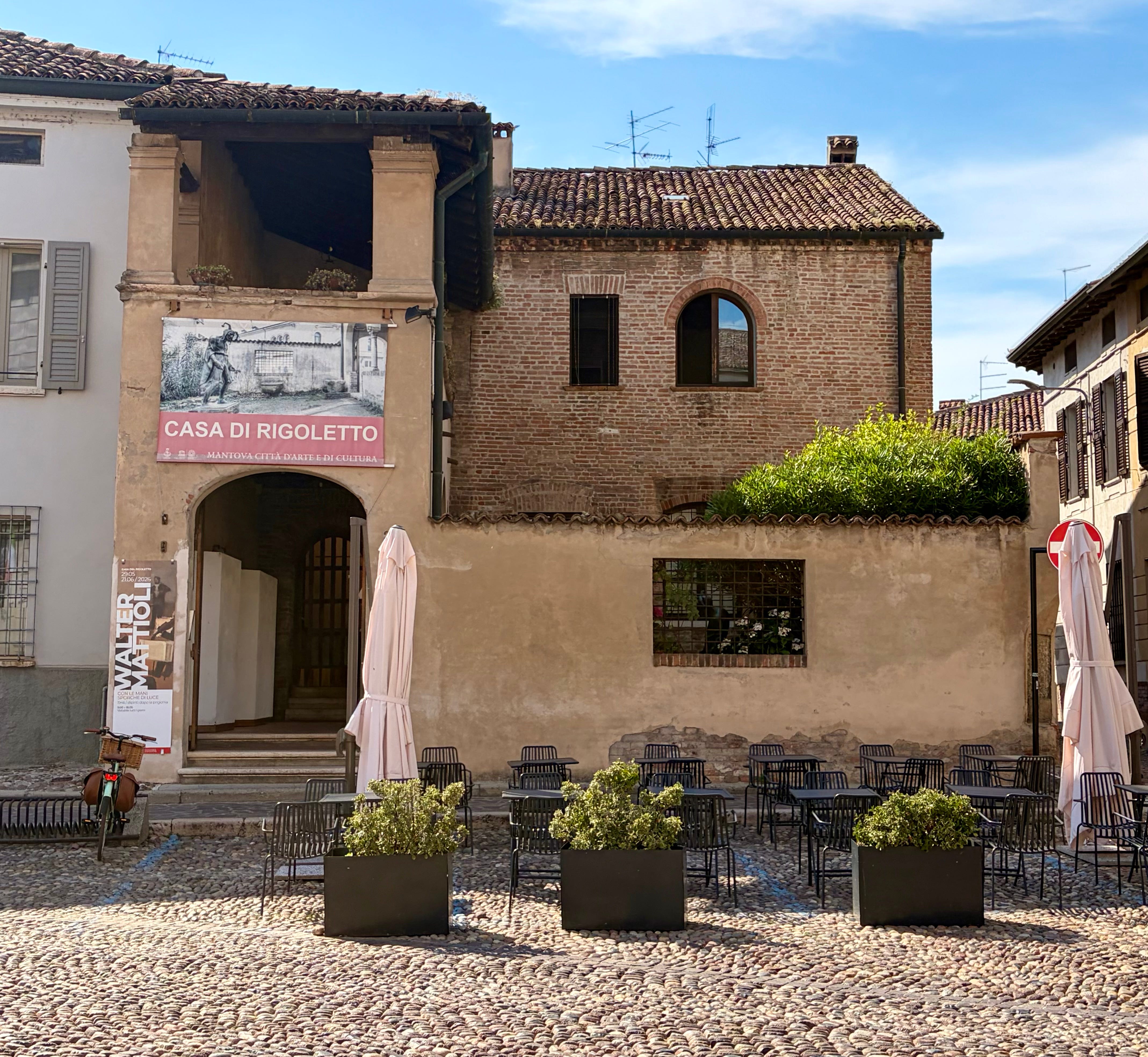
Rigoletto’s house—or what is designated as such:
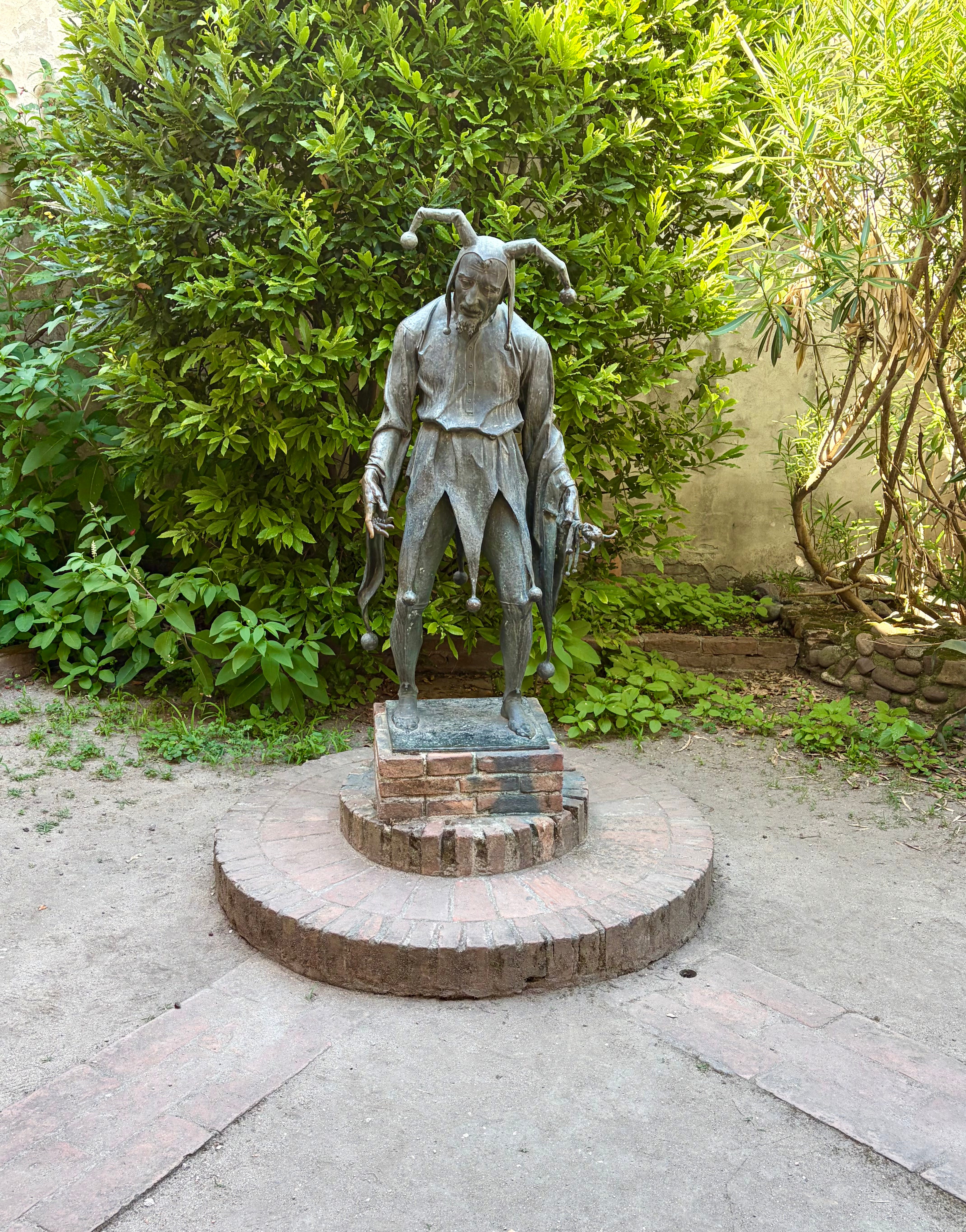
And here’s the jester himself, in the courtyard:
***
Kind of nice, right? The ducal palace:
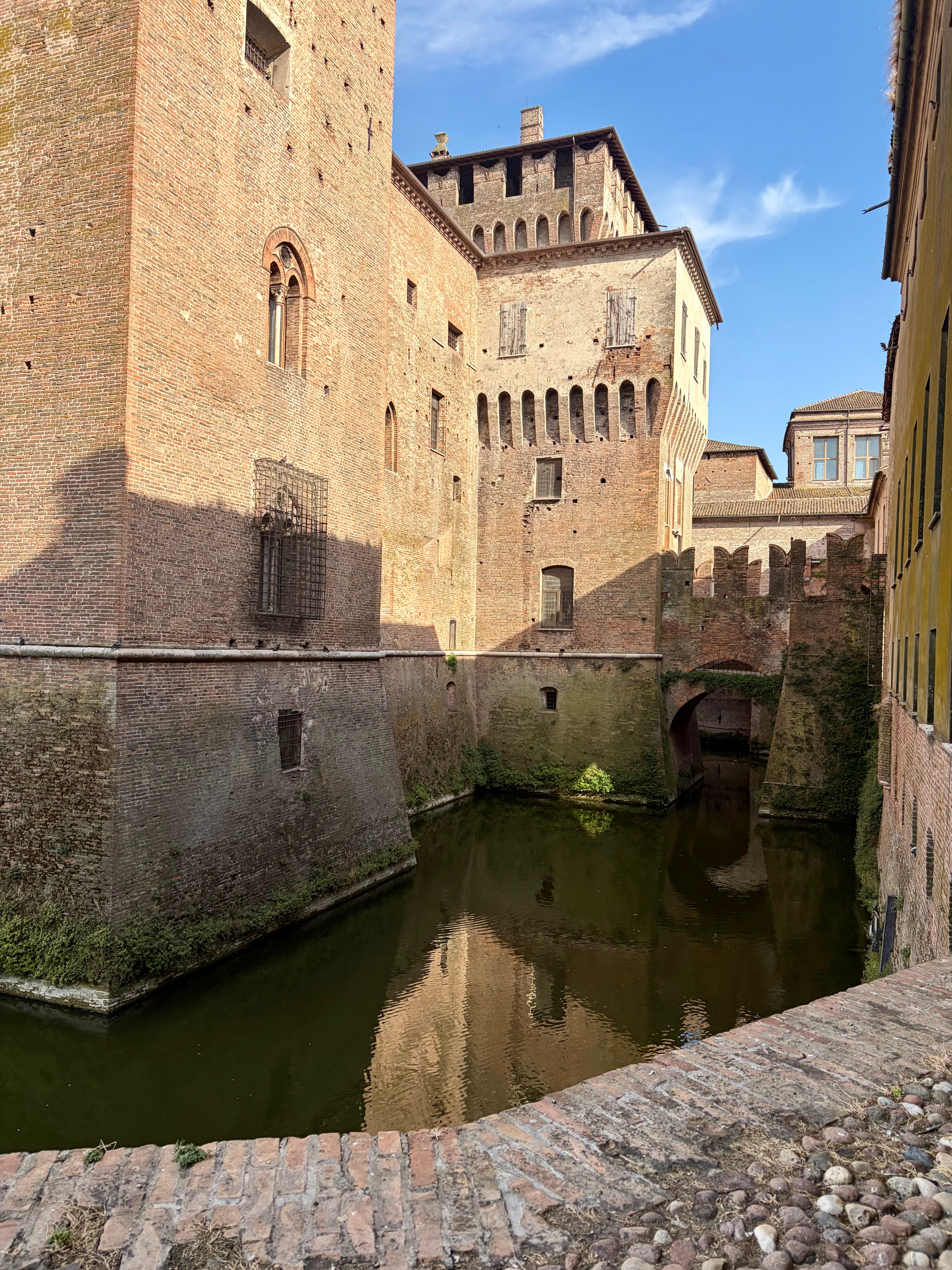
***
Here is the police station—which looks out of an opera set:
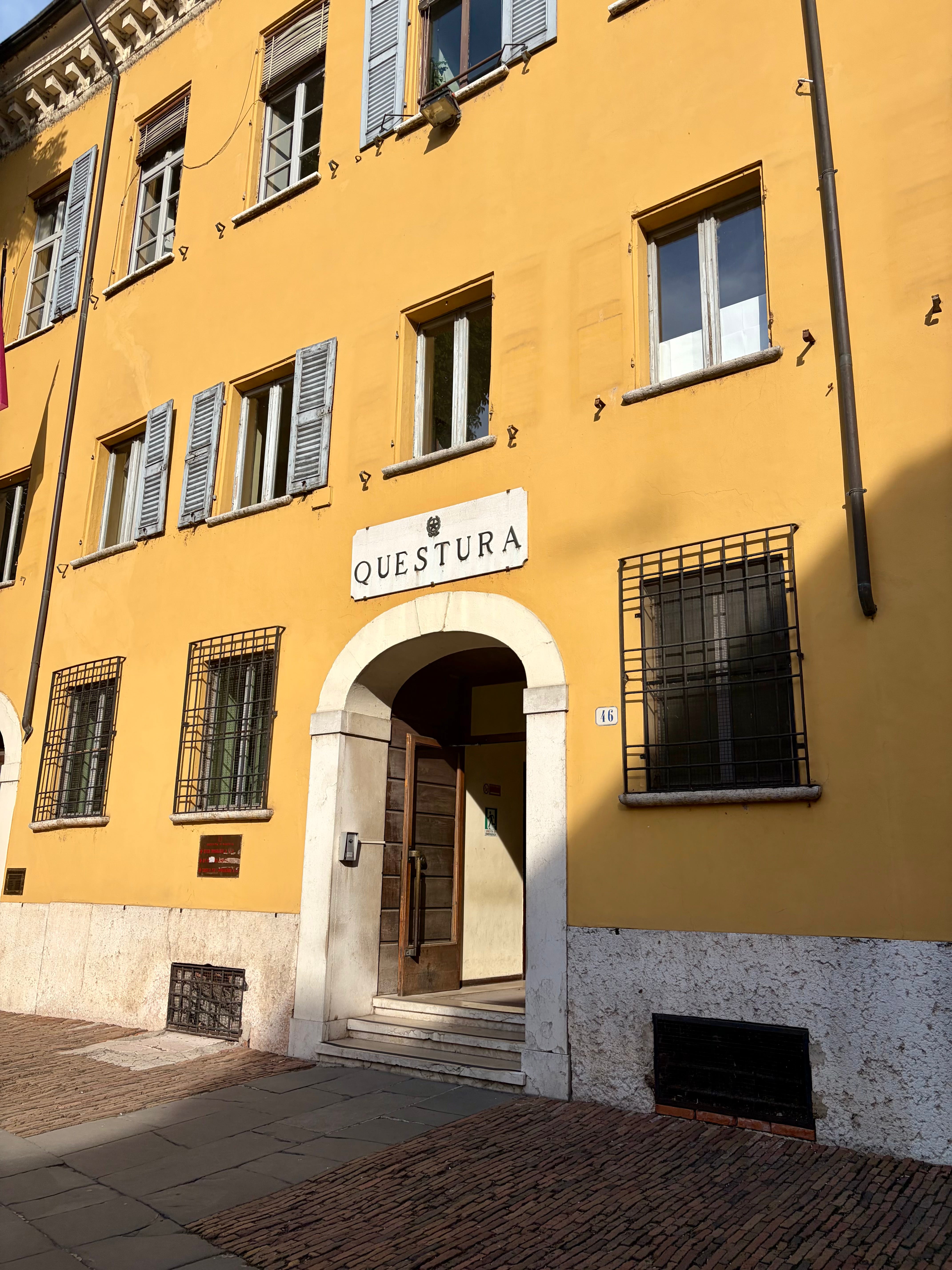
***
There are lakes surrounding Mantua. They are nice enough, but … what can I say? I’m from Michigan …
***
My friends, if you ever have the chance to have dragon-fruit gelato—certainly here in Mantua—grab it.
***
I hear, behind a wall, a kid (I presume) piping out the “Ode to Joy” on a recorder …
***
Do you like these blooms? I do.
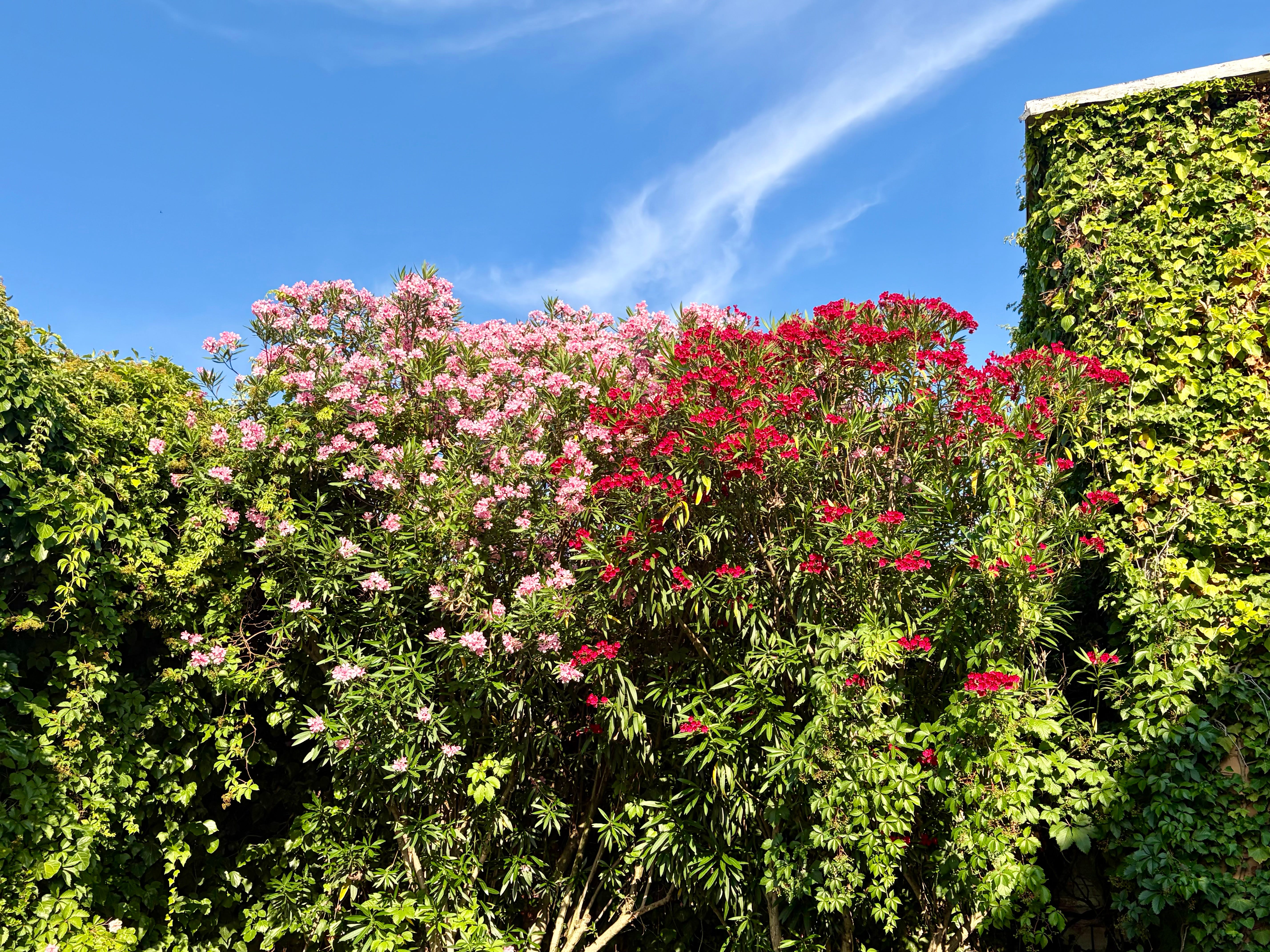
***
In the evening, down by a lake, there is an international food festival, with booths offering just about every kind of food the mind can imagine. I have one shot for you—of the Indian station:
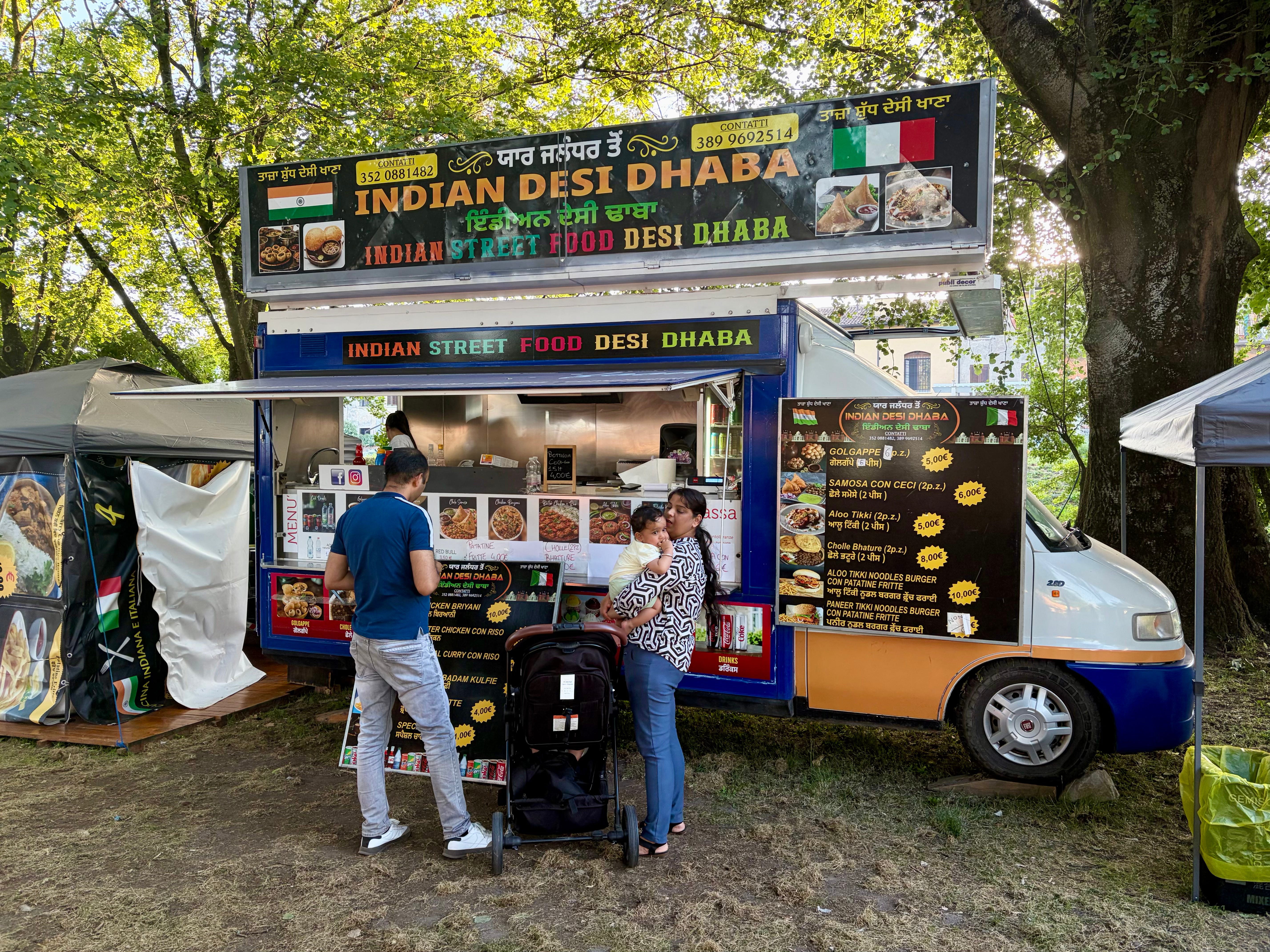
***
Hang on, how do you turn on the water in this sink? Ah—a foot pedal. He is an inventive animal, man.
***
On a train, the conductor greets me with “Buondì”—“Good day.” Nice. (An informal way of saying “Buon giorno.”)
***
As our train passes the town of Bevilacqua, I think, “I wonder whether you can drink the water there.” I take myself for a comedian, sometimes. (“Bevilacqua” means “Drink the water.”)
***
On arriving in Ferrara, I see a restaurant called “Brunch Republic”—in English, I mean. Clever name. How many locals know the term “brunch”? Plenty, I bet.
***
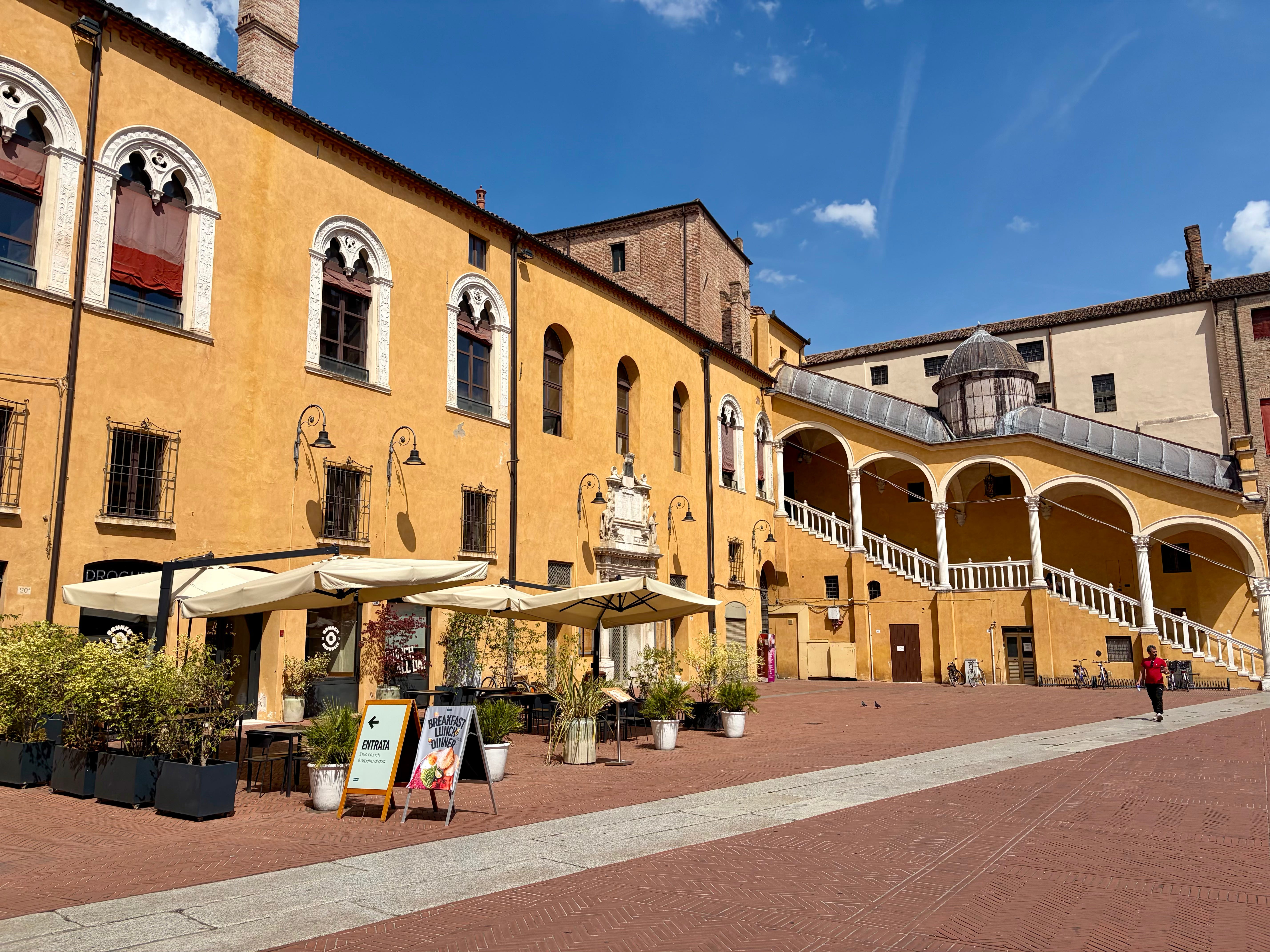
I like this color, very much. Works particularly well in a warm environment.
***
If you’re like me, you can’t think of Ferrara without thinking of The Garden of the Finzi-Continis. Giorgio Bassani wrote this novel in 1962, and Vittorio De Sica made a movie of it eight years later. The story concerns Jews in Ferrara. Bassani himself was one.
I have a lot to say about The Garden of the Finzi-Continis, and have said most of it elsewhere. Suffice it to say now: the story tells us a lot about fascism, populism, history, and human nature.
We may not want to know—but it tells us.
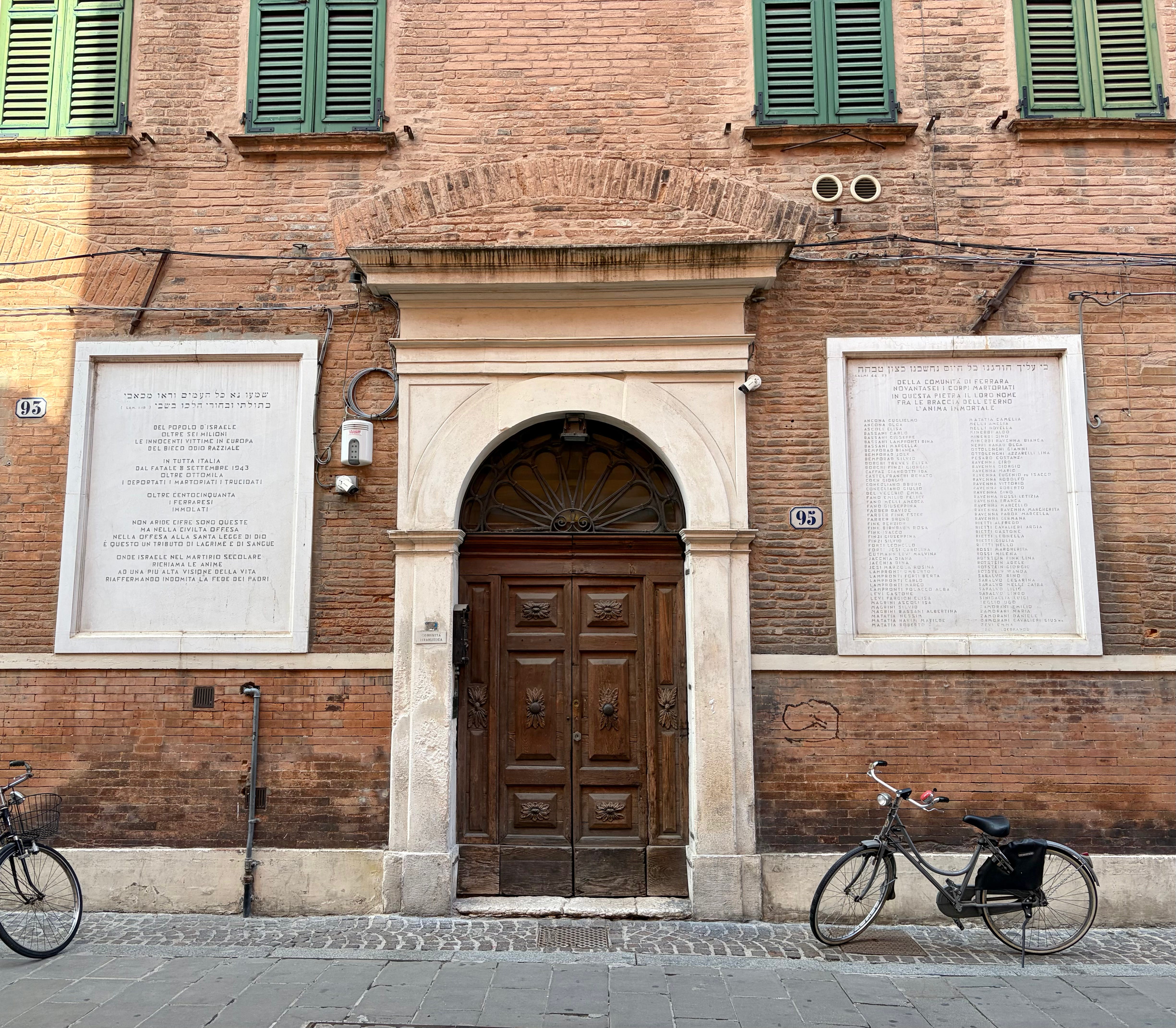
I go to the old Jewish quarter here and stand in front of the synagogue. On either side of the door, there are moving plaques. Powerful statements. Before the Holocaust, there were 300 Jews in Ferrara. Ninety-six of them were deported to the camps; five survived.
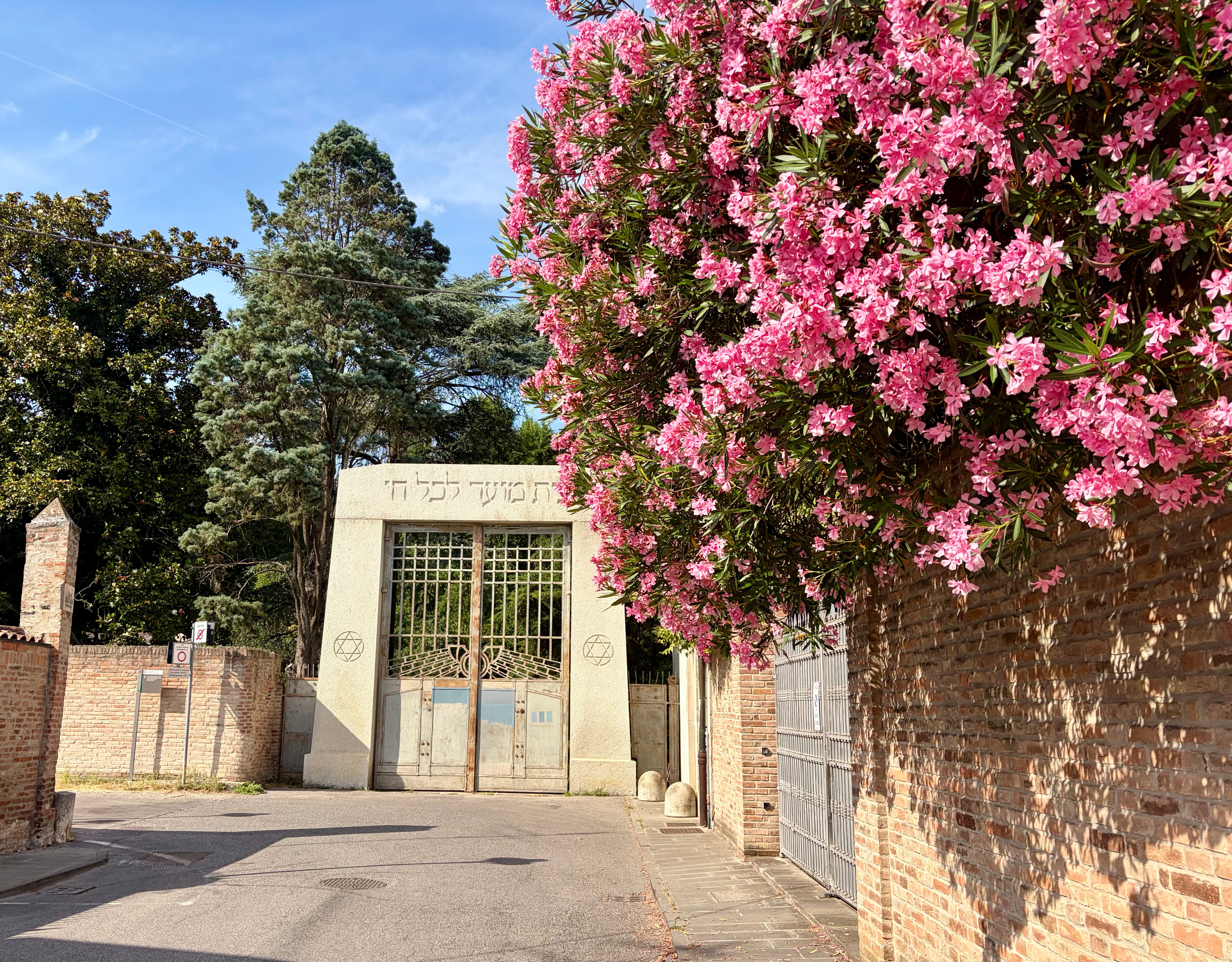
Here is the entrance to the Jewish cemetery (in which Giorgio Bassani and some of the real-life Finzi-Continis are buried):
Ferrara has a museum called “MEIS”—whose initials, in Italian, stand for “Museum of Italian Judaism and the Shoah.”
***
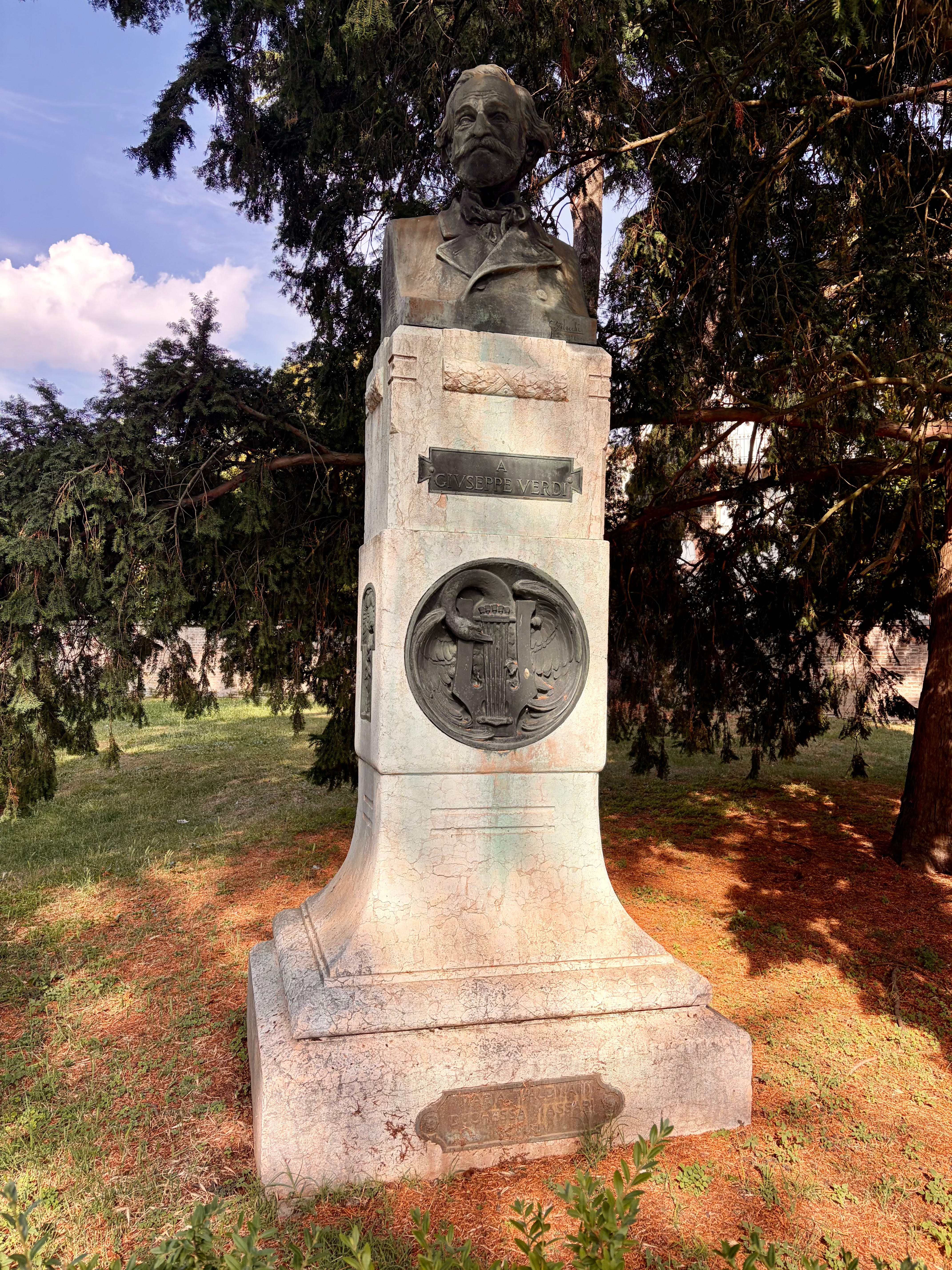
Want to say hello to our friend Giuseppe Verdi? You can see him all over Italy—as you should—and here he is in a Ferrara park:
***
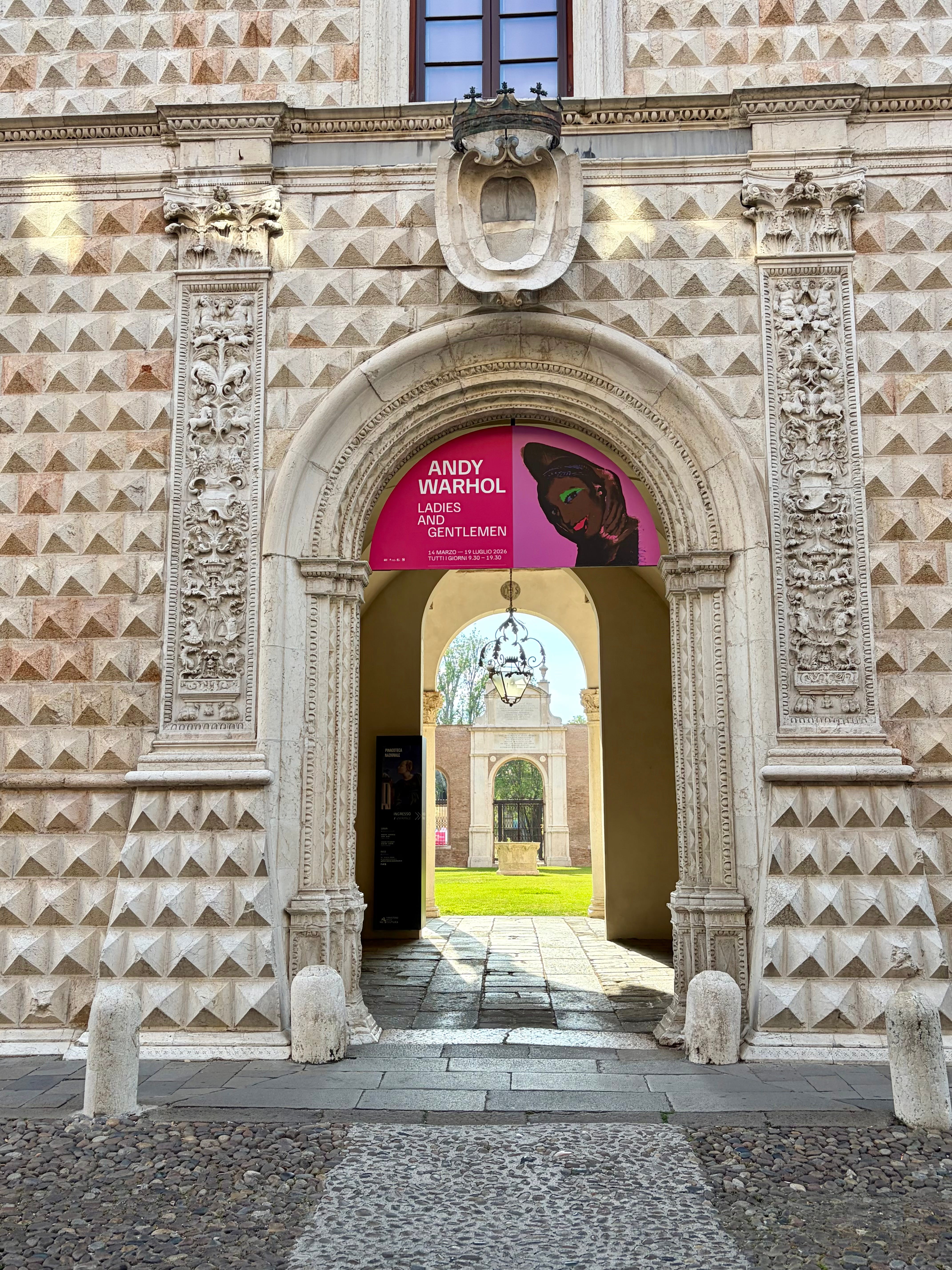
I have come from New York, but you can’t escape Andy Warhol—who has enjoyed a lot more than 15 minutes …
***
Huh.
***
A street is named after a composer—1583 to 1643—who was born here: Girolamo Frescobaldi. That is one of the most beautiful names in music.
***
A division of the University of Ferrara does not bother to translate the final word, which I regard as interesting: “Economia e Management.”
***
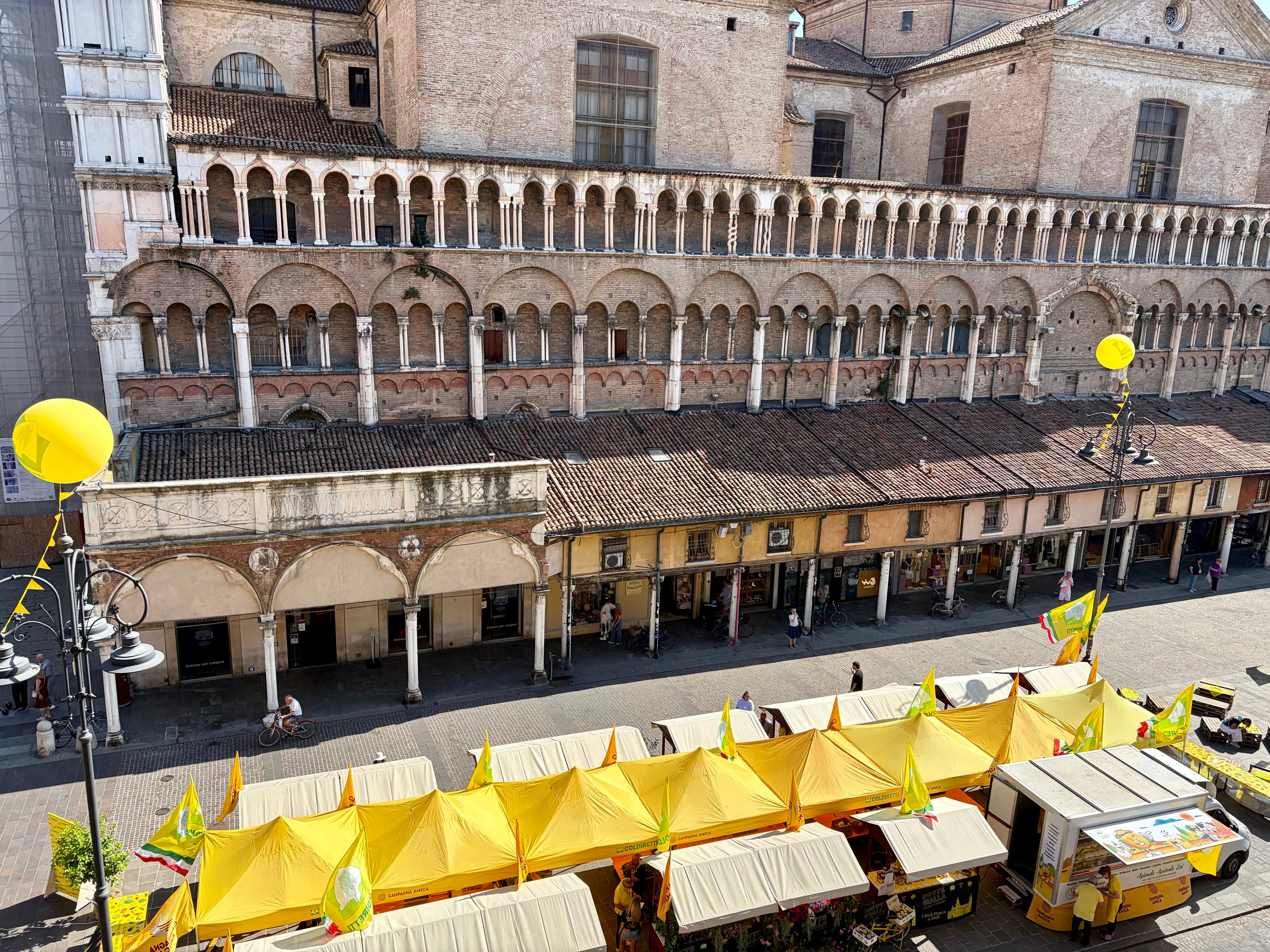
As in the Forster novel, I have a room with a view:
***
Years ago, I was petting one of Bill Buckley’s dogs—a King Charles spaniel—and he (Bill, not the dog) said, “Isn’t that the most beautiful dog in the history of dogs?”
I liked that formulation.
A few years later, I texted to a friend of mine, “I have just met the most beautiful girl in the history of girls.”
This became a thing between us. Every now and then—every year or two years or so—I’ll announce, “I have just met the most beautiful girl in the history of girls.”
He’ll sometimes say, “Remind me: who’s the current most beautiful girl in the history of girls?”
Well, today, she works in a Ferrara pizzeria.
***
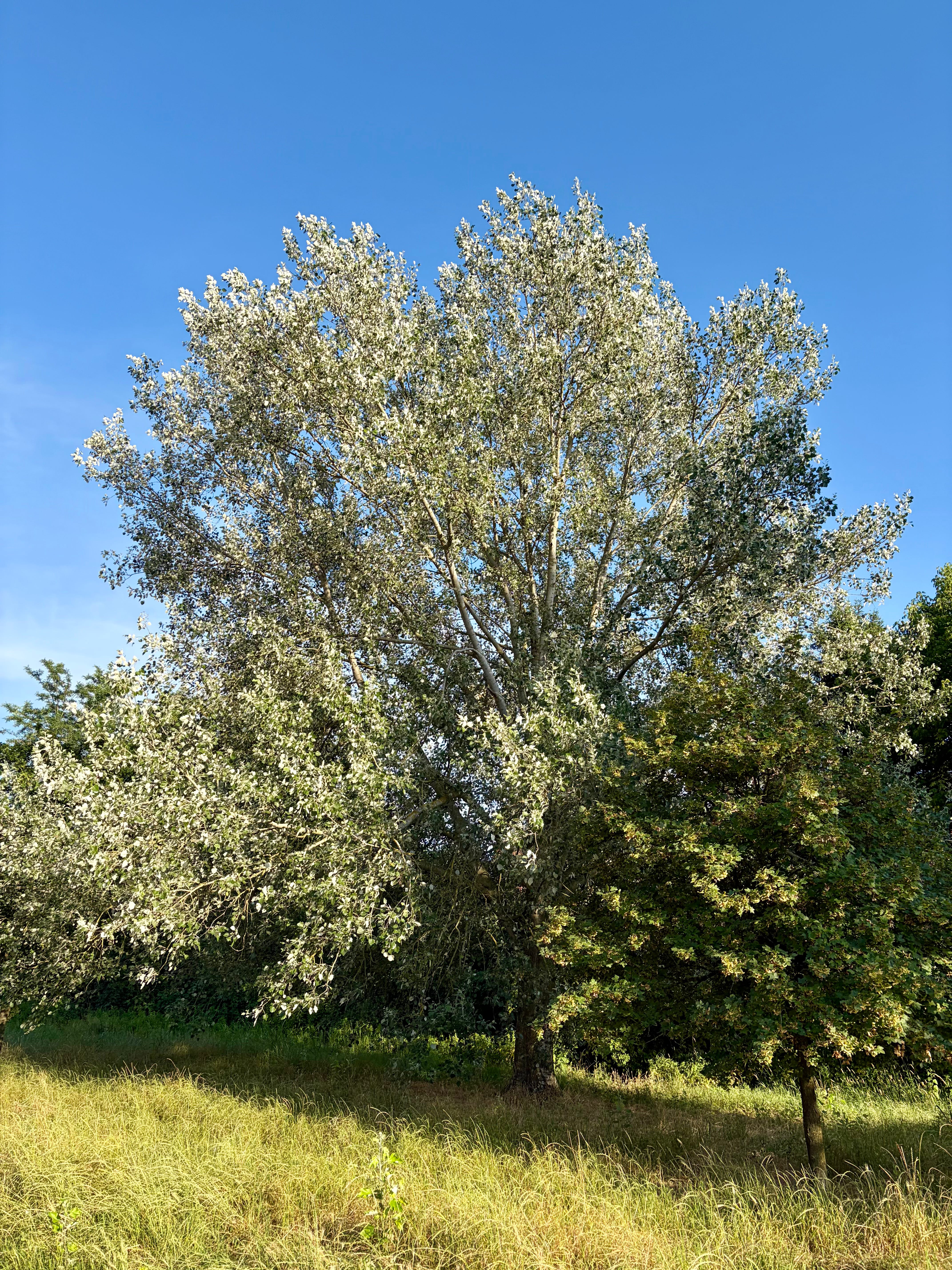
This white poplar isn’t bad either:
***
Very much not bad is a pistachio croissant—I have never had its like before.
Wow.
***
Thank you for joining me today, my friends. Forgive my abrupt changes of tone. My zig-zagging around. That’s par for the course in these parts (my column, I mean, not Italy).
I’d like to close this installment with a plaque I see at the Ferrara train station, as I am leaving for Ravenna.
At this station, on October 19, 1943, the Shoah train stopped with 1,023 Jews from Rome deported by the Nazis to be exterminated at Auschwitz.
May I make a confession to you (since it’s just us friends)? When I was younger, I thought these things were too much noted. I don’t think that anymore, at all.
The last line is poingant. I have a Ukrainain/Russian Jewish barber who 3 years ago told me of anti-semitic slurs his daughter had experienced at a rural middle class midwestern high school. At the time I found it hard to believe. In a more current time a friend's christian high school son was ostracized in a homeschool classics discussion group for not accepting their accusations against the Jews. He left the group. With all the history of anti-semitism, why do I still find it bizarre. The oddness of it argues for something supernatural.
“May I make a confession to you (since it’s just us friends)? When I was younger, I thought these things were too much noted. I don’t think that anymore, at all.”
Amen Brother Jay.