


Dear readers: The previous parts of this journal can be found at the following links: I, II, III, IV, V, VI.
Porto Recanati and Recanati are not to be confused. They are distinct towns. The first is on the coast—on the Adriatic—as “Porto” tells you, and the second is about eight miles inland. But high on the ridge in Recanati, you can certainly see the sea.
***
In Porto Recanati, there is a “Beniamino Gigli Arena.” Gigli (whose name means “lilies”) was a great tenor, who lived from 1890 to 1957. Was he from Porto Recanati? He was from Recanati—close enough.
And what’s playing at his arena? A poster in town tells me Jethro Tull, the British rock band formed in 1967.
I’ll be damned.
***
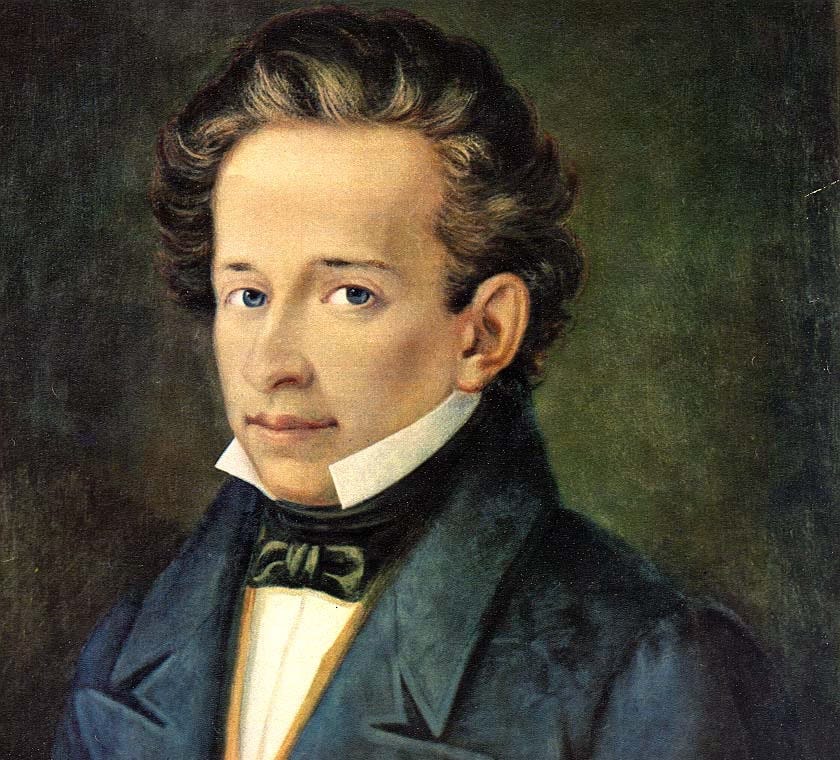
Recanati bills itself as the “città dell’Infinito”—the City of the Infinite. Why? Because it is the hometown, not just of Gigli, but also of Giacomo Leopardi, the great poet and philosopher (1798–1837). But what does that have to do with infinity? One moment, please.
There is a cult around Leopardi, but “cult” seems too harsh and pejorative a word. There is nothing kooky about this appreciation—and appreciation it is. A loving, grateful appreciation.
Leopardi was not just a literary and philosophical genius, he was also a beautiful soul. An engagement with his work elevates the engager.
Earlier in this journal, I quoted Dante Della Terza, the eminent literary scholar. I went to see him in 2018, when he was 94. Let me quote, once more, from the piece I wrote, after that visit:
Asked about his favorite writers, Della Terza makes a tender statement: “Leopardi was always very dear to me.” … “He was often physically ill, but he had a great lucid mind, a creative mind.”
One of Leopardi’s poems is “L’infinito,” “The Infinite.” It is something like the national poem. Schoolchildren memorize it. We have no equivalent in America. I myself memorized the poem a few years ago, and wrote about the experience here. I will quote just a little, from my article:
[Leopardi] composed “L’infinito” in 1819. It is beautiful simply at the level of words—sentences, if you like. It is also “deep,” philosophically. Something to puzzle over, if one chooses.
The poem is universal, reaching into the cosmos. (It’s called “L’infinito,” after all.) But it is also specific to Recanati, which is why so many of us come here. The poem begins, “Sempre caro mi fu quest’ermo colle”—“This lonely hill was always dear to me.” That hill is Mount Tabor, also known as “il colle dell’Infinito,” “The Hill of the Infinite.”
Here is a little monument, upon the hill, and pardon my awkward angle:
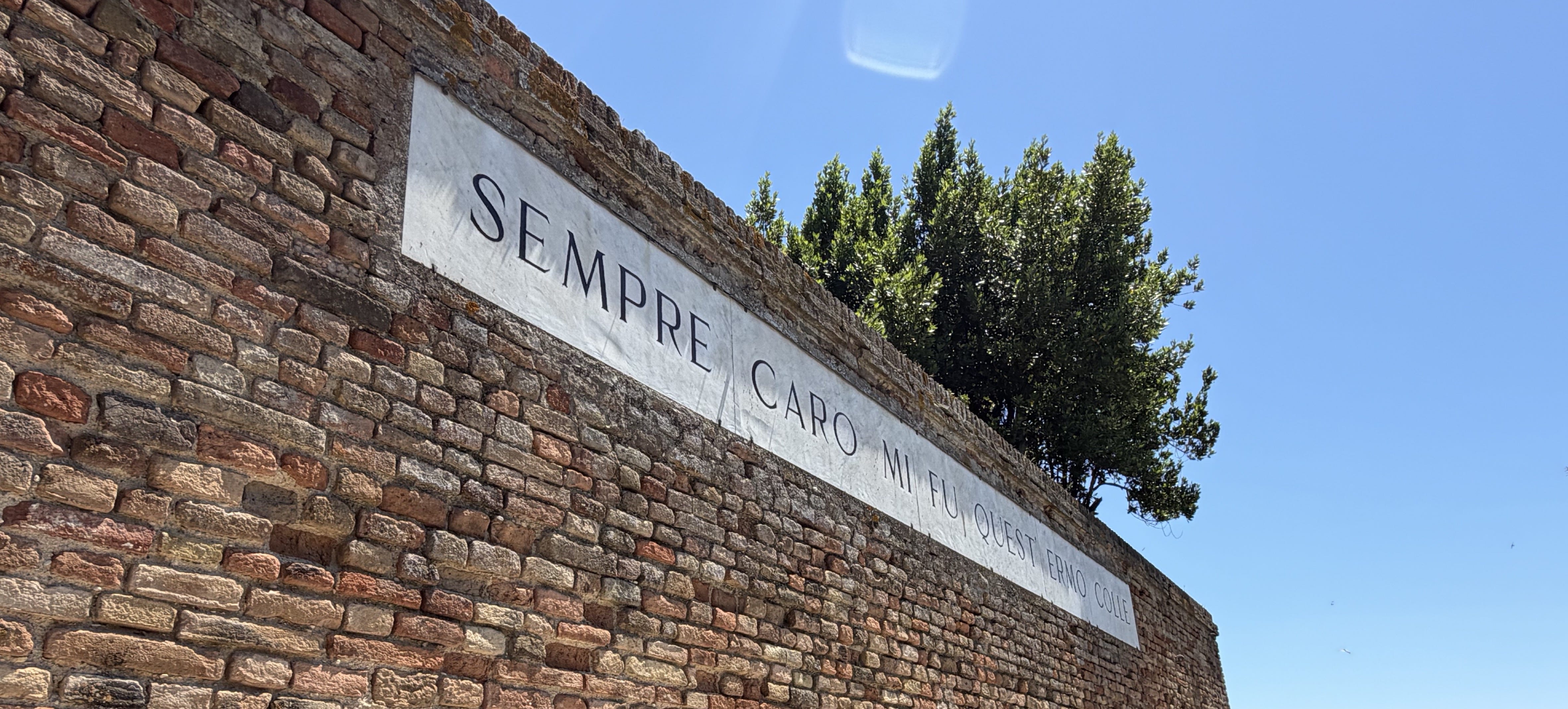
I will use a translation of Leopardi’s poem by Jonathan Galassi:
This lonely hill was always dear to me,
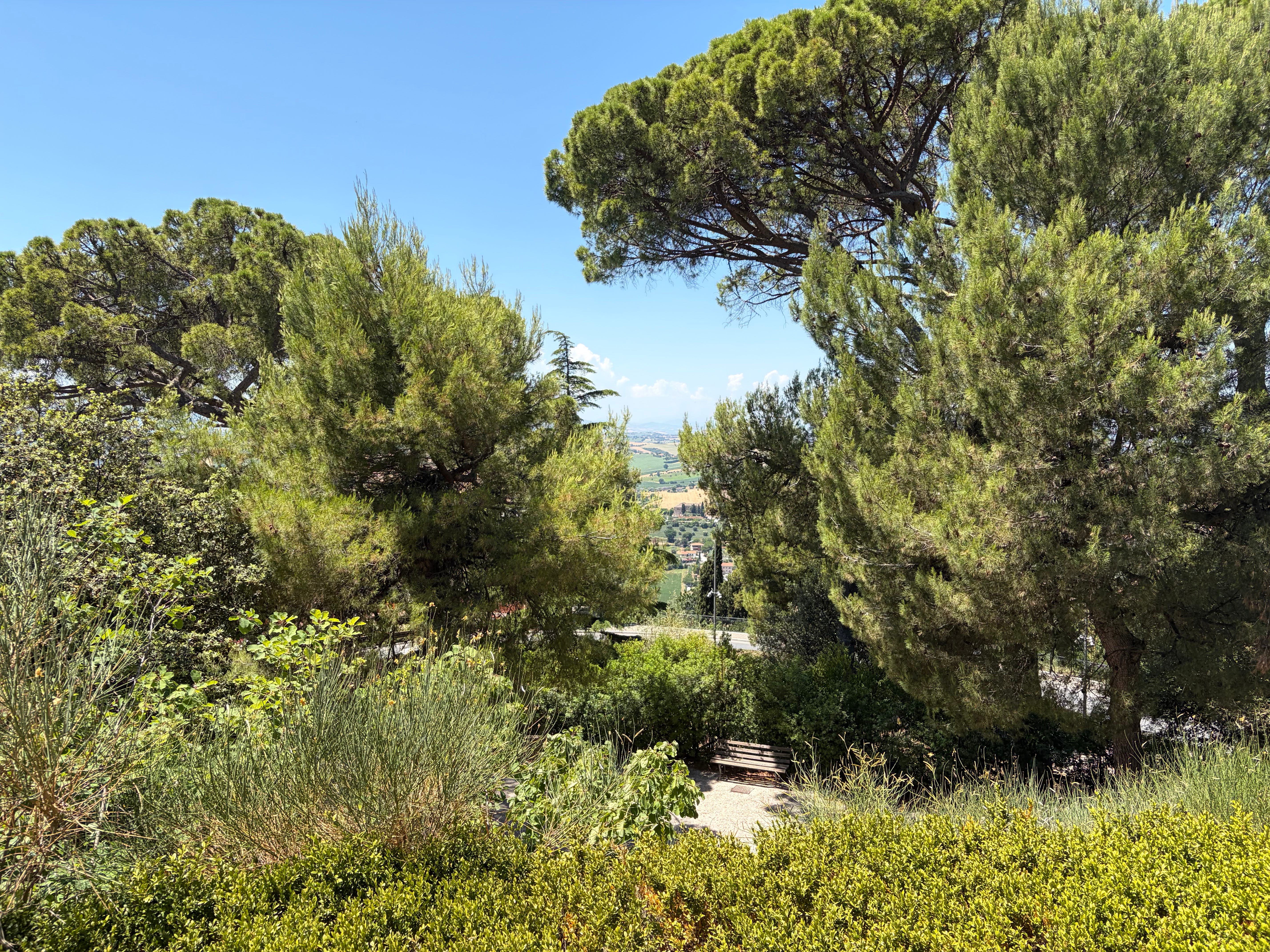
and this hedgerow, which cuts off the view
of so much of the last horizon.
You know, I can see it. Feel it. Something like this:
This is less obscured, less cut off:
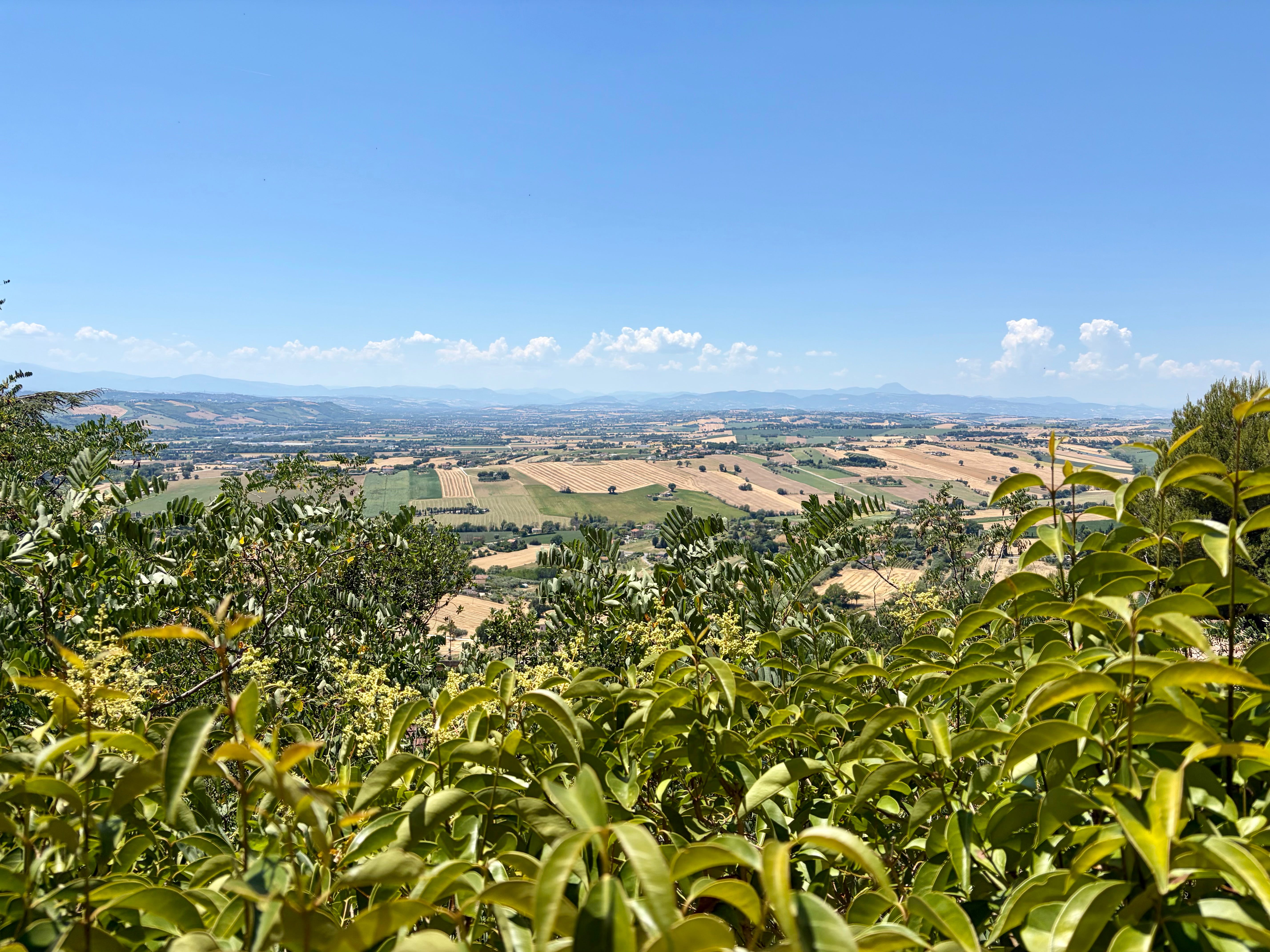
The poem continues,
But sitting here and gazing, I can see
beyond, in my mind’s eye, unending spaces,
and superhuman silences, and depthless calm,
till what I feel
is almost fear. And when I hear
the wind stir in these branches, I begin
comparing that endless stillness with this noise …
You know, I can hear the wind stirring in these branches, on this warm June day. I really can.
… and the eternal comes to mind,
and the dead seasons, and the present
living one, and how it sounds.
So my mind sinks in this immensity:
and foundering is sweet in such a sea.
A short poem, but deeply meaningful, to millions.
Do I recite the poem, upon Mount Tabor? You know I do (in Italian). There is no one around to hear me. In fact, I recite it three times.
The first time goes pretty well. The second time, less well (I am concentrating too hard). The third time is the charm.
I must say, it has been affecting to be here on the hillside. Usually, place means nothing to me, or not much, as I have detailed in many columns over the years.
Since 2002, I have worked every August at the Salzburg Festival, in Austria. For the first seven years, I stayed around the corner from the house that Mozart was born in. Since then, I have stayed around the corner from the house he grew up in. Both of these homes are museum-like and open to the public.
You know, I have never been in either one of them? I have no interest in the tables and chairs and whatnot. They have nothing to do with Mozart, really, who is in his music.
I have been to Richard Strauss’s house in Garmisch, shown around by his grandson. There was nothing of Strauss in it, for me.
I have given a talk on Bruckner in Saint Florian itself, where the composer lived and worked. The place had no effect on me whatsoever. Bruckner is way, way beyond that.
And don’t get me started on the Church of the Holy Sepulcher in Jerusalem. Really, you don’t want to get me started.
But to be in Recanati, setting (of a sort) of “L’infinito”? A beautiful experience.
***
A couple is having wedding pictures taken in the Park of the Infinite (along the hillside). Good choice, venue-wise.
***
You know what the gelaterie in Italy have that they did not have when I was a student, back in ’84? Vegan ice cream. I bet it’s good, though I don’t try it.
***
Another difference between now and ’84? You can take as many pictures as you want, without worrying about allotting your film. You had to think carefully about the pictures you wanted to take. Now, you just click click click, ad infinitum.
***
A further difference? No wrestling with maps—physical maps. Now you can gripe at your phone, that miracle.
***
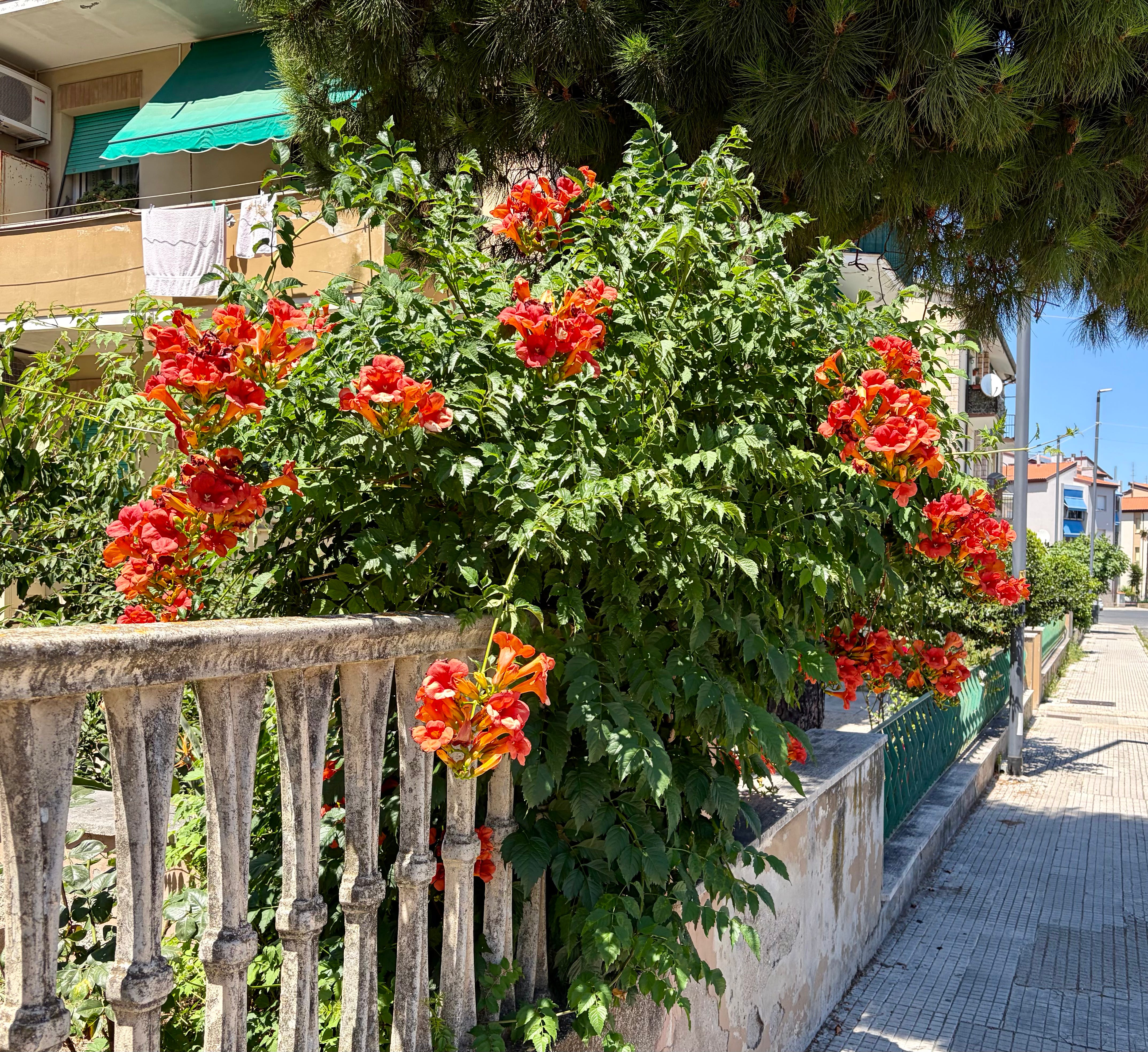
Here are some “creeping trumpets,” creeping beautifully:
***
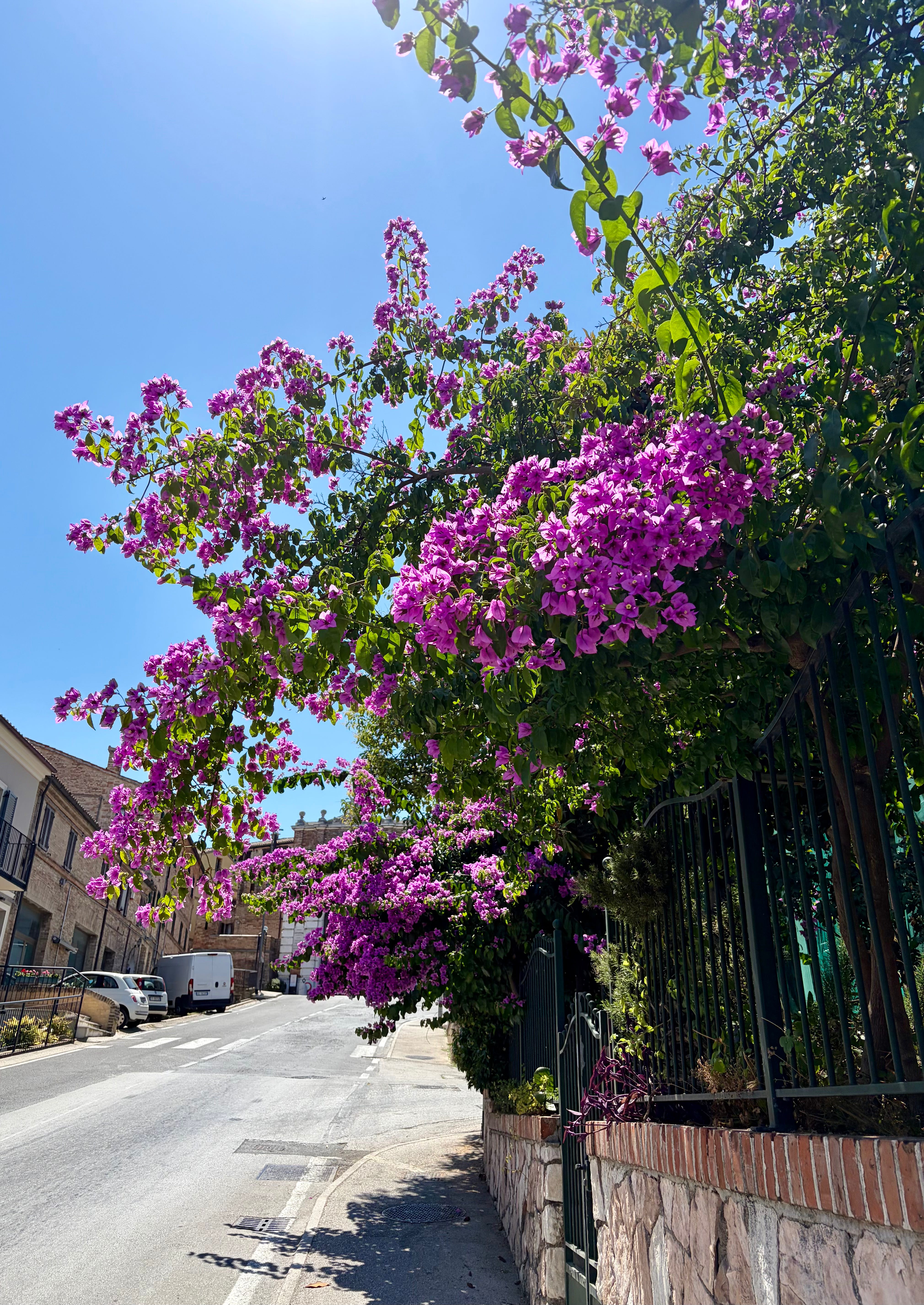
Bougainvillea don’t never disappoint, wherever it appears:
***
I see the name—the male first name—“Virginio.” It occurs to me: in our English culture, we have “Virginia,” but not its male equivalent. Curious.
***
There is a street named for Aldo Moro. And the sight of his name gives me something like a painful jab. I remember this drama, this nightmare, very well. I was 14, and getting ever more engrossed in the affairs of the world.
Moro had been prime minister for five terms, in the 1960s and ’70s. In 1978, he was kidnapped by the Red Brigades, the terror group, and killed after 55 days.
The Pope, Paul VI, had offered himself in exchange for Moro. (They were good friends.)
Moro wrote a farewell letter to his wife, saying, “They have told me that they are going to kill me in a little while, I kiss you for the last time.”
***
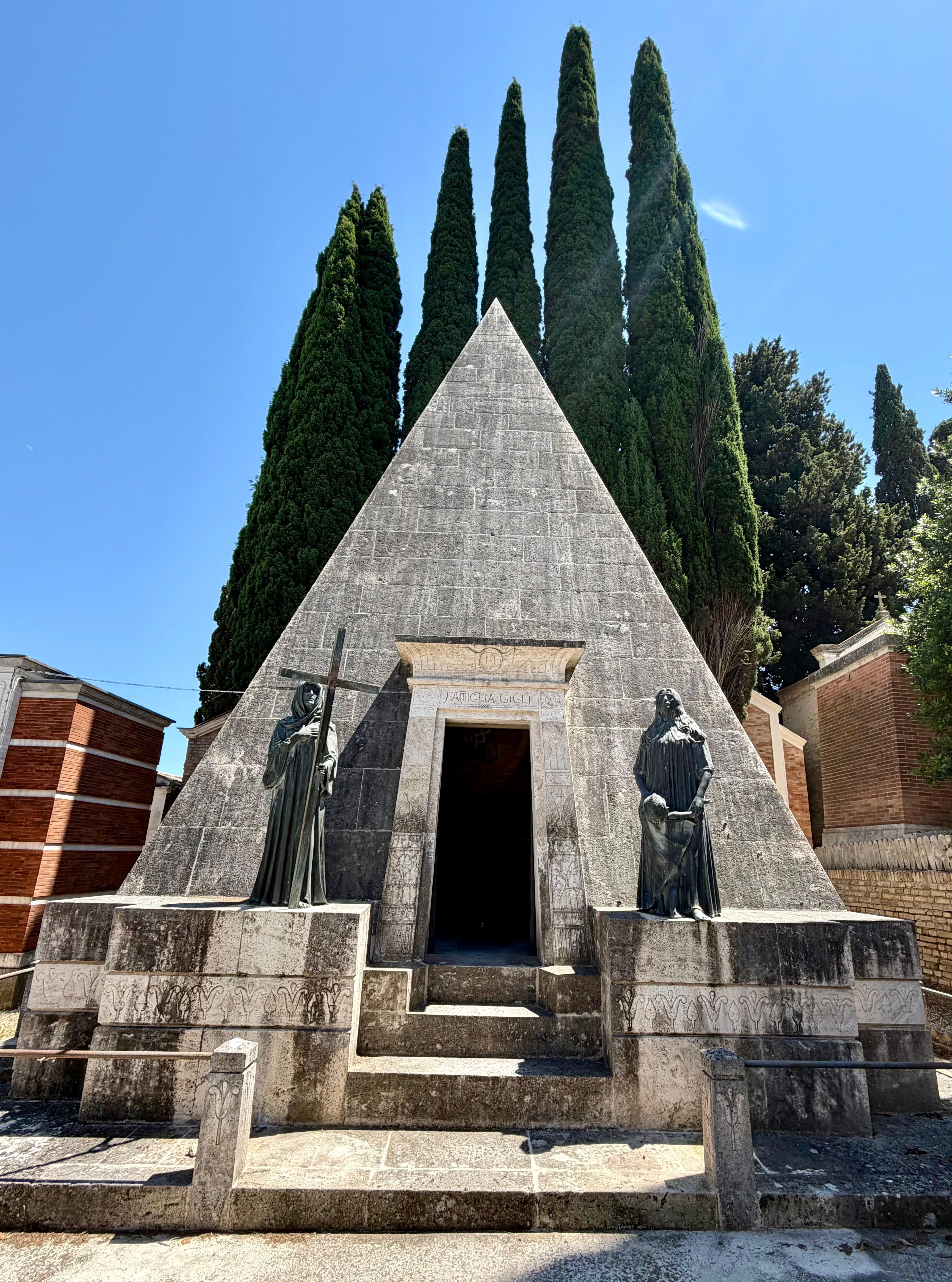
Here is something to know about Beniamino Gigli: he is the kind of great who is esteemed by other greats. He is a model for all other tenors. Pavarotti, for instance, revered him.
The tomb of Gigli, here in Recanati:
Inside:
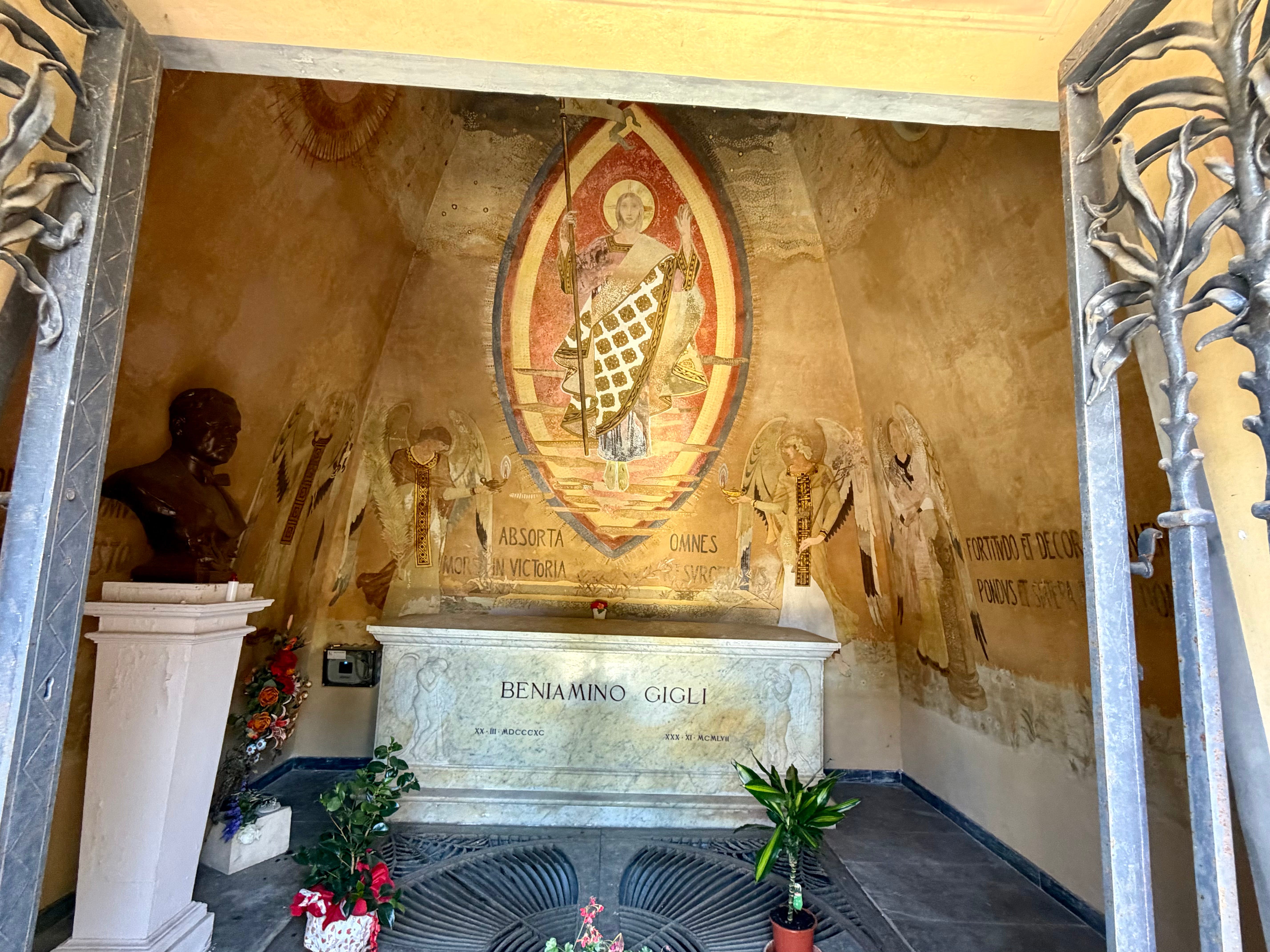
There is a guestbook, signed by travelers from all over, and I duly add my name.
***
Piazza Giacomo Leopardi is really a fine square, the kind the poet deserves. Check out this tower, built long before Leopardi’s time—in the 1100s:
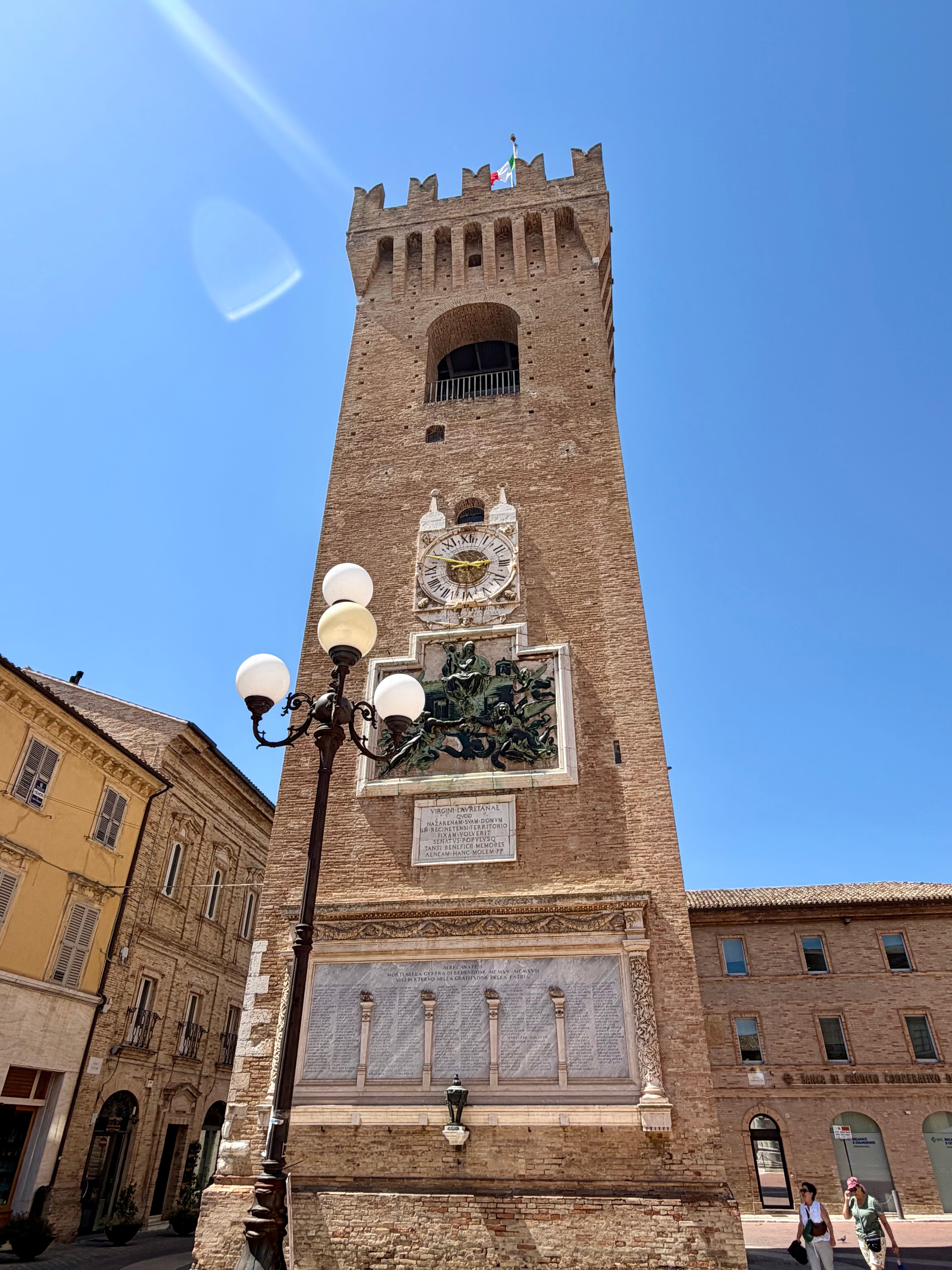
The tower is called the “Torre del Borgo.” I think of a pun, so help me: “That’s a torre.” (In the 1950s, Dean Martin popularized the song “That’s Amore.”)
***
The poet, in the center of his square:
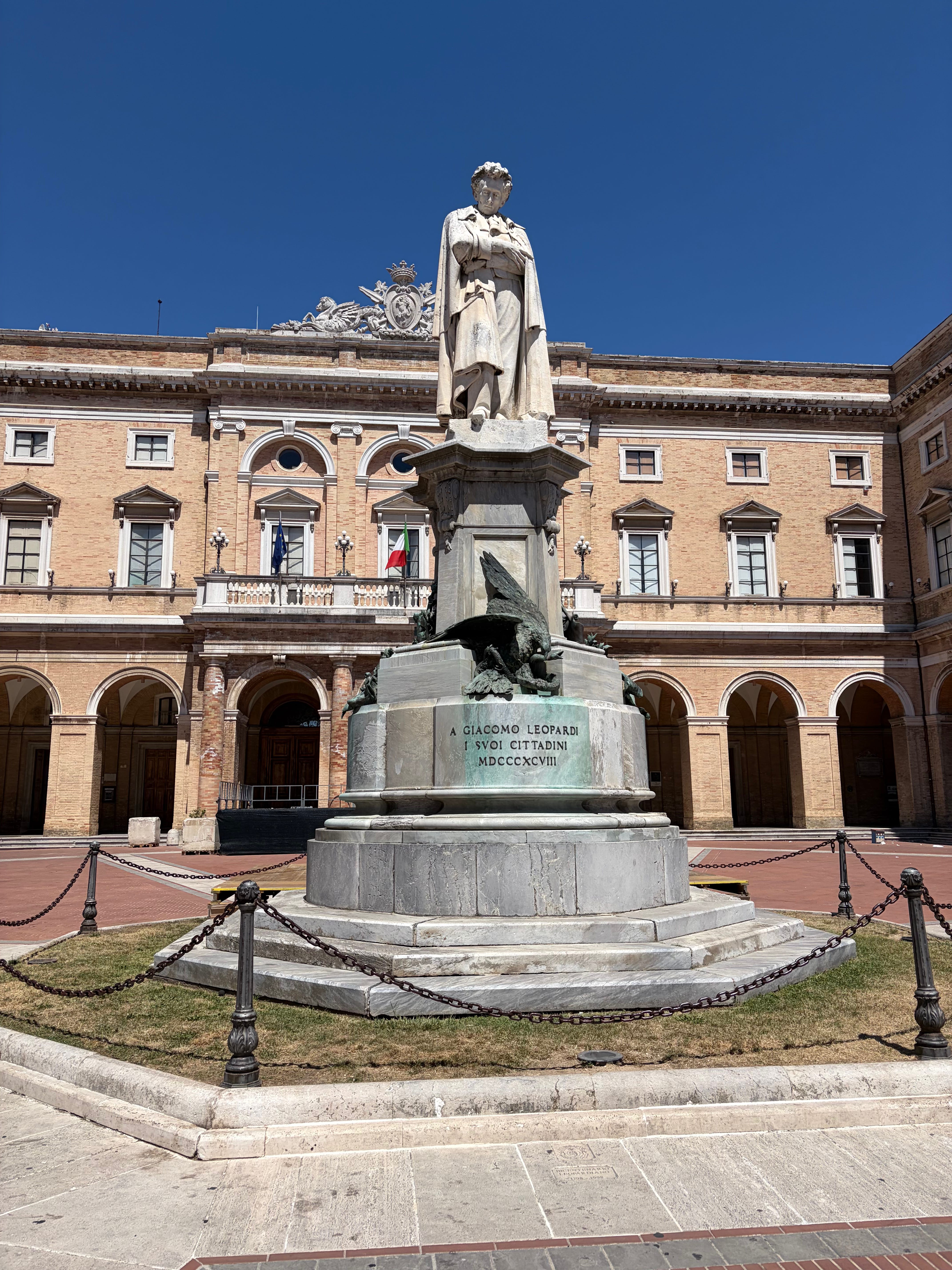
Oh, I have so much to tell you, but I don’t want to weary you, and we have had enough for one day, I’m sure. Thanks for reading and subscribing. Back at you soon.
That was a good pun (yes, I know some would consider that it an oxymoron). Forty-some years ago I was walking past a hotel restaurant one morning. A young lady was playing a woodwind instrument. I said to myself "Nothing goes better with breakfast than a little fresh flute." Whenever I tell the story the reaction ranges from confusion to I guess you had to be there. Safe travels.
Jethro Tull (died 1741) was an early agronomist and the inventor of the seed drill.