


Dear readers: The previous parts of this journal can be found at the following links: I, II, III, IV, V, VI, VII, VIII, VIX.
When I was a student, I lived for a bit in Trastevere, a neighborhood here in Rome. Its name comes from the Latin meaning “beyond the Tiber.” I lived on supplì, sold by street vendors. These things come from the gods. How to describe them? “Rice ball” does not do them justice. In any event, they are an inspired concoction.
I don’t see any street vendors today. (Maybe I’m on the wrong streets.) I have a supplì at a sidewalk restaurant, however. It’s okay—overcooked and a bit hard.
A while back, I had a very good supplì in Ancona, though it’s Rome that’s known for this food.
***
My waitress at the sidewalk restaurant is Albanian, and I show off a little. I tell her that I once interviewed “King Leka,” as his supporters called him—the pretender to the Albanian throne. I then tell her that I wrote extensively about the dictator Hoxha and his family.
She is gobsmacked (I blush to say). Her jaw is almost to the ground. Albania is a blank spot, for most.
***
I see little plaques or cubes on the sidewalks that were not here when I was a student, more than 40 years ago: Stolpersteine. That’s the German word for “stumbling blocks,” and these blocks commemorate Jews who were murdered or persecuted by the Nazis and their allies. I have seen these blocks all over Europe. I first saw them in Salzburg.
***
Earlier in this journal, I had occasion to mention Henry Dunant, the primary founder of the Red Cross. He won, or shared, the first Nobel Peace Prize ever conferred, in 1901. Well, there is a piazzale—a plaza, or square, or open space—named for him in this city: Piazzale Enrico Dunant. I like how the Italians italianize first names.
There is also Via Beniamino Franklin …
***
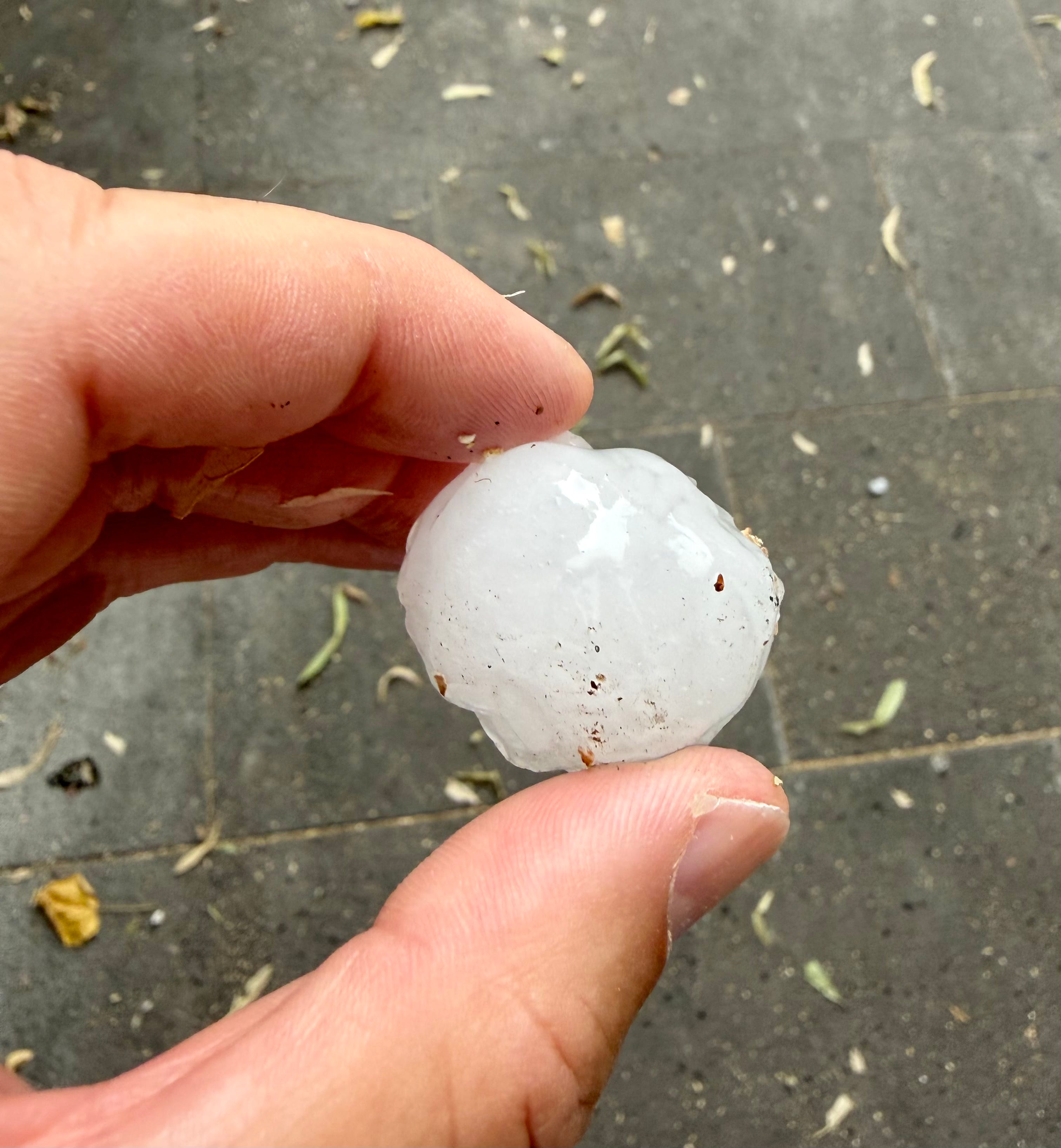
Today, I learn a new word: grandinata. That’s Italian for “hailstorm.” And we have one helluva hailstorm, with those suckers comin’ down like golf balls, denting cars and making a terrible racket.
I have exaggerated the size of these suckers, but not by much:
***
Over the years, I have eaten many, many pieces of Sachertorte. I don’t especially like Sachertorte—it’s dry—but I have spent a fair amount of time in Austria, and when in Rome …
The worst piece of Sachertorte I have ever had in my life was in the place where it should be the best: the Hotel Sacher in Vienna. That thing was like sawdust.
But here in Rome? I have some Sachertorte gelato, and holy moly—never had anything more delicious.
There is also a flavor called “ginger-cinnamon.” Three cheers.
***
A young woman at this particular gelateria tells me that I have good Italian pronunciation, “for an American.” I think of a saying I learned long ago: “For a fat girl, you don’t sweat much.”
***
Rome does a much, much better job of providing public bathrooms than New York does. Then again, New York is the worst offender imaginable in this regard. (I wrote an article about this, here.)
***
Though it’s always swarmed, the Trevi Fountain is beautiful. (For that reason, it’s swarmed.) The fountain boasts a majestic beauty.
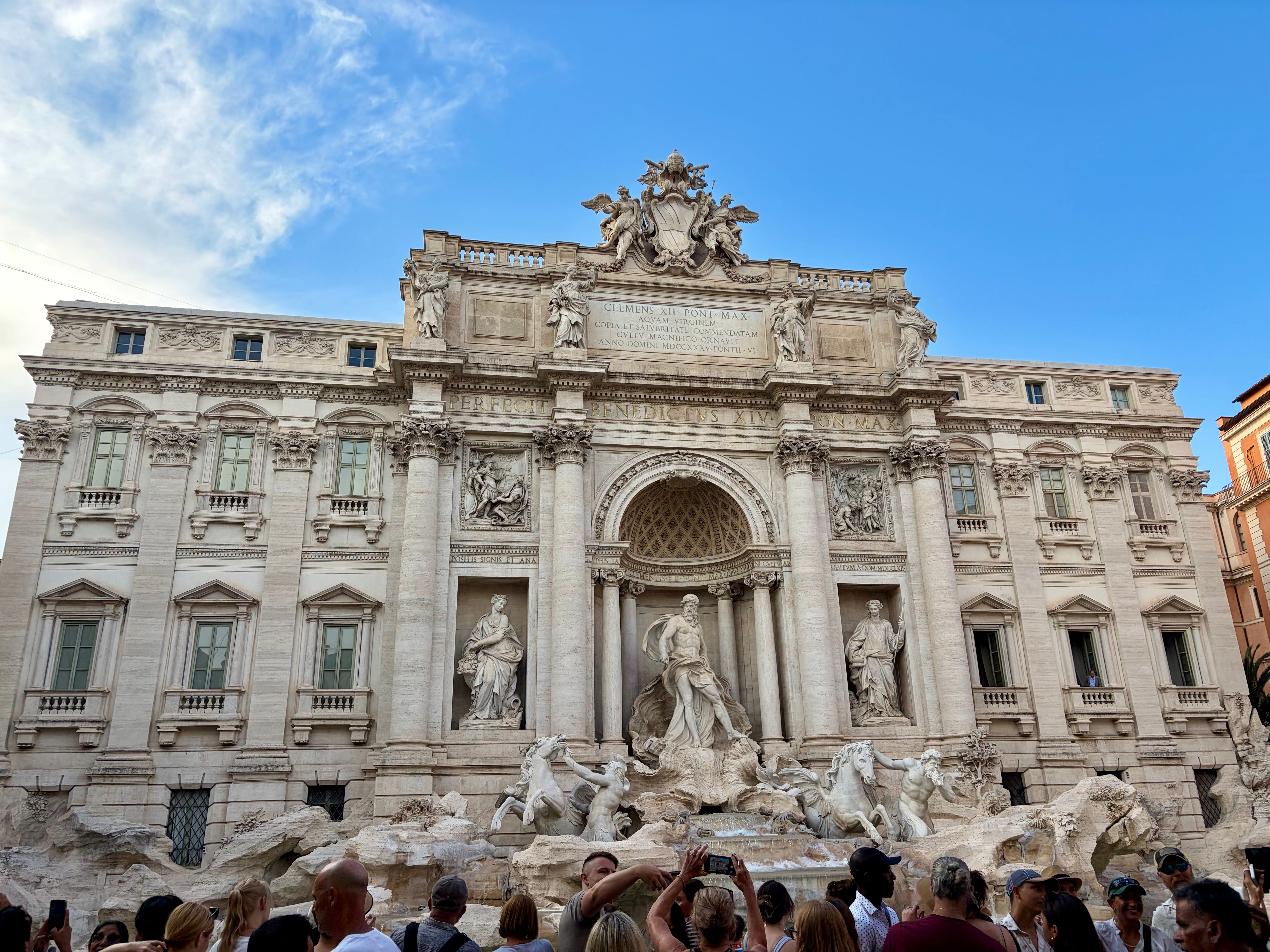
I have a memory from 1982—two years before I lived here as a college student. It relates to the World Cup, an event that’s going on as we speak. I happened to be here in Rome 44 years ago, when Italy won the Cup. And the people, in their excitement—their sheer jubilation—jumped into the Trevi Fountain.
Not sure you could do that now …
***
The “garden” of the Villa Borghese—a big ol’ park—is a thing of beauty. It is utterly beautiful, in its planning and execution. Covers about 200 acres. Can I give you a smidge, just a few blooms?
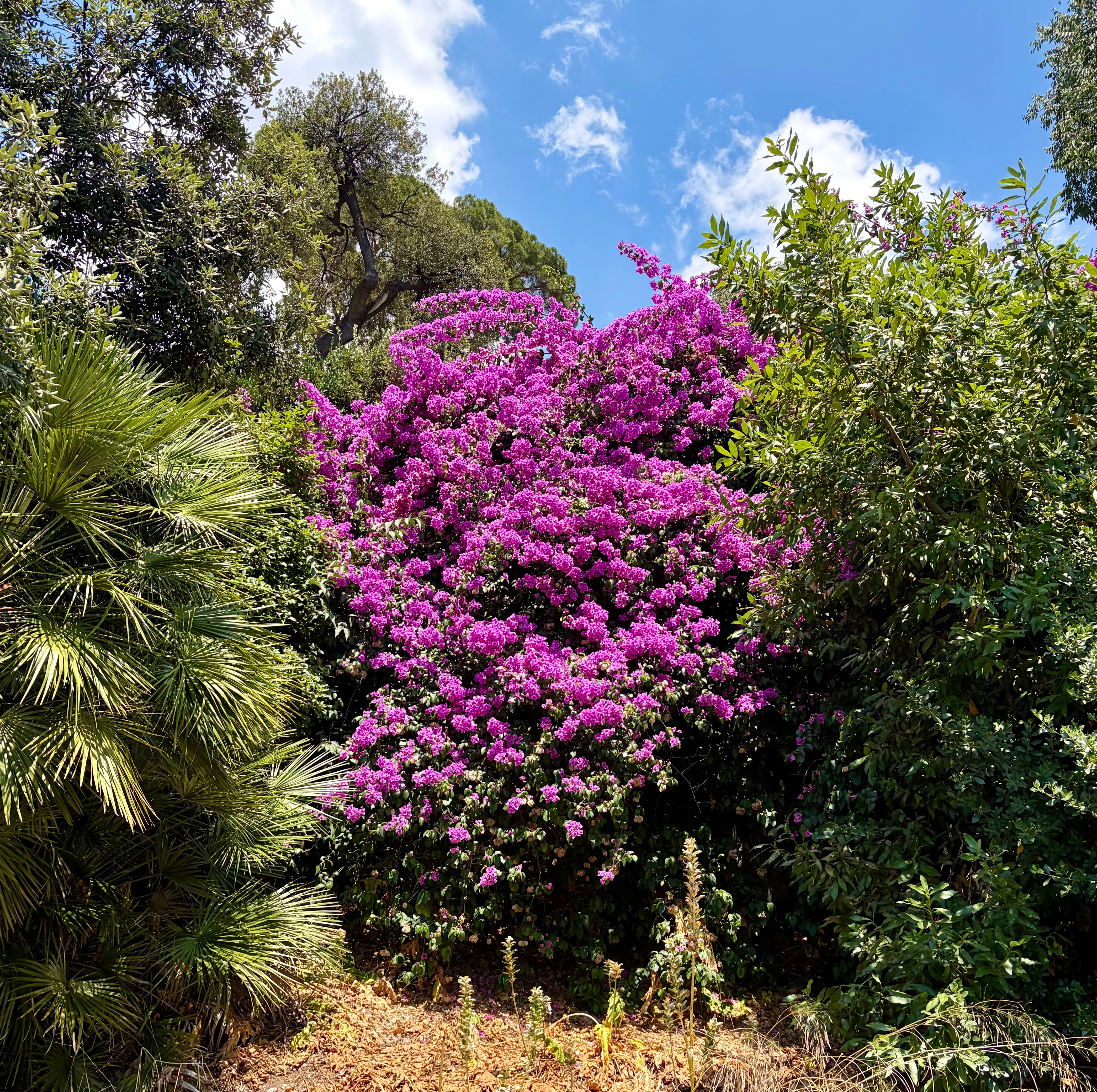
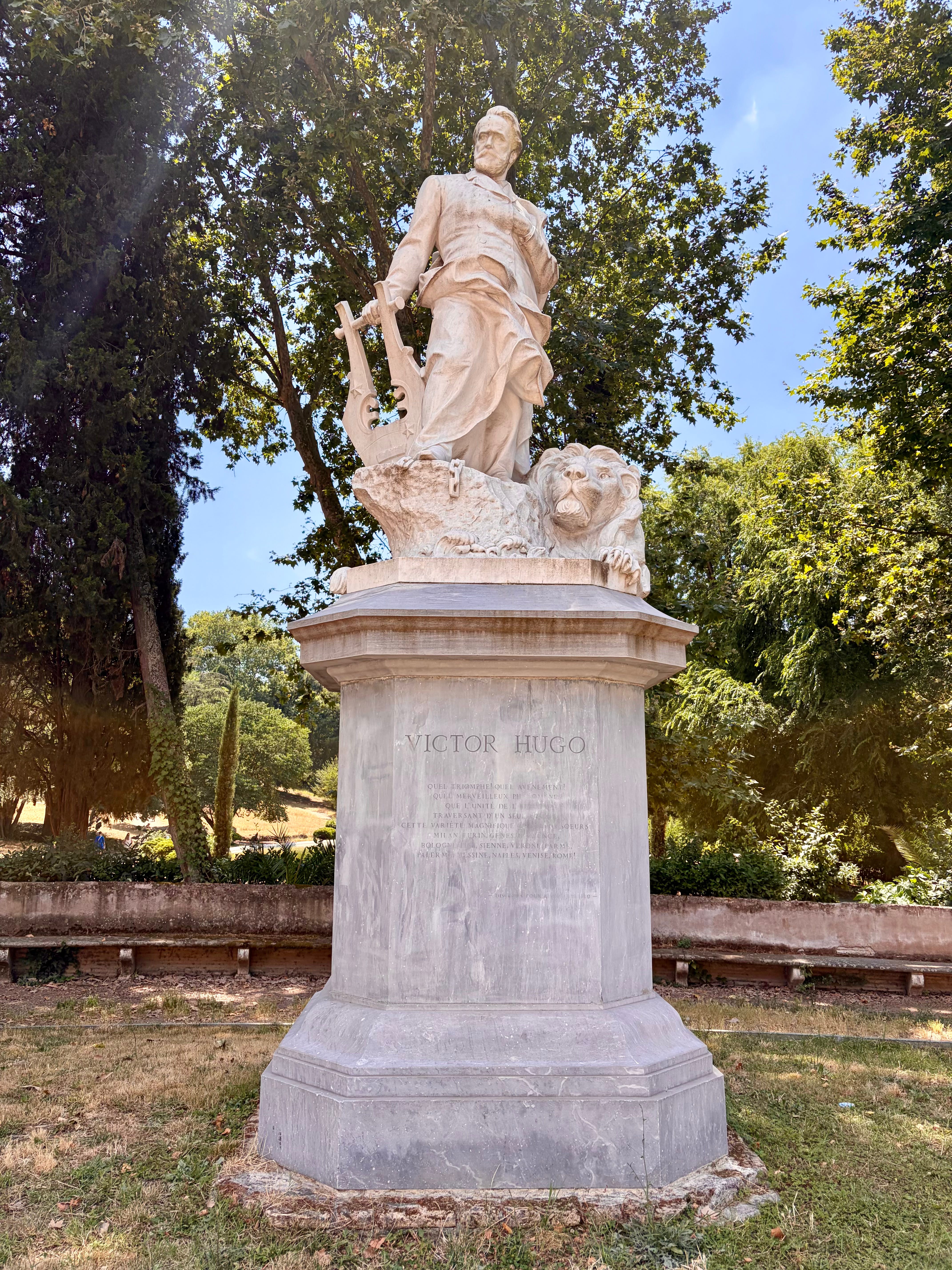
I would also like to give you Victor Hugo, because he was a great writer, and because he was a great friend of Italian unification, which is why he is put on a pedestal here:
***
The Via Veneto is a swanky, swanky street. It was immortalized, or at least celebrated, by Fellini in his 1960 film, La dolce vita. There is a plaque on the street thanking Fellini for making the Via Veneto the “theater” of his movie.
***
On this street, you will find the U.S. embassy, and I’d like to give you a memory. During the Reagan years, Millicent Fenwick was our ambassador to the U.N.’s Food and Agriculture Organization, which is based in Rome. She was in her seventies, and a legend: fashion model, Vogue editor, congresswoman (from New Jersey) …
An individual and an iconoclast, she smoked a pipe.
Her life had many privileges, but at the same time it was very hard. In 1915, her parents were aboard the Lusitania (sunk by the Germans). Her father survived, but her mother was killed. Millicent was five. Her father later became ambassador to Spain.
Anyway, I secured an appointment to see Ambassador Fenwick when I was a student here. I wanted to talk with her about life in Washington. I was going to be in that city soon, for a government-and-politics program that included an internship. I wound up interning in the office of Senator Bob Dole.
It was at the U.S. embassy that Ambassador Fenwick had her office. One thing I remember about our meeting: the pipe in its tray on her desk.
***
Back at my hotel, I’m talking with Luca, who’s presiding over the establishment. I tell him the following:
“By the time I moved to New York in the 1990s, there were virtually no Italians working in Italian restaurants. They had all moved out and up. Working in those restaurants were Hispanics and Eastern Europeans. And they were working their tails off, of course, doing a very good job.
“Here in Rome, in 2026 … there are no Italians working in Italian restaurants. They seem to be all South Asians—working their tails off, of course, and doing a very good job.”
“It’s true,” he says. “It’s true.”
Immigration and employment are big issues in Italy, and they are linked. Lots of young Italians go abroad to work. To be continued …
***
I meet a young Roman who is half Italian, half Chinese. Stunning woman, advantaged by that combo.
***
You want intricacy? Feast your eyes on this:
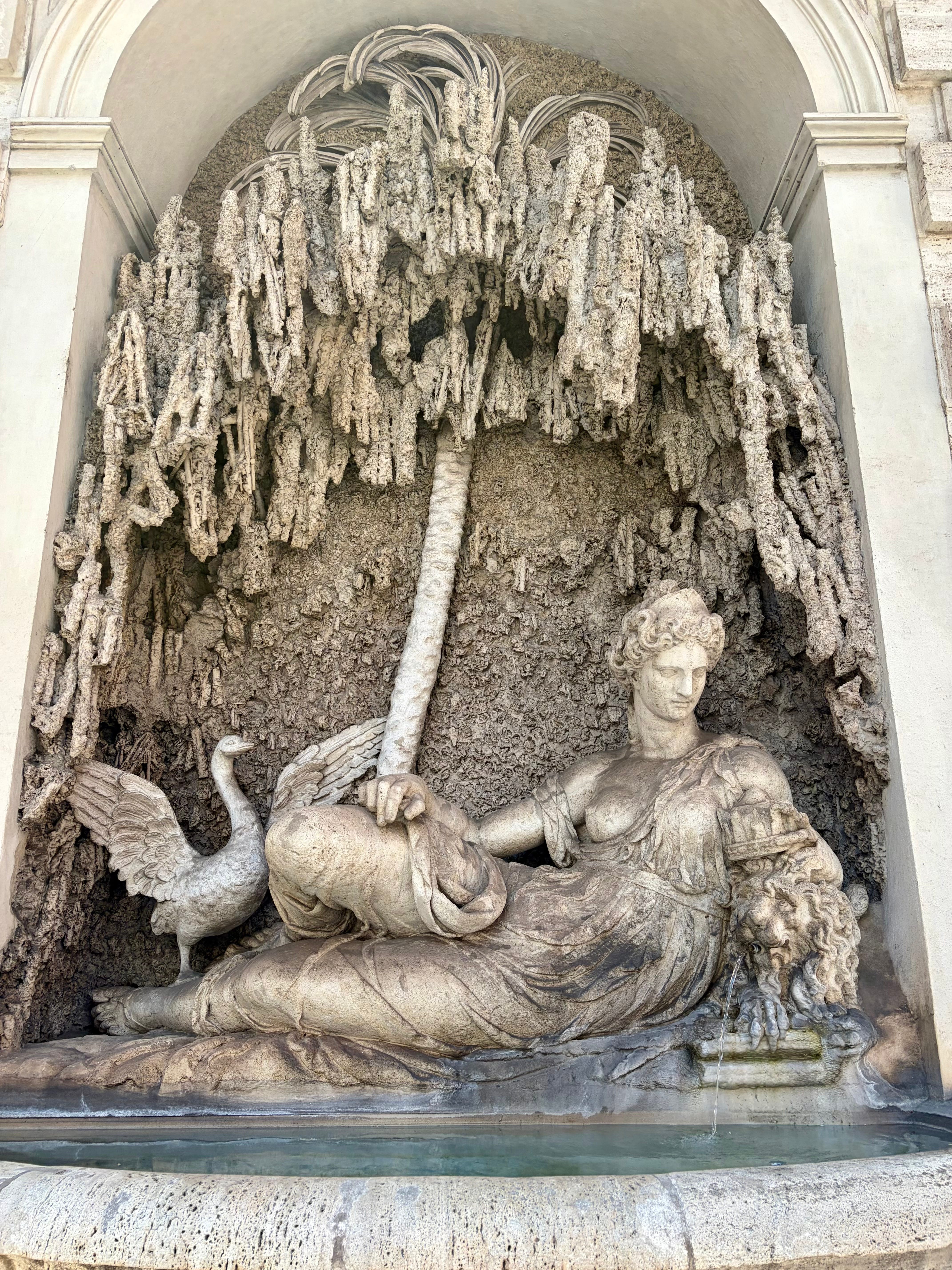
(That’s the goddess Juno, playing her part in the “Four Fountains.”)
***
Guys, Frida and Diego seem to be everywhere I go (Frida Kahlo and Diego Rivera, the Mexican painters). In May, I reviewed an opera about them. Let me ask you: Are they ubiquitous because they are good, artistically? Or does it mainly relate to politics, myth, and fashion?
***
I’m in a gelateria at about 11 (in the morning). Conversing with the guy behind the counter, I say, “How’s business?” What I mean is: How has business been lately? Has it been a good year, or a good summer? Thinking more narrowly or immediately, he answers, “Well, you’re my first customer of the day.”
Yeah, that sounds like me.
***
Cities sometimes get nicknames: “City of Lights” (Paris). “Eternal City” (Rome). These names can be kind of dorky. But, you know? There is an air, a feeling, of eternality about Rome.
Talk to you soon, and thanks so much for joining me.
"Or does it mainly relate to politics, myth, and fashion?"
This.
Re Italian restaurants, I have a friend from El Salvador who was head chef at a Sicilian restaurant in New York twenty years ago. He drives a truck for a construction company now.
Sachertorte gelato -- sounds amazing. Thanks for the recommendation!