


Dear readers: The previous parts of this journal can be found at the following links: I, II, III, IV, V, VI, VII, VIII, VIX, X, XI, XII, XIII.
A hundred miles south of Naples is Maratea, on the western coast of the Italian peninsula. It’s known as the “Pearl of the Tyrrhenian.” It is listed in a bible of Italian travel: I Borghi più belli d’Italia, or “The Most Beautiful Villages in Italy.”
About this “Tyrrhenian” business: Habitually, people like me speak of the “Adriatic” side of the peninsula and the “Mediterranean” side. But that is a mistake. At least it’s an inconsistency.
The Adriatic Sea is part of the Mediterranean. A branch of it, if you will. The Tyrrhenian Sea is part of the Mediterranean. Further up is the Ligurian Sea.
But all of these seas are Mediterranean.
I find it a little confusing, to be honest …
***
When it comes to places, there are different types of beauty. There are different types of beauty when it comes to people, too. Maratea is hard to beat. Is it more beautiful than, say, deserts in New Mexico or Arizona?
Again, apples and oranges. We are lucky to have all types of beauty.
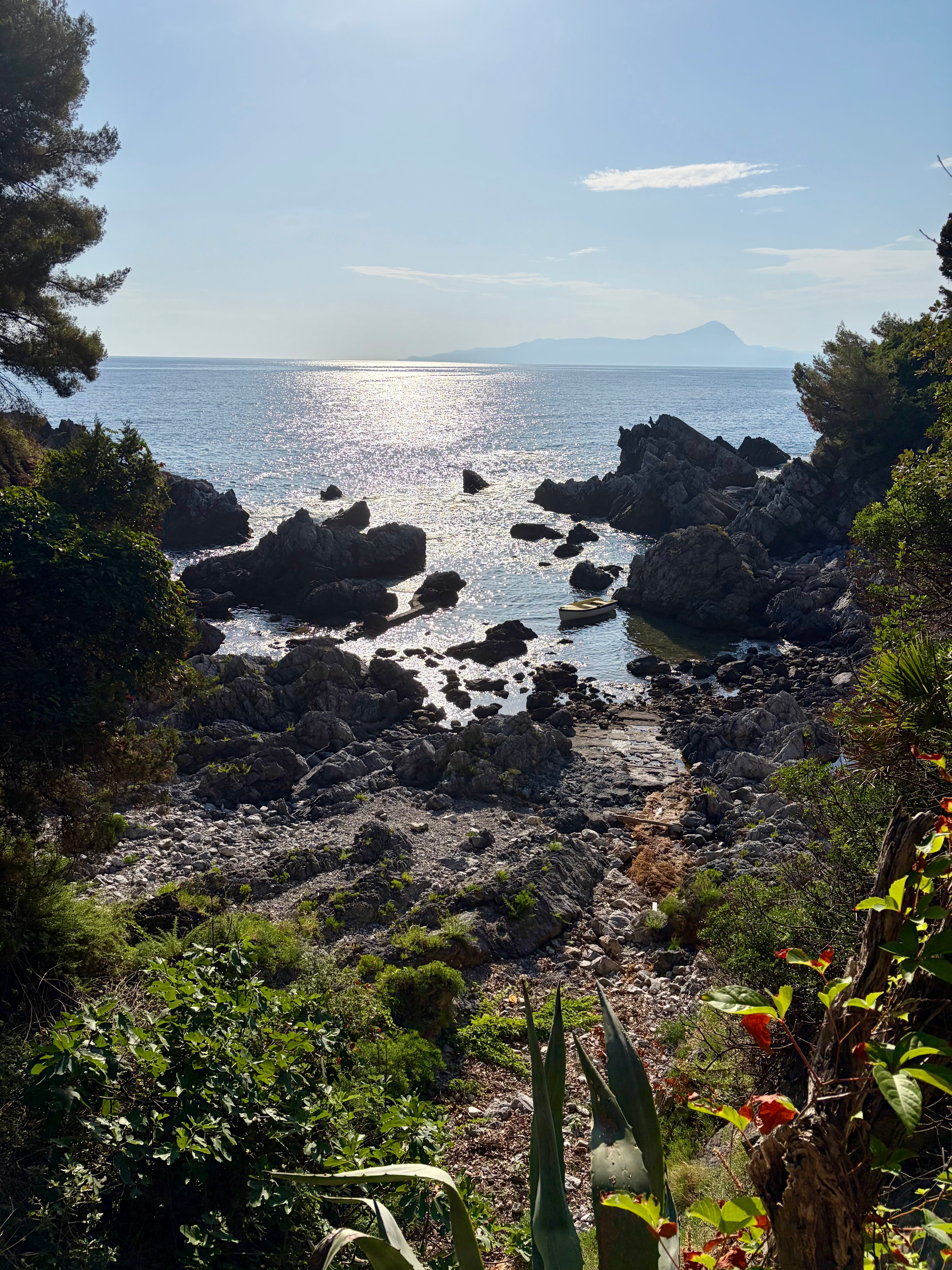
Let me show you a cove in Maratea:
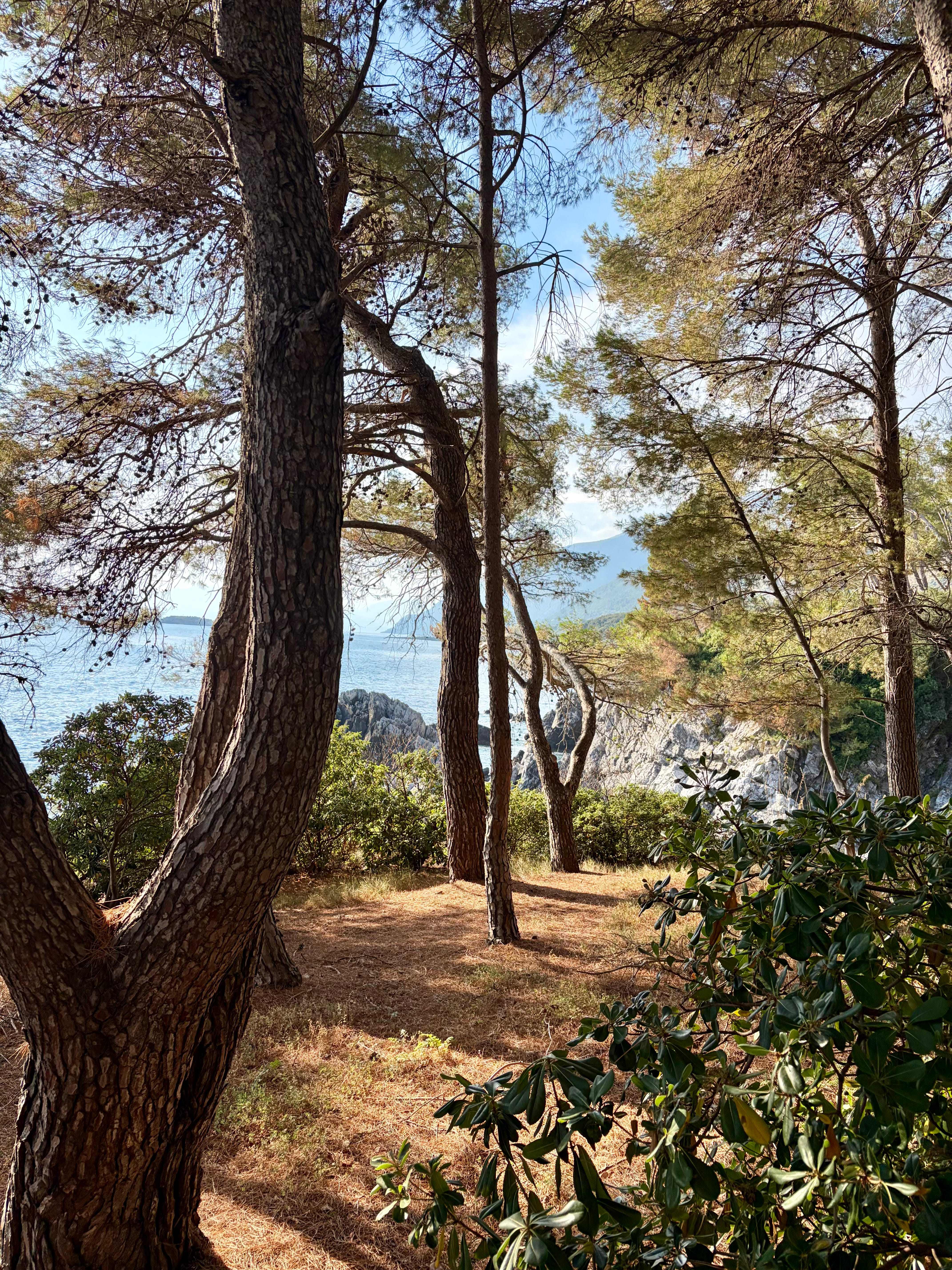
Here’s a shot through the woods:
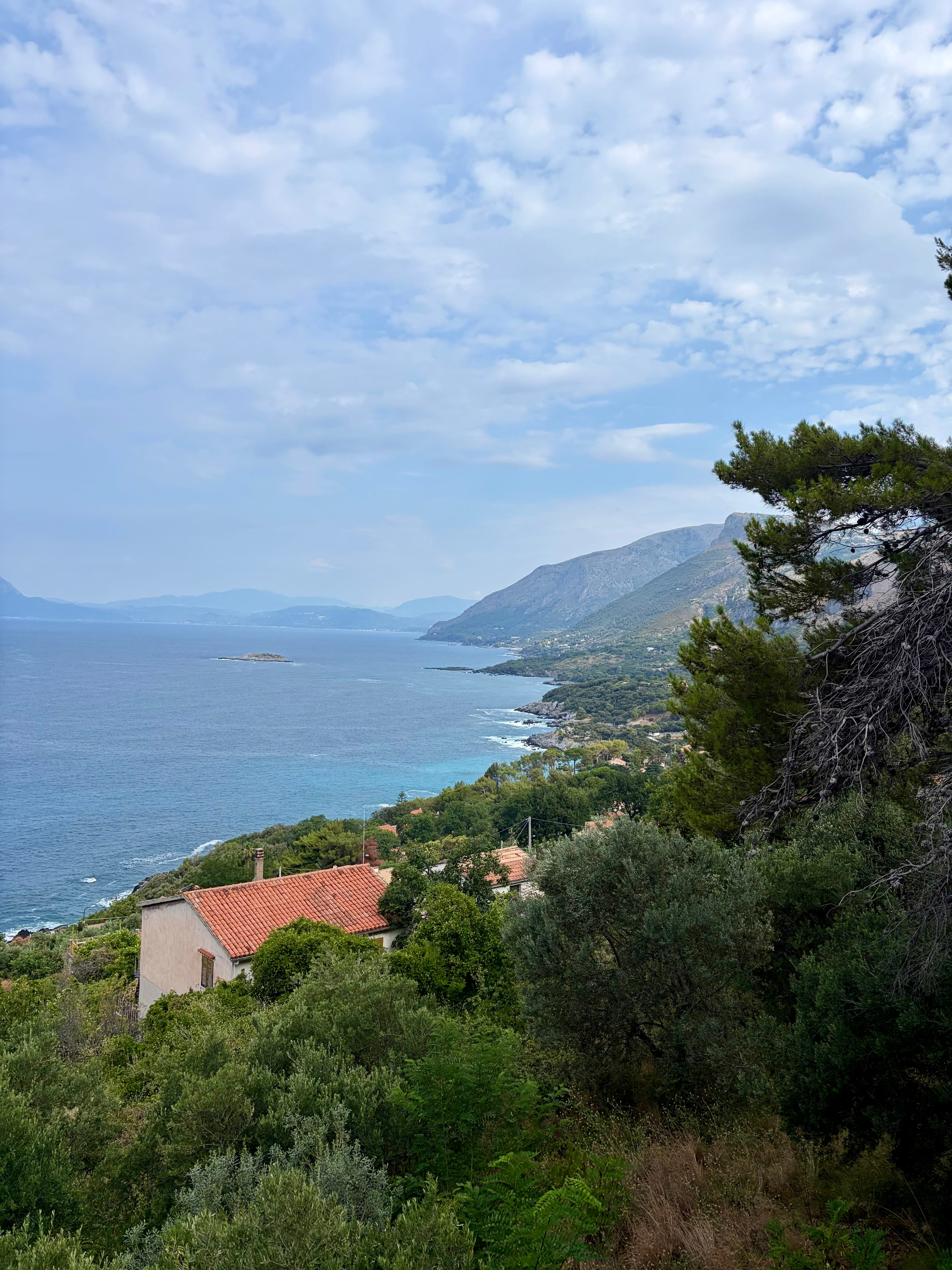
Maybe you can take one more? Broader?
***
A poem comes to mind:
Kennst du das Land, wo die Zitronen blühn,
Im dunklen Laub die Gold-Orangen glühn …?
Which is to say,
Do you know the land where lemon trees blossom,
where golden oranges glow amid dark leaves …?
The words are by Goethe, that Italy-besotted German. I know this poem, not from poetry, but from song (the way I know most poetry). Many composers have set it, including Hugo Wolf, indelibly.
Hang on, why I am bringing this up? Oh, yeah: I’ve seen a grove of lemon trees …
***
The general community of Maratea has a section called “Acquafredda,” meaning cold water. I bet it’s true, though I don’t test it (the water).
***
A group of Italian tourists are talking with a hotel clerk—a clerk I have gotten to know a bit. They are talking animatedly, even agitatedly. Lots of gestures, a considerable commotion. I get about half their conversation, not all of it.
When these people have dispersed, I say to the clerk, “Let me ask you a funny question: Were those people mad or are they just Italian?” With a smile, she says, “They’re just Italian.”
They are from Lombardy, way up north.
***
The next day, I speak with another clerk, who knows English well. I ask her why or how. She spent eight years in Bristol, is the answer. She worked at a pharmacy, and the manager was very sad when she and other employees from abroad had to leave.
Why did they have to leave? Brexit—complications of.
***
For about 20 minutes, for reasons I could explain, I am in an awkward social situation with a drunk. Not a well-off fellow who has drunk too much. A down-and-outer, probably homeless.
I remember, so help me, something an acting teacher told her class long ago. When you play a drunk, don’t play a drunk. Play a person who is drunk and is trying to maintain his dignity. Who is trying to pass himself off as not drunk.
I also think of a famous passage from The Little Prince. I’ll go from memory: “I drink because I’m ashamed. I’m ashamed because I drink.”
A vicious, satanic cycle.
***
My analogy will be strained, but worthwhile, I hope. People think of San Francisco as “northern California.” In truth, it’s a little bit more than halfway up. People think of Naples as the capital of southern Italy, and they’re quite right. But there is a lot of southern Italy south of Naples …
Today I am in Reggio Calabria, which is just about as far south as you can go (on the peninsula, not including Sicily). There’s a song by Rodgers & Hammerstein: “They’ve gone about as fur as they c’n go!”
If you think of the shape of Italy, Reggio Calabria is in the toe of the boot. It’s about 200 miles south of Naples.
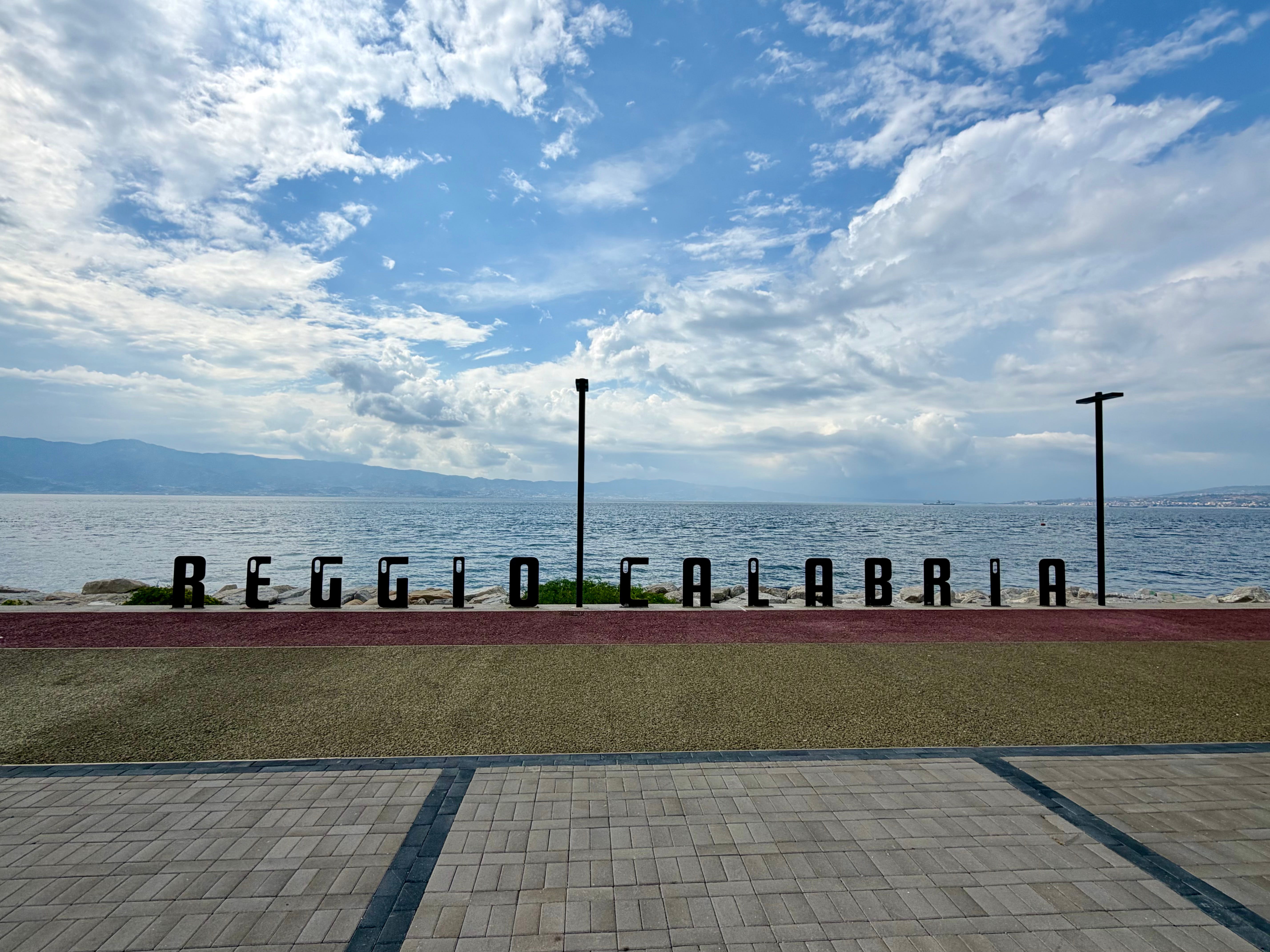
Across the Strait of Messina is … well, Messina, on the northeastern tip of Sicily.
***
A quick word about the subheading of this present part of my journal, Part XIV: “A turn in the South.” Do you recognize it? It is the title of a 1989 book by V. S. Naipaul (about the United States).
***
Reggio Calabria boasts a fruit: bergamot, defined by one source as “a fragrant citrus fruit the size of an orange, with a yellow or green color similar to a lime, depending on ripeness.”
On grounds of “When in Rome …,” I try some bergamot ice cream.
I try it at Gelato Cesare, one of the most famous ice-cream parlors in Italy, a parlor sometimes rated No. 1 in the world of Italian ice cream, gelato.
The lines are out the door. The place closes at … 2 in the morning.
Here in the Deep South—certainly in Reggio Calabria—people like their ice cream stuffed into a brioche. No kidding.
I hit Gelato Cesare a couple of times. Is this ice cream good? Yes. Is it superior to ice cream elsewhere in the country? You know, not that I can tell (to be perfectly honest).
***
Also on grounds of “When in Rome …,” I have me a bottle of bergamot soda. Distinctive.
***
I see a sign on a gate: “NOEL.” Something having to do with Christmas? No, this is the acronym for the Natural Ocean Engineering Laboratory, which is part of the Università Mediterranea.
The lab’s name is in English. (A nice acronym results.)
***
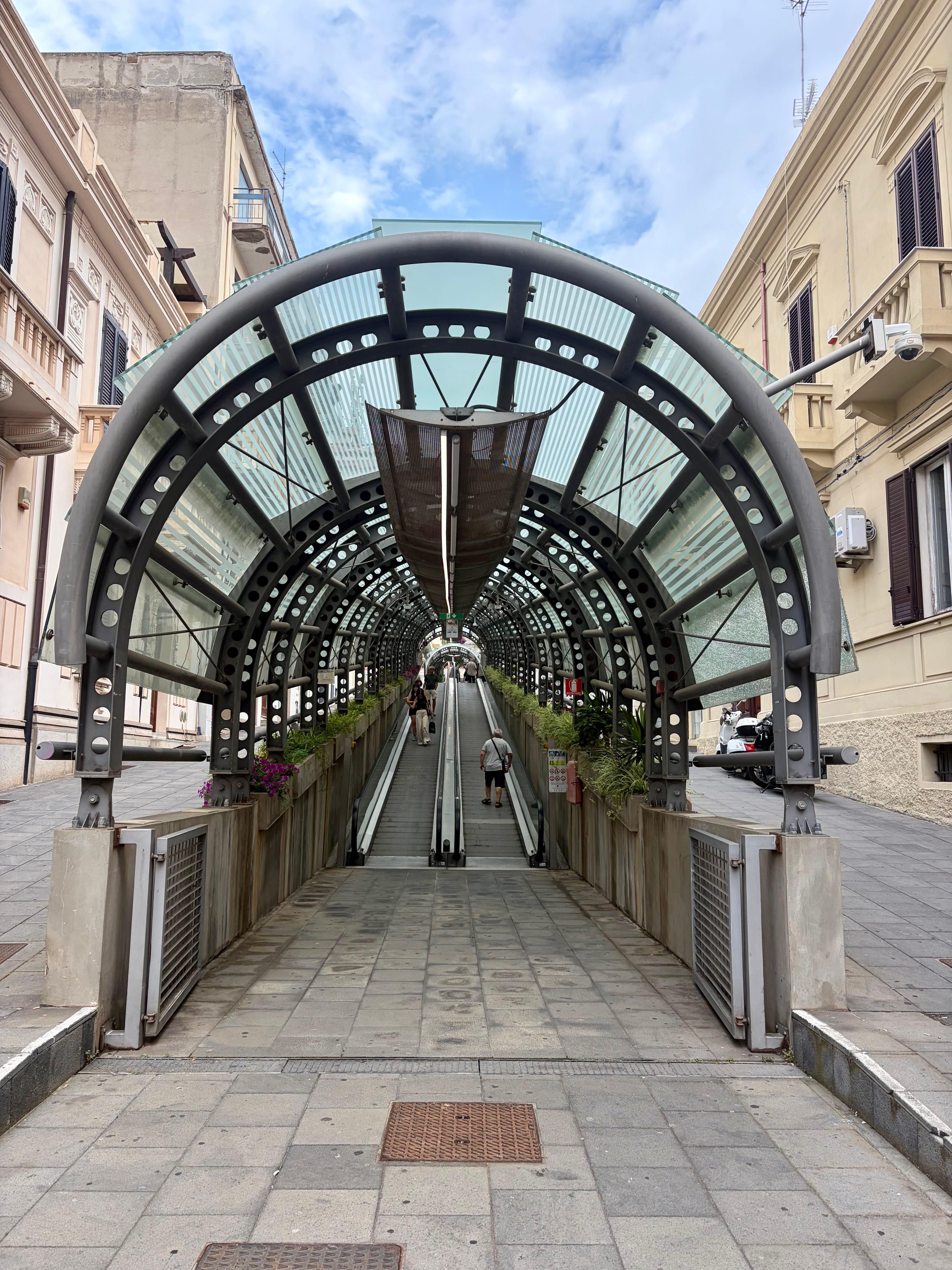
The hills are steep in Reggio Calabria, as in so many other Italian towns. These days, people get a little help from escalators. Have a look:
***
Ah, our namesake. Or are we his? Anyway, I see Amerigo Vespucci Street.
***
On posters, there are some municipal slogans: “Together, we can.” And, “A city that works, a city for all.”
***
A local gives me a little speech, which is wise and helpful. Goes something like this:
Reggio Calabria and Messina are mirror cities. We are strait cities. We’re like each other. Reggio Calabria is not very Calabrian, and Messina is not very Sicilian. We’re our own thing.
Taormina [in Sicily] is for tourists. It is very beautiful, don’t get me wrong. But it does not feel very Sicilian or Italian. It is like a Disney exhibition. A very good Disney exhibition.
Catania is crazy and beautiful, like Milan. Palermo, too, is crazy and beautiful.
Syracuse is the city—the great Sicilian city, I would say. It is thoroughly Sicilian, endlessly interesting, and very beautiful. No one hassles you there. You go at your own pace. Syracuse is my favorite city in Europe, actually.
All of Sicily is to be absorbed. Many of the people there don’t speak Italian—they speak only Sicilian of one variety or another. And Sicily, of course, has known many, many problems over the years.
But the people have big, big hearts.
See you in Sicily, my friends. Thanks so much for joining me. Later on.
The Oceans are just one big puddle of water, with the Mediterranean in the Middle East of it…I think that’s why they all taste like salt.
“Maybe you can take one more?” That’s just what I would say to you.