


Dear readers: The previous parts of this journal can be found at the following links: I, II, III, IV, V, VI, VII, VIII, VIX, X.
At Roma Termini—the main rail station in the capital—I see the Leonardo Express. It runs to and from the main airport. And it makes me think of a lost cause of mine.
Italians refer to the painter as “Leonardo.” If they want a fuller name, they say “Leonardo da Vinci.” Americans have learned, somehow, to say “da Vinci.” I’m afraid there is nothing to be done about it.
It’s like calling William of Orange “of Orange.”
Michelangelo’s full name is “Michelangelo Buonarroti.” But we never call him “Buonarroti.” Thank heaven for small mercies.
***
In every rail station, all over Italy, there is the same recorded voice. A young male voice—or young-sounding one—that begins each message with “Attenzione!” His Italian is crisp and clear, perfect for the job assigned.
***
I would like to show you a monument at the rail station in Cassino. It’s not a war memorial. This is an unusual monument, at least in my experience.
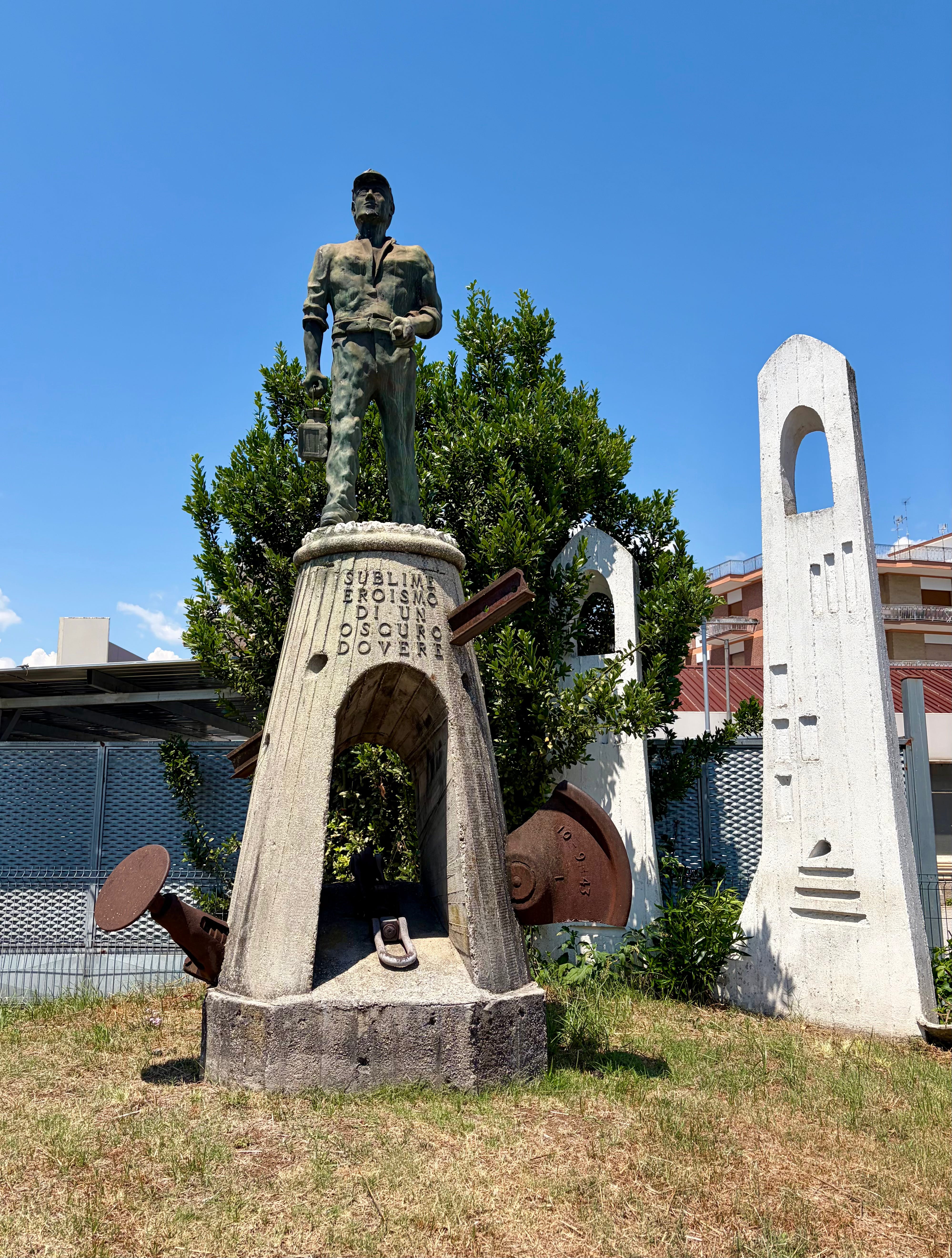
Inscribed on the monument are the words “Sublime eroismo di un oscuro dovere.” Translated literally, those words mean “Sublime heroism of an obscure duty.”
This is a monument to rail workers who died while carrying out their job.
***
Nearby was the Battle of Monte Cassino, a ghastly battle even in the context of World War II. A local man tells me that Poles, especially, come to visit. The Poles had an outstanding role in the battle.
***
I have come to Roselli, a frazione of Casalvieri, a comune in the Province of Frosinone, whose region is Lazio. We are about 70 miles southeast of Rome.
“Frazione,” in math, means “fraction.” Otherwise, it is a neighborhood or subdivision.
I ask my friend Tania, “Is there a rivalry between Roselli and the ‘big town’ of Casalvieri?” “Yes, for sure,” she says. “Which is better, Roselli or Casalvieri?” I ask. “Oh, Roselli, without a doubt.”
Have I said that Tania is from Roselli?
***
You know who else is from Roselli? The great Maria Rosaria Vitti-Alexander. I wrote about her in 2021, here, in a piece called “Back to School.” She was my professor of Italian in my freshman year of college. During the pandemic, I studied with her again, by Zoom.
I also “Zoomed in” with another invaluable professor from my freshman year: Barbara J. Fields, the historian. My 2021 piece is about both of them.
These days, Maria Rosaria spends about half the year here in her family home—the home she grew up in. Have a look:
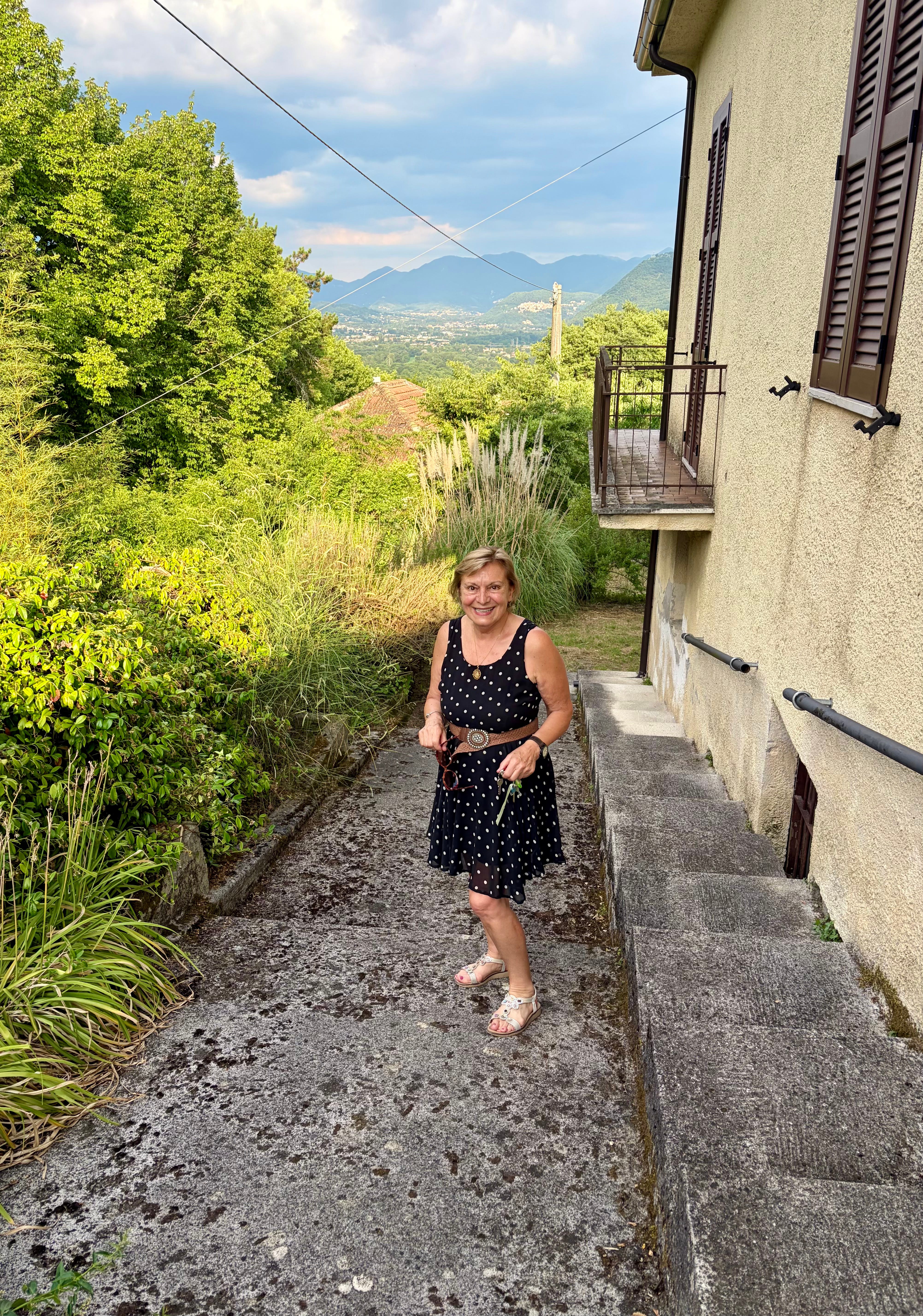
Why is Maria Rosaria hugging this tree? I’ll explain in a second.
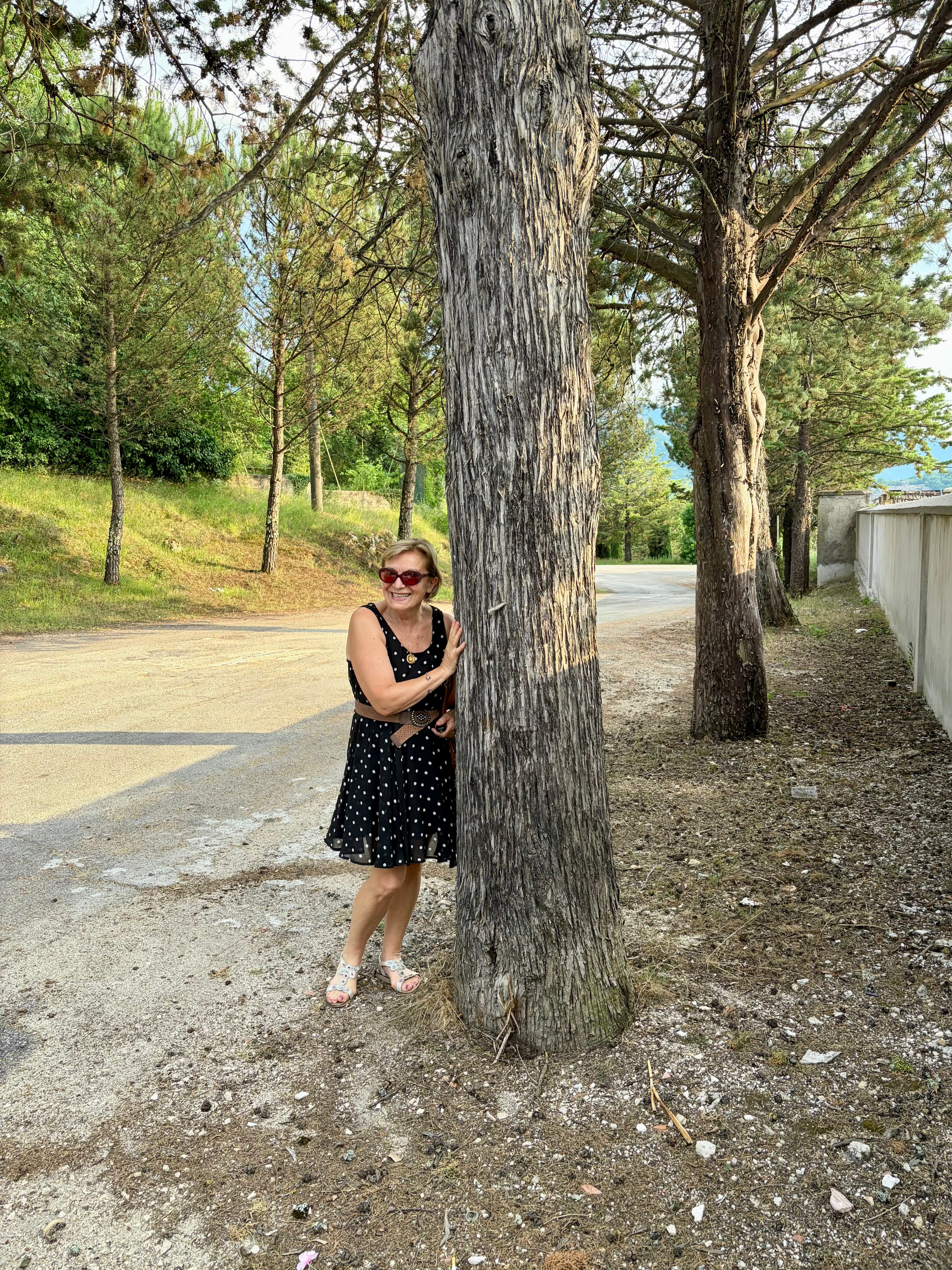
Maria Rosaria planted that tree, in a class project, when she was a little girl.
***
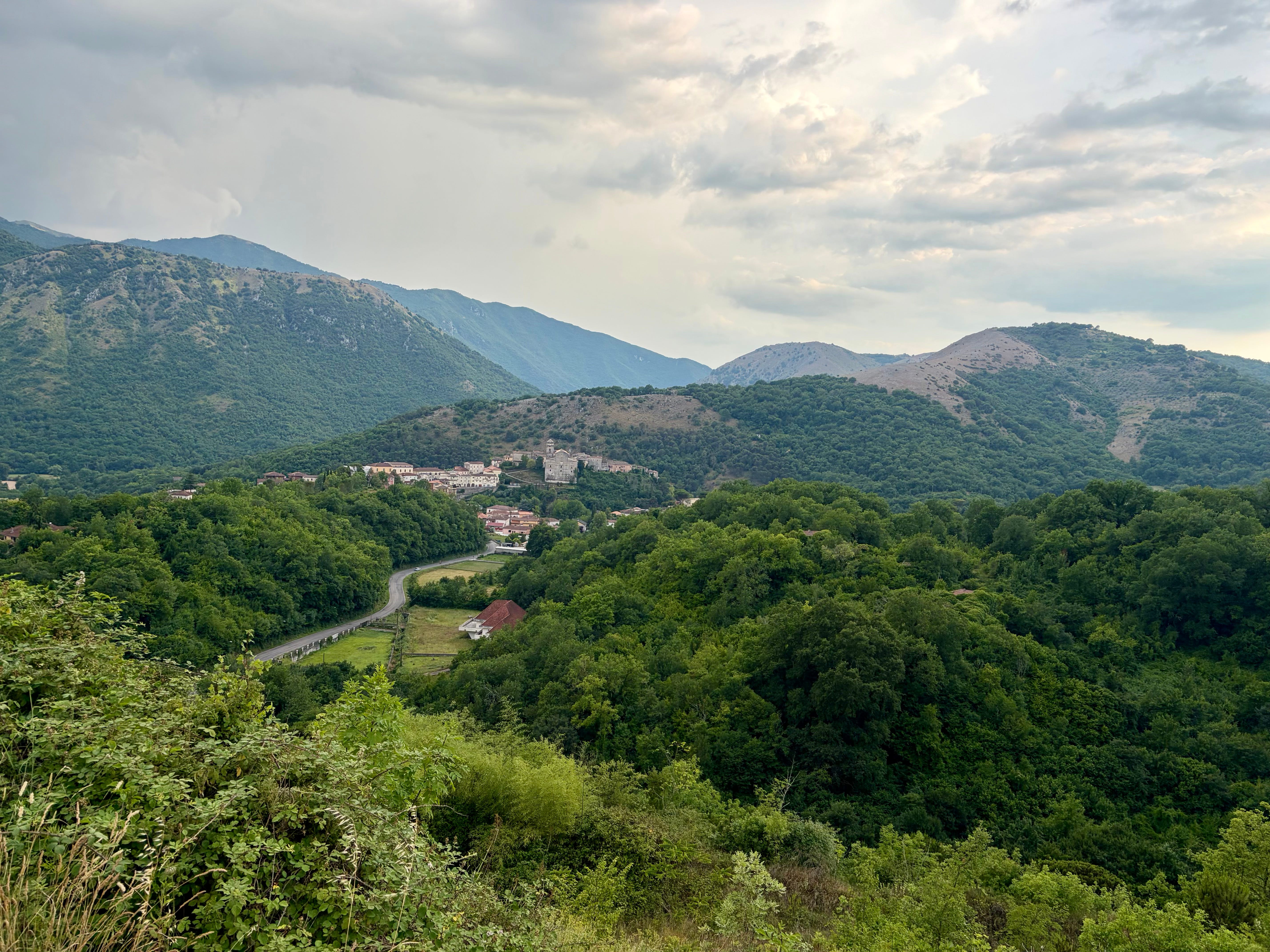
To throw another geographical term at you: We are in the Valle di Comino, known colloquially as the “Val Comino.” I will try to give you a sense of it:
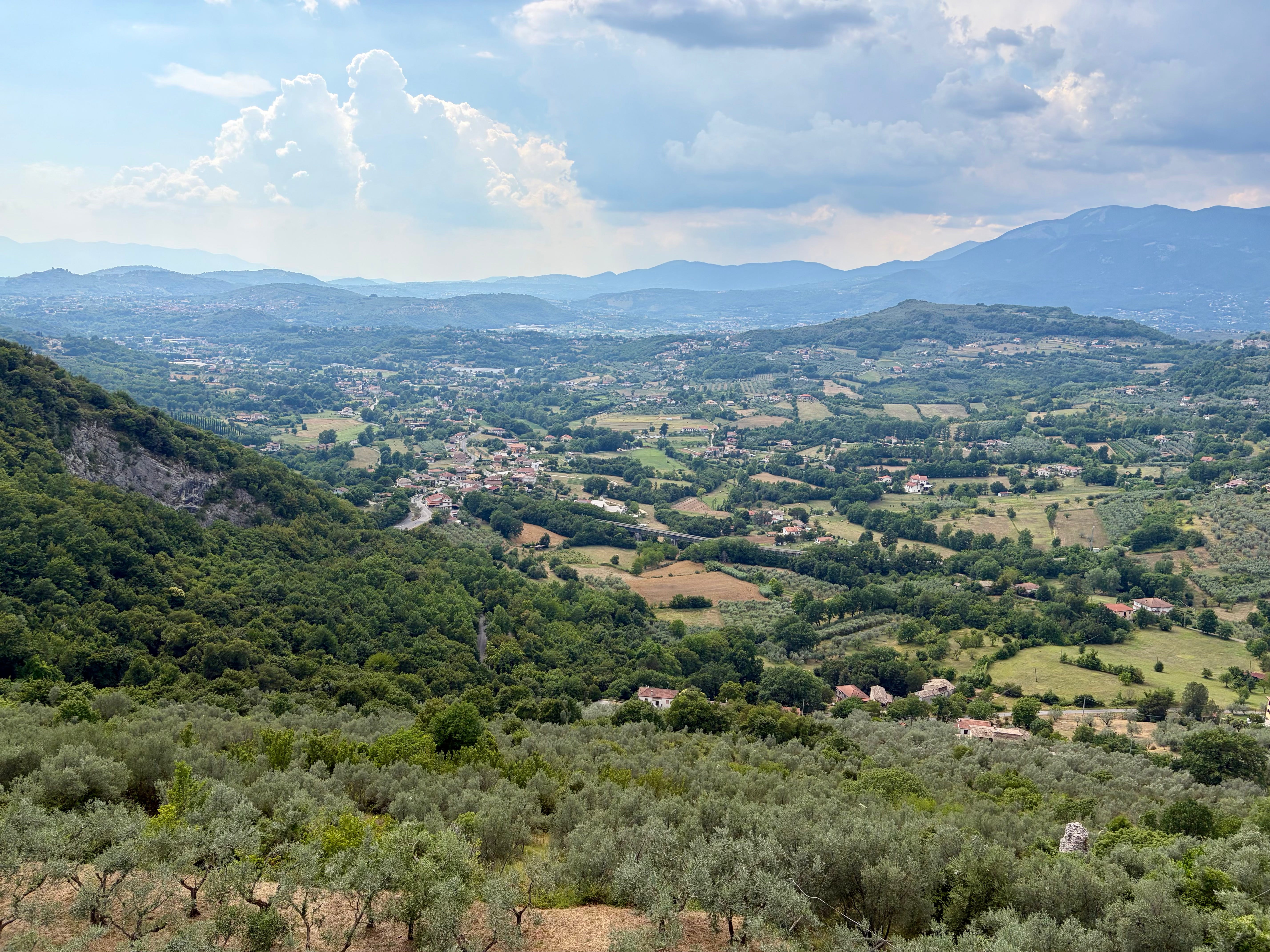
I think of a phrase: “How Green Was My Valley.” That is the title of a 1939 novel by Richard Llewellyn, about Wales. It was made into a movie two years later, directed by John Ford.
***
Several years ago, I was talking with an Italian friend of mine, Francesca. She said, almost sheepishly, “Can I ask you a question? Why do Americans and others make such a big deal over Tuscany? I mean, yes, it’s a beautiful region, but we have so many others in Italy.”
Good question. I think it has to do with Florence and its glories. We become familiar with them, through books and other things.
Anyway, this is a longer discussion …
***
Here in the country, you are awakened by the sound of roosters crowing. Just like in a movie, I swear.
***
From a hedge, there is a fairly loud noise, a loud hum. It’s like a drone. This hedge is full of bees, doing what they do.
***
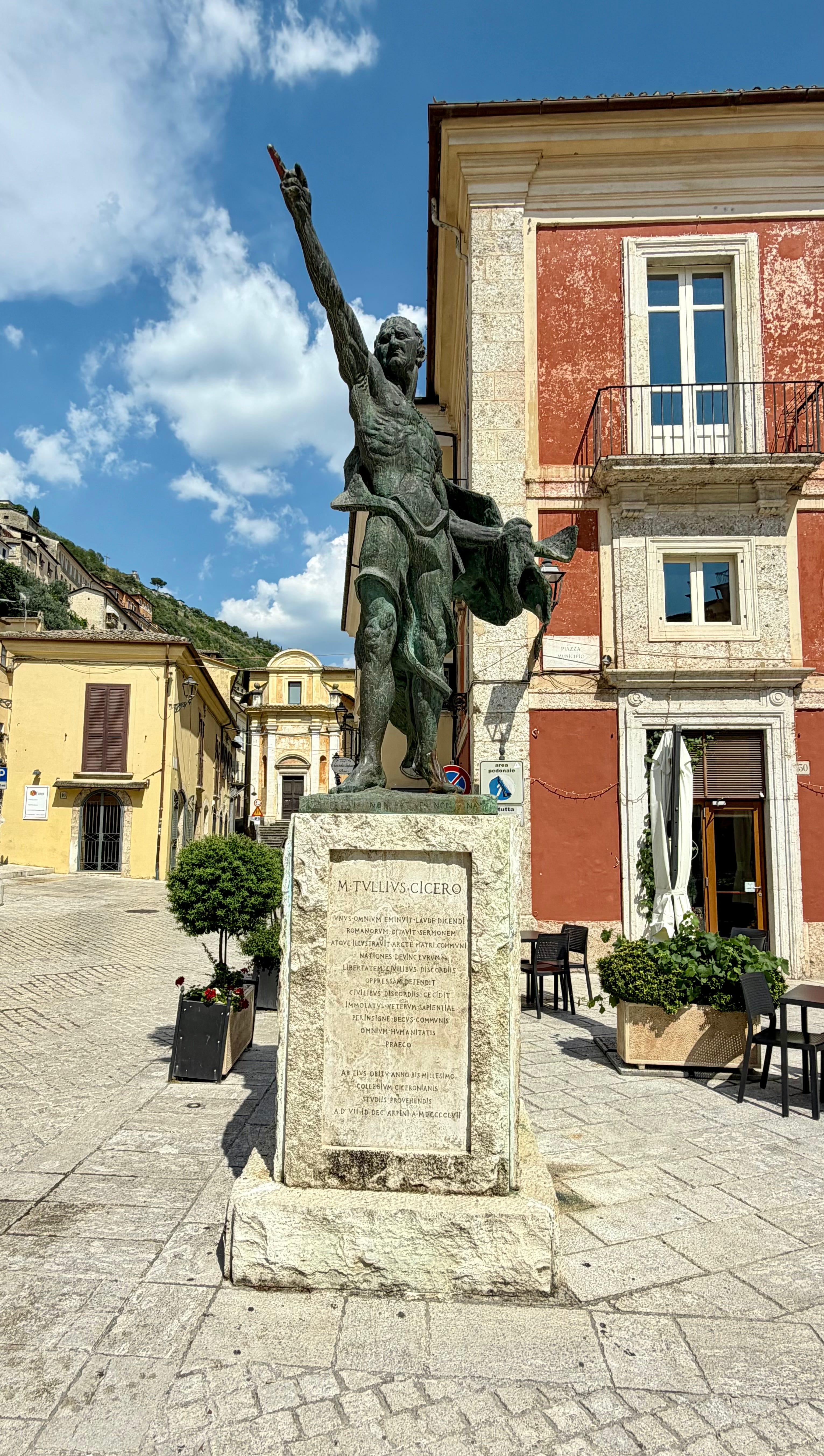
Another comune in this area is Arpino, a beautiful hill town—mountain town?—where Cicero was born. He was born 2,132 years ago, which in Italy does not seem so distant …
Here he is, in full oratorical flight, I believe:
***
Our friend Antonio—a onetime schoolmate of Maria Rosaria’s—has a question: “What’s missing here? What’s missing in Arpino?” And the answer: people.
It is kind of a ghost town. Young people don’t stay. This is a problem all over Italy, I’m given to understand. A big subject.
***
Hang on, I have something related. In Casalvieri, I enter the home of a distinguished lady who, in her nineties, has a home aide. The home aide is a lovely young South Asian woman who speaks excellent Italian.
Such people fill such jobs up and down the peninsula …
***
Have you ever seen a waterfall in the middle of town? I have not—until now:
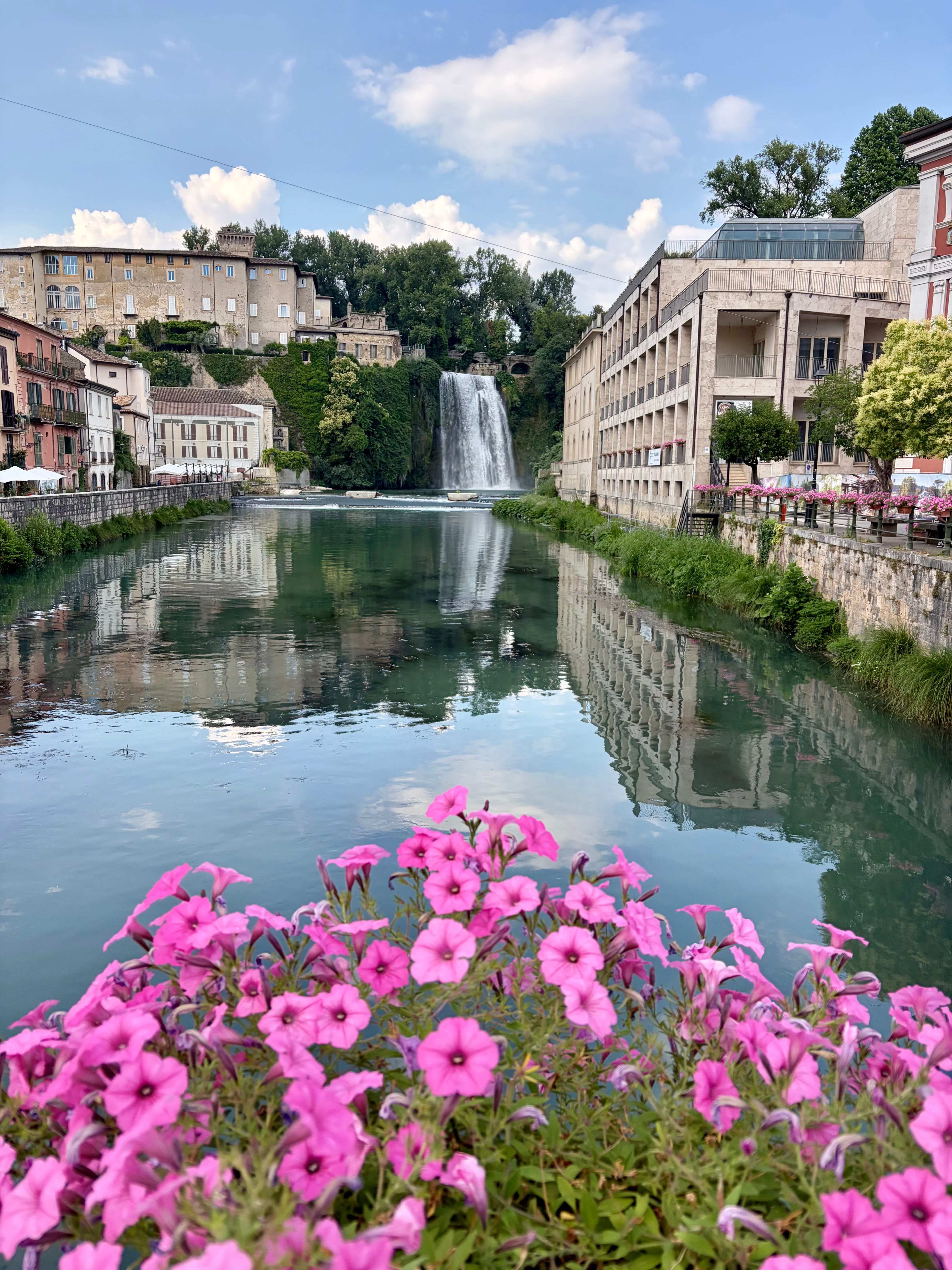
We are in downtown Isola del Liri.
***
In the area is a barbershop with an English name: “The Men’s Room.” Um, I would have advised something else …
***
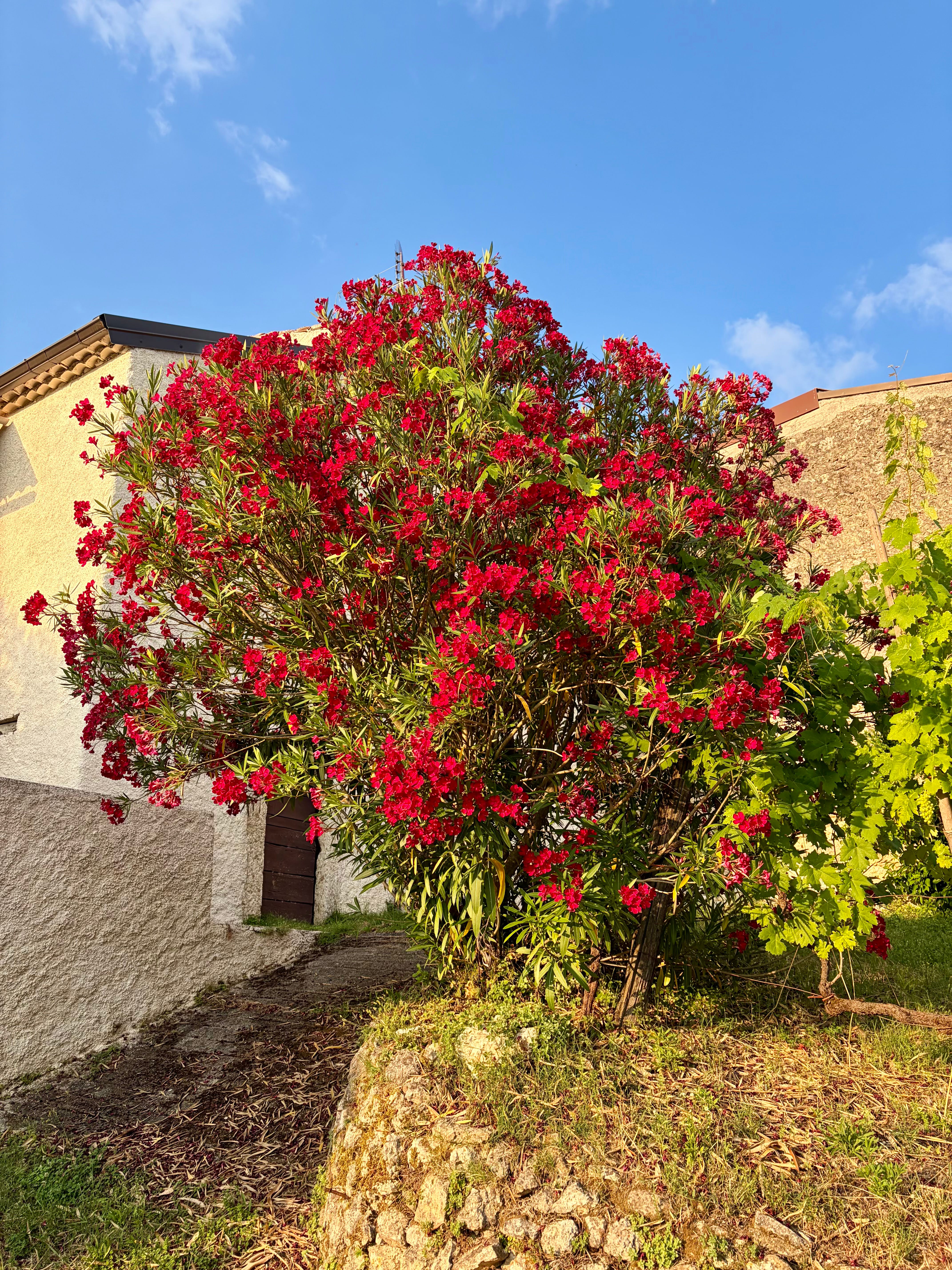
Some flowers in Roselli, at twilight:
***
I will leave you with the winding road:
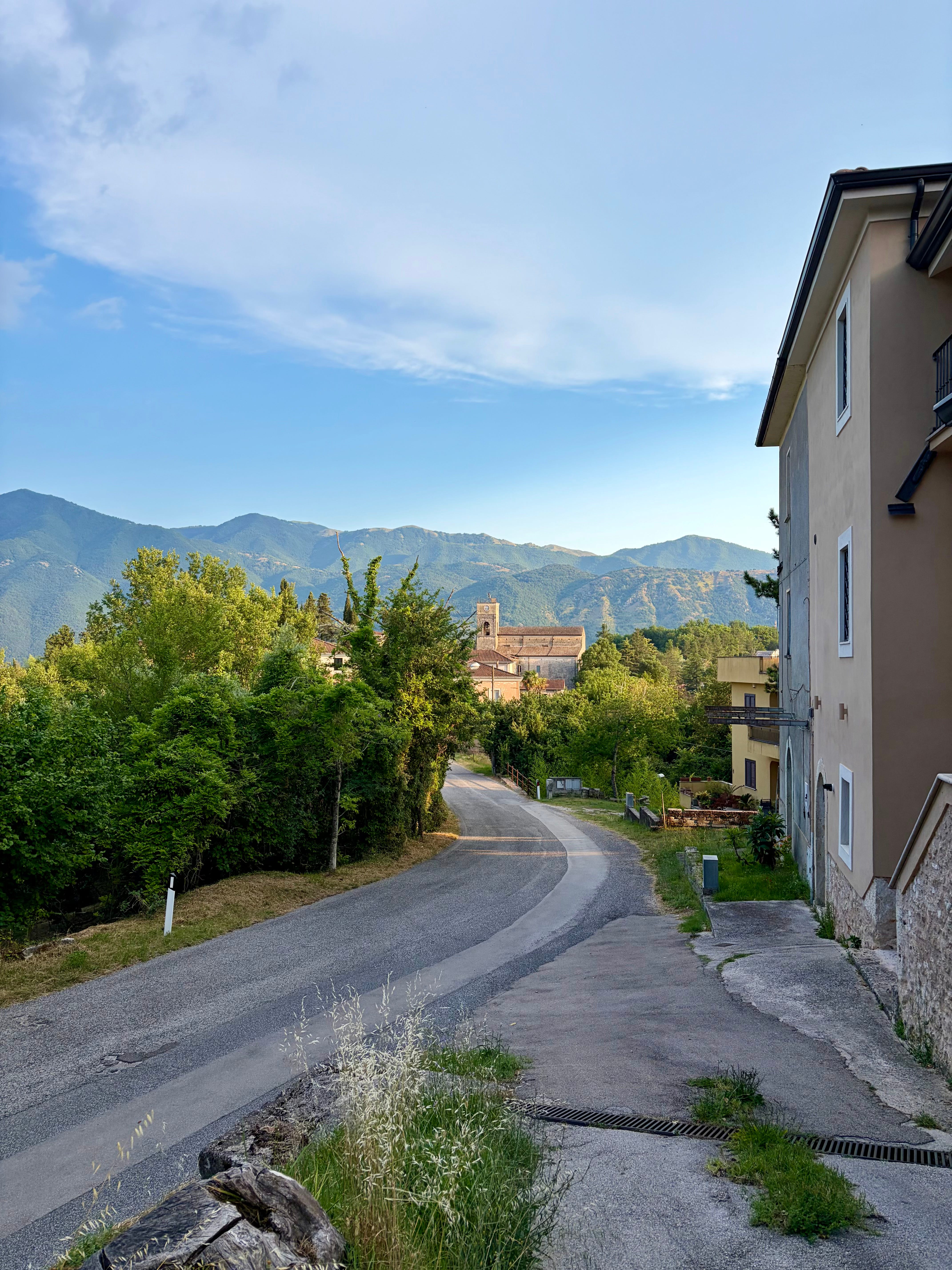
See you later, thanks so much.
I say, “Would you call our Savior ‘of Nazareth?’“
It works about half the time. As you think, Jay, it’s probably hopeless.
That waterfall—wow. (We have one here, in Spokaloo, too—smack in the middle of the city. Worth a look-see if you ever pass through the Inland Empire.) Will you be visiting Venice on this trip, Jay?