


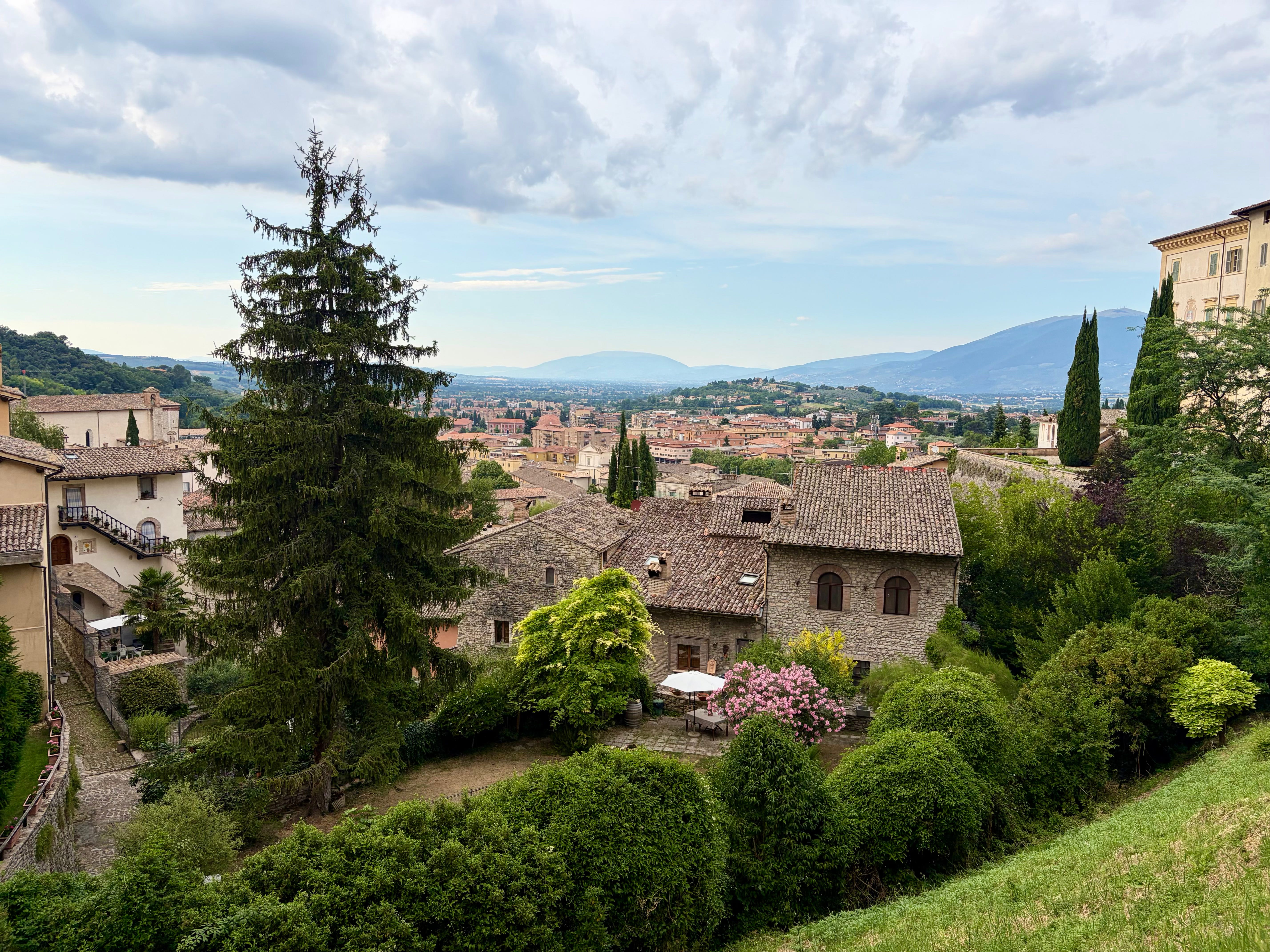
Dear readers: The previous parts of this journal can be found at the following links: I, II, III, IV, V, VI, VII.
Riding from the Adriatic coast into the center of the peninsula, I’m reminded of something: the great geographical variety of Italy. There are coasts (two). There are mountains and hills—Alps, even. There are flatlands, islands. A splendid variety.
(I might have mentioned lakes, too.)
We Americans like to compare countries to our states, in size. To which of our states does Italy compare, in size? Arizona.
Although what different shapes!
***
Perugia is much loved by foreign visitors and Italian visitors alike. It’s a hill town, the capital of Umbria. It is known for its beauty (like many towns in this country, let’s face it). And for chocolate. And for language instruction—the instruction of foreigners in Italian.
***
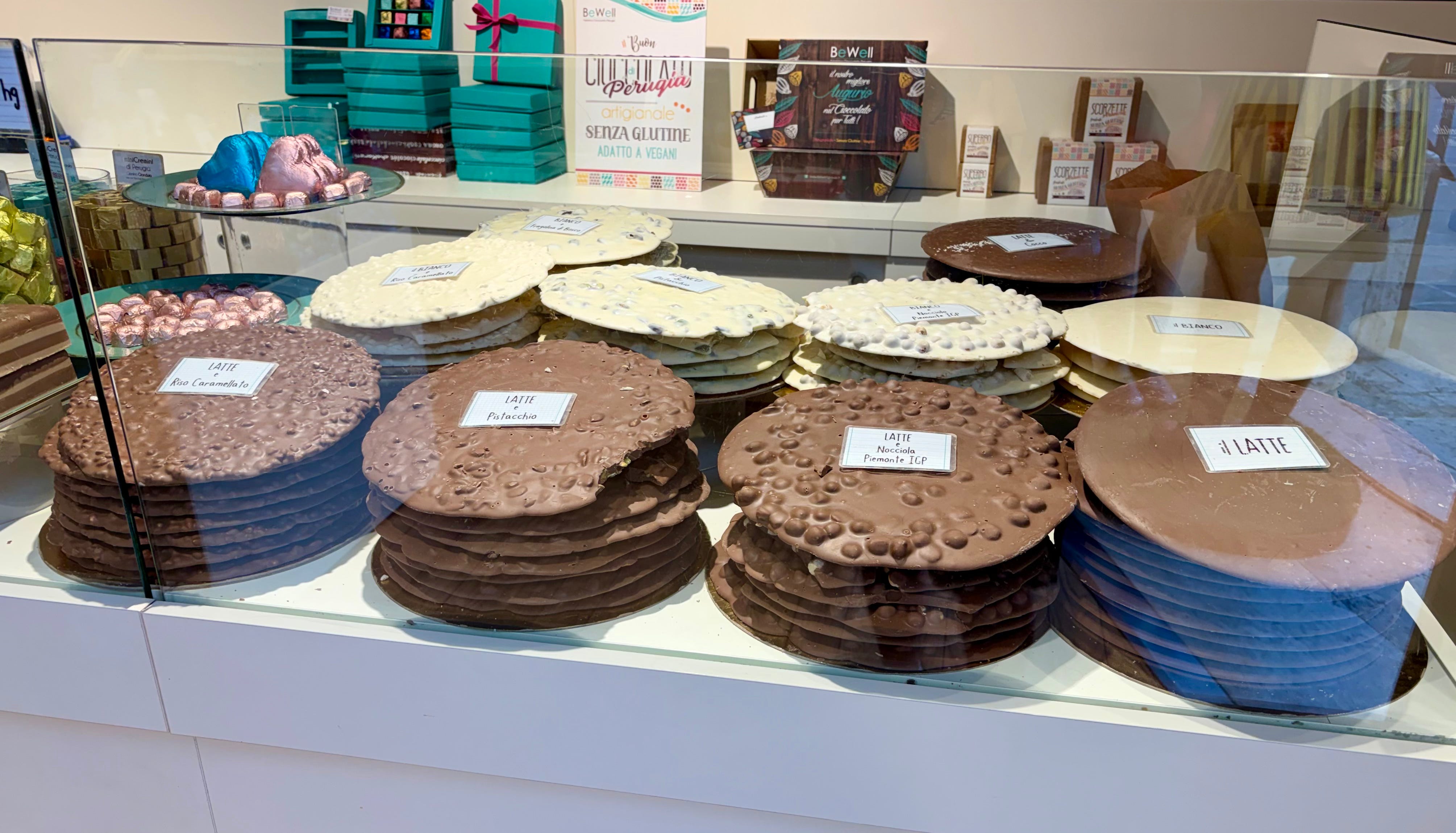
Let’s talk chocolate. Perugia styles itself “la città del cioccolato,” the City of Chocolate. There’s a Chocolate Museum here. The Perugina company is in Perugia, naturally, and they are known for their Baci, or Kisses, wrapped in silver and blue foil.
Baci are not to be confused with our Hershey’s Kisses (bless ’em).
A square in Perugia is named the “Piazza del Bacio,” Kiss Square. (It now sounds like I’m talking about a rock band.)
Check out these discs, these dinner plates:
***
Behold the Università per Stranieri, the University for Foreigners:
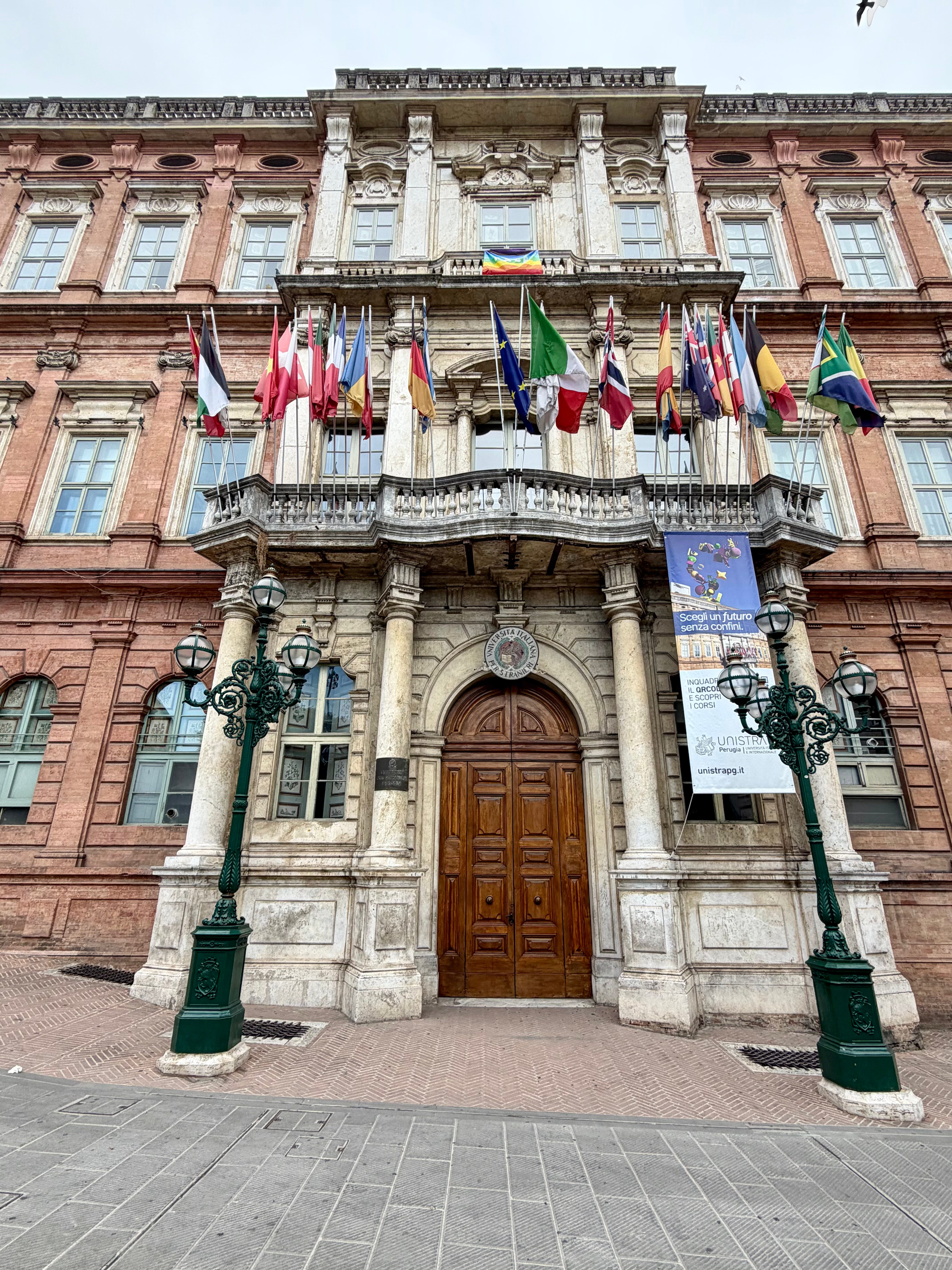
I like the word “foreigners.” It is so much straighter than the euphemism “international students.” Personally, I like being a foreigner, when I roam (including in Rome).
***
Man, are these hills steep. My friend Clarissa Pryce-Jones once said, “All the old ladies in Italian hill towns have great legs, because they’ve been climbing those hills their whole lives.”
***
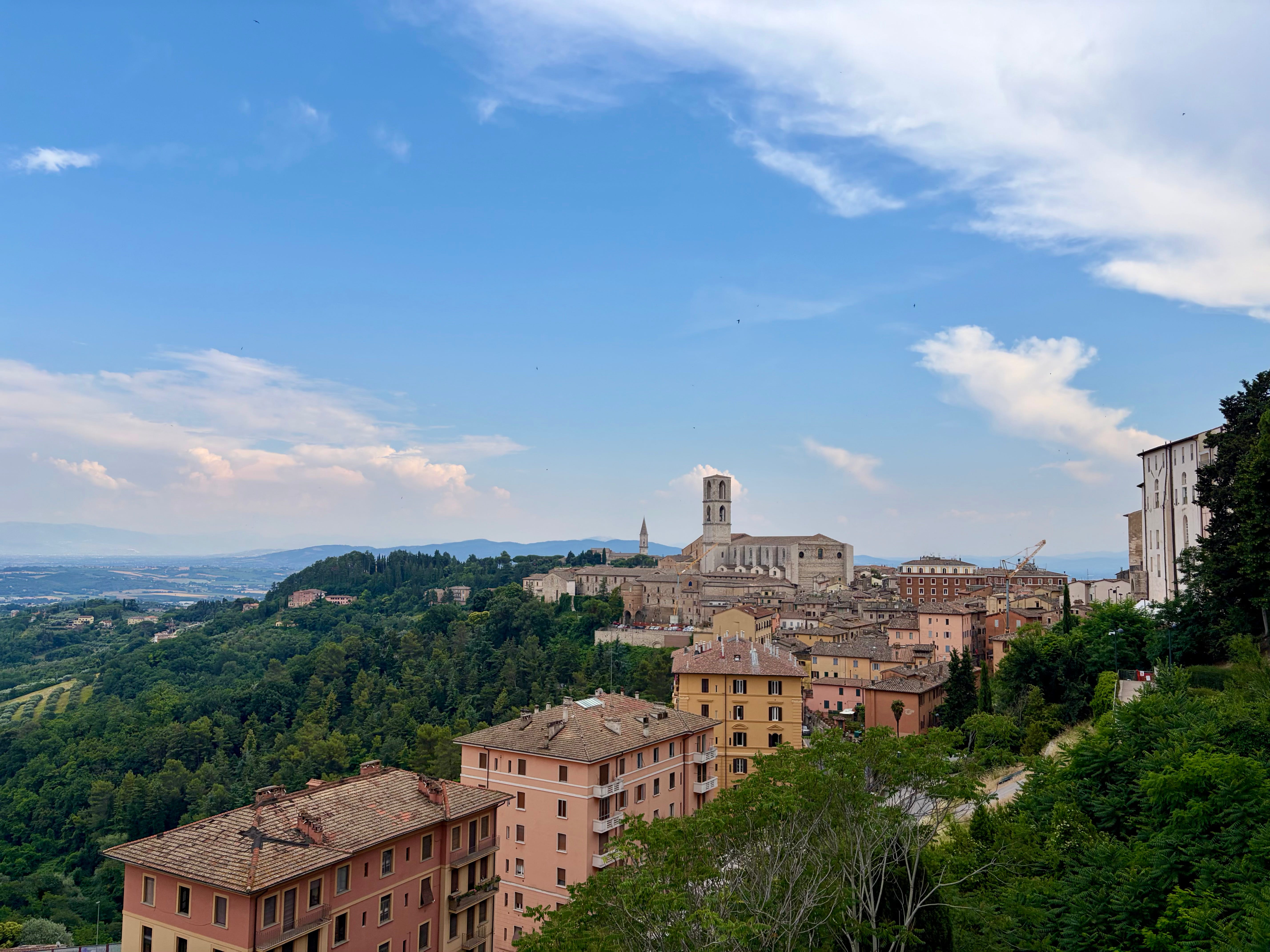
Have a view:
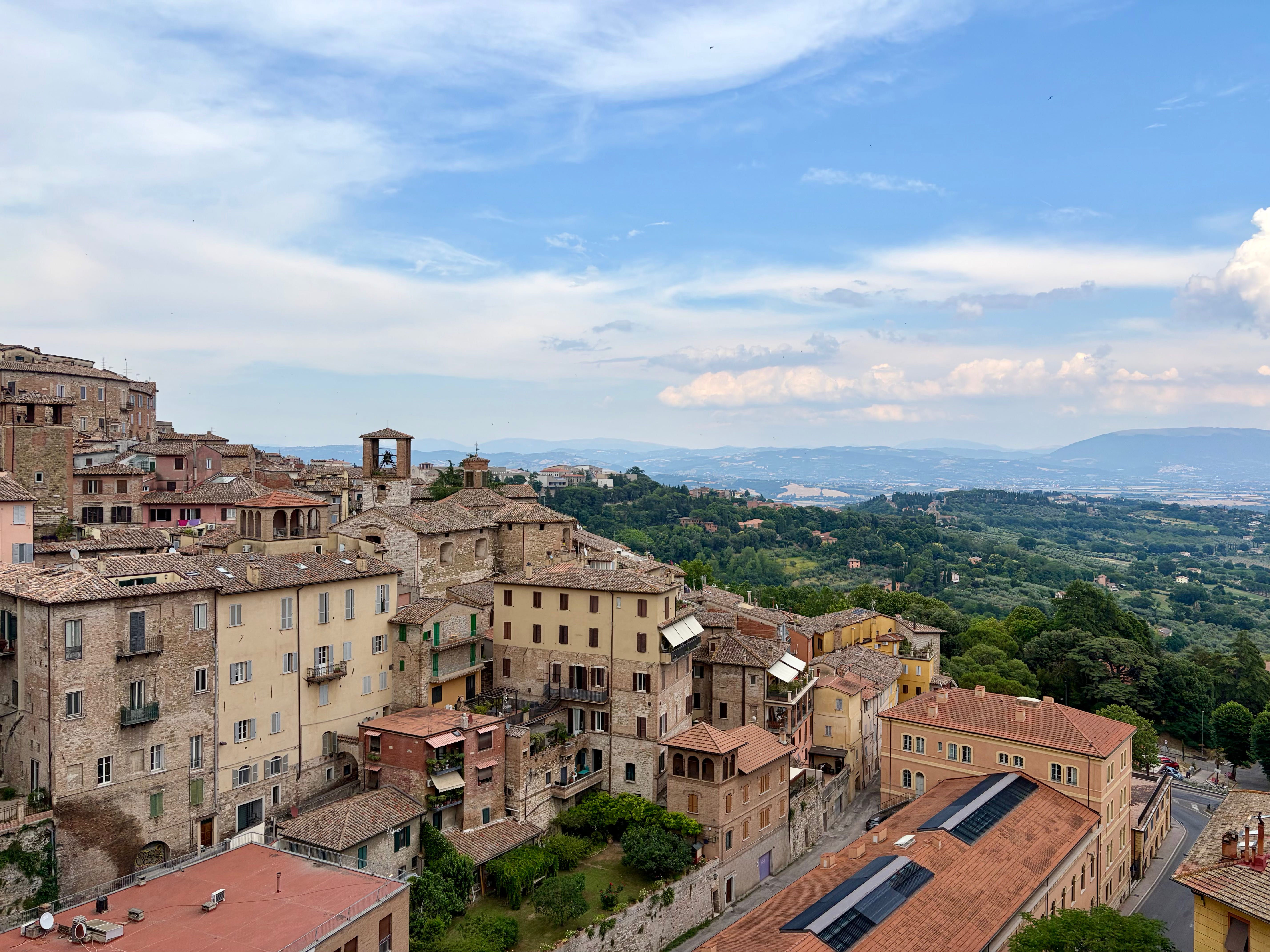
Have another view, no extra charge:
***
Perugia has a Corso Cavour. A “corso” is a boulevard or avenue, often grand. I wonder how many “Corso Cavour”s there are in Italy. People want to honor Cavour, but also, “Corso Cavour” is so beautifully and irresistibly alliterative.
***
I have some pear ice cream, with chocolate chips. Eating this ice cream is like biting into a pear picked right off the tree—with accompanying chocolate, of course.
***
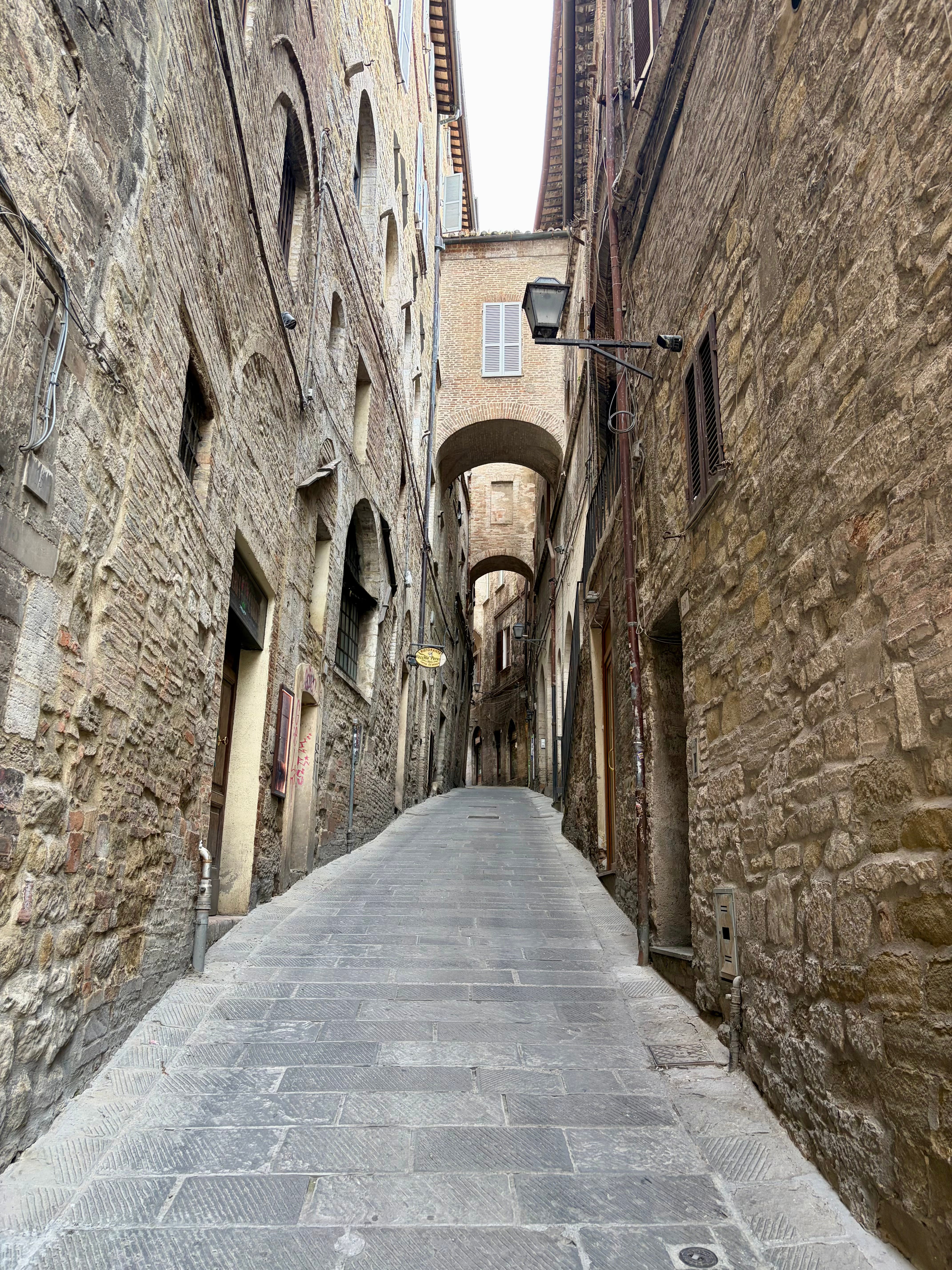
A typical view, a typical look:
***
I see a sign for the Rotary Club here in Perugia. Rotary is such a valuable, admirable organization, as I’ve written many times, in columns over the years. To borrow Bush 41’s formulation, it is a point of light, international.
***
Coming upon the Piazza Giordano Bruno, I pause, thinking back to my student days. I delved into the life of Giordano Bruno—the philosopher, scientist, etc., who lived in the second half of the 16th century. They burned him at the stake. Murdered him.
What an example of conscience and integrity he set. And courage, tremendous courage.
***
If you’re like me, you worry that you are not exploiting your time, that you are not doing justice to a city like Perugia, that you are not taking enough in.
But how can you? Maybe a few tastes—good tastes—is enough.
***
Two American ladies go into a chocolate shop. The husband of one of them—the other lady might be his sister or sister-in-law—says, “Nah, I’m not goin’ in there. I’ll see you down the road. I’ve had enough.”
I love that.
***
To open a door, they often want you to push in this country. My instinct is to pull. To pull it open, not push it.
There must be studies of this subject …
***
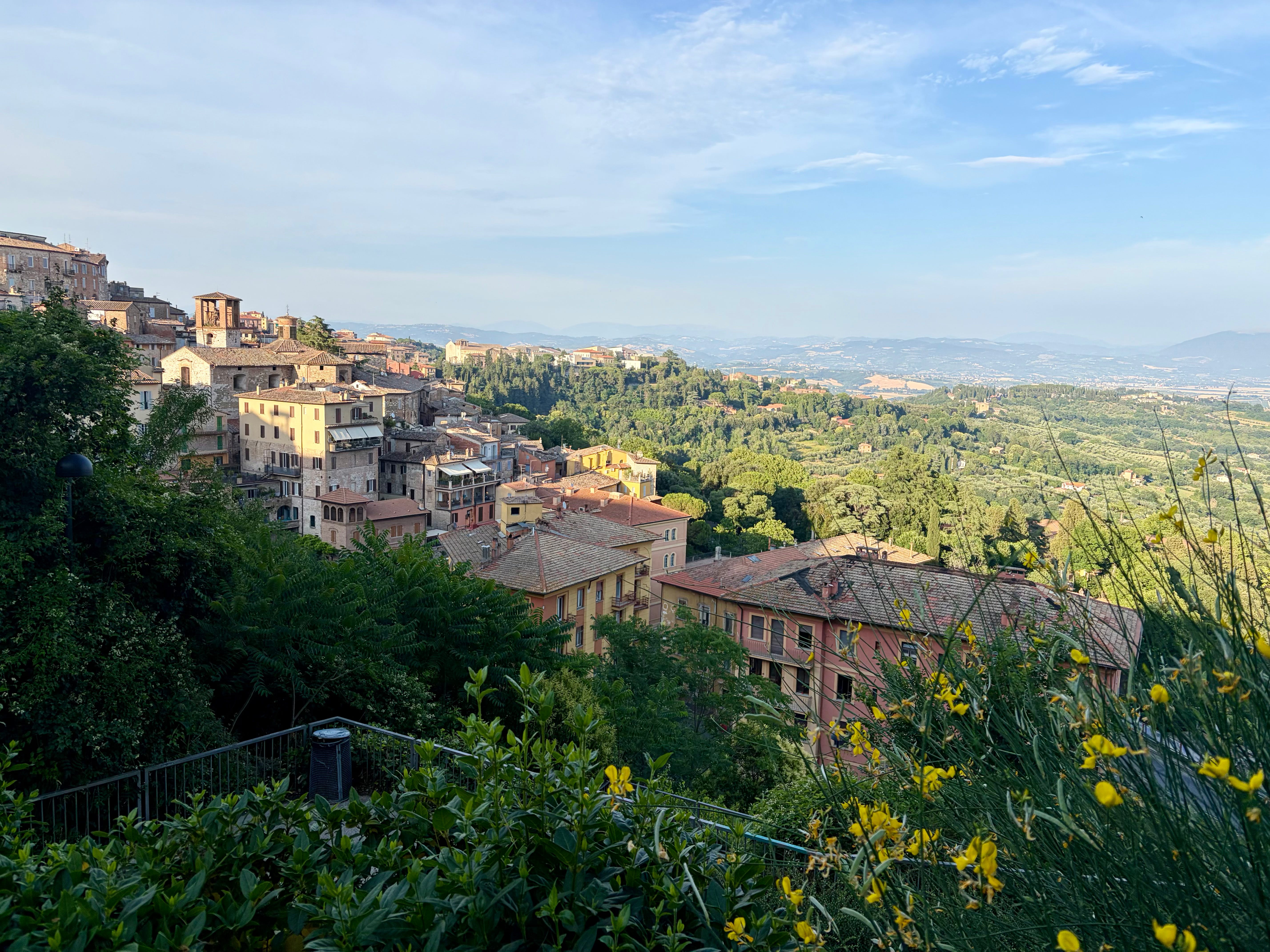
One more view, before leaving Perugia?
***
But listen: Spoleto is pretty easy on the eyes as well. It is another hill town, which many know for a music festival, the Festival of the Two Worlds. It was founded by Gian Carlo Menotti in 1958. Menotti was a composer (and writer) “of the two worlds”: born in the Old World, Italy, he made his career in the New, America.
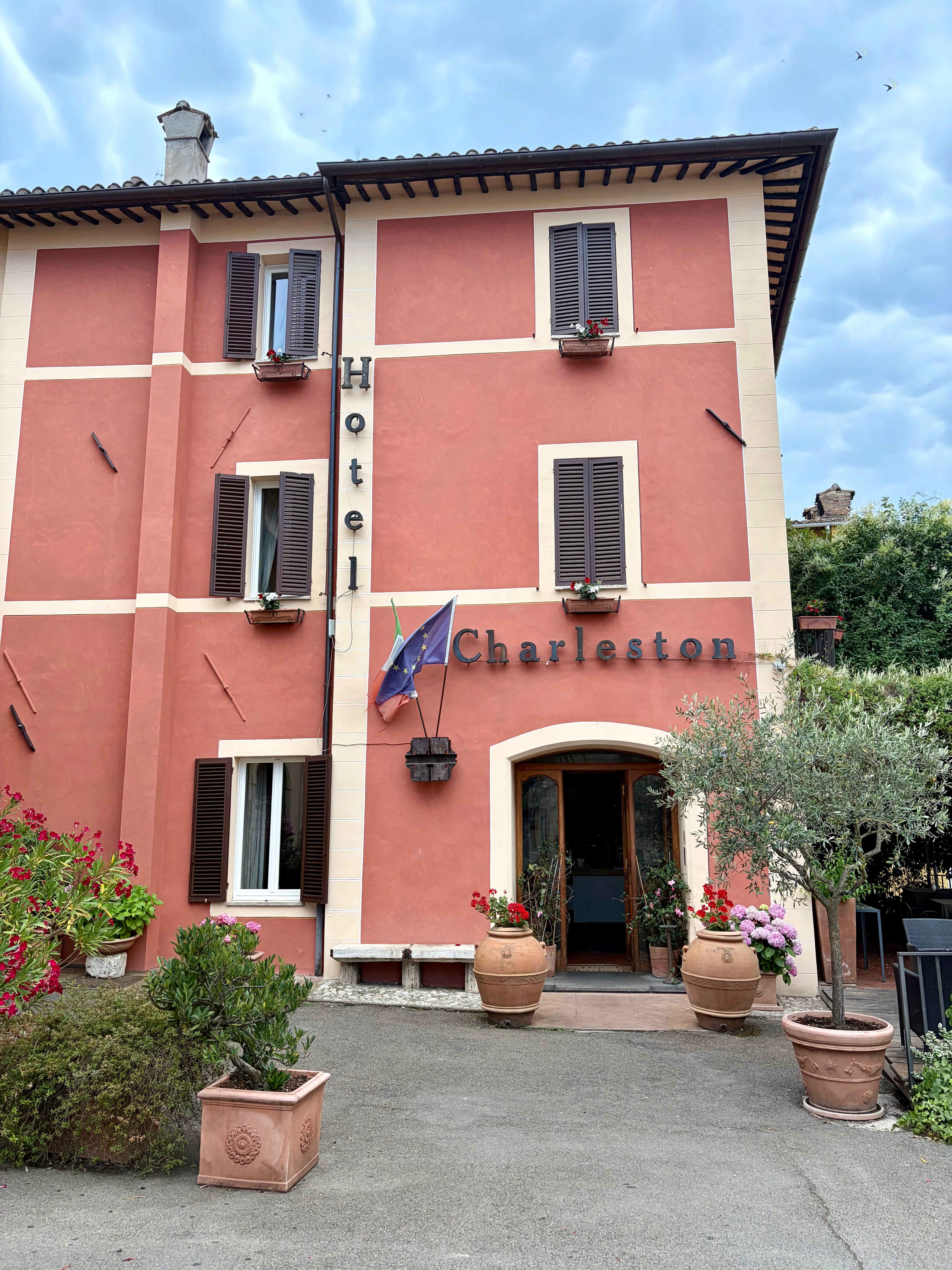
In 1977, Menotti founded a companion festival in Charleston, South Carolina: the Spoleto Festival. You wanna see a hotel here in Spoleto, Italy?
***
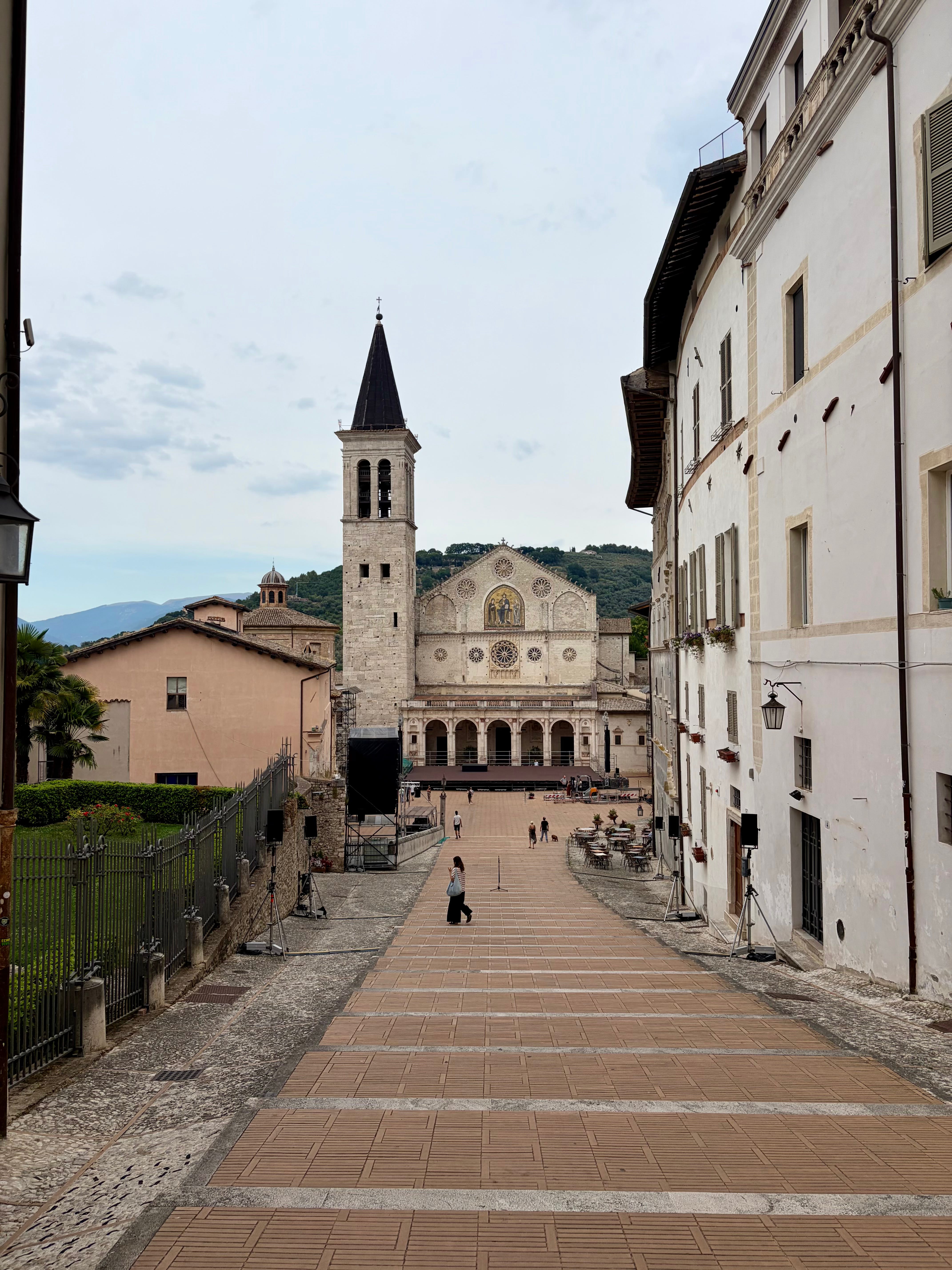
Have a look at the Duomo, the big church, in town—and the run-up to it:
***
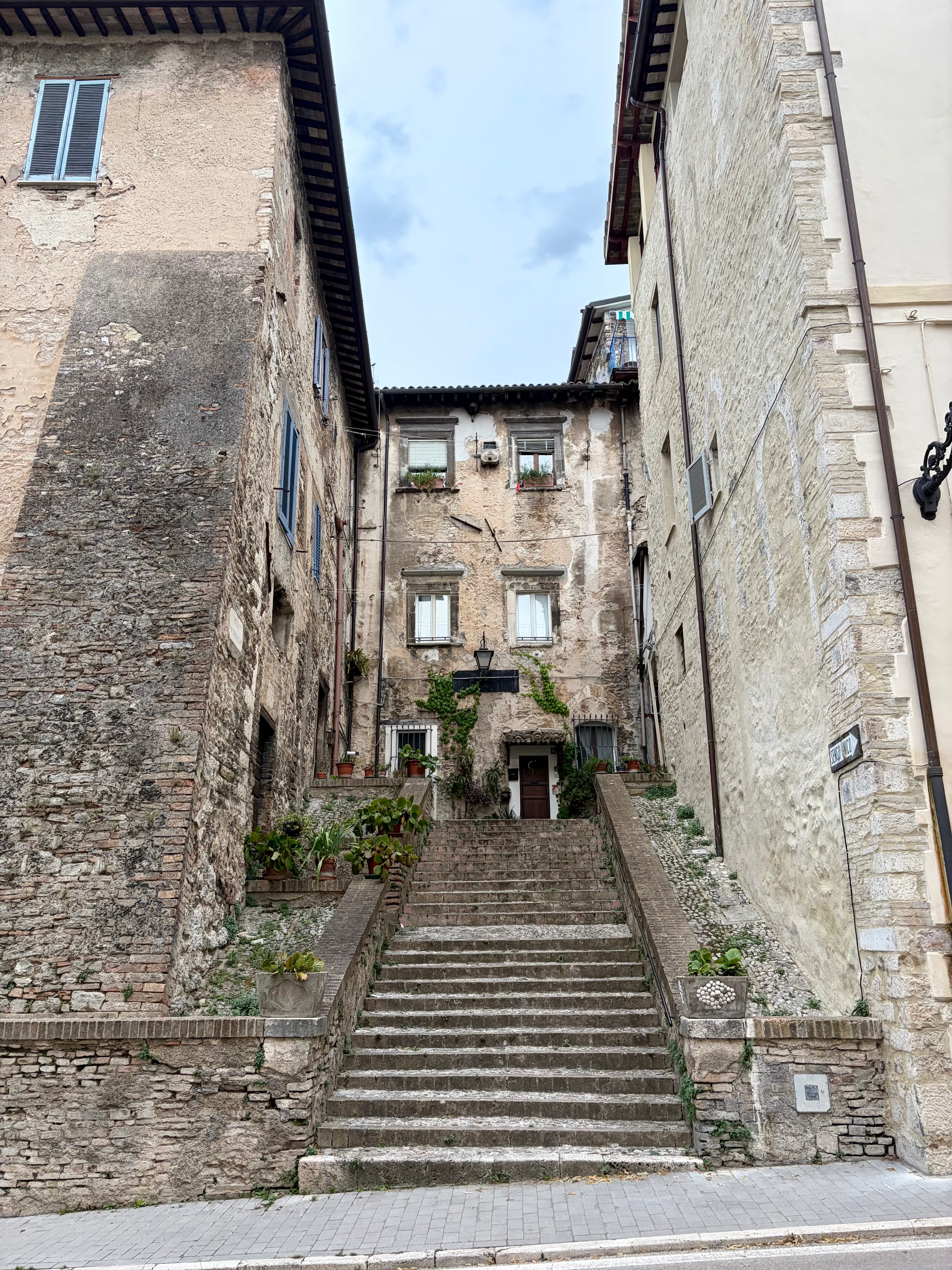
Such a typical sight, in this part of the world:
***
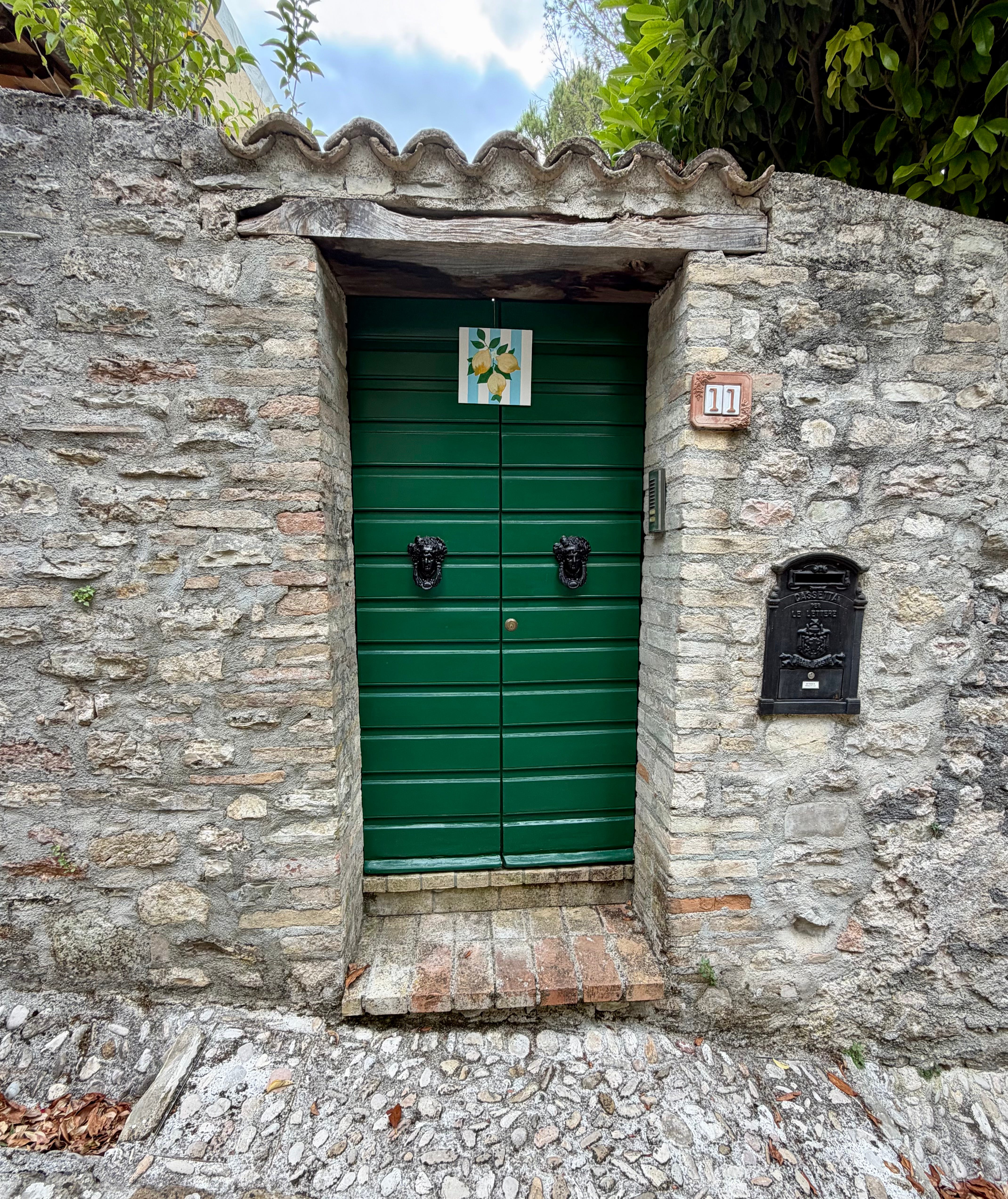
An attractive, appealing entrance to a home:
***
This is not a street name you see every day: Via dell’Assalto, or “Assault Street.” In the twelfth century—1155—Spoleto was invaded, assaulted, by the forces of Frederick Barbarossa, the “Holy” Roman Emperor.
***
So, I’m walking up a hill—a very steep hill. I’m exerting myself, almost to the nth degree. Semi-sorta proud of myself. This kid, about 16, is walking home from school. We’re going in the same direction. He’s wearing a backpack, looking at his phone, and listening to music via his headset. He passes me like I’m standing still. Never looks up from his phone.
And let me say—without a trace of meanness—that this is not an especially fit-looking kid.
I console myself by thinking, “Well, he’s had practice. This is normal for him. He’s done it all his life, day after day.”
Still …
***
In Spoleto, groups of old men gather together, to talk. These groups are like little fraternities, and their sessions have been going on for … how many years?
Italy would not be Italy without groups of old men, gathered together to talk.
It is almost comforting to see.
***
Very comforting, and delicious, is a torta al testo, a special kind of Umbrian sandwich. Mine this evening is with eggplant and cheese. Man alive.
***
The banana ice cream tastes like—well, bananas, right off the tree. And very special—to me at least—is the Calabrian licorice. (Another flavor of ice cream, I mean.)
Boy, do they have an assortment of flavors over here. And when I was growing up, I thought 31 was a lot.
***
My eye is drawn to a sign that says “Largo Melvin Jones.” (A largo is a kind of public square.) I am used to seeing Italian names on these signs, making an English one stand out. Who was Melvin Jones?
A civil-society leader—the founder of the Lions Club International. (He was born in 1879 in the Arizona Territory.)
***
Piazza Giovanni Bovio is interesting to me. Its name, I mean. I’m not sure who Giovanni Bovio was. But I remember that, in student days, I lived at No. 20 Giovanni Bovio Street in Florence.
Wikipedia, Source of All Knowledge, tells me that Bovio was a “philosopher and politician of the Italian Republican Party,” who died in 1903, having been born in 1837.
When Mussolini came along, the Republican Party was strongly anti-him, anti-Fascist. Therefore, the dictatorship banned the party (in 1926). The party reemerged in 1943 and is still going today.
Earlier in my journal, I spoke about The Garden of the Finzi-Continis, Giorgio Bassani’s book (and Vittorio De Sica’s movie). The Finzi-Continis are Republicans; their populist resenters—no.
There’s a lot in that book.
I don’t know whether “all roads lead to Rome,” but that’s where I’m going and I’ll see you later.
To the Village Idiwitt, the irony of ironies is your enjoying yourself in formerly the greatest (with all its Caesarean cancerous warts and all…that lived the high life in Mar a Lago, I mean had their Oceanside villas), formerly most powerful country on Earth…and so many of U.S. are not looking forward to the Sasquatchettenial celebrations…overloaded by a sociopathic rhesus monkey, that has mismanaged, I mean managed to turn the greatest nation on Earth’s birthday party into an Il Duce wannabes Don King Trump Show…Power corrupts. Absolute rich white trash power corrupts absolutely. His story repeats itself. GOD HELP U.S. We the Living in Kakistocracy, I mean Idiocracy. Here we are now, Trump entertain U.S. Calgon take me away. Gotta run on. Thanks for taking my rant. Peace through superior mental firepower and Viva Jaywalking.
The Hotel Charleston would fit right in on Rainbow Row in the South Carolina city, color-wise that is.