


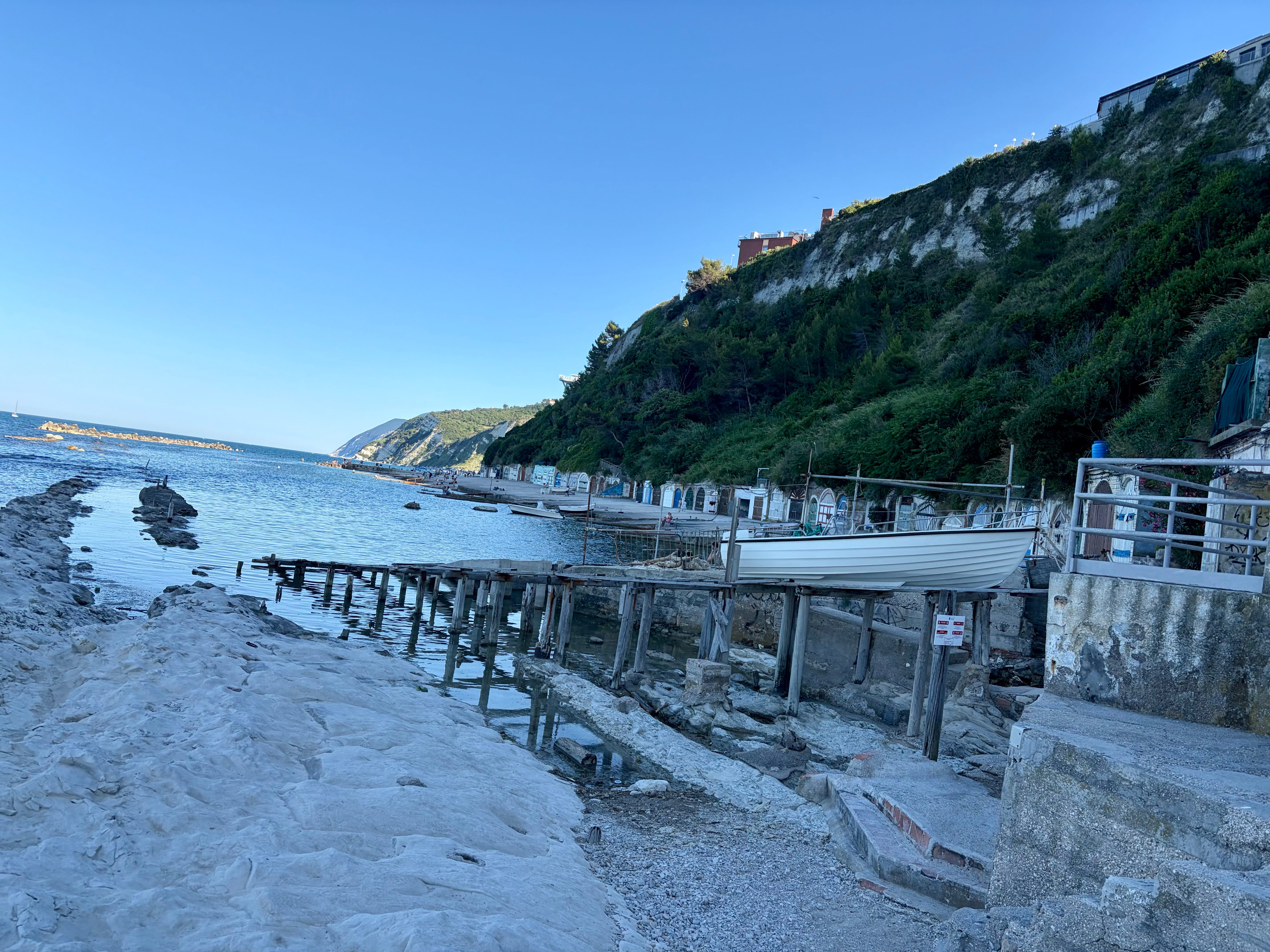
Dear readers: The previous parts of this journal can be found at the following links: I, II, III, IV, V.
On a train down the Adriatic coast, we pass Pesaro, birthplace of Rossini. (Also, it is the site of the summer opera festival in his name.) Rossini made a great contribution to the happiness of the world. Always, he will bring smiles and delight.
I’m speaking of his comedies (The Barber of Seville, The Italian Girl in Algiers, etc.). But we should not overlook his tragedies, less popular though they may be.
An all-around genius, this fellow.
***
It’s enjoyable to overhear Italian teenagers talking about school. “È proprio banale la materia,” a boy tells a girl. I wish you could hear his tone, which conveys weary contempt. “It’s frickin’ boring, the subject matter.”
***
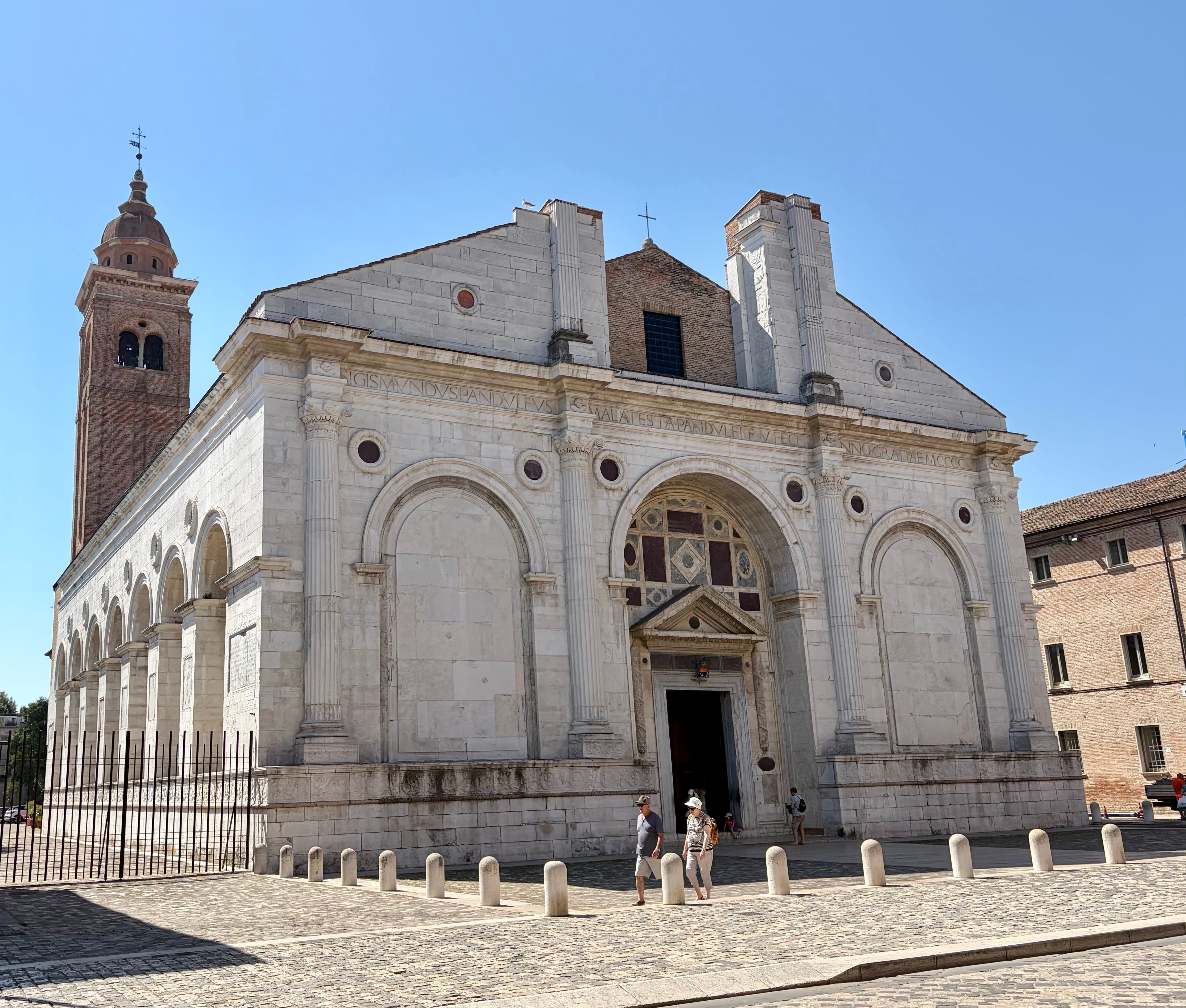
Wait a second, let me go back up to Rimini, north of Pesaro. (Does this journal have to be in strict chronological order?) (Probably.)
I want to show you a handsome sight—even a beautiful one:
***
In the middle of Rimini is Three Martyrs Square. It used to be Julius Caesar Square. On August 16, 1944, three partisans were hanged by the fascists (Italian and German): Mario Capelli, Luigi Nicolò, and Adelio Pagliarani. They were between 19 and 23 years old. There is a poignant memorial to them, on what I believe is the spot of their execution.
***
Now, down to Ancona—which makes me think of a Wolf song and a British journalist.
Matthew d’Ancona was once the editor of The Spectator (when I read it avidly). Today, he writes around, I think. And the Wolf song? The song by Hugo Wolf?
It comes from his Italienisches Liederbuch—Italian Songbook—and begins, “Ich hab’ in Penna einen Liebsten wohnen” (“I have one lover living in Penna”). He has them all over.
“Another in the plain of Maremma, / One in the beautiful port of Ancona …”
Oh, my, it is beautiful, a jewel of the Adriatic.
***
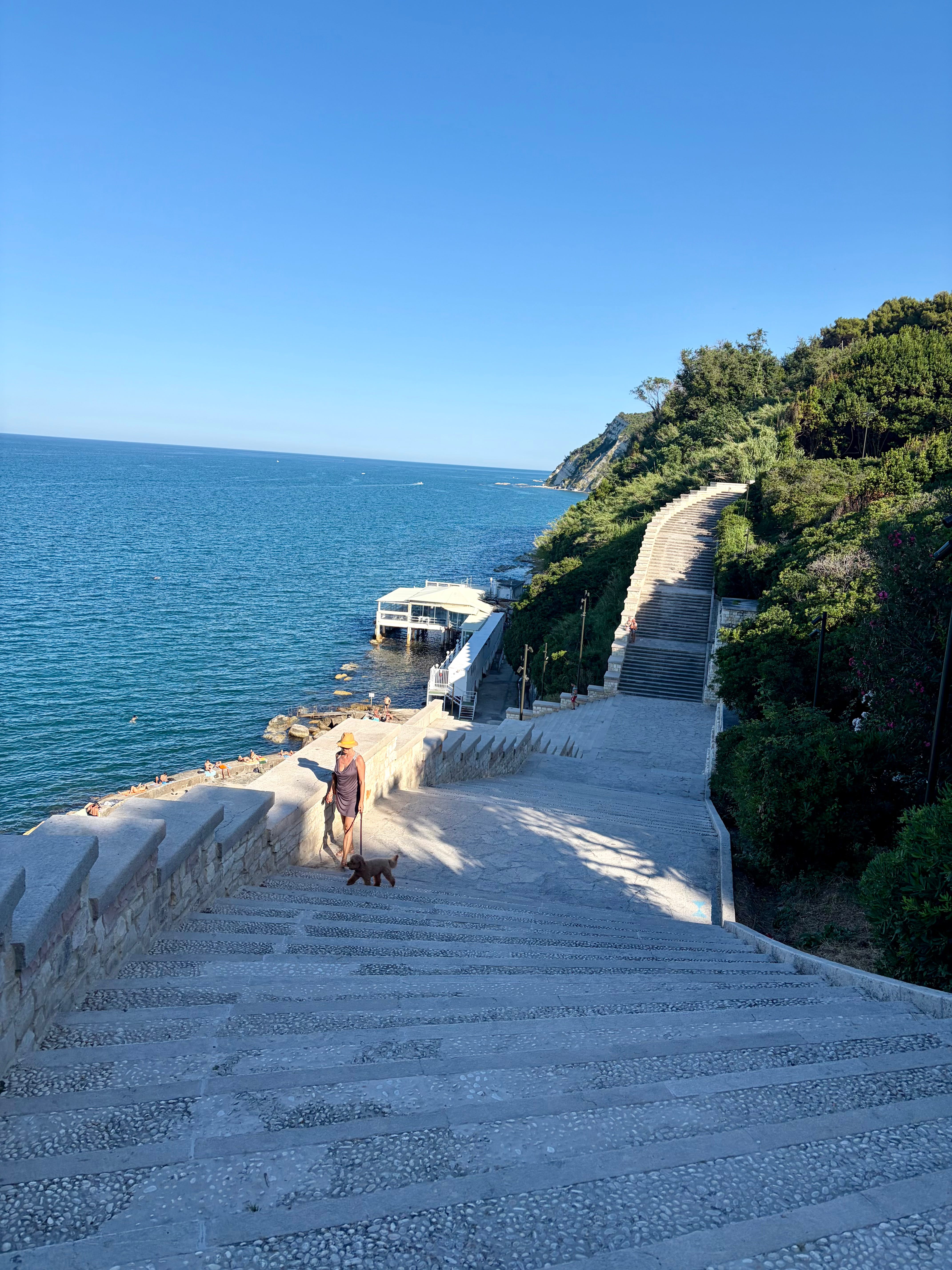
The name of the town derives from the Greek word meaning “elbow.” Ancona looks like an elbow—that is, its coastline curves like a bent arm. You can see the sunrise over the sea. And the sunset over the sea as well. And never leave Ancona.
This is one of the few places in all the world where such a thing is possible.
***
Here is a shot of the sunrise side (though in late afternoon):
***
In a supermarket, I meet a woman working in the deli. She makes a superb panino. When I tell here where I live—for she has asked me—she exclaims, “New York is my favorite city! My favorite place in the world!”
It has been so since she was a little girl. Her dream was always to go to New York—and she did it, for the first time, last year.
“Did it meet your expectations?” I ask her. “More than,” she answers.
With her family of four, she stayed three nights. They did not go to a Broadway show. As it was, the trip—for the four of them, for three nights—cost … $8,000, door to door. (Ancona is not exactly New Jersey.)
But it was worth every penny, she tells me.
Her plan is to go to New York again for her 60th birthday—which will be in seven years.
I get very, very mixed receptions to New York. What I mean is, I get a broad range of reactions when I tell people where I live. Some are like that of the lady in Ancona. Others?
For years, I was on a kind of political circuit. And I learned to avoid telling people where I lived, if I could help it. Often, New York would be anathematized (to use a Bill Buckley word). (Now there was a man who loved New York.)
“New York?” they would say. “Why, I wouldn’t live there if it were the last place …”
I wanted to tell them: “Don’t worry. No one is going to make you.”
Anyway, I could regale you with stories, but I have told them elsewhere, and I think maybe we should move on with things Italian …
***
In Ancona, I stay on Michele Fazioli Street. Chi è? Who is he, or was he? He was a nobleman, a count, who became the first mayor of the city in 1861. It all has to do with Italian unification …
***
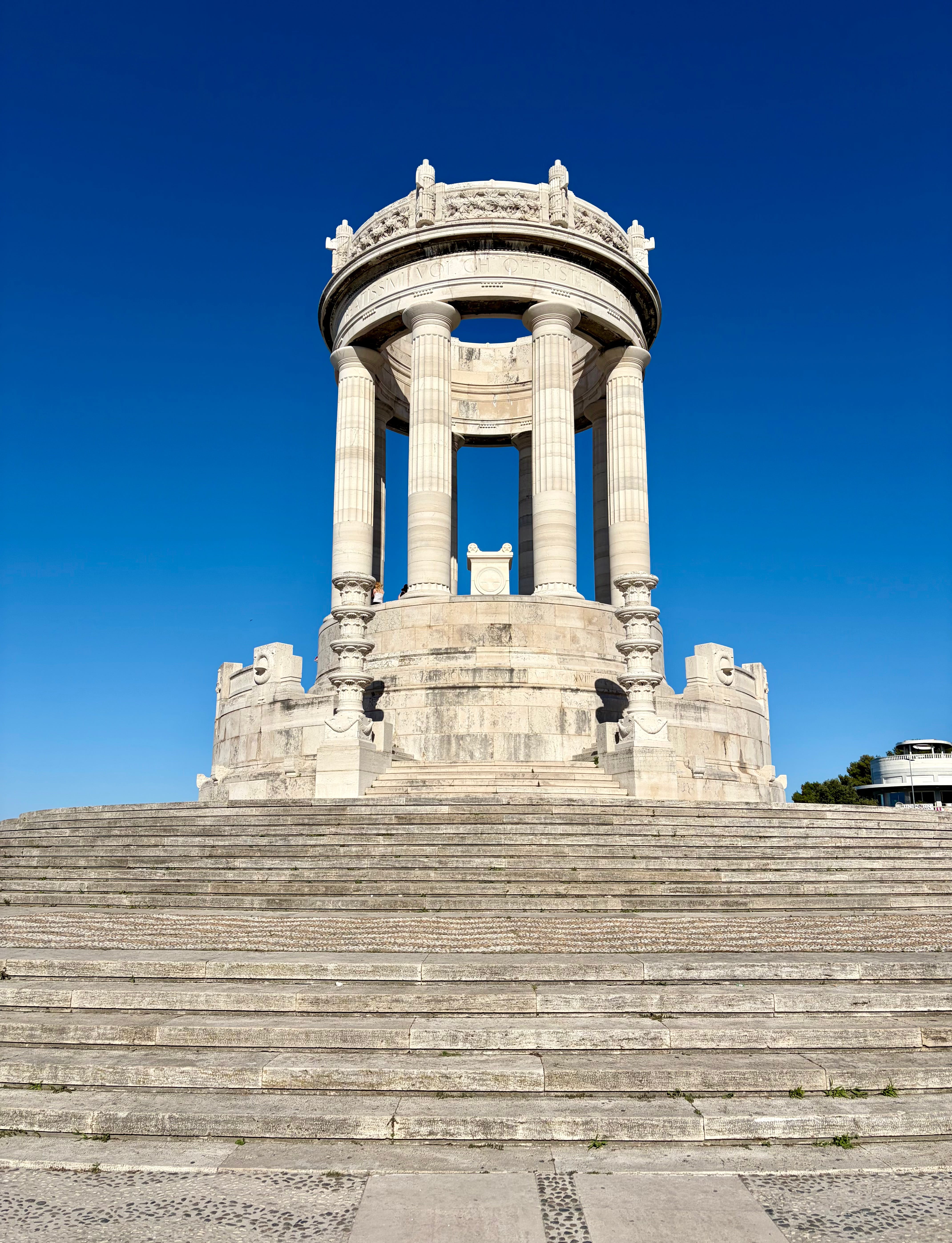
Here is the Monumento ai Caduti—the Monument to the Fallen. It was erected after World War I.
***
In back of the monument, a couple is having their wedding photos taken. An older woman looking on calls out, “Viva la sposa!” (“Long live the bride!”). The older woman’s husband then calls out, “E anche lo sposo!” (“And also the groom!”).
***
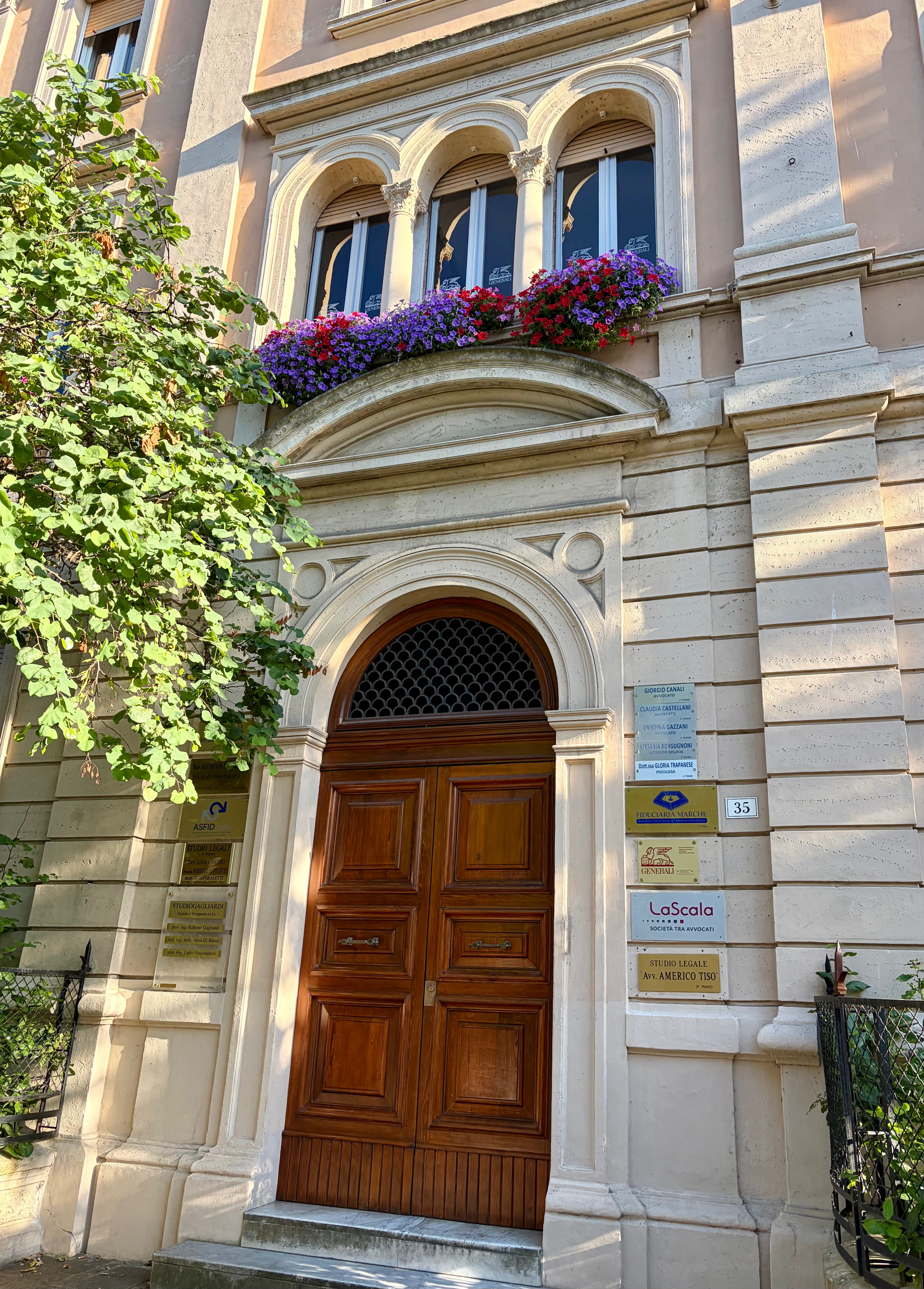
The entrance to this office building—pretty attractive, I think:
***
Above, I mentioned a count (Fazioli). Now, here’s a count:
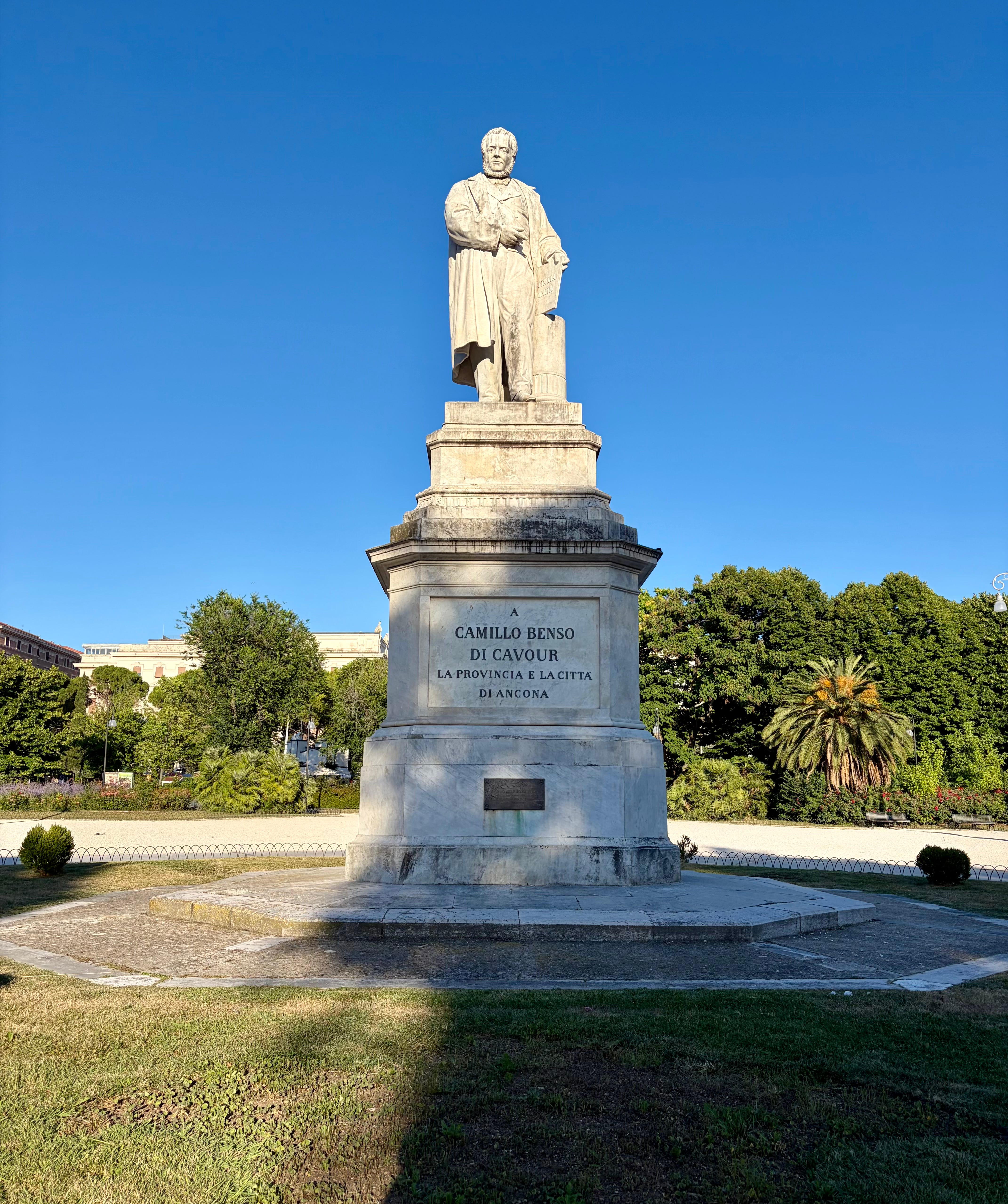
Formally speaking, we’re talking about Camillo Benso, Count of Cavour. Or to speak really formally about it: Camillo Paolo Filippo Giulio Benso, Count of Cavour, Isolabella, and Leri.
Is he the No. 2 hero of the Risorgimento, after Garibaldi? Or would it be Mazzini?
I have heard it said: “Garibaldi is the George Washington of Italy. Cavour, the Alexander Hamilton. And Mazzini, the Thomas Jefferson.”
Unfortunately, I’m not equipped to judge these analogies—but I can offer them to you …
***
Up and down the pedestrian viale, young men tend to walk in pairs and trios, and young women do the same. The boys eye the girls, and the girls pretend not to notice, while glancing furtively.
Age-old …
***
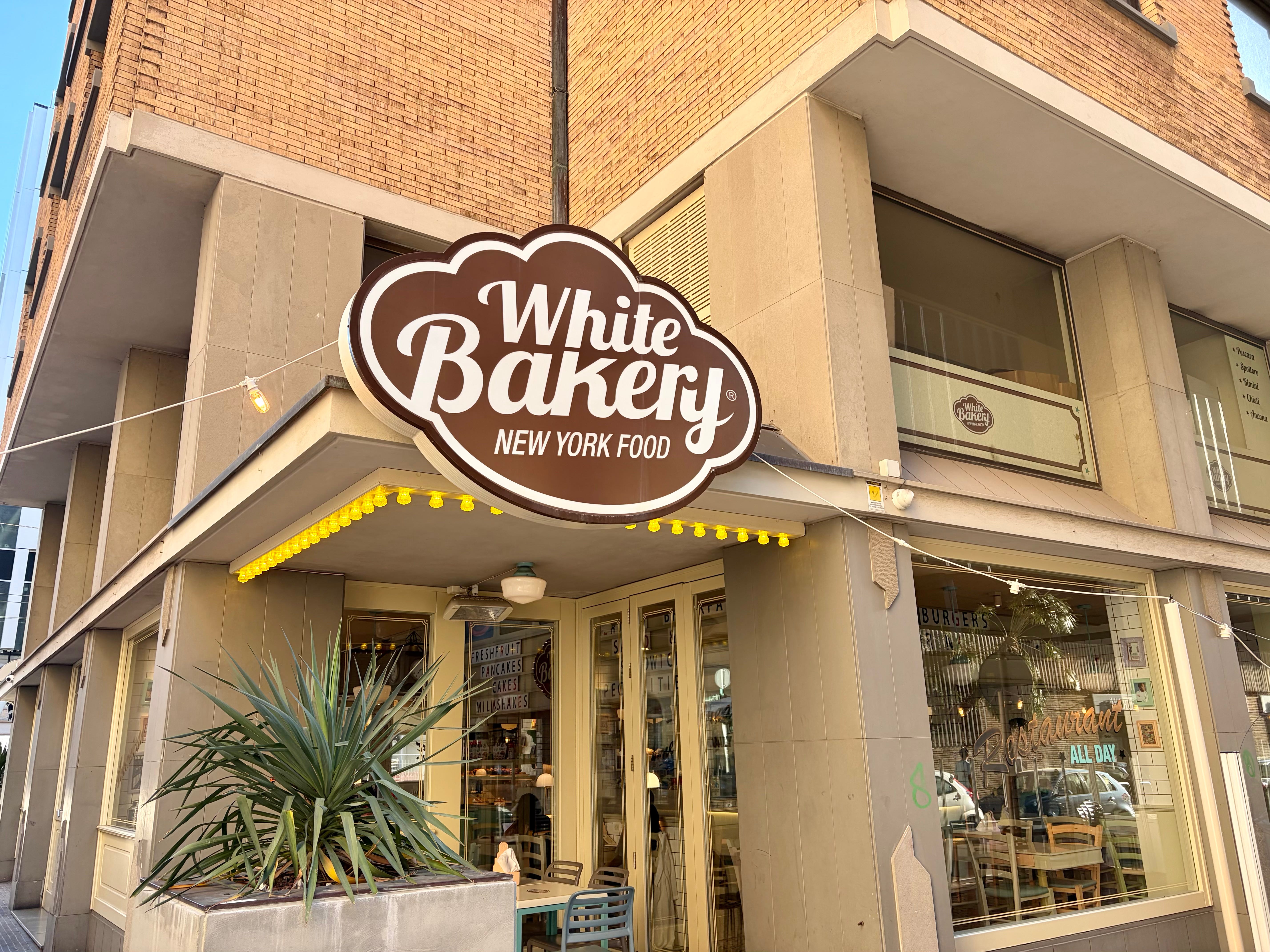
Heh, get a load of this:
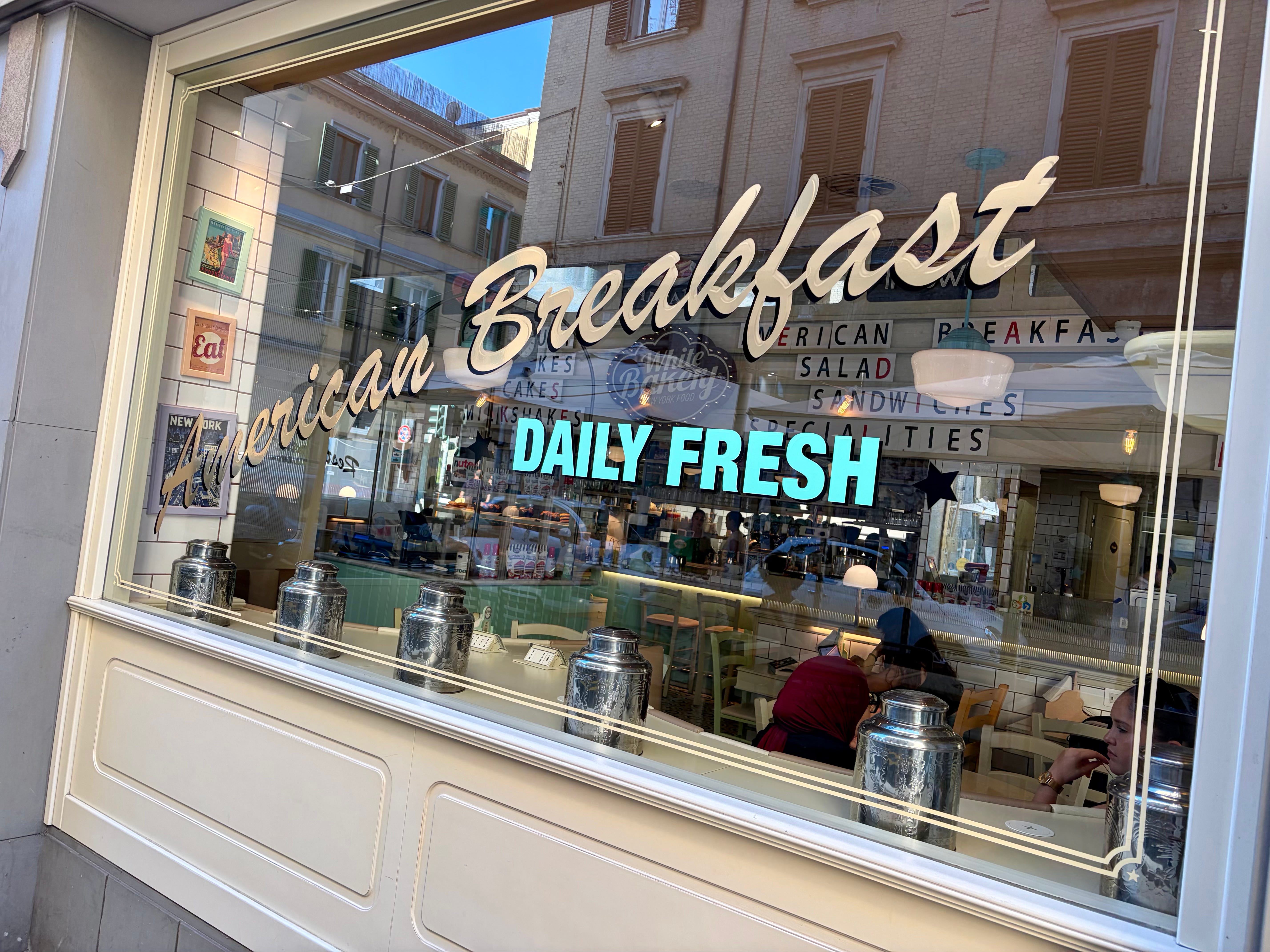
Here is a front window:
***
You know what’s good to see here in Italy? At least the towns I have been in? Bookstores. Plenty of bookstores, courtesy of Feltrinelli and Mondadori, those longtime publishers.
Viva il libro—and vivano le librerie. (Remember, a libreria is a bookstore in Italian, not a library.) (Those are biblioteche.)
***
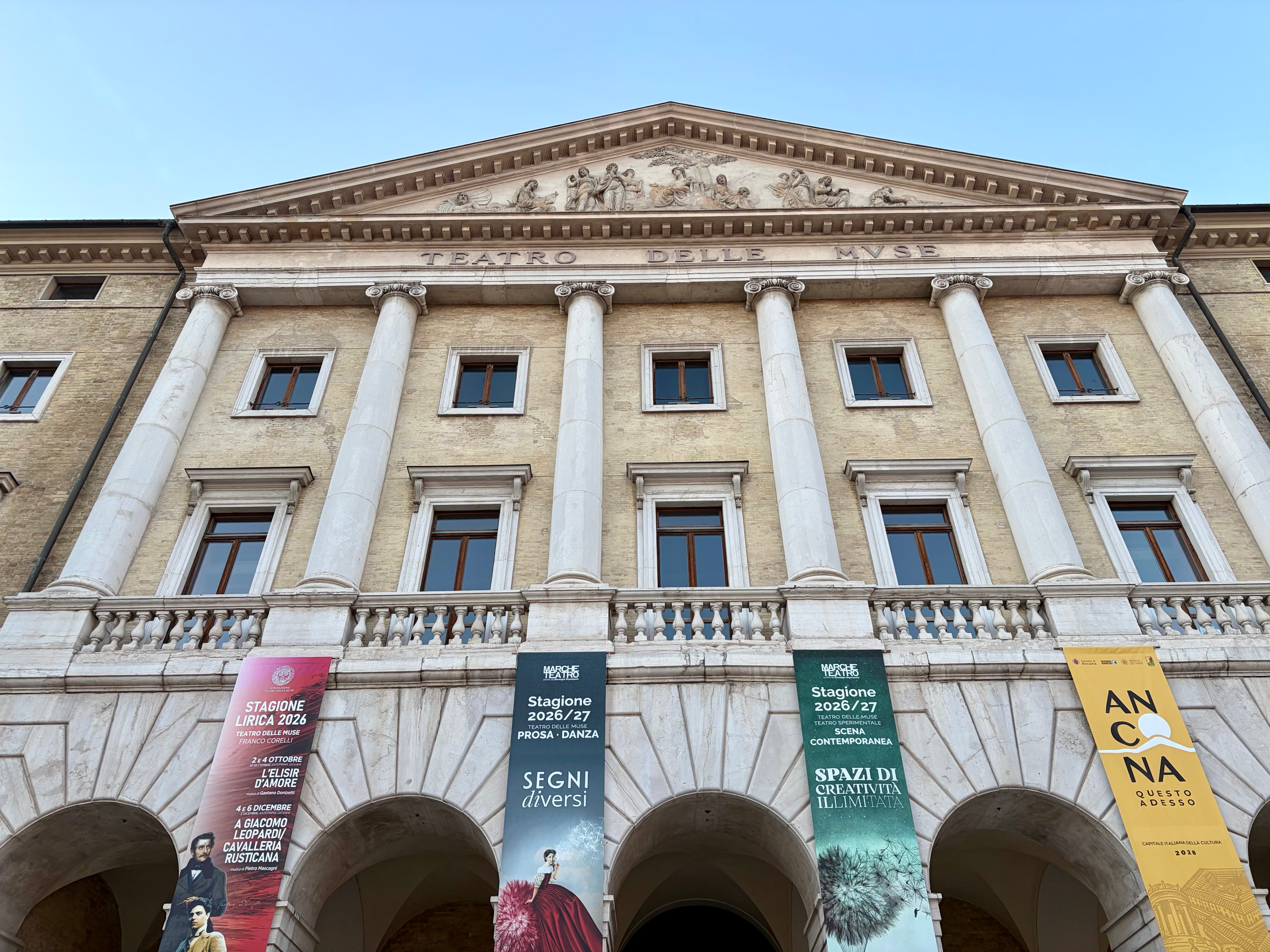
A beautiful theater with a beautiful name: “Theater of the Muses”:
***
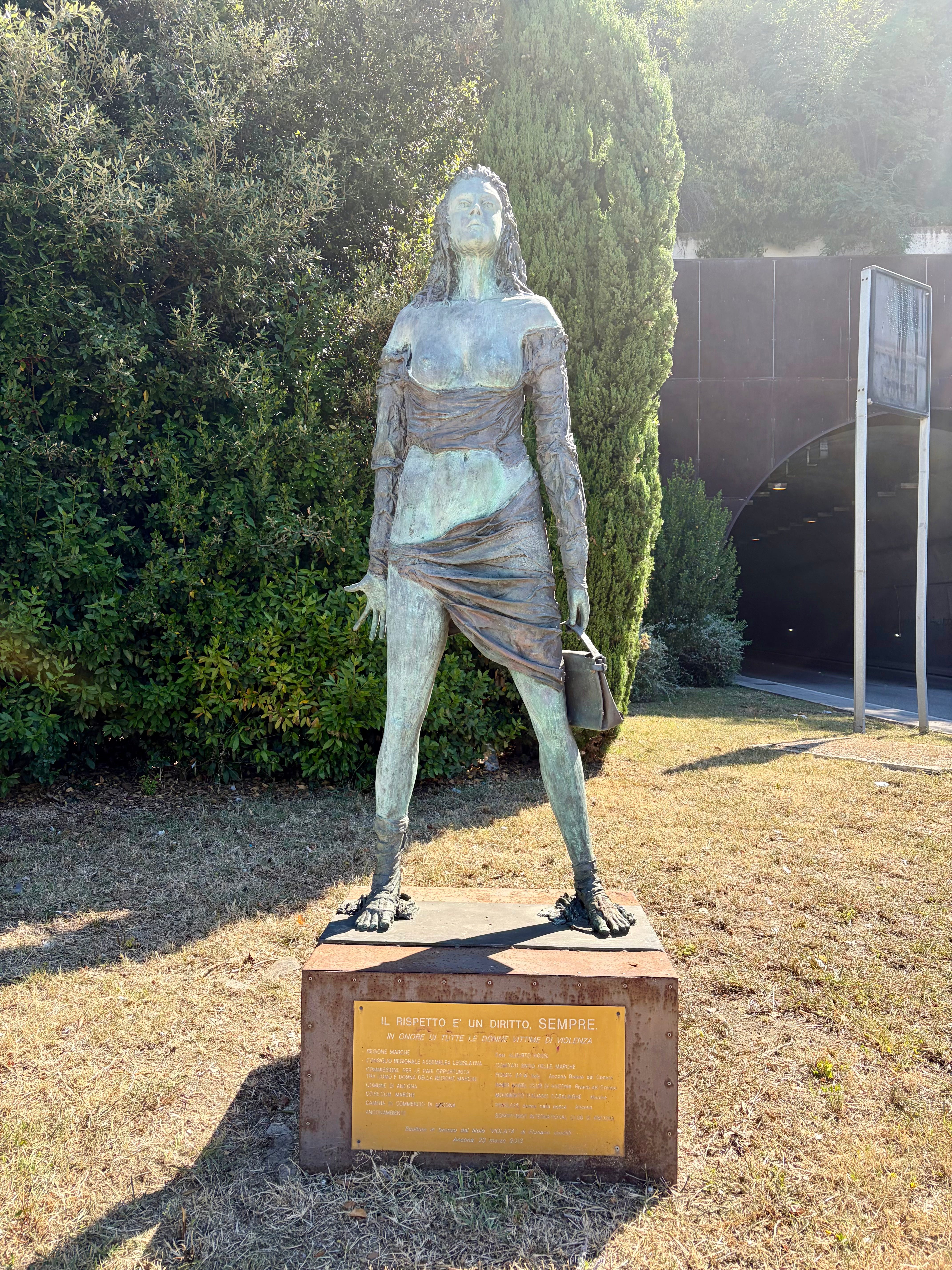
This statue was controversial when it went up in 2013. It has a blunt title: “Violata,” i.e., “Raped.” The statue is meant to honor, and call attention to, female victims of sexual violence. The more discussion of this sometimes-taboo subject, the better, I think.
***
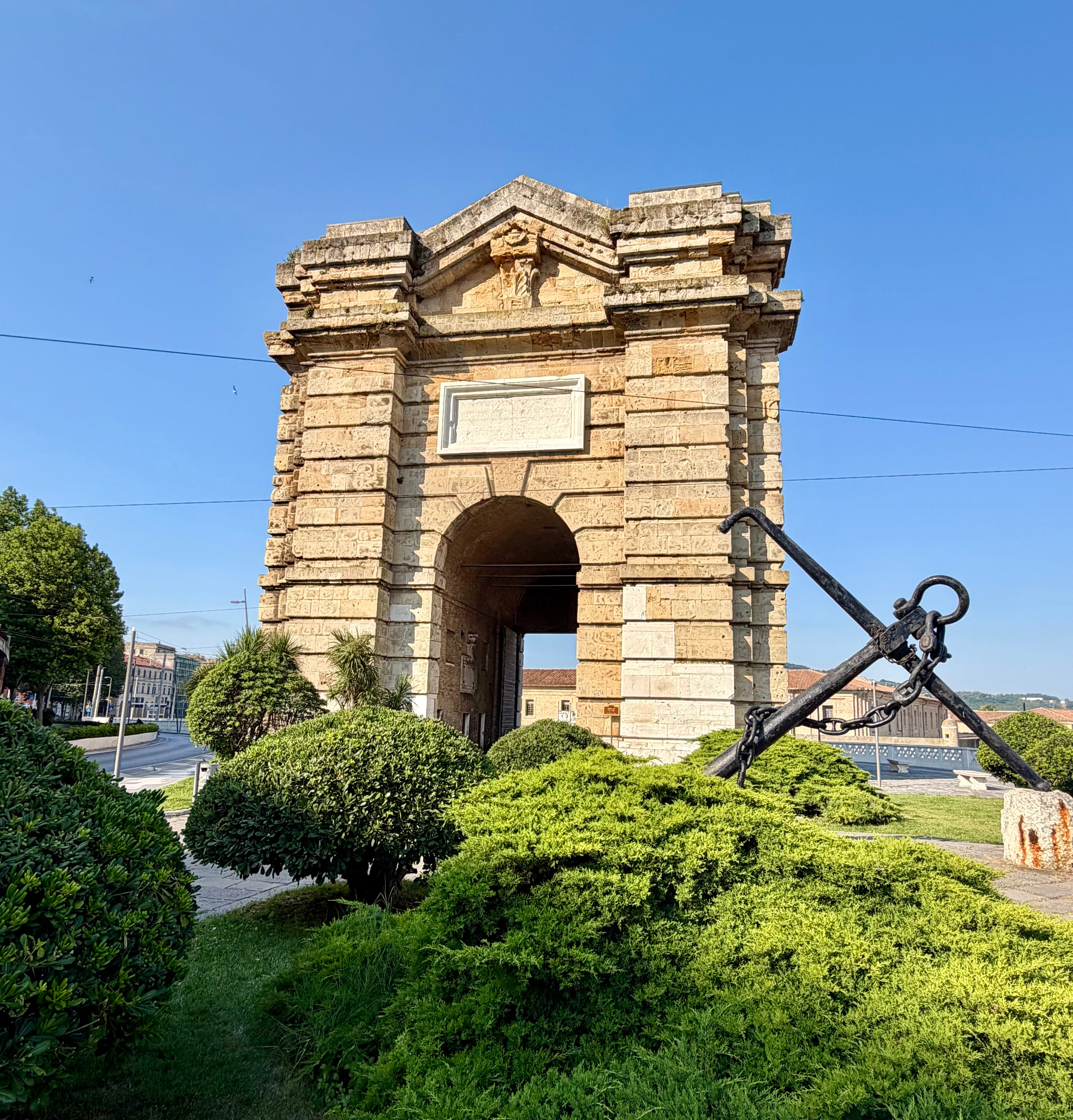
Let me end on a door—an old and monumental door: the Porta Pia, near the sunset coast of Ancona:
My gosh, what a beautiful and interesting place. See you in our next installment for another one, or two.
N.B. I had originally identified the Porta Pia as Trajan’s Arch. A classics scholar set me straight. The arch is elsewhere in Ancona. Thank goodness for classics scholars.
Due to an extended internet outage just recently resolved, I read parts I-VI in a single sitting. What an exquisite triptik. Thank you and more please!