


I saw that Jonathan Yardley had died. The headline over the New York Times’s obit said that he had “Reviewed 3,000 Books and Pulled Zero Punches.” Yardley was a superb literary critic and scholar.
As is my practice, I Googled to find out what I had written about him over the years. I saw that, in 1999, we had a … confrontation of a sort. I gulped. (I had no memory of this at all.)
I had written a piece—a review-essay—about American classical music. The occasion was a ten-CD set from the New York Philharmonic. In the Washington Post, his home, Yardley devoted an essay to my review-essay, under the title “The Misunderstanding of American Music” (which really got my goat).
His thrust was that the glory of American music lies in the popular, not the classical.
Yardley called my piece “provocative” and said various complimentary things. After quoting me a bit, he wrote,
In all of this Nordlinger is absolutely right; the lucidity and passion of his argument are exemplary. Yet he backs, however unwittingly, into the trap … of defining music in European terms.
My Googling told me that I fired off a letter-to-the-editor, rather snotty. Here is a portion:
[Yardley] points out that I failed to mention that America’s chief musical contribution to the world is its popular music, not its classical music.
I did indeed neglect to mention this, for roughly the same reason that I did not think to mention that a stitch in time saves nine, or that you should not go swimming right after a heavy meal. Anyone who would bother to utter such a truism would be hooted at.
One more portion:
Along with everybody else, I realize that America has much to offer musically that has little to do with Europe and its traditions. But, you know, a person ought to be allowed to write a piece on American classical music without writing a piece on American popular music. There is room for both types of article.
(In those days, I would have insisted on “both types of article” rather than “both types of articles.” The former is correct, strictly, although it has been widely dropped.)
I would not fire off such a letter today. I was right, sure (he said modestly), but I should have been flattered that someone so august and senior as Jonathan Yardley had bothered to read me, and that he had been so “provoked” by my piece as to write a piece of his own off it.
I wish I could tell him that right today. Instead, I am telling you, unlucky readers …
***
You want to hear a wonderful story? It comes from a neighbor of my sister’s, Emily, who comes from Wimbledon—Greater London. I can’t tell it as well as she, and I can’t recount it in her accent. But I will do my best.
When she was a child, she and a cousin walked over to the tennis tournament to see whether they could get in. They were standing around, waiting to see whether people leaving would give them their tickets. This was not allowed.
An official, gruff-seeming, came striding over to them. “You have tickets, I assume.” “Uh, yes,” the kids fibbed. The official said, “Come with me.”
They walked for what seemed like miles. Emily thought, “That’s it, we’re done for. They’ll tell our parents. We’re going to jail.” Finally, the official rapped on a wooden door. Another official opened it, inquiringly. The first official said, “These children seem to have misplaced their tickets. They are to sit in the VIP section. Please show them to their seats.”
Emily said, “Thank you.” Striding off, the official said, “Good day.”
The children were right up front, Centre Court. Someone saw them on television or in a picture in the newspaper the next day (I forget which). “How did you get there?”
I love the thought of that gruff-seeming official, performing that act.
***
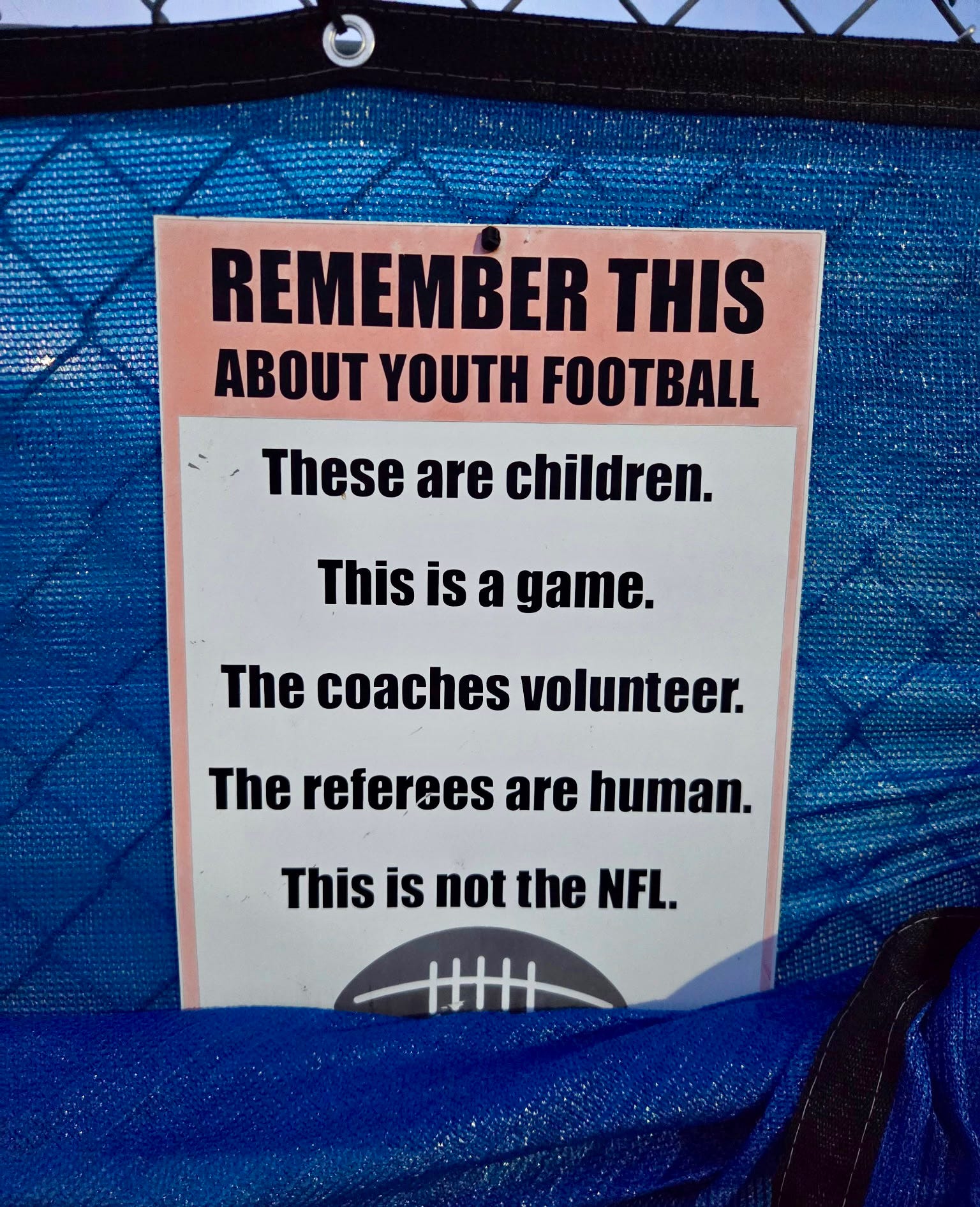
In many a column, I have noted a problem in youth sports today: the craziness of the parents. The fanaticism of the parents. Their extreme rudeness. People don’t want to ref or ump anymore—it’s not worth the grief.
I smiled when my cousin sent me this picture:
***
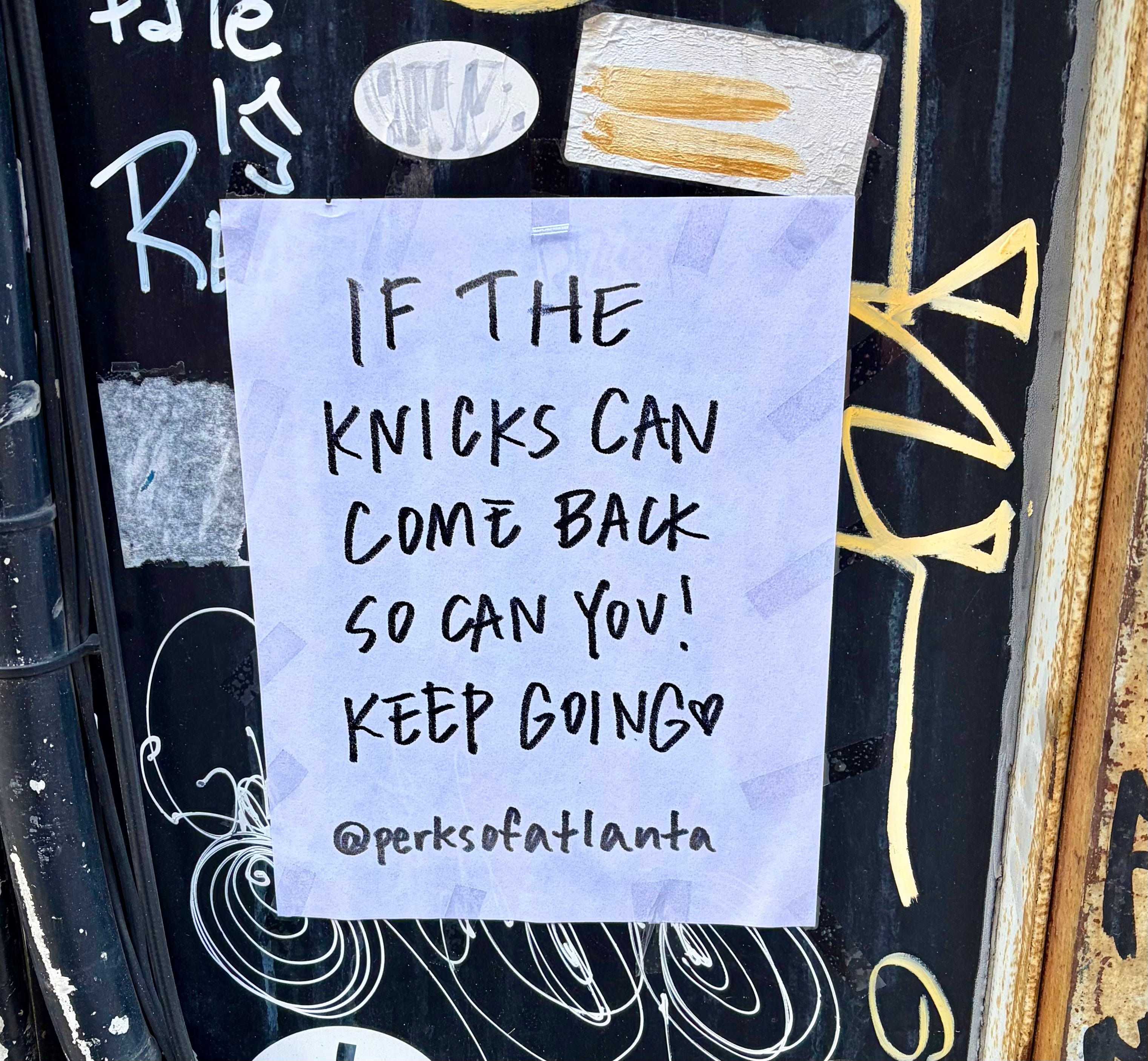
I liked this too, on the streets of New York:
***
On a bus, I sat behind two French ladies of a certain age—grandmothers. They were bavard-ing away. Sticking out of the shopping bag of one of the ladies was a baguette. Comically stereotypical, seriously great.
***
Care for some language? At the golf range, two young men were swatting away. College students, I think. One of them had been away for a while and had now returned. Said the other one to him, “So, are you, like, lit to be back?”
***
On social media, people often state an opinion or a preference and then say, “And it’s not even close.” That phrase, to my ear, suggests an insecurity—an insecurity about the opinion or preference just stated.
Case closed. I don’t want to hear any objection. We’re not talkin’ about this.
***
In a recent column, I wrote,
I wanted to share a thought, which occurred to me the other week. Young people, I understand, seldom carry cash. Society will, by and by, go cashless.
What will that do to panhandling?
A reader writes,
I saw a guy outside a Whole Foods where I live who was panhandling. He had a Venmo QR code on a piece of cardboard.
That is … modern.
***
Penelope Green wrote a delicious obit of Annette Green (no relation, I assume). The deceased was the “High Priestess” of the perfume world. She lived to 102.
I had to share this nugget:
Like many eager transplants to the island of Manhattan, she was a true New Yorker. She rarely ate at home, and if she did, she didn’t cook. Her fridge held only Champagne and Haagen-Dazs chocolate and double-chocolate ice cream. The oven in her Gramercy Park apartment, where she lived for nearly half a century, had never been turned on.
I have known ladies just like that.
Let me share the final paragraph of the obit, too:
Ms. Green never copped to a favorite perfume, but she once told a Times reporter, after explaining that sense memories were the most powerful, that her favorite smell was that of Crayola crayons.
I can smell them now, now that you mention it.
***
A pastime of the American media is to hoot at corrections in the New York Times. This is especially true of the conservative media (or the soi-disant conservative media). The thing is, the Times actually prints corrections. Corrections on matters large and small. This is good practice.
You think the hooters are so accurate? I assure you, they’re not. It’s just that no one scrutinizes them and no one cares, including them.
Here is a correction under the obit I have just cited:
An earlier version of this article misstated which kitchen appliance in Annette Green’s apartment had never been turned on. It was her oven, not her stove.
***
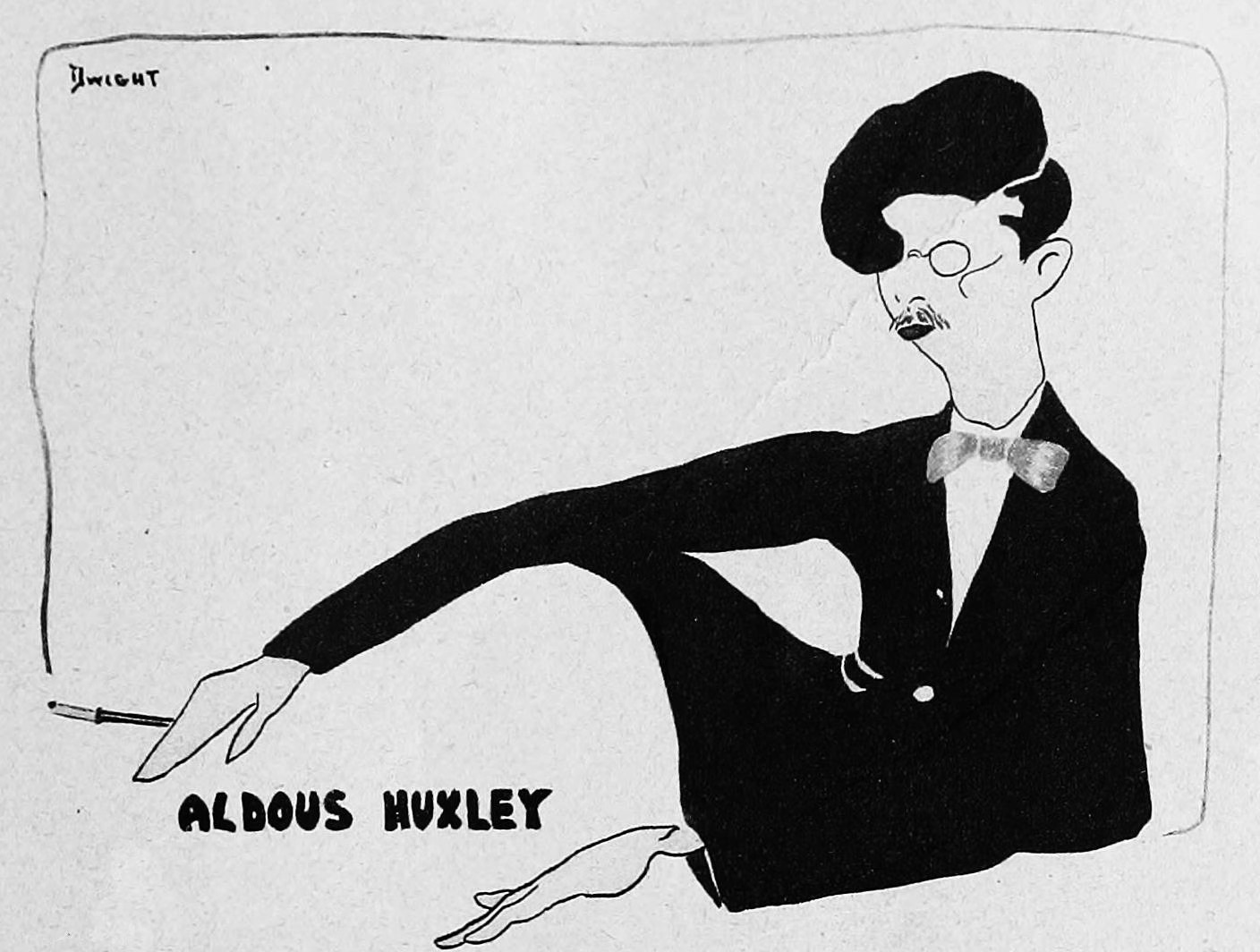
I once asked David Pryce-Jones about truly impressive people he had met (and there were scores). The first name out of his mouth was “Aldous Huxley.”
On social media last week, someone quoted from Huxley’s Island (1962):
Lightly, child, lightly. You’ve got to learn to do everything lightly. Think lightly, act lightly, feel lightly. Yes, feel lightly, even though you’re feeling deeply. …
So throw away all your baggage and go forward. There are quicksands all about you, sucking at your feet, trying to suck you down into fear and self-pity and despair. That’s why you must walk so lightly. Lightly, my darling …
I can hear my grandmother saying to me, over and over, “Keep it light.” It can be a challenge.
***
Care for some music? Here’s a review of a concert by the New York Philharmonic, with Roberto González-Monjas on the podium and Frank Huang as violin soloist. (He is the concertmaster of the orchestra.) On the program: Korngold (though not his violin concerto), Mendelssohn (his), and Strauss.
***
Photo-wise, what do I got for you? A shot of fall in Central Park:

Thank you for joining me, everybody. Thank you for reading, subscribing, corresponding. Have a happy post-Thanksgiving weekend.
Jay, after many months, I've finally caught up with you and am now a subscriber who, once again, can enjoy your musings which make you feel like a friend who lives next door.
Love the red tree peeking over the weeping willow in your photo. Looks like a Bomb Pop.