


Sometimes I begin a sentence with “If I were president” just for laughs. So … If I were president, I would give a short, crisp speech saying what our goals in Iran are. That is, what are our goals in the war? What is our purpose? How will we know whether we have achieved it?
I study foreign affairs for a living, pretty much—and I don’t know the answers. I’m not sure the president and his team do.
There is also the question of: Can you trust the president? Can you believe what he says about negotiations in Pakistan, etc.?
A reader of mine said something like this: “We have reached a strange pass when I have to check with the brutes in Iran to know whether what our president has said about what they have agreed to is true.”
Often, people roll their eyes when they hear about the importance of character. “Character is destiny” and all that. It sounds goody-goody. It sounds girly. And people—many of them—want to be all macho. “Me strong man!”
Well, strength of character is important.
***
I would like to note a report in the Guardian, mainly for the purpose of making a general point. There are many such reports. This one bears the following heading and subheading:
‘We were terrified they were going to kill us’: fishers who survived US boat strike speak out
An Ecuadorian fishing crew describe their ordeal as victims of Trump’s purported war on ‘narcoterrorists’
When I read the story, I had a painful thought: “We’re the good guys, dammit.” I mean, isn’t that our self-image, and isn’t that the reality? Hasn’t it been?
A year ago, I filed a report from Copenhagen. I had gone to talk with Danes about our new belligerence toward them: threats concerning Greenland, in particular. Maybe I could quote the last few paragraphs of that report:
Two days before coming here, I heard a talk by William McRaven, the retired admiral who commanded our special operations. He is best known for being in charge of the raid that killed bin Laden. He was speaking in New York to a gathering of the Renew Democracy Initiative, an organization chaired by Garry Kasparov, the chess champion who is now a full-time human-rights and democracy champion.
We Americans, McRaven said, have always thought of ourselves as the good guys. We have made mistakes, of course. We are not saints or angels. But on the whole, we are the good guys, standing against the darkness of the world.
To think it might be otherwise—with respect to Ukraine, Denmark, and other arenas—is incredibly bitter.
***
Usually, my language notes are at the bottom of my column. But I would like to pause for one now—two, actually.
In that Guardian headline, did you notice the word “fishers”? I’m not sure I have seen that, outside the Bible (King James Version): “Follow me, and I will make you fishers of men.”
My guess is, the Guardian uses “fishers” in order to avoid “fishermen,” which some would find sex-specific. (I would not find it so, but I’m on the losing side of that battle, among others.)
Also, did you notice the spelling “Ecuadorian”? I have always written “Ecuadorean,” which strikes me as natural. (Same with “Mozartean,” which I use regularly, in music pieces.)
***
Reading about a disruption at the UCLA law school, I thought of Jeane Kirkpatrick—a favorite memory of her, actually.
Here’s what happened at UCLA: That school’s Federalist Society had invited the general counsel of the Homeland Security Department to speak. The result was mayhem.
FIRE, which is to say, the Foundation for Individual Rights and Expression, issued a statement:
What happened at UCLA Law undermines a university’s basic function. Students have every right to object, question, and peacefully protest invited speakers. But sustained disruption preventing others from hearing a speaker has no place at a university committed to free inquiry.
All right, what about Jeane K. and “a favorite memory” of mine? I’ll quote a piece I wrote in 2020—a piece about free speech, particularly on campus:
In 1983, Jeane Kirkpatrick had to leave a stage at the University of California, Berkeley. She was then the U.S. ambassador to the United Nations, and was a veteran political-science professor. The students would not let her finish her speech. (She eventually returned and did.) Jesse Choper, dean of the campus’s law school, said, “You children should be ashamed of yourselves.” Later, Kirkpatrick said, “I have not seen a group so interested in denying free speech and discussion.”
Why is this a “favorite memory” of mine? Well, I myself was in college at the time. And I had seen speakers shouted down, prevented from speaking. Usually, they tried to soldier through. But Jeane K.? She just up and left. She left the stage with a disgusted “To hell with you” attitude. With an attitude that said, “You jerks aren’t worth my time.”
I loved her for that, and many other things.
***
Did I mention college? Well, this was high school—or the summer between my senior year and my freshman year of college. Earlier this week, the Associated Press ran a story headed “Nathalie Baye, French actor known for her warmth and versatility, dies at 77.”
I will never get used to “actor” for women, but …
Anyway, in 1982, she was in a movie called “The Return of Martin Guerre.” I saw it immediately, in part because I was a student of French. And it was hard for 18-year-old me—or most anyone else, I imagine—not to fall in love with Nathalie Baye.
***
Back to something serious—the U.S. government. Did you see this, about our secretary of health and human services? “RFK Jr. once chopped off a dead raccoon’s penis to ‘study later’ while on a family road trip.”
I think we’ve gone beyond Caligula’s-horse territory and have now entered Caligula’s-horse’s-penis territory.
***
Out of Washington, the AP reports,
Eight months after President Donald Trump declared a crime emergency in the nation’s capital and called up the National Guard, more than 2,500 troops remain, in a deployment that has grown increasingly routine, with no clear end in sight.
I’m reminded of an old lesson: Policies or practices that get implemented on an “emergency” basis may well become permanent. (In Egypt, Hosni Mubarak ruled by “emergency” decree for 30 years.)
***
“Possible Spirit rescue fuels new fears about government involvement in business,” reads the headline over this story. “The U.S. could end up owning 90% of the struggling budget airline in a potential deal under discussion. Experts warn it would set a dangerous precedent.”
Yes. If this were a Democratic administration, not a Republican one, Republicans would be squawking, mightily. And I would be squawking mightily along with them.
Also, I can’t help remembering that Donald Trump once owned an airline: the Trump Shuttle. One of his less successful ventures.
***
On social media, the journalist Ben Jacobs pointed out a correction in the New York Times. Want to read it?
Because of an editing error, an earlier version of this article misstated which day the New York Mets suffered their 11th straight loss. It was on Sunday, not Monday. Even the Mets cannot lose on an off day.
As we would have said in the ’70s, “Man, that’s cold. Cold-blooded.”
***
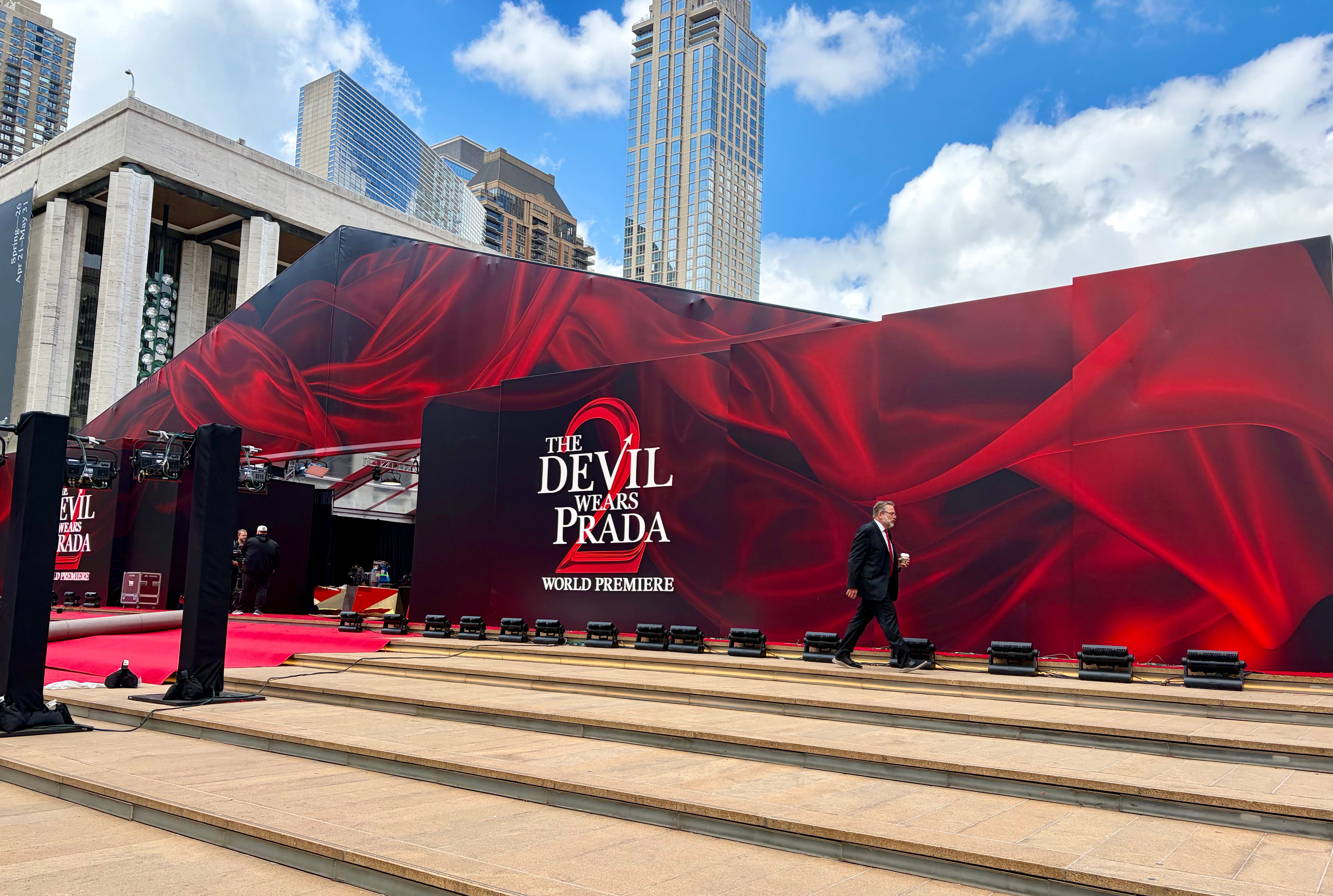
A few days ago, Lincoln Center Plaza, here in New York, got … cinematic:
And Central Park is blooming its hiney off:



Thank you for joining me today, y’all. Truly appreciate you.
I, too, was in university in 1983.
University of Western Ontario, to be exact.
There was a psychologist by the name of Phillip Rushton. He had done controversial research concluding that Asians had higher IQs than Whites, both groups in turn having higher IQs than Blacks.
A debate was arranged. Celebrity naturalist, environmentalist, and geneticist David Suzuki flew in from the west coast of British Columbia to oppose the psychologist.
Suzuki swept the floor with him.
But what I remember best about this encounter was twofold: first of all, it wouldn’t and couldn’t be allowed to take place today.
Secondly, I distinctly recall how Dr. Suzuki chastised the entire faculty of UWO for any and all lacking the courage to debate Dr. Rushton.
“Why did I have to fly 3000 kms to do what any of you could have done.”
It was a thrilling, engaging, and invigorating intellectual experience.
The whale. The bear. And now the raccoon. Why does every RFK Jr. story sound like he she be played by Chevy Chase in a movie?