


There are many vital things in the news, including the U.S. action against the Maduro dictatorship in Venezuela. I jotted some notes about it—some initial notes—on X. (Isn’t that kind of an ugly, stark name, compared with “Twitter”?) There will be time enough for those vital things. I would like to begin today with fashion—politics and fashion.
Did you see Laura Loomer, the MAGA “influencer”?

The governor’s press office had a two-word response: “it’s houndstooth.”
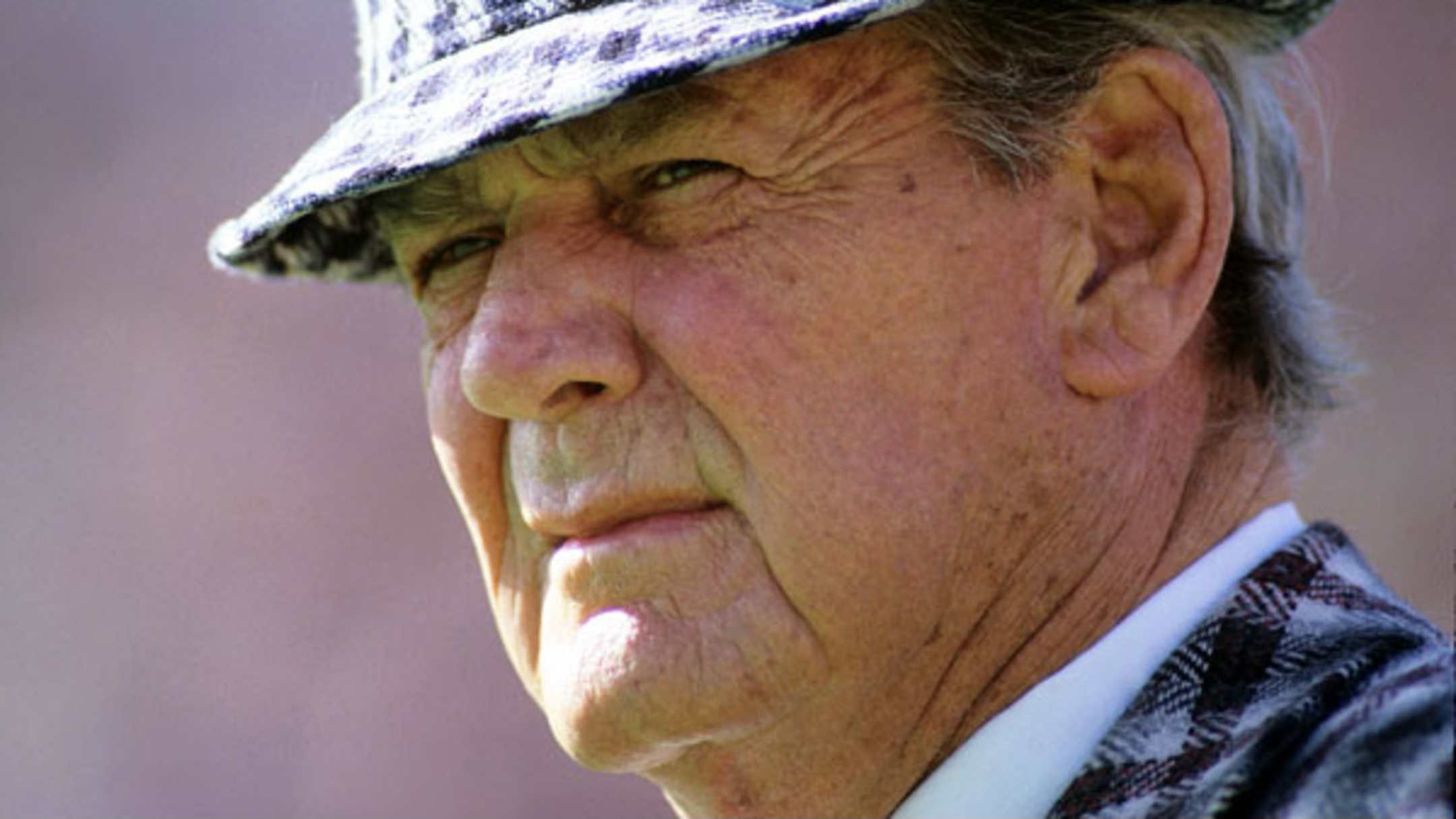
Like many people my age, I know about houndstooth for one reason: Bear Bryant. The Alabama football coach liked to wear a houndstooth hat, and the university still sells a lot of memorabilia in the houndstooth style.
If you need a definition of “houndstooth,” I’ve got one for you—or rather, Merriam-Webster does: “a usually small broken-check textile pattern.”
***
By now, you have seen this news:
Ben Sasse, a Republican former senator from Nebraska and a former president of the University of Florida, announced on Tuesday that he had received a diagnosis of terminal Stage 4 pancreatic cancer.
“Since a bunch of you have started to suspect something, I’ll cut to the chase,” Mr. Sasse, 53, wrote in a heartfelt, nearly 700-word-long message on X that cited Scripture.
“Last week I was diagnosed with metastasized, stage-four pancreatic cancer, and am gonna die.”
It is hard to know what to say. I know Ben a little. I wish he could have been president of something other than a university. (He has been president of two.) I wish the Republican Party—our politics in general—had room for him.
He is a breath of fresh air. I am grateful for his example.
***
Regular readers have heard me say this before: Years ago, I learned from conservatives that the government—especially the federal government—doesn’t have to be involved in every nook and cranny of life. In fact, it shouldn’t.
I am still a conservative, of the pre-2016 variety.
Did you see this?
The Trump administration is terminating a nonprofit’s management of three public Washington, D.C., golf courses, in what may be the latest effort to put President Donald Trump’s stamp on local institutions.
Hains Point is one of those golf courses. I spent many happy hours there, earlier in my life. (At the course’s range, in particular.)
Why is it called “Hains”? (And isn’t that spelling interesting?) The All-Knowing Wikipedia says,
Hains Point is named in memory of Peter Conover Hains (1840–1921), Major General, United States Army, who is buried in Arlington National Cemetery. He designed the Tidal Basin in Washington, D.C., which solved drainage problems and foul smell in much of the Washington-area marshlands.
The foul smells continue, at least in a metaphorical way.
(As you might imagine, I have a fair amount to say about the Kennedy Center, which Trump has renamed the “Trump Kennedy Center.” I will address the matter in due course.)
***
The latest example—or at least a recent example—of our government’s agitprop:

There is something the nat-pops—the nationalist-populists—should understand: We who favor alliances, international trade, etc.—who know that the world is connected, in important ways—are patriots, too. At least as much as they are.
(This is apart from the question of the foreign support the revolutionaries received. Say, what’s the name of that park across from the White House? “Lafayette Square,” right?)
***
I wish I knew about birds—the names of birds, the types of birds. Their calls. I wish I were a bird-watcher. I wish I knew about trees, and flowers. I wish I knew about the stars—the constellations and all that.
Have I ever roused myself to learn about these things? No. I am lazy (though my excuse is, “I know about other things, and you can’t know about everything”).
I sometimes fantasize about being a classicist—or at least having a decent acquaintance with antiquity: “Balzac and Shakespeare and all them other hifalutin Greeks” (as Mrs. Paroo says in The Music Man).
I know classicists. I greatly admired Donald Kagan, the Yale scholar. (For my appreciation of him, upon his passing in 2021, go here.) My friend Eric Simpson says, “I majored in Kagan.” Not “I majored in classics” but ... My friend Susan Kristol is a classicist (Harvard Ph.D.).
Did I ever even take a class in the subject (or subjects)? One, that I can remember: classical rhetoric. Good class, good subject, good teacher.
After I was done with formal education, I stuck a toe in—half a toe, perhaps. I wrote about this pathetic exercise in a little article for The Weekly Standard, where I was then working—summer of 1996. It was published under the title “Time for My First Declension” and published in a subsequent collection under the title “A Man and His Primer.” (Subtitle: “On (not) learning Greek.”)
Here is an excerpt:
Of the gaps in my education, the one that bothers me most acutely is that concerning antiquity. This inadequacy I feel with great force when in the company of my polymath grandmother, the once-and-forever valedictorian. To her, not knowing Greek and Latin is akin to not knowing how to tie your shoes.
My grandmother was a stellar human being. (Well, both were, but I am now talking about one of them.) I could sing of her all the day. But, to continue:
Not long ago, I was perusing her bookshelves when I lit on a small, worn volume titled The Elements of Greek. I figured I should give it a whirl, because, you know ... better late than never.
Yeah. And it always gets later ...
The book was published in 1902 and authored by one Francis Kingsley Ball, Ph.D., “instructor in Greek and German in the Phillips Exeter Academy.” Gracing the frontispiece is a serene picture of the Acropolis. Dr. Ball begins his preface with the lament that “Greek is not studied as much as it ought to be” and asks, “Are not the treasures of Greek literature richly worth the finding? May not these treasures be brought within the reach of the average boy or girl?”
Um ...
That’s about all of the preface I understand, however, because it quickly moves to a discussion of declension, oxytones, penults, mute verbs, liquid verbs, aorist systems, and the Anabasis. I look again at the picture of the Acropolis.
If my memory is right, I stuck with the book for a good three, four pages. I got through the alphabet, sort of. But ...
One final quotation, from my article:
I’ve barely learned to gurgle in this tongue, and already I’m being asked to recognize Greek sentences meaning “There was a rout of the Persian guards” and “Cowardly was the flight of the garrison.”
Let me tell you a story: Shortly after the publication of this article, I met Christopher Buckley at a gathering. He held up his finger, cleared his throat, and said, “Cowardly was the flight of the garrison.”
In the years since, that phrase has been a byword between us. Chris could write me an e-mail this very day—in 2026, 30 years later—and end, “P.S. ‘Cowardly was the flight of the garrison!’”
As I have told him more than once, he is a chip off the old block. (Both of them.)
Hang on, why did I start talking about classical studies in the first place? Oh, yeah. On X the other day, I saw something amazing: a letter sent to Ted Turner by his father when Ted was a student at Brown.
My dear son,
I am appalled, even horrified, that you have adopted Classics as a major. As a matter of fact, I almost puked on the way home today. ...
I am a practical man, and for the life of me I cannot possibly understand why you should wish to speak Greek.
You will want to read the whole thing, here.
And I have an idea (which is often trouble): What would you like to know about that you have not (yet) roused yourself to study? I have already confessed to birds, trees, flowers, stars, and classics.
If you would like to tell me—if you would like to “share,” as people say nowadays—please write mail@jaynordlinger.com. Thank you.
***
I have lots of other items for you today, but I got on that classics kick (not in the way I should). Maybe I could lay some music on you? In the form of my “New York chronicle” in the January New Criterion.
Let me end on a New York note. It has been very cold here. Some streets, you have to yourself, especially at night. You have the trail along the Hudson River to yourself, as the wind whips. (“. . . where the wind’s like a whetted knife”—Masefield.) You have the piers to yourself.
It’s interesting to have New York to yourself. “That is not New York,” you might say, and you would be right. New York is crowded, jostling. But a New York to yourself is an interesting New York.
Happy Sunday, y’all. Thank you.
Let us not forget about Pulaski and Kosiouscu !
Nice bridges too !
I think when you grow up around a classicist, you absorb a lot of history and some language, even if it’s just word roots from Latin and Greek-also an appreciation for the influence classic civilization had on our Western one.