


By now, you have heard a lot about the Supreme Court’s ruling on tariffs—it was issued on February 20. In news-cycle terms, that was like a year ago. But maybe I could jot a few generalities.
I agreed with the decision—not that my agreement or disagreement is of any importance. It just seemed to me that the majority had the better arguments.
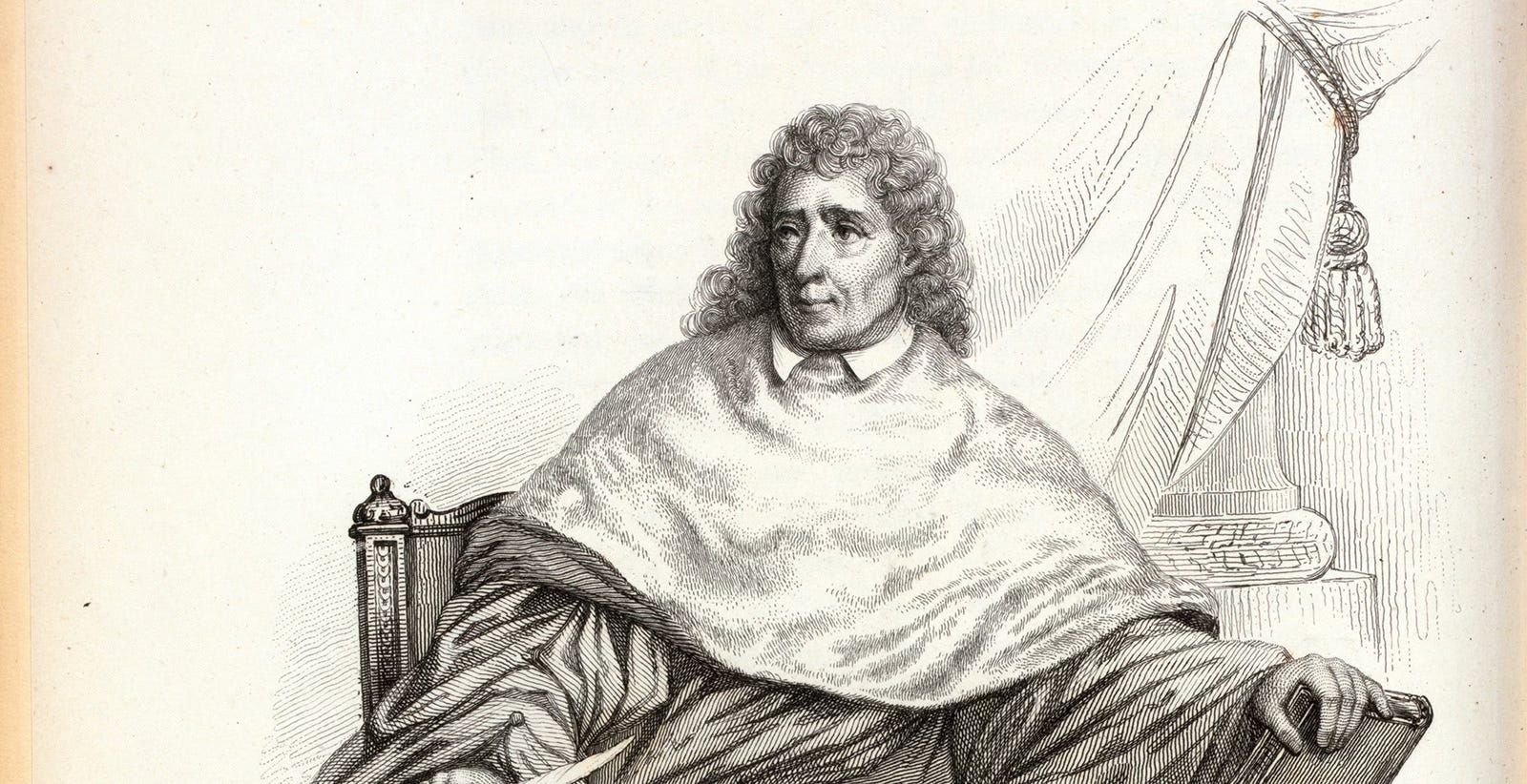
But much more important than that: the separation of powers asserted itself. I thought, “Vive Montesquieu. Long live our glorious Madisonian project.”
I often have occasion to quote an old song (heard in Casablanca): “The fundamental things apply.” In our present political era, the fundamental things apply, big-time.
As readers know, I have very strong policy views (maybe too strong, in some cases). But more important than any of them: I want our constitutional structure to hold.
“Process is more important than result.” I heard that over and over, long ago. It has stuck.
Most of us like process when it leads to the outcome we favor. We are not so hot on process when it leads to an outcome we dislike.
This is very human.
When it comes to being a check on the executive—indeed, a branch of the federal government (and the foremost)—Congress has been sleepy. I keep observing that the Speaker of the House acts more like a White House staffer than like the holder of an august and vital position.
One more thought: When the Court’s decision came down, it occurred to me that the justices had done President Trump and the GOP a favor. In current parlance, they had offered an “off-ramp.”
Tariffs are bad policy, which could lead to electoral losses (for the tariffers). Trump now had an opportunity to say, “We had these big, beautiful tariffs, but the Supreme Court screwed it up.”
Trump seems in no mood, however, to take the off-ramp. He seems bent on tariffing, by any means necessary.
***
Maybe I could pause for a language note. In English, we make a verb out of virtually any noun. I’m not sure I had heard “to tariff” until recent years. But we’ve heard it a lot now.
“If that country doesn’t behave, I’ll tariff the bejesus out of them.”
***
If I said, “There are some headlines that are shocking and not shocking at all,” would you know what I meant? Here is one from Monday: “Paris Kosher Restaurant Doused With Acid Amid Surge in Antisemitism Across France.” The article is here.
Permit a memory. In the summer of 1982, I was in Europe, which included Paris for a bit. This was right after I graduated from high school. I was learning about the world, day after day, as we all do, especially in those years.
In the Marais district (Paris), terrorists attacked a restaurant called “Chez Jo Goldenberg.” To English-speakers, it was “Jo Goldenberg’s.” A well-known place. The terrorists killed a bunch of people and injured many more.
Israel’s prime minister, Menachem Begin, said something like this: “If French authorities can’t protect Jews, we’ll do it for them.” These words might have been bravado, but I understood them, in some visceral way.
Events such as this had a lot to do with my political formation. Things that happen in the world when you’re 18 or so—they leave an impression.
I mentioned 1982, briefly, on Twitter. (That is a more congenial word than “X,” isn’t it?) Angela Hewitt responded as follows:
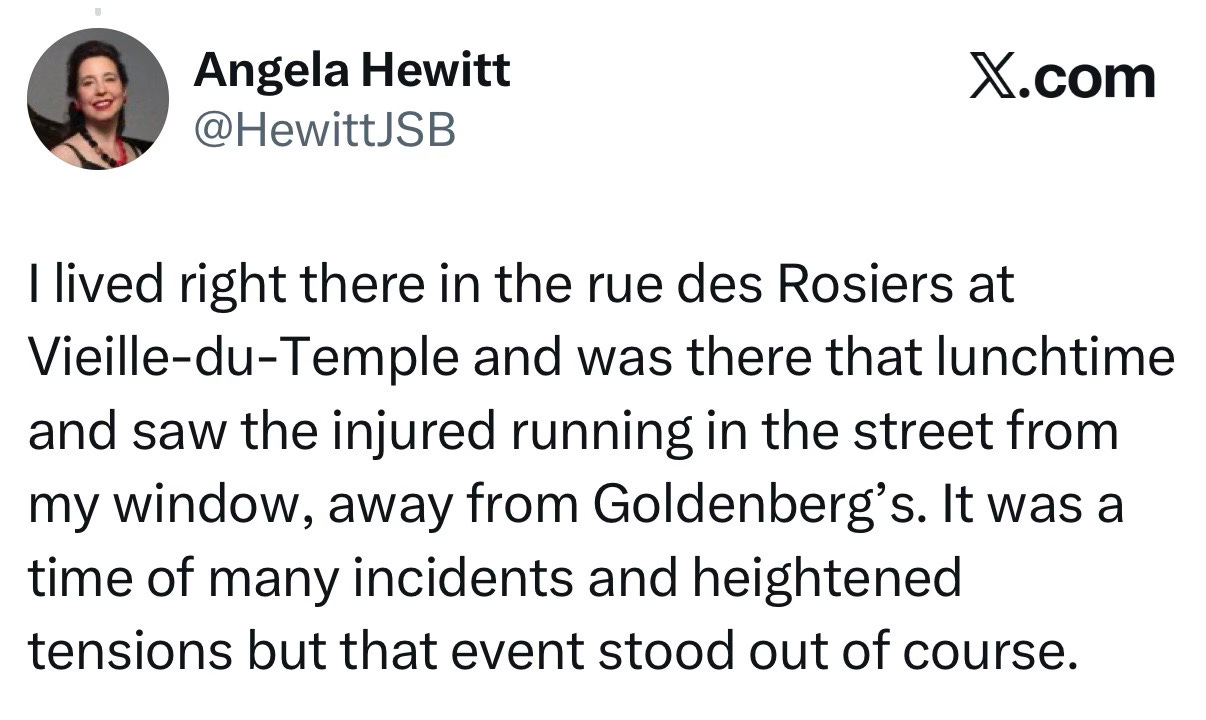
She has an interesting “handle,” an interesting username, Ms. Hewitt. Those initials “JSB” stand for “Johann Sebastian Bach.”
Angela Hewitt is a Canadian pianist, known particularly for her Bach. If you care to sample her, try this. She is playing the French Suite in G major. The taste, ungainsayable (to use a Buckley word).
***
I thought of Bill the other day. I was doing a little television: Chris Stirewalt’s Sunday show. (Stirewalt is as smooth a host as you can imagine. And a one-man political encyclopedia.) I was in the makeup room, where the artist was doing her best. (I did not give her much to work with.)
Bill Buckley started his television show, Firing Line, in 1966. His male guests were reluctant to have makeup applied. They thought it was girly.
As Bill recounted, he persuaded them by telling them this: “The makeup is not meant to alter your looks; it enables you to look like yourself, on television. Otherwise, your looks would be distorted.”
I wonder whether that’s true. In any case, it’s a good line.
***
On Twitter, Jeff Jacoby noted something noted by Irwin J. Mansdorf: here. In a survey, 45 percent of young Republicans—actually, Republicans under the age of 44—said that Jews posed a threat to “the American way of life.”
Let me try something out on you. I’ve been thinking about fascism lately. Fascism is making a comeback—a big and overt comeback—in several countries.
I grew up in a post-1945 environment (obviously). Fascism had been discredited. It had also been stigmatized. The name “fascist” was mud.
But stigmas wear off, don’t they? They can’t last forever, can they?
Fascism was popular once, all over. I suppose there’s no law saying it can’t be popular again.
Antisemitism, we have always had with us, needless to say. Antisemitism has never taken a day off. But sometimes it lurks in the shadows, and sometimes it roars in broad daylight.
For most of my life, antisemitism has been … déclassé, in America. Regarded as crude, loutish, boobish—if not evil (which it is), then disrespectable, embarrassing.
I wonder whether we have lately entered a different period.
***
Jarring change of subject (a specialty of this column): I don’t often throw science stories at you—but I want to throw this one at you. Science stories can be a nice break away from the political news.
This one is by Adithi Ramakrishnan, of the Associated Press. Its heading is, “A horse’s neigh may be unique in the animal kingdom. Now scientists know how they do it.”
I had never thought of that: a neigh’s uniqueness, or near uniqueness. It is an extraordinary sound, isn’t it?
***
Sticking with sounds, I stuck up for George Michael yesterday. Scott Lincicome, the trade whiz, was taking grief over his fondness for that singer-songwriter. I am not well acquainted with the Michael œuvre. But I certainly know “Wake Me Up Before You Go-Go.”
Which is one of my favorite pop songs ever (FWIW). Practically the equivalent of a Schubert Lied.
(One day, I might spring on you a list of my favorite pop songs. It could give you a laugh, if nothing else.)
***
Sticking with music: here is a review of Bruce Liu in recital at Carnegie Hall. Liu is our second Canadian pianist of the day, or of this column. Born in Paris to Chinese parents, he grew up in Montreal. At Carnegie Hall last week, he played the same French Suite that Angela Hewitt plays, in that link I have provided.
***
Let me end on an anecdote—a true story. At lunch the other day, I was talking with some friends of mine, who told me about a late friend of theirs: Martha Swiss. She was a lawyer, graduating from Harvard Law School in 1965. There were few other women in that class, as you can imagine. Another was Elizabeth Hanford, who would become Elizabeth Dole.
After speaking with my friends, I found an obit for Martha Swiss, here. The obit says, “At Harvard she was renowned for an audacious classroom retort to a taunt by Professor Clark Byse, model for the character Charles Kingsfield in ‘The Paper Chase.’”
The obit does not tell the tale. But my friends had.
I’m not sure that Professor Byse was taunting her, but he was certainly teasing her, probably excessively. He said, “What do you think of this, Miss Swiss?” Again, “And what do you think of this, Miss Swiss?” He was amused by the rhymes.
The young woman responded with a rhyme of her own: “That’s not very nice, Mr. Byse.”
Touché.
I looked up an obit of Clark Byse, too. I found this from the Harvard Law Bulletin. Let me paste a few sentences:
After receiving his B.Ed. degree from Oshkosh State Teachers College in 1935, Byse attended the University of Wisconsin Law School and received his LL.B. in 1938. He began his teaching career the following year at the University of Iowa. During World War II, he served in the U.S. Navy and as an attorney with the Board of Economic Warfare.
The Oshkosh State Teachers College. You don’t have to start out in swanky places to wind up in one. At least that’s the way it was. And I believe it still is.
And I thank you all, for joining me. Later on.
You’re right about the Wham! song. I was, to make a considerable understatement, not part of their fan demographic, but even when it first came out, I admitted that is one hell of a catchy, up-beat tune and would unashamedly listen to it on the car radio. (I remain considerably less enthusiastic about the rest of the Wham!-Michael œuvre, but, damn, that’s a pop song.)
1. "Congress has been sleepy." Seriously? Were you going for a masterpiece of understatement. We're talking Rip Van Winkle levels of snoozing.
2. In my part of the country, it is common to quote Nick Saban, "Trust the process."
3. I like democracy. I like sausage. But I can only handle watching so much of their making.