


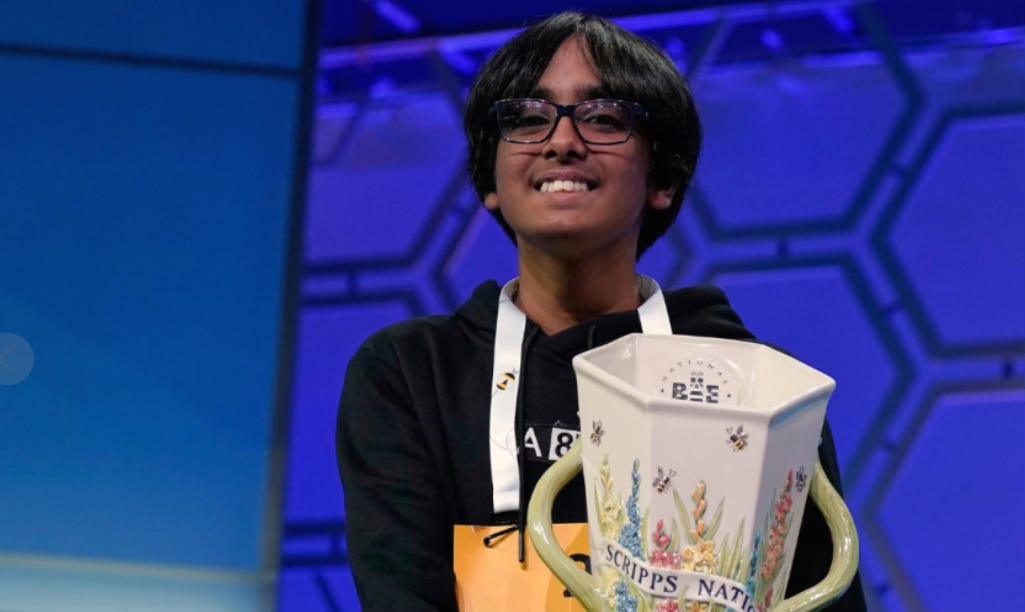
In recent weeks, there have been many articles noting an upsurge in anti-Indian bigotry—by which I mean nativist bigotry against Indian Americans. Let me quote a few paragraphs from a column by Sadanand Dhume in the Wall Street Journal:
The parallels with antisemitism are striking. Like Jewish Americans, Indian Americans are highly educated and have extremely low crime rates and welfare dependency. Both groups are “resented because they are successful,” journalist Jay Nordlinger said in a phone interview.
In 2004, Mr. Nordlinger wrote an article in National Review in which he called Indian Americans “entrepreneurial, hard-working, striving, traditionalist, family-oriented, religious, assimilationist, patriotic”—therefore natural GOP voters. That hopeful time “feels like a thousand years ago,” Mr. Nordlinger said. “The GOP has become a populist-Right party.”
Mr. Nordlinger may be overly pessimistic. … But there’s no question that many GOP-inclined Indian Americans are wondering if the party has room for them anymore.
If you are interested in reading that article from 2004, go here. It’s like a relic, dusted off by the Leakey family in Tanzania.
I wish to quote another article, this one published three days ago in The Atlantic. Its title is “The Mainstreaming of Anti-Indian Bigotry.” Let me paste a paragraph, then give you a memory from almost 25 years ago—a memory of Donald Rumsfeld:
Indian Americans, Rufo argued, are “going to grind on spelling-bee words like unlimited hours,” whereas American culture says, “You’re not supposed to study for the spelling bee.” Keeperman agreed: “What actually makes America so dynamic—it’s not the kid who studies all night for the spelling-bee test. It’s the kid who is the fullback on the high-school football team, who puts his head down and is willing to run through a freaking wall on behalf of his teammates and then spends the night drinking beers at the kegger and wakes up in the morning and gets a 1500 on his SATs, okay?”
Okay. Does America, this great star-spangled country, from sea to shining sea, have room for both? Both the spelling-bee studier and the fullback?
(Bill Buckley liked to draw on the phrase “from sea to shining sea” when indicating the continental vastness of our country and its remarkable variety.)
In 2002, Donald Rumsfeld was secretary of defense. (He had held the same position 25 years before under President Ford.) I interviewed him as he flew from one event in Colorado to another in California.
He had just seen a movie—a documentary—called “Spellbound.” First, his wife saw it, and then she said, “Come on, you have to see this.” And they went together.
The documentary is about the National Spelling Bee, and, naturally, it features Indian-American kids, among others.
Rumsfeld said that if some Martian or other stranger asked him, “What is America all about?,” he would recommend watching Spellbound.
One could certainly do worse. And I hope and trust that the spirit represented by Rumsfeld and Spellbound is still alive in our country, even in lowdown, boobish times.
***
Well, stick with Indian Americans for a moment. There is a video of Vivek Ramaswamy, the Republican nominee for governor in Ohio. It is actually an ad—a campaign ad for Ramaswamy. One friend said to me, “How in the world could his team approve this?”
The ad shows the candidate taking cuts in a batting cage—and to use the word “cuts” is very generous. The poor fellow shows virtually no acquaintance with a bat and ball.
What’s my point? To knock a guy for his batting swing? No, it is to say this: There are some offspring of immigrants who go overboard in trying to prove how “American” they are. But think of the son of immigrants in this case: He went to Harvard and Yale. He became a billionaire. Now he is in politics, another demagogue and blowhard.
Can you really be more “American” than that (I’m sorry to say)?
***
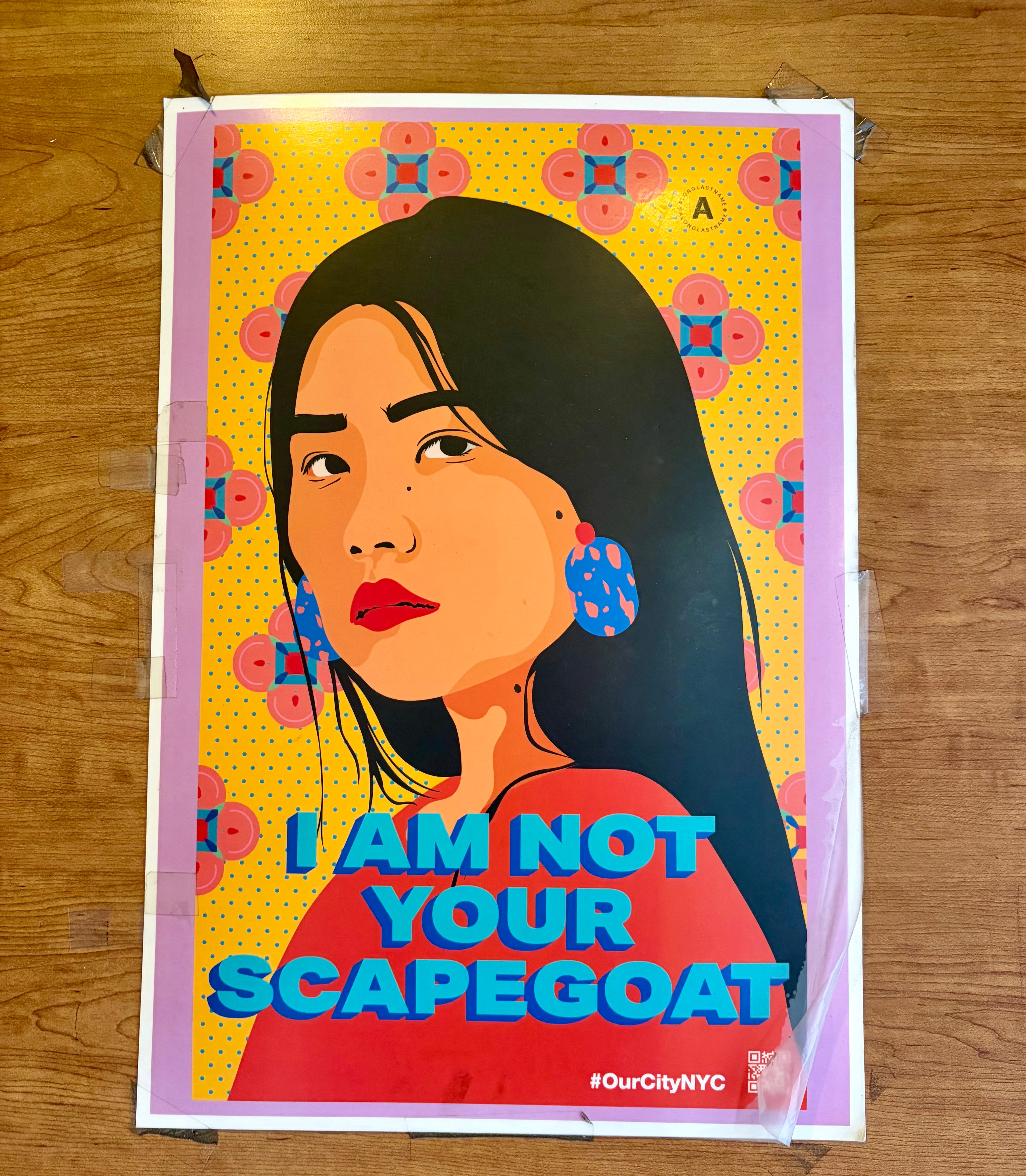
I saw this poster in a New York diner:
***
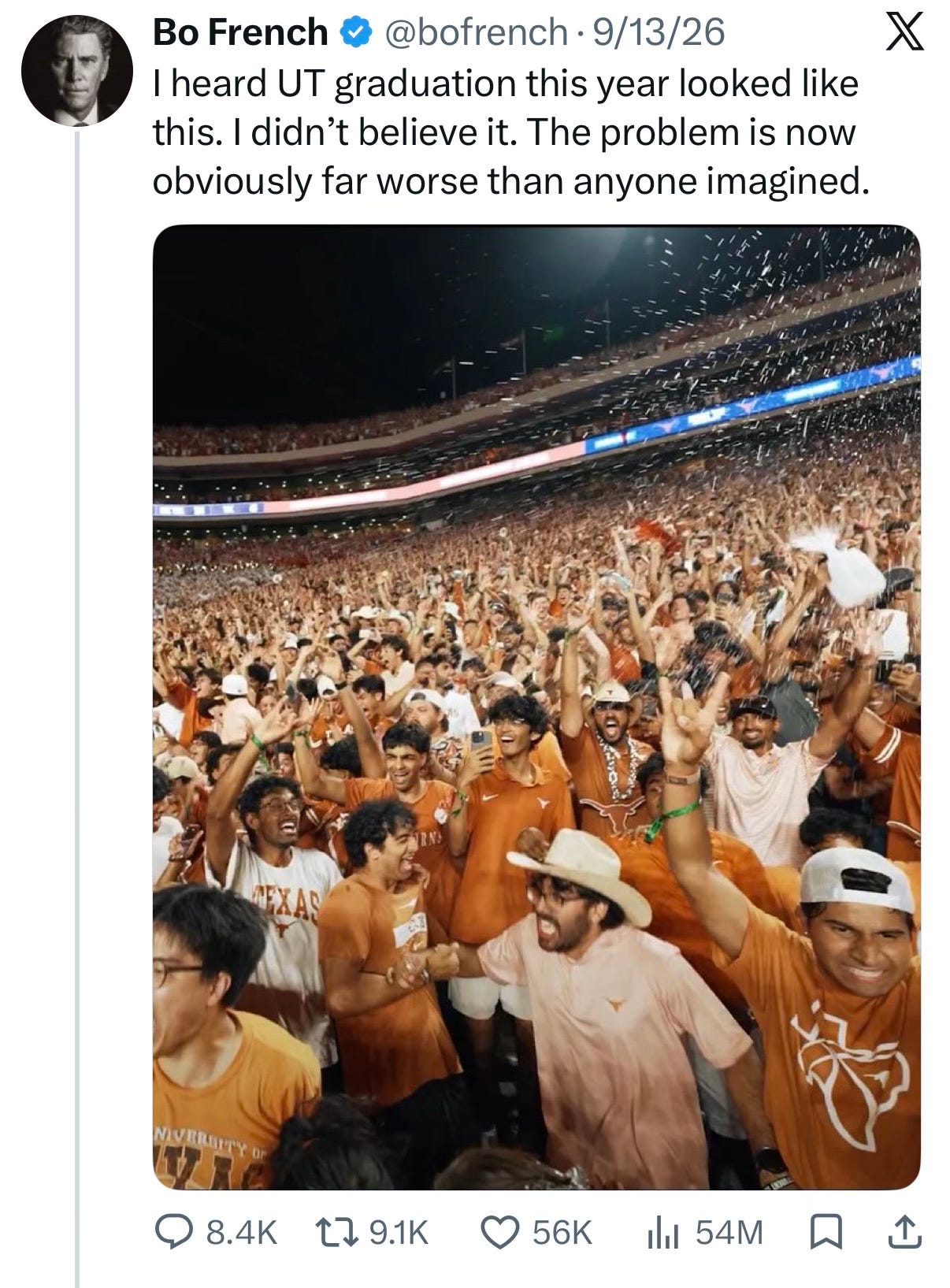
At the beginning of this column, I said that there had been a spate of articles about anti-Indian bigotry. Here is the tweet that started it all—a tweet from a Republican nominee in Texas:
The federal government, in the form of the Education Department, followed that up with a tweet of its own:
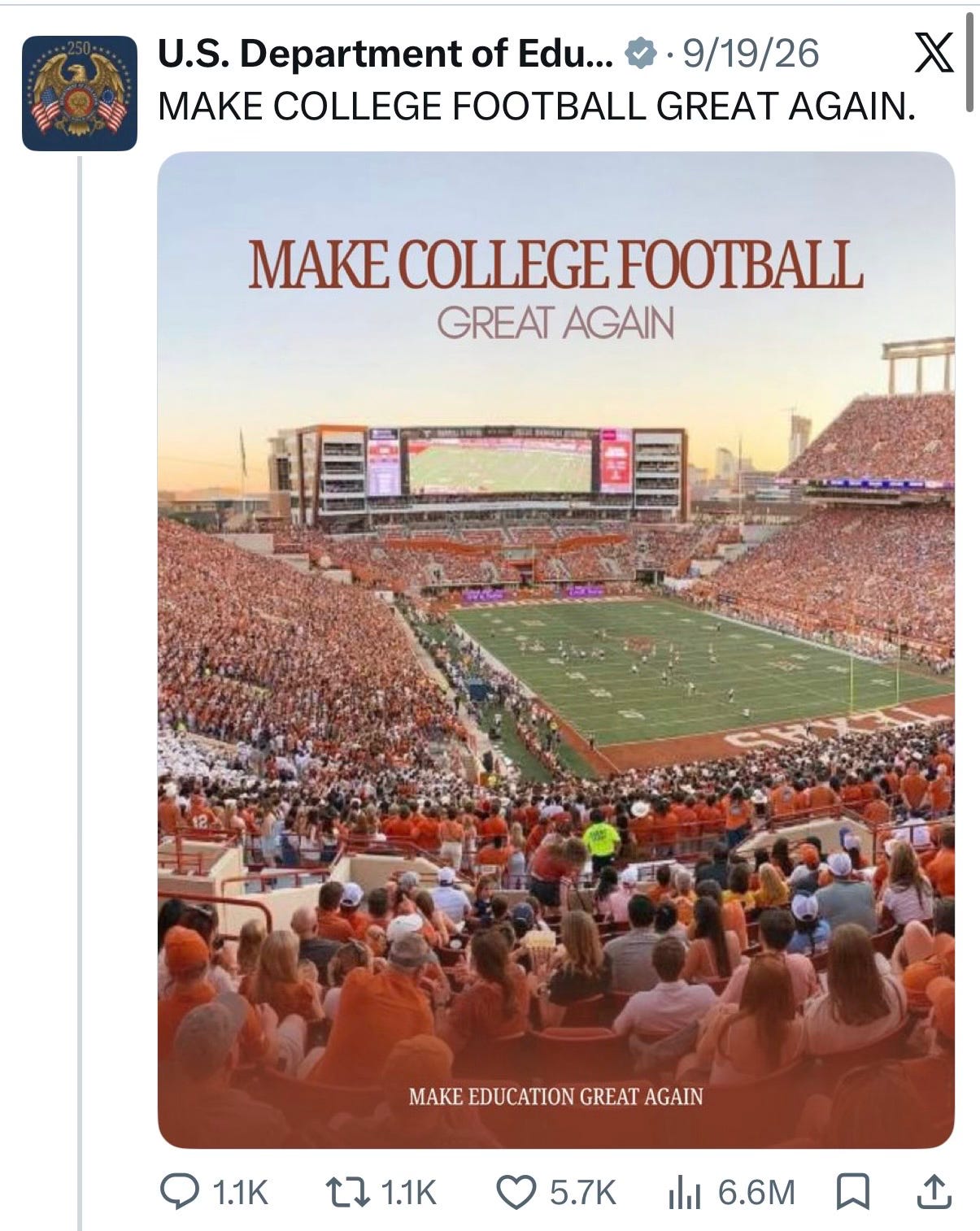
I trust this needs no explanation or interpretation.
You know what one big problem is, as I see it? Judging people as members of ethnic or racial groups rather than individuals. Now, some generalizing is necessary—a person can hardly think, talk, or write without generalizing. In that 2004 article, I generalized that Indian Americans were “entrepreneurial, hard-working,” etc.
But you know what we all are? Individuals. This ought not to be forgotten, and I regard it as very American (and classically liberal).
***
Let’s do a little language, and praise Ken Paxton at the same time. Yes, I will. Paxton is the attorney general of Texas and the Republican nominee for the U.S. Senate. He is the perfect specimen of the corrupt MAGA politician. He is so corrupt, he was impeached by the Republican house in his state, before being let off the hook by the Republican senate. Naturally, Republican primary voters wanted him to be their nominee for the U.S. Senate.
A recording has been leaked in which Paxton explains that he does not have genuine control over his campaign, because everything is coming “from D.C.” But my interest is grammatical. At the end of the recording, Paxton says that “we are maximizing every cent so that people understand the difference between him and me”—meaning between him and his Democratic opponent.
Well, score one for Paxton. In this age of vanishing grammar, he knows how to use his pronouns.
Pronouns are an issue in our politics, aren’t they? (But not the ones I’m talking about …)
***
“Bob Pettit, N.B.A. Great for the Hawks, Dies at 93.” For that obituary, published in the New York Times, go here. By the way, I find it interesting that the Times still puts periods in “N.B.A.” I do not. Also, I write “CIA,” “not C.I.A.” But I am inconsistent.
I always do “U.S.,” not “US,” because the latter reminds me of “us,” to rhyme with “fuss.” I also do “U.N.” But, abbreviating “United Kingdom,” I do “UK.” Why?
To heck with abbreviation and back to Bob Pettit. I wish I had been at this game:
Pettit turned in one of the most brilliant playoff performances in N.B.A. history on April 12, 1958, when he scored 50 points, including 19 of the Hawks’ last 21, in a championship-clinching 110-109 victory over the Boston Celtics at Kiel Auditorium in St. Louis in Game 6 of the playoff finals.
Many years later, Pettit said, “In the last quarter, I wasn’t sure what was happening. I was getting the ball, shooting it, and it was going in. I wanted the ball because I didn’t think there was anything they could do to stop me.”
We have a word for that now: “unconscious,” with the first syllable usually drawn out, when spoken.
Bill Russell said, “Bob made ‘second effort’ a part of the sport’s vocabulary. He kept coming at you more than any man in the game. He was always battling for position, fighting you off the boards.”
Many of us could use some of that quality in life—life “its ownself,” as Dan Jenkins would say.
Finally, I want to quote a portion of the obit concerning Bob Pettit’s upbringing:
He did not make the Baton Rouge High School basketball team as a sophomore, but he joined a church league and practiced nightly by shooting tennis balls at a makeshift hoop in his back yard, bending a wire into the shape of a basket.
I just love that, and I believe I can see it. I had a friend who, as a boy, practiced in the freezing cold—outdoors in Michigan—until he got frostbite in his fingers. With the onset of every winter thereafter, he felt his fingers tingle, a reminder of his earlier diligence (or foolishness?). He welcomed the sensation, too—for it meant, “Basketball season has arrived.”
Thank you for reading, thank you for subscribing, thank you for being.
Jay, this column is one of your best ever columns and that’s saying something.
I’ve read so many of them over the years.