


The train I’m on pulls into Trenton, the capital of New Jersey. “Is it the smallest state capital?” I wonder. I think I read that somewhere. Later, I look it up: No, Annapolis is the smallest state capital, by area. Trenton is No. 2. The smallest capital by population is Montpelier, with 8,000 residents. Trenton has a whopping 90,000.
***
I see a sign for Wallenberg Avenue, making me reflect on Raoul Wallenberg for a minute. Through the “protective passports” he issued, he saved something like 4,500 people. I have a little speech on Swedish neutrality, which I’ll spare you. But some good came out of that neutrality.
Wallenberg was able to issue those passports because he was an envoy from a neutral nation. If he had been Danish or Norwegian, we would not have heard of him.
Denmark and Norway did not want to be involved in the war, obviously. They had wanted to stay out, as all three Scandinavian states had in the first world war. But they were invaded, and ...
Sorry, I fear I’m launching into my speech ...
***
I am going to the village of Lawrenceville, home of the Lawrenceville School, one of those top-drawer prep schools in America. It was founded in 1810. For generations, it was known as a feeder school to Princeton.
“Of” Princeton? What is the desired preposition there?
Anyway, Lawrenceville is about 6 miles from Princeton and roughly equidistant between Philadelphia and New York (closer to Philadelphia).
The campus is beautiful, dreamy—out of a movie set. It covers about 700 acres. The place was designed by Frederick Law Olmsted (of Central Park fame) and the architectural firm of Peabody & Stearns.
Beat that, as Bill Buckley would say.
We used to say of a new car—I don’t know whether they still do—“It’s fully loaded.” Well, the Lawrenceville campus is fully loaded, with all the facilities, all the bells and whistles.
***
I am a guest of Ash Shah, who is a teacher here. He’s a Lawrentian himself, meaning an alumnus of the school. What does he teach? English, officially, I think. But he also teaches history, international relations, and maybe other subjects. He is a Renaissance type.
***
A group of us has dinner at Foundation House, where the headmaster lives. These days, they say “head of school,” because “headmaster”—the “master” part—is bad, you see.
This makes me gag. What about a master’s degree? What about the golf tournament in Augusta, Ga. (the Masters)?
Anyway, the headmaster, the head of school, has made a roaring fire at Foundation House. Are there non-roaring fires? I suppose so.
David Pryce-Jones cautioned me against clichés such as “grievous error” and “fatal flaw.” “Roaring fire” may well belong in that category.
Lawrenceville’s head of school is Steve Murray, who embodies the phrase “a scholar and a gentleman.” He went to Phillips Exeter, Williams, and Harvard. In appearance, he’s fit as a fiddle and sports a bodacious mustache.
Presidents such as Cleveland, Roosevelt (Theodore), and Taft would be impressed.
In addition to his administrative duties, Steve teaches French literature. “What are you guys reading now?” I ask him. The answer: Les Liaisons dangereuses. Holy moly, smut at Lawrenceville?
I like it.
***
Around the dinner table are various teachers and administrators. Ash Shah is to my right. To my left ... well, let me sketch the dramatis personae.
A young man from Costa Rica who studied in China and who worked in Maine. Think of it. Costa Rica, China, and Maine are worlds apart—not just geographically but mentally, culturally, as well.
A mild-mannered, professorial Quebecker who teaches calculus and who, I’m given to understand, is an absolute beast on the ice. An accomplished hockey player.
A young New Englander who teaches English and who is 6-foot-3 but whose twin brother is 6-foot-6.
An Aussie of Greek origin who teaches economics. He grew up in a labor household—indeed, a communist one—but went his own way …
A man from St. Louis who studied at Amherst and who teaches math but who is—above all, I think—a violinist.
***
We talk about a slew of issues, most of them having to do with education. We recall the teachers who had a special influence on us. What makes a good teacher? There are many ingredients, but I like what an old educator once said: “In the end, all you have is love and your own example.”
Here at Lawrenceville, they practice the Harkness method of education. What’s that? I will call on the almighty Internet:
Harkness education is a student-centered, discussion-based learning method developed at Phillips Exeter Academy in the 1930s. It involves 12–15 students sitting with a teacher around an oval table, collaborating to explore ideas, solve problems, and analyze material. The approach emphasizes student-led conversation, critical thinking, active listening, and equal participation, with the teacher acting as a facilitator rather than a lecturer.
Ay caramba. That was just what I feared when I was in school. I’m thinking of college, in particular. On the first day of class, the prof would say, “Now, we’re all going to learn from each other.” I’d think, “Really? I’m going to learn from these a-holes who are puking in the toilets every night? What are you here for? They don’t know anything. And if they think they know something, they don’t, trust me.”
I am even for the dreaded “rote education”: the memorization of names and dates and so on. There has to be a foundation of facts—of solid knowledge—before opinions can begin. “How firm a foundation.”
Anyway, this is a big topic, and I can’t do it justice in a breezy lil’ journal. I have no doubt that they know what they’re doing here at Lawrenceville. Maybe I could conclude with an observation—something personal:
To the dominant Right today—a nationalist-populist Right—I am no conservative. In truth, I am so conservative, I might as well be fossilized.
***
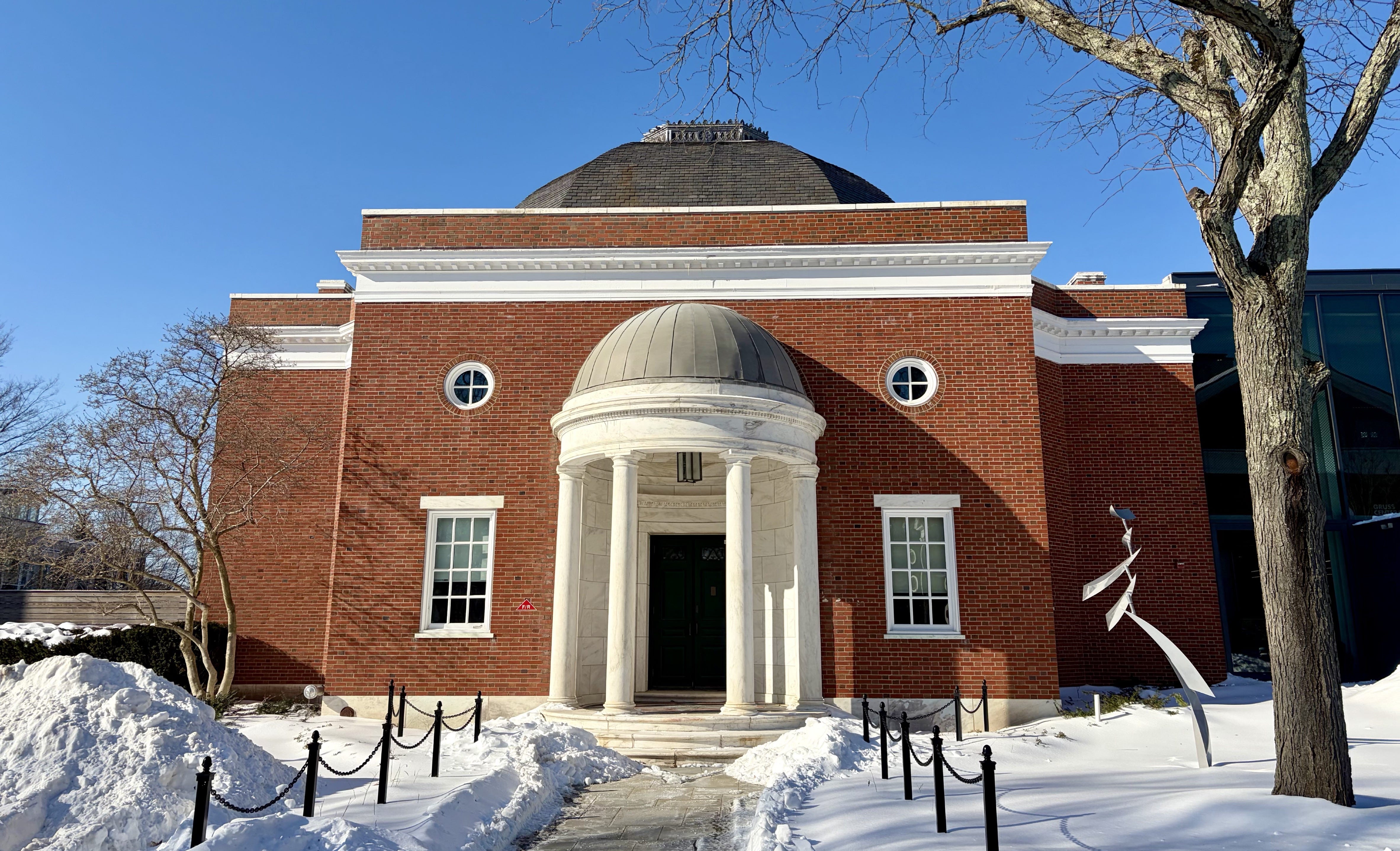
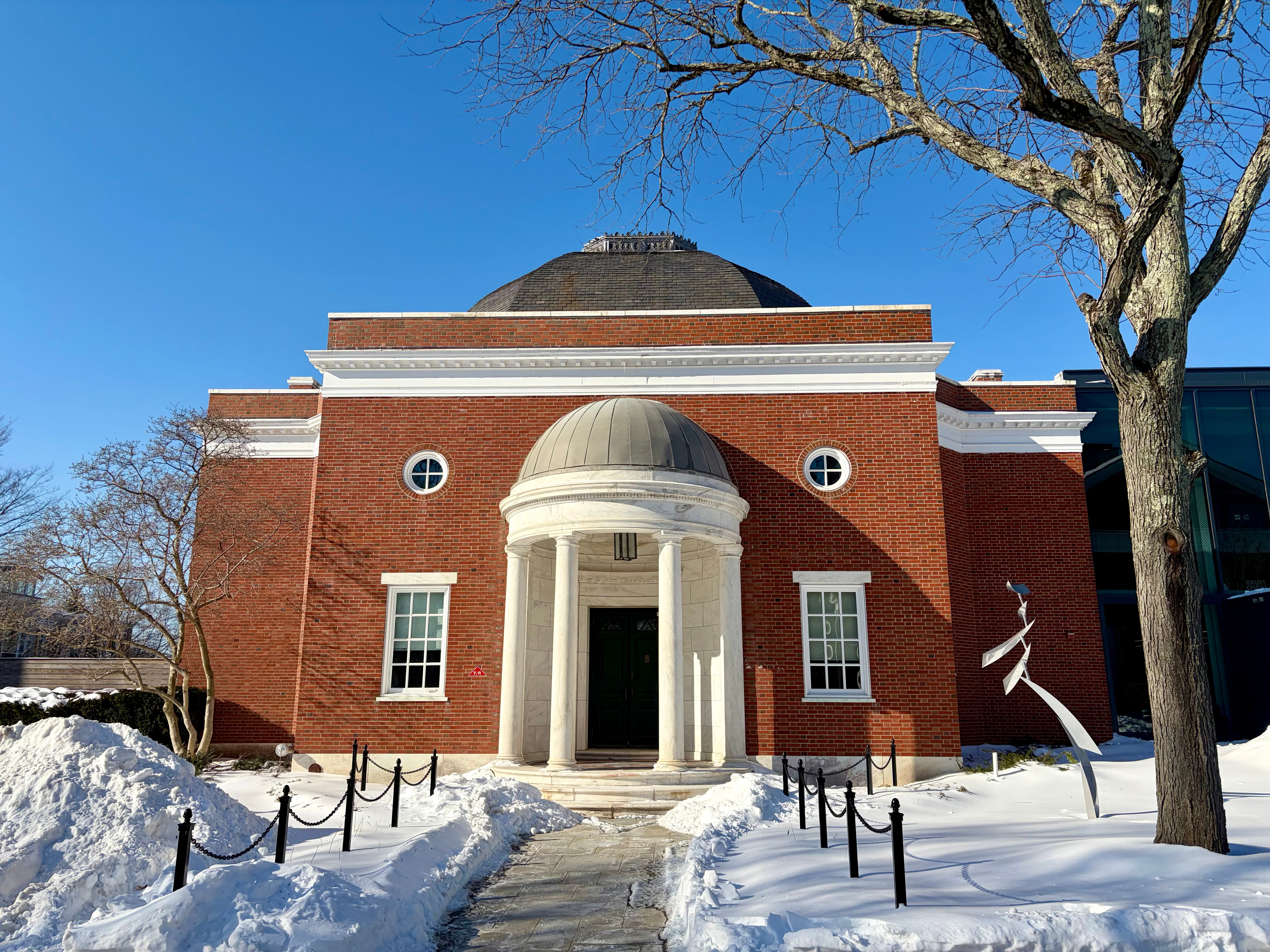
The next day, I have a tour. The Lawrenceville School is, indeed, fully loaded. There’s a music school (a school-within-a-school). There’s an art-and-design school. You want to see the old library? It’s now an art museum:
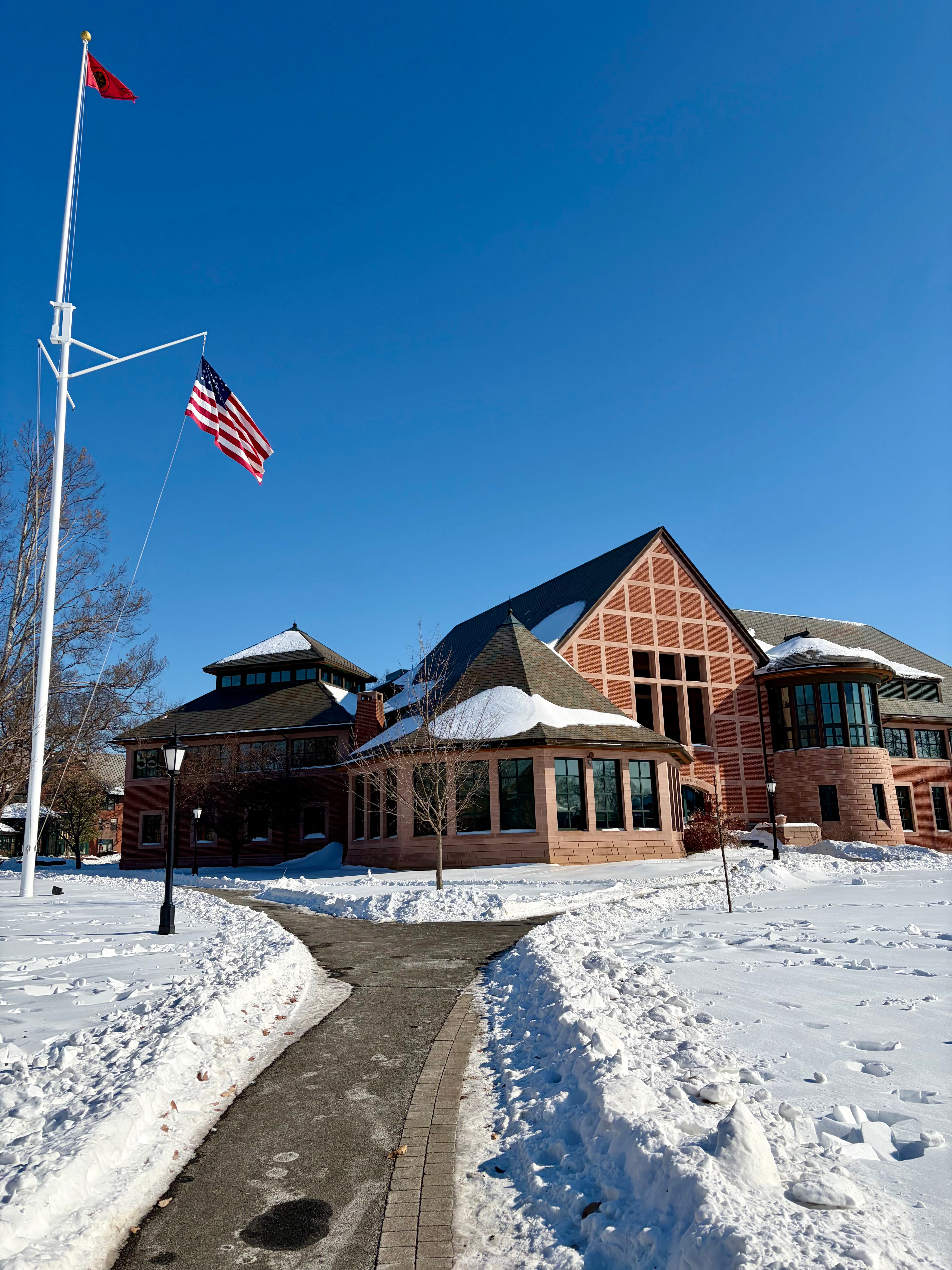
Here’s the new library:
Very pleasing to me is that there’s a “center for civics.” Maybe I could quote something I wrote recently:
We need a renewal of civic education. I think of an old saying, from the early part of the previous century: “What this country needs is a really good five-cent cigar.”
(That line was uttered by Thomas R. Marshall, vice president under Wilson, and, formerly, governor of Indiana.)
Well, what this country needs is a renewal of civic education.
***
The chapel:
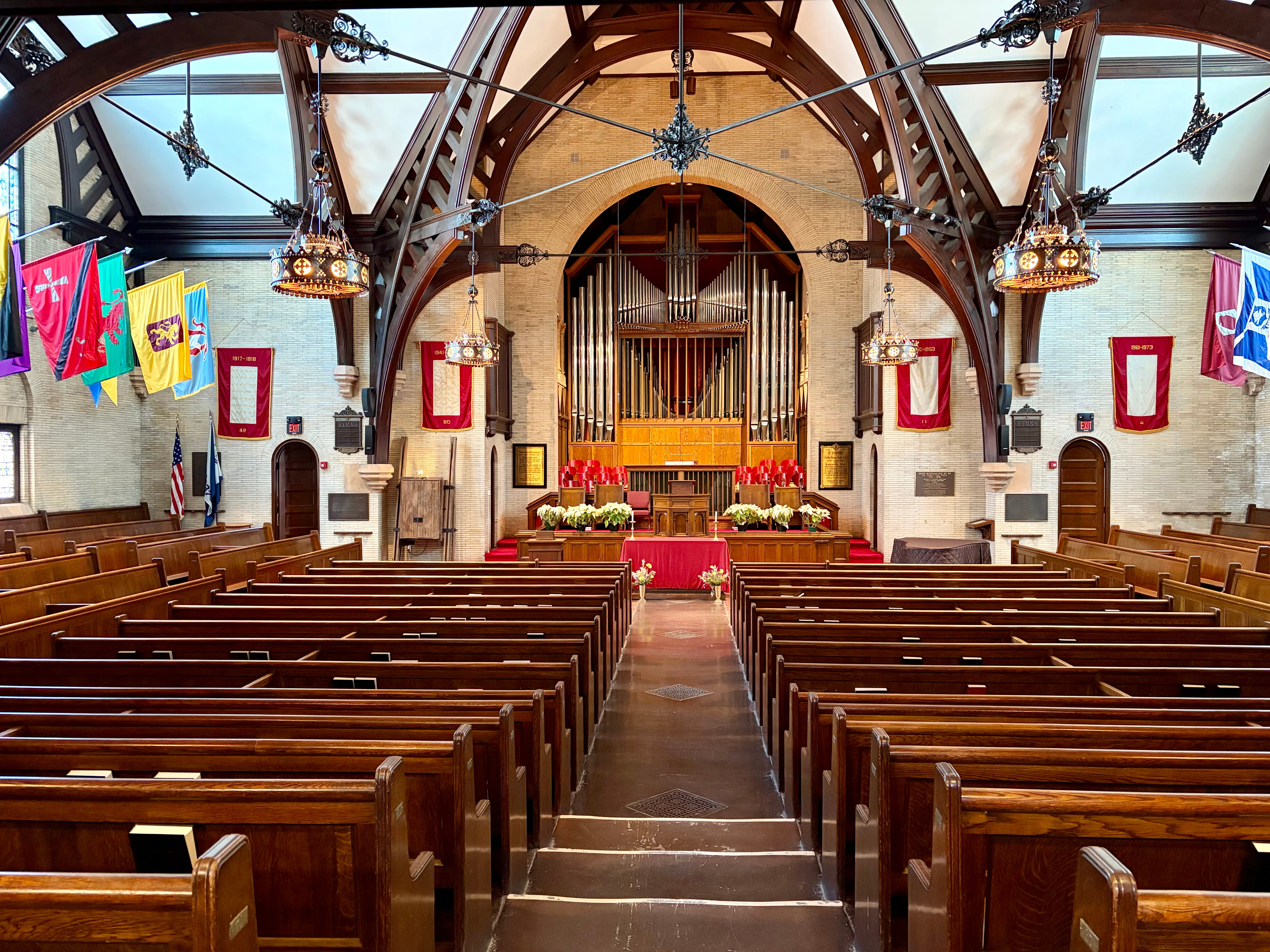
Moving, to me, are a couple of memorial plaques. One is to Simon John McPherson, who was headmaster from 1899 to 1919. He was “an inspiring preacher,” says the plaque, and “a profound thinker and gifted scholar,” with “the added grace of wit and humor.”
One more sentence: “Fearless, great-hearted, and unsparing of self, he enriched the lives of his boys and associates by his broad wisdom, lofty ideals, tireless labors, and Christian example.”
Let me now quote from a bio, published in the Lawrenceville archives:
Following the chaos of World War I, the school found itself in the grip of the deadly Spanish influenza epidemic. Throughout the fall and winter of 1918, McPherson took a personal role in the care of sick boys, nursing them himself, and sending a letter or telegram every day to the parent of every sick boy. Unlike so many communities, Lawrenceville did not lose a single student to the disease. Tragically, McPherson’s heroic efforts overtaxed his already failing health. On January 9th, 1919, he died in Foundation House of the influenza from which he had worked so hard to spare his school.
***
The athletic facilities here—hockey rink, basketball court, etc.—would be the envy of many a university. Lawrenceville has every sport you could think of, and a couple I would not have thought of: fencing and squash.
The teams are “the Big Red,” as Cornell is. Alabama is “the Crimson Tide.” Harvard is “the Crimson.” When I was growing up, Cincinnati boasted “the Big Red Machine.”
I’ll stop now.
Lawrenceville’s athletic director is a name I know well. Very well. He is Tripp Welborne, a star football player at the University of Michigan, in my hometown of Ann Arbor. He went to Michigan in the late 1980s. He is called “Tripp” because, of course, he is a “third”: Sullivan Anthony Welborne III.
I think of my friend Hersh Patel, who was the captain of the University of Michigan golf team, and almost as adept at wordplay. To him, a triple bogey was a “Welborne” (because of “Tripp,” natch). “Yeah, that guy hit it out of bounds and wound up Welborning the hole.” “Jay was lookin’ at Welborne but escaped with a double.”
Memories ...
***
Ash Shah has two sections in international relations: 15 students in each. I am a guest in each class, each section. The kids are from all over, not excluding China and Kenya. Quite a few are from nearby, which is to say, New Jersey.
We talk about—whatever is on their minds. American power. NATO. Ukraine. Venezuela. China. The Middle East. Conservatism. The media. Liberal democracy. Its antagonists.
Talking about the world with bright, curious young people? I’m a pig in mud ...
***
People without children can be romantic about children. Parents, as a rule, are not. People who work in education can’t be romantic about education. But I don’t work in education—and I kind of am.
Whenever I visit a school, I want to enroll. I want another crack at school. I didn’t enjoy it all that much the first time, frankly. Maybe I wouldn’t again. But part of me would like another go ...
I’m sure that Lawrenceville is beset by problems, unseen by me. Human institutions are always beset by problems, aren’t they? But to this visitor—to this breezer-through—it seems like a kind of paradise.
***
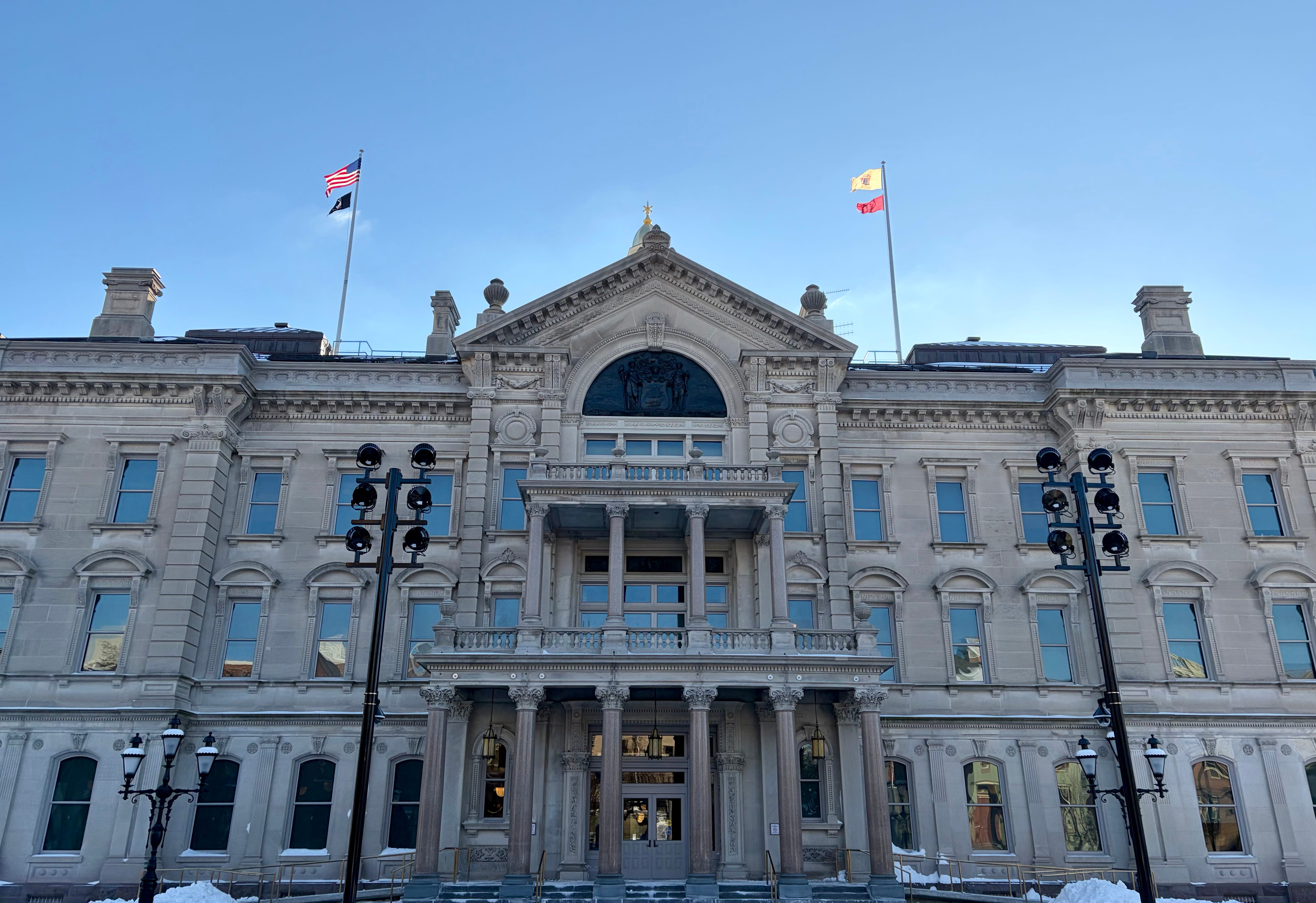
Back in Trenton, I pass by the statehouse:
Across from the statehouse is a World War II memorial:
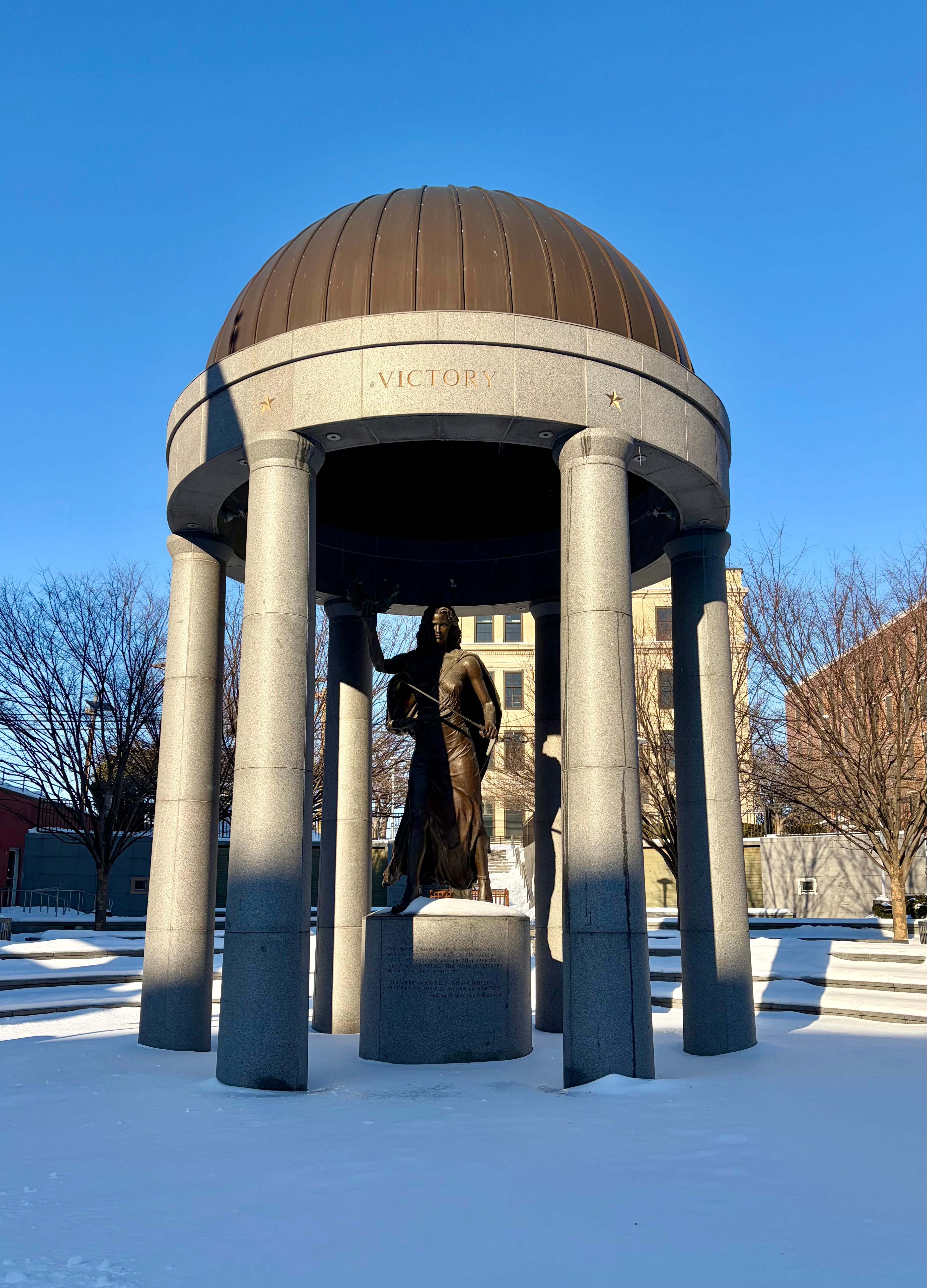
They saved the world, those guys. Who’s saving it now? Remember the Ukrainians—and help them.
Even though I don't care about Lawrenceville, this article makes me care. Over my life, I've had some outstanding teachers. Robert Waller, who wrote "Bridges Over Madison County" was one of them. Tough and intellectual, he made me want to know more about economics and taught like no other teacher-sort of the way Jay writes. I think schools overall overlook the value of personal instruction. The highly inefficient and ineffective public school system is largely like this. It is too regimented, standardized, and mismanaged. Dr. Waller reflected none of that and taught economics his own way. I will never forget him and others who took the time to really care about what they taught.
That bit about a beloved former headmaster, McPherson—what a man. And, with “the added grace of wit and humor," certainly a man of another time. The effect of a single individual—of his behavior, his motives, his manners—on a society: We seem ignorant these days of its magnitude. (Just enter traffic at rush hour in Anywhere, USA for evidence.) In his final column for The New York Times published on Friday, David Brooks touched on this. "We all create a moral ecology around ourselves," he writes, "one that either elevates the people we touch or degrades them." You too, Jay, have a talent for cultivating such an ecology. Bravo.