


Are you Hungary’d out? If you were, I wouldn’t blame you. I myself have been writing about this subject for years now. Last month, for instance, I published a piece about a ghastly coalition: “Putin and Trump for Orbán.”
We all know that “politics makes strange bedfellows.” But this is—well, ghastly.
Hungary’d out as we may be, the subject is important, and I would like to jot a few notes, in the wake of last weekend’s elections, in which Viktor Orbán and his party went down, at long last.
Gregg Nunziata, you know. He is the executive director of the Society for the Rule of Law. Recently, I did a podcast with him, here.
On social media, he wrote:
One lesson from Hungary is that the fight for freedom against corruption and autocracy is not right versus left. Central and Eastern Europeans know well that threats to liberty can come from the right or the left. Were we to know this better, our politics might be transformed.
That is a key point, a key observation. (As I have often remarked, it’s amazing what you can say in a tweet—even an old-fashioned, tightly limited tweet.)
(Bill Buckley used to say it was amazing what you could say on a bumper sticker. You could boil down big, big topics into bumper-sticker language: “Better Red Than Dead”; “Better Dead Than Red.”)
***
Let me try something out on you, please. I’m going to exaggerate, at the end, but only a little, in order to make a point. See whether you think I’m off base or on.
For ten or more years, the nationalist-populist Right, in various countries, made Orbán’s Hungary a focus of attention. His regime was the beau idéal of this Right.
In America, the nat-pop Right included the Heritage Foundation, CPAC, and so on. Donald Trump and the Republican Party boosted Orbán constantly.
All the while, the Kremlin did the same, of course.
Many people went to Budapest, in trips that were like pilgrimages. Some—including old friends of mine—went to work for Orbán.
This year, he tried for a sixth term in office. The international illiberal Right—“the whole global movement,” as Nigel Farage calls it—rallied ’round him.
President Trump campaigned for him, through social-media posts and videos. Secretary of State Marco Rubio showed up in person. “Our success is your success,” he told Orbán. “Especially as long as you’re the prime minister and the leader of this country, it’s in our national interest that Hungary be successful.”
Vice President JD Vance showed up in person, too, in the last days of the campaign.
From France, Marine Le Pen showed up. From Italy, Matteo Salvini showed up. From Israel, Benjamin Netanyahu planned to show up, but the Iran war kept him at home and he sent a video instead—a video in support of Orbán. He also sent his son, who rallied for Orbán in person.
In any event, a sixth term for Orbán—his perpetuation in power—was extremely important to “the whole global movement.” And when Orbán and his party lost, we heard this, from the “movement”:
“Hungary? Where’s that? Who cares about Hungary, what’s the big deal? Why are the libs making such a fuss? Hungary is a small, insignificant landlocked country, and the libs are all a-flutter. Silly libs!”
***
James M. Patterson has chapter and verse, in an article published by Providence magazine. Chapter and verse on what? Well, Professor Patterson’s article is titled “The Grand Budapest Cartel,” and it begins,
When Vice President JD Vance was campaigning for Viktor Orbán earlier this month, he was also campaigning to preserve the Hungarian funding for the New Right organizations that would support his own future political ambitions. With Orbán defeated, that money is gone. The Hungarians, in their own way, helped decide the future of American conservatism.
How is that possible? How did this happen?
A very interesting story (and to some of us, a little sickening).
***
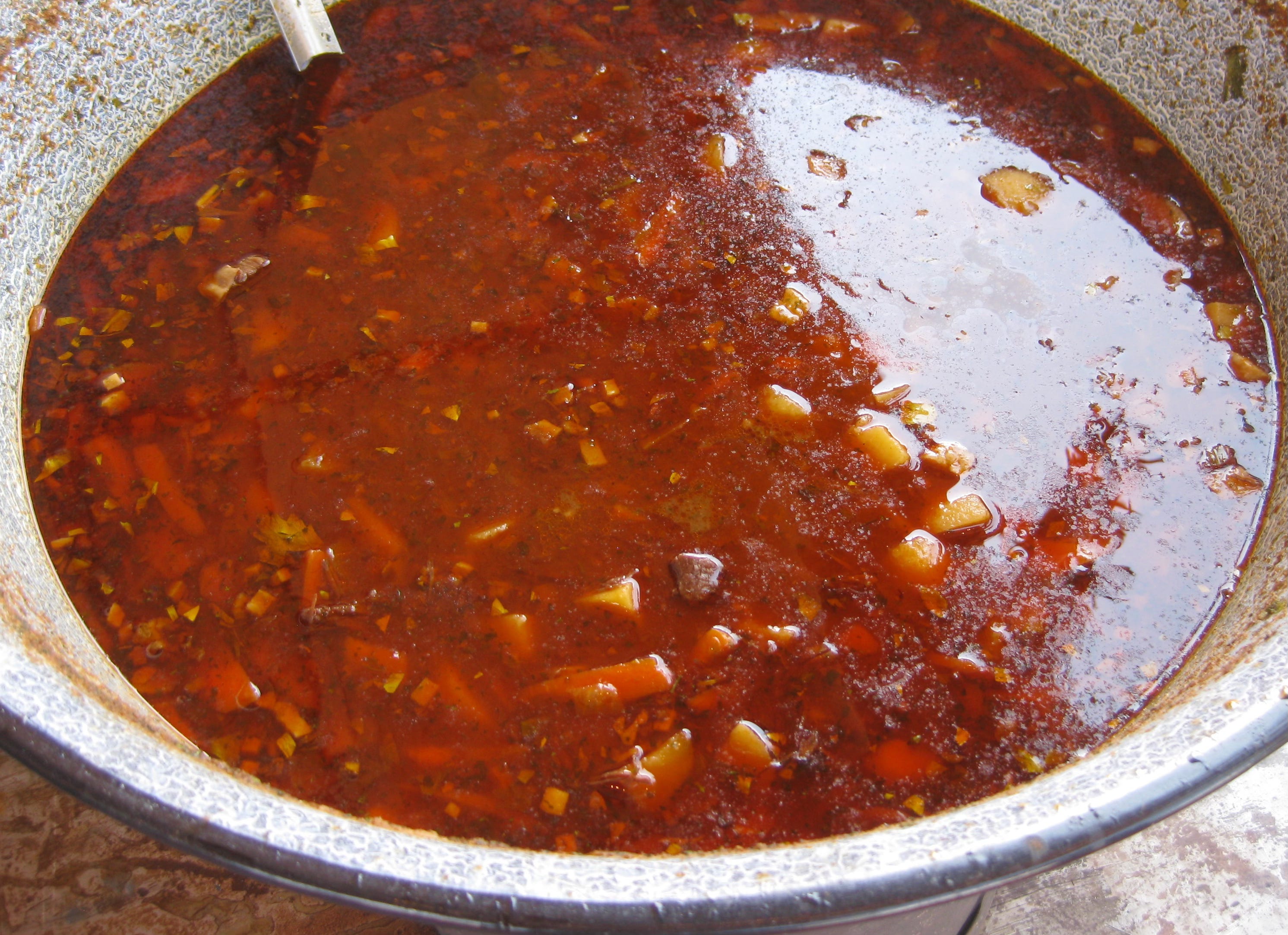
I grew up with the phrase “goulash communism.” This meant the kind of communism practiced in Hungary—although “practiced in” is not the right phrase; “imposed on” is better.
Well, I suppose we have now seen “goulash conservatism,” or better, “goulash rightism,” or “goulash autocracy” or “kleptocracy” or … Whatever we call it, I hope the allure of it fades, in America at least.
***
Can you stand one more note on Hungary? I was thinking: I wonder whether Péter Szijjártó will pull a Karin Kneissl. Szijjártó has been Orbán’s foreign minister since 2014.
Kneissl was Austria’s foreign minister from 2017 to 2019. She now lives in Russia, working for Putin (more directly, I mean).
She was foreign minister in the nationalist-populist government headed by Sebastian Kurz. Kurz now works for Thiel Capital (and duly endorsed Orbán for reelection this year). In 2018, Kneissl got married, and Putin was a guest of honor at her wedding.
She danced with him, then curtsied before him in her dirndl, gazing up at him adoringly.
I always thought that this posture symbolized the position of “the whole global movement” (to borrow Nigel Farage’s words once again).
After she left government—Austria’s, I mean—Kneissl joined the board of Rosneft, the Russian oil giant. She also blogged for RT, the Kremlin propaganda network.
Finally, she just “went home,” to Russia itself.
And Péter Szijjártó? I have written about him a fair amount. In 2016, he was a guest speaker on a National Review cruise. Our ship was docked in Budapest. I made myself absent, taking a walk around town. Just a little private protest.
Orbánism, I thought, was very unlike American conservatism, as I had always understood it, and still do.
In 2021, Szijjártó received the Kremlin’s Order of Friendship. This was in November, when Putin was massing troops along the Ukrainian border, preparing his full-scale invasion.
Let me paste a paragraph from an article I published last December:
Alexei Navalny, the Russian opposition leader, was killed in prison on February 16, 2024. A funeral for him was held in Moscow on March 1. On that day, Foreign Minister Szijjártó was meeting with Sergei Lavrov, Putin’s foreign minister. Pictures showed them laughing it up together—which nauseated some of us.
In the recent Hungarian campaign, transcripts of phone calls between Szijjártó and Lavrov were leaked. “I’m always at your service,” the Hungarian tells the Russian.
And it was no different between Orbán and Putin. “In any matter where I can be of assistance, I am at your service,” said the Hungarian to the Russian.
What services can Orbán and Szijjártó provide to the Kremlin now? None, I hope.
I will have another column for you tomorrow, with happier subjects, mainly—but I consider the defeat of Orbán happy, as it is a defeat for his allies as well: Russia, China, and Iran, which menace and brutalize the world in multiple ways.
Jay: One of the good things about aging (78 year old) is the sense of perspective time brings. (Or, should bring, to be more accurate.) Your piece on Hungary was a breath of fresh air. Since I first met my father-in-law I wanted to visit Hungary. By way of explanation, his B-24 was damaged over Linz, Austria in 1945 and limped to Hungary before the crew had to bail out. Hungarian partisans rescued them all and spirited them through the German front lines to the Russian army. He was quartered with a Hungarian family who looked after him until he could be moved to Budapest and then back to his base in Italy. The Hungarians were a generous group who gave what little they had to him and his fellow air crew. They did NOT like the Germans, for obvious reasons, but loathed the Russians just as much. Fast forward to 2023 when I finally made it to Hungary I sought out as many locals as I could in places like the Dohany Street Synagogue and the 1956 Uprising Memorial. They were very unhappy with Viktor Orban and his cronies. This loathing crossed all age groups. They remember 1956 and were incredulous at Putin/Orban love fest. I physically felt the joy of that nation at Peter Magyar's victory as I watched the news feeds. That kind of joy can't be faked. I sense the country will still be to the right of center on social and immigration issues but, I also feel the new government will reflect the will of the majority of Hungarians. Through the presidency, Orban's ilk will still try to exert some influence but Peter Magyar has what is close to a mandate. Anytime something is bad for the Russians and authoritarians in general, is a good day for humanity. Let us hope the falling of this "domino" is the first of many to come.
Hugh Donohue
Excellent, helpful article. Thank you.