


Momentous events are playing out in Iran right now. U.S. and Israeli forces have attacked the regime, which has ruled since 1979. No doubt, you have read a great deal about the situation: from military, political, and historical points of view. What might I have to contribute at this juncture?
Maybe personal experience—with Iran and Iranians, over the decades. I have interviewed many dissidents and others with a stake in Iran. I have thought about them in recent days—especially the dissidents.
Iran has been part of my experience since long before I became a journalist. In 1979, I was 15 years old: an age when many people are starting to be engrossed by world affairs. It is all so vivid to me, even now.
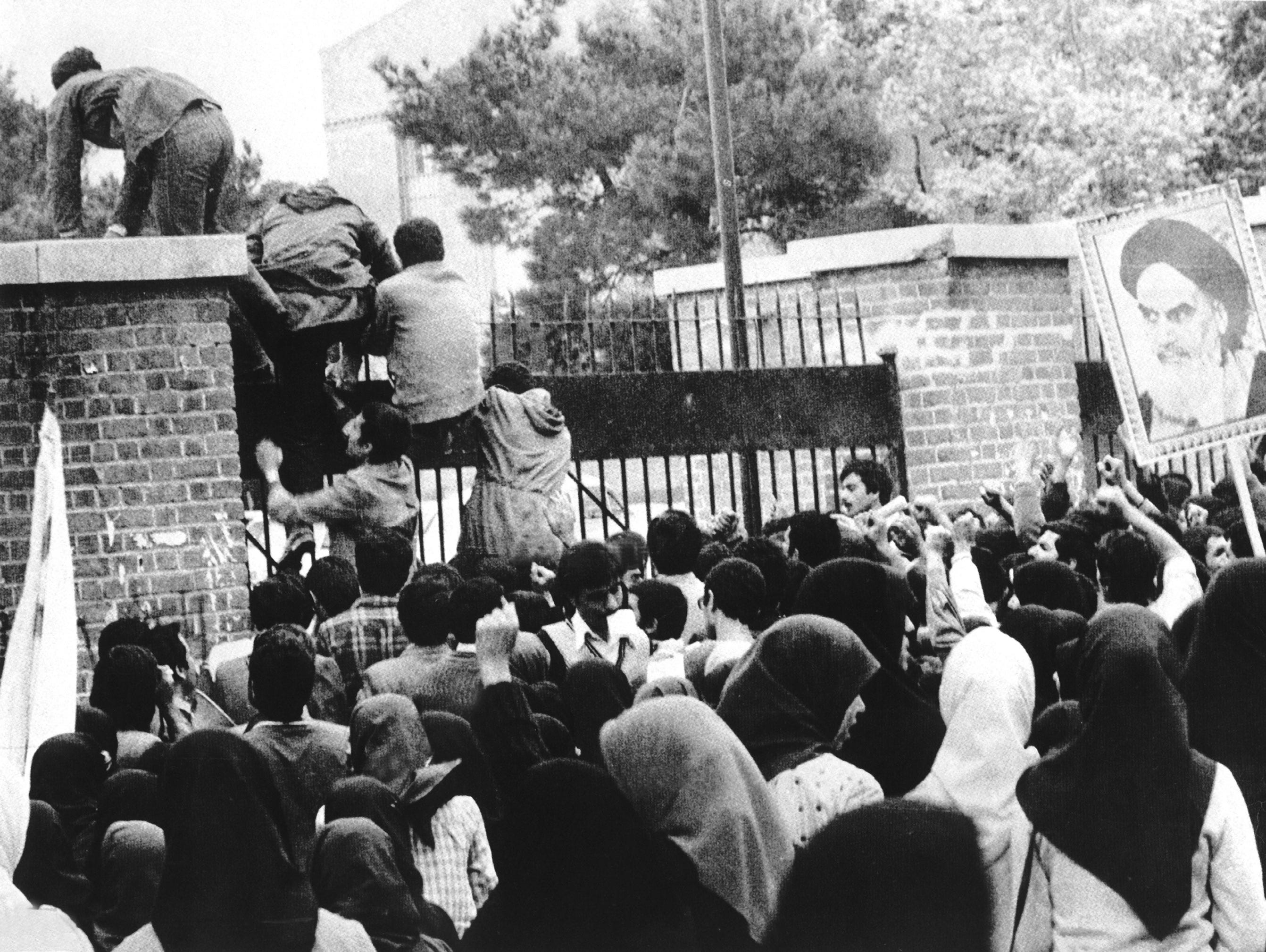
Khomeini and his revolution took over in February. In October, the U.S. admitted the deposed Shah for medical treatment. That was a controversial decision. In November, Iran seized our diplomatic personnel in Tehran.
That ordeal—the “Iran Hostage Crisis”—lasted 444 days. Night after night, Walter Cronkite concluded his CBS Evening News by saying how many days it had been since our people were taken hostage.
Many Americans tied yellow ribbons around trees, to express support for the hostages—to say, “They are not forgotten.” Penne Laingen started this practice. She was the wife of Bruce Laingen, our chargé d’affaires in Tehran, and the spokesman for the hostages.
In April 1980, our military attempted a rescue operation, which failed badly. That was a disappointing day. January 20, 1981—Inauguration Day—was a great day. That’s when the hostages were released.
Years later, in the late 1990s, I had the honor of meeting Bruce and Penne Laingen. Just last year, I had the honor of meeting Barry and Barbara Rosen. He had been one of the hostages.
I met him outside a New York courthouse, where a band of us—more like a small army, actually—were supporting Masih Alinejad, the Iranian dissident in exile. Inside the courthouse, two men had just been sentenced—two men who had been hired by the Iranian government to kill Masih.
I first interviewed this brave woman in 2021, in a piece called “A Free Spirit.”
Year after year, I have heard some version of the following: “Hamas, Hezbollah, and the rest are mere tentacles—tentacles of the octopus. The head is Tehran. The head is the Iranian government. To do something about the tentacles, you have to do something about the head.”
One of the people I have heard this from is an Arab head of state (who was not speaking for the record).
October 23, 1983, was a very bad day. Terrorists in Beirut—some combination of Hezbollah and the Islamic Jihad Organization—killed 241 of our Marines in their barracks. They also killed 58 French servicemen, and six civilians.
Two years later, they killed our CIA station chief in Beirut, William Buckley. They tortured him to death.
I have talked with many Iranians about their lives before the revolution and after. One was Manuchehr Honarmand, an exile journalist. “Before the revolution, I was a normal guy,” he said. “I was earning a living.” Then, everything went dark. “I had gone to a French school,” he said, “and I had a free and liberal spirit. Under the Iranian revolution, I could not fit in for even one hour.”
He then led a storm-tossed life, abroad. This included two years in a Venezuelan prison (for the Iranian dictatorship was a close friend of the Venezuelan dictatorship, led by Hugo Chávez). It was amazing that Honarmand survived that.
In 2003, an Iranian woman won the Nobel Peace Prize. She is Shirin Ebadi, a human-rights lawyer. Before the revolution, she was a judge—the first female judge in the entire history of Iran, according to some researchers.
I wrote about her, and a long roster of other laureates, in my history of the peace prize. Here are a few lines from that book:
In 2008, the authorities raided her office and shut it down. The next year, they went into her safe-deposit box and took her Nobel medal and diploma, along with other items (her Légion d’honneur, for example). She eventually got her medal back, she told me—but her house, her money, and other assets, no. The regime took it all.
In 2023, another Iranian woman won the Nobel Peace Prize: Narges Mohammadi, who had worked closely with Shirin Ebadi. Mohammadi was a political prisoner when she won the prize, as she is today.
Last month, the Norwegian Nobel Committee sent out an urgent bulletin saying that Mohammadi had been beaten and tortured almost to death.
The “Islamic Republic” was founded by the ayatollah Khomeini, who, though he died in 1989, has been its guiding spirit ever since. I wrote about him and his family in a curious book, Children of Monsters: An inquiry into the Sons and Daughters of Dictators. His children and grandchildren are a mixed brood. Some of the grandchildren became critics of his regime, and one of them, Hussein Khomeini, became an outright champion of freedom and democracy.
In January, I recorded a podcast with Marina Nemat, a dissident from Iran who is exiled in Canada. I have known her, and talked with her, for many years. At age 16, she was arrested and thrown into Evin Prison, one of the most notorious and worst places on earth. Marina was there for two years.
About 90 percent of the prisoners were under the age of 20. “It was the high school from hell,” she says.
Marina was raped and tortured. She made it out alive, but some of her friends did not. At the Oslo Freedom Forum in 2017, she made a statement in a tone I will never forget:
“One day I will go back home, and I will search, and I promise you I will find every single mass grave in that country, and there are many. I will walk on my knees, and I will find every one of them. I will dig the dirt with my own bare hands, and I will make sure that those young women, and young men, are remembered.”
Sardar Pashaei is another Iranian in exile. He lives here in the United States. Sardar was a wrestling champion, and so was his brother Saman. Sardar was born in September 1979, about seven months after Khomeini and his followers took control. The Pashaeis were a dissident family.
“I remember when I was five years old,” Sardar told me. “Members of the Revolutionary Guard came to our house at 2 in the morning and arrested my dad. I have never forgotten that scene.”
I have not mentioned all of the dissidents and exiles I have met and interviewed. But each one has left an impression.
For many years, the ayatollahs’ Iran has been driving for a nuclear weapon. A great question has been, “Would a nuclear Iran be deterrable?” Some have said yes, some have said no. I have always said: “I would rather the question not be tested.”
Bernard Lewis, the late and great Middle East historian, had a decided view of the matter. (For my appreciation of him, on his death at 101 in 2018, go here.) He often said something like this: For the ayatollahs, the threat of massive retaliation—in other words, the mass death of Iranians—is not a deterrent. On the contrary, it’s an inducement, given their views of martyrdom.
Ash Carter was of similar mind. He was the U.S. secretary of defense from 2015 to 2017. “Deterrence is a strong force,” he told me, “but not an infallible force.” It was one thing to deter Leonid Brezhnev’s Soviet Union. But the ayatollahs’ Iran?
In the afterword of my Nobel history, I played a little parlor game, asking, for example, “What is the worst Nobel Peace Prize ever conferred? The most wrongheaded, the least justified?” My vote was for the 2005 award, which went to the International Atomic Energy Agency and Mohamed ElBaradei, who was then its director general. One reason for my vote was this: “… for almost 20 years they were clueless about Iran. Once that program was revealed, by Iranian whistleblowers, ElBaradei seemed more interested in protecting the regime from economic sanctions or military attack than in holding the regime to nuclear account.”
It was in 2003 that the United States invaded Iraq. Without getting into the wisdom of that invasion—or the wisdom of the current operation against Iran—I will share something that Professor Lewis said. He quoted an Iranian analyst: “The Americans have invaded Iraq. They should have gone in alphabetical order.”
The ayatollahs’ regime has been in power for 47 years. It has been a curse on mankind: on Iranians, first and foremost; on the Middle East; and on the world at large. There is much to say about the current operation—“Operation Epic Fury,” the Americans call it, while the Israelis call it “Operation Roaring Lion.” There will be plenty of time to say it, as events unfold.
I will say, here and now: I wish our forces, and those of our ally, Israel, every success.
In November, 1979 I was a kid sergeant with the 101st Airborne. They flew us and the 82 Airborne to Ft. Hood, Texas on a no-notice readiness exercise. The 3-star said on TV, "Anywhere in the world. 24 hours." This was announced as sending a signal to Iran.
40 years later my grandson was a kid Marine sergeant deployed afloat with the Fifth Fleet in the Persian Gulf. This was announced as sending a signal to Iran.
Great essay.
I don’t know if it is your writing style, your modest erudition, or the authenticity with which you wrote, but this one really hit home.
Perhaps too, it’s because this is one of those stories of our lives, that we didn’t just read about, but that we actually experienced.
No story of the captives is complete without acknowledgement of Ken Taylor, a Canadian diplomat who was instrumental in executing the “Canada Caper”. Six American hostages were shuttled out of Iran, after hiding out in the homes of Canadian diplomats.
Mr. Taylor remained a Canadian folk hero until his death in 2015.
I pray that within my lifetime, the people of Iran and Cuba will again be free.