


Cass Sunstein, the law professor, has a Substack. He titles it, aptly, “Cass’s Substack.” Should that be “Cass’ Substack,” rather than “Cass’s”? No chance. Rule 1 of Strunk & White … well, rules.
To describe Sunstein as a “law professor” is accurate but insufficient. He is one of the top legal thinkers of our time and a damn big deal.
Anyway, he devoted a column on his Substack a week ago to writing—I mean, to the subject of writing. The heading of that column: “Writers Who Aren’t Boring.” Blessed are such writers.
It was a delightful column, and I said so on social media. Sunstein responded, “Unusual fare for this law guy.” But he clearly has more than one string to his bow.
His column prompted several thoughts in me, of which I will give you, like, two.
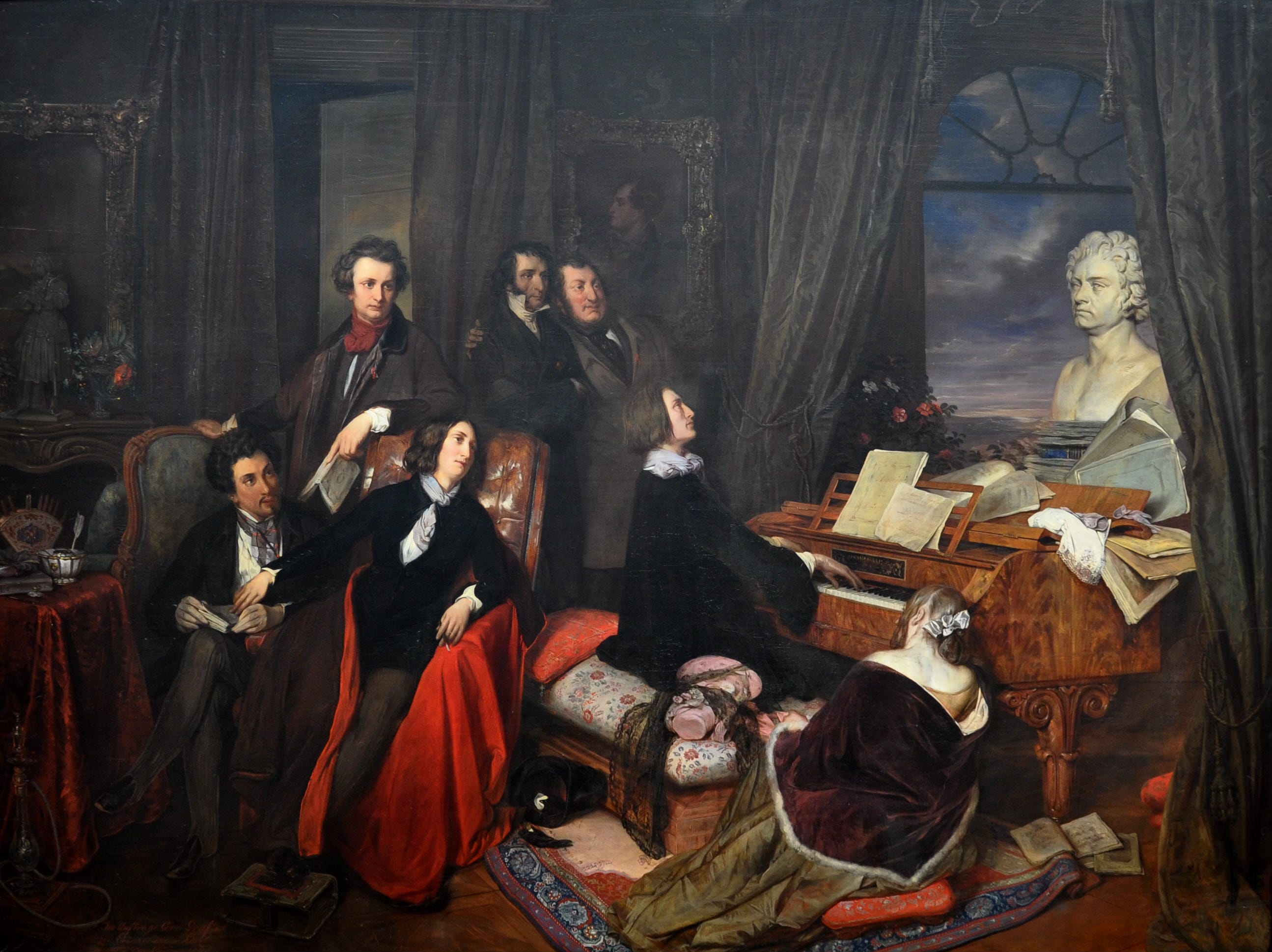
I have often quoted Franz Liszt, who said, “The cardinal sin of performance is dullness.” I have often applied that to composition, too: Compose in the style you like, or that suits you. But don’t be dull.
When writing about a piece of new music, I sometimes say, “It held my attention—which may seem faint praise but which, I assure you, is not.”
I further thought of Bill Buckley. More than anything, he hated being bored. Or rather, he feared being bored, because I think he seldom was. He made sure he wasn’t bored.
Almost the worst thing he could say about someone was that he was boring.
I once heard him describe a book as “insuperably dull.” I have had occasion to use that phrase over the years: “insuperably dull.”
Also, he once wrote a book—or rather, allowed the publication of a book with his name on the cover—that he was not fully responsible for. (His “bad,” true.) He muttered, “The dullest book I ever wrote.”
I can still hear his tone of sadness, self-reproach, and contempt.
***
Cervantes has entered my life lately. Am I reading Don Quixote? Oh, hell, no. Papa don’t read; he just scribble. No, a young friend of mine—a writer himself—has just read Don Quixote, and he raced through it. “A page-turner,” he reported. “Couldn’t put it down.” It interested him or delighted him on every page.
Must be a good book.
Years ago, I knew a man named John Coleman—John Alexander Coleman, who wrote as “Alexander Coleman.” He wrote about music for The New Criterion.
But he had spent his career as a professor of Spanish (at New York University). You can find an obit here. Wonderful guy.
John tended to call you “Maestro.” Or “Doctor.” He was learned, ebullient, and altogether great company. Must have been superb in the classroom.
I once said to him something like this: “John, I know there’s only so much time in life, so many hours in a day. One can’t read everything. But should I read Don Quixote? Should I make sure not to let life pass without having read it?”
He took the question very seriously. He pondered it. He did not dismiss me with, “Oh, you ridiculous young man, of course you should read Don Quixote. Don’t you realize that it’s a keystone work of literature? Are you a moron? Do you think you can miss Hamlet?”
No, he was very kind, even gentle.
He said, “You don’t have to read it. You’d be just fine not reading it. But I think you would find it worthwhile. It would repay your time.”
Then and there, I resolved to read Don Quixote. I’ll let you know when I do …
I saw in the news that the prime minister of Spain, Pedro Sánchez Pérez-Castejón, had presented the governor of California, Gavin Newsom, with a book: Don Quixote. Newsom, in turn, gave Sánchez several books, including The Handmaid’s Tale, by Margaret Atwood.
Who got the better end of the deal?
I sometimes quip, “I have wasted my life on politics and music.” I whip out that quip when I explain, or make an excuse for, why I haven’t read something.
Seriously, I know the Strauss tone poem (the composer’s treatment of Don Quixote, I mean). And the Minkus ballet, choreographed by Petipa. And the Massenet opera (Don Quichotte).
But the work itself? I’ll get back to you …
***
You may have missed this, but there has been talk recently about “white culture.” A Trump nominee is one of these “white culture” guys. I’m familiar with the type. As a rule, they believe that “white culture” is being “erased” by—you know: darker shades.
What is “white culture”? I’m not going to spend a lot of time on this, but I think it has something to do with Stephen Foster and tuna casserole.
(Let me leave no doubt: I love Stephen Foster, and I like tuna casserole—especially when it has crumpled-up potato chips on top.)
At any rate, Jonah Goldberg wrote a (typically) sharp column on the subject. He mentioned an old accusation, namely, “acting white.” And I thought of W.E.B. Dubois.
Some years ago, there was a news story out of Sacramento. I have written about it, and spoken of it, in various forums. A schoolteacher—white, by the way—refused to teach Shakespeare, as Common Core required, because Romeo and Juliet (for example) was not “relevant” to her “diverse” students.
Blah blah blah.
(What about Othello?)
I was talking with Norman Podhoretz about this case, and he quoted me some Dubois—from Souls of Black Folk (1903):
I sit with Shakespeare and he winces not. Across the color line I move arm in arm with Balzac and Dumas. … I summon Aristotle and Aurelius and what soul I will, and they come all graciously. … So, wed with Truth, I dwell above the Veil.
Race, ethnicity, tribalism, “identity”—it’ll be the death of us, I swear.
***
You know who can write? Roger Rosenblatt. He has one of the most lyrical pens in the country. Years ago, many of us read him regularly in Time magazine. That was an excellent forum for him.
Do we have anything anymore that resembles Time magazine?
Well, here he is in the New York Times: “What It Means to Hold Someone’s Attention With a Story.” Unless I have muffed the technology (which is typical), I have provided a “gift link.”
Treat yourself to that lyrical, wise, Rosenblattian essay.
***
I feel very defensive of Edward Bulwer-Lytton. For years, he has been a laugh line. Specifically, people have laughed at “It was a dark and stormy night.” (Remember when this line featured in Peanuts?)
Bulwer-Lytton begins his 1830 novel Paul Clifford as follows:
It was a dark and stormy night; the rain fell in torrents—except at occasional intervals, when it was checked by a violent gust of wind that swept up the streets (for it is in London that our scene lies), rattling along the housetops, and fiercely agitating the scanty flame of the lamps that struggled against the darkness.
Sure, that’s not “modern” prose. It does not have Hemingway’s economy. But how many of Bulwer-Lytton’s mockers write better? Or as well?
You may wonder why I’m bringing up this man now. It’s because Anna McCullough has written a very interesting article about him, and about one work of his in particular (not Paul Clifford): here.
Our language—our everyday, barely conscious language—is stocked with Bulwer-Lytton phrases: “the great unwashed”; “the almighty dollar”; “the pen is mightier than the sword.”
Beat that, as Bill Buckley would say.
***
In 2020, I wrote a piece called “Right Words: On how to write, and what to read.” The piece was prompted by a meeting I’d had with a group of interns and fellows and the like. We had talked about writing, and reading. And I followed up with—well, this, that piece.
FWIW, as they say.
Nice to see you today. Thanks, and have a good one.
The Du Bois quote is beautiful but i think it's important not to divorce it from the accusation that immediately follows: "So, wed with Truth, I dwell above the Veil. Is this the life you grudge us, O knightly America? Is this the life you long to change into the dull red hideousness of Georgia? Are you so afraid lest peering from this high Pisgah, between Philistine and Amalekite, we sight the Promised Land?'
I will have to Google Steven Foster