


Yesterday, I circulated a little essay I wrote about American culture. The occasion for that piece was ICE recruitment ads: “Defend your culture!”
Another ad goes like this: “Your nation needs you to step into the breach. For our country, for our culture, for our way of life. Will you answer the call?”
One more: “America has been invaded by criminals and predators. We need YOU to get them out.”
That ad continues: “For the enforcers. For the brave. For those who fight to keep America safe. For the protectors. For the analytical. For those who seek the truth.”
You have seen ICE agents in action over recent months. There are horror stories nearly every day. Do you think “analytical truth-seekers”?
Relatedly, you might want to check out this news report, which is rattling: “Ex-ICE instructor testifies that agency slashed officer training, lied to Congress.”
Back to that little essay of mine and American culture. I’d like to revise and extend my remarks, as they say in Congress.
I wrote,
When I was a kid, there was a jingle: “Baseball, hot dogs, apple pie, and Chevrolet.” (You pronounced that “Cheverlet.”) The next line went, “They go together in the good ol’ USA.”
Yes. I also thought of another line, from a different ad: “Two all-beef patties, special sauce, lettuce, cheese, pickles, onions, on a sesame seed bun.”
I may forget my Social Security number. I may forget my address. But I’ll never forget that line. It is lodged into my brain, somehow.
In fact, I remember a music teacher saying to us—we must have been in fifth grade or so—“If you can remember ‘Two all-beef patties’ and all that, you can remember the sharps and flats in the various scales.”
The ad, as you probably know, was for McDonald’s. (I’m talking about patties and pickles and so on.) And the “Cheverlet” jingle advertised … well, it hardly need be said.
But stick with cars for a minute. Did you ever sing, “Come away with me, Lucille, in my merry Oldsmobile”? We learned that song in elementary-school chorus. Wikipedia tells me that the song was composed in 1905—when cars were very new. Yet we kids were learning that song some 70 years later.
Few must be the people who know it today …
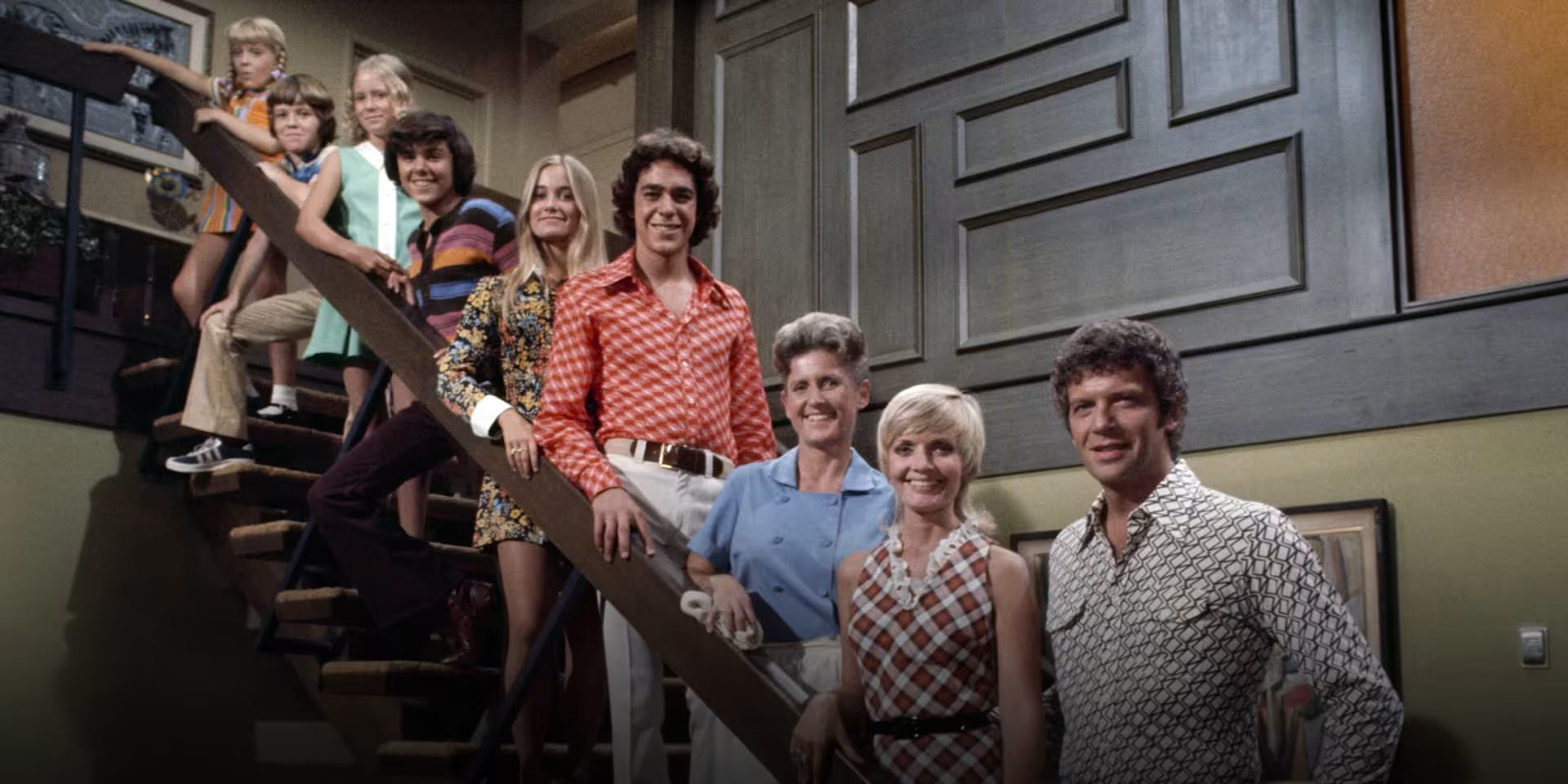
Preparing my American-culture essay, I further thought of Conrad Kottak and The Brady Bunch. Let me explain.
The Brady Bunch was a sitcom that ran from 1969 to 1974. Then it had a long life in reruns. Is that life over? I suspect so.
To listen to the show’s theme song, go here. There was a time when Americans, collectively, knew this song. As they knew the national anthem. (I’m exaggerating, but not by much.)
Conrad Kottak is an eminent anthropologist, who is now a professor emeritus at the University of Michigan, where he has taught since 1968. He earned his doctorate from Columbia, which was the home of anthropology, along with the University of Chicago, if I remember correctly.
At Michigan, there were many Columbia and Chicago grads, forming a mighty department of their own.
Professor Kottak has a Substack: “The Anthropocene Anthropologist: Reflections on Bizarroland.”
As I was gathering my notes for that essay, I e-mailed Professor Kottak, out of the blue: What was that about The Brady Bunch again? He graciously replied, appending an article of his called “Brady Bunch Nirvana.”
It begins,
One teaching technique I started using several years ago, taking advantage of students’ familiarity with television, is to demonstrate changes in American kinship and marriage patterns by contrasting the TV programs of the ’50s with more recent ones.
I recall a famous statement by Robin Fox—famous to the anthropologically minded, that is: “Kinship is to anthropology what logic is to philosophy or the nude is to art; it is the basic discipline of the subject.”
Anyway, back to Conrad Kottak:
Each time I begin my kinship lecture using sitcom material, a few people in the class immediately recognize (from reruns) the nuclear families of the 1950s, especially the Beaver Cleaver family. And when I start diagraming the Bradys, students start shouting out their names: “Jan,” “Bobby,” “Greg,” “Cindy,” “Marcia,” “Peter” …
Yes. Those are the six children. They belong to a “blended” family. The father, who was a widower, is Mike. The mother, who was a widow, is Carol. The housekeeper is Alice, who dates Sam the Butcher.
I wish I could remember characters in Shakespeare plays so well …
Professor Kottak continues,
As the cast of characters nears completion, my class, filled with TV-enculturated natives, is usually shouting out in unison names made almost as familiar as their parents’ through exposure to TV reruns. My students almost seem to find nirvana (a feeling of religious ecstasy) through their collective remembrance of the Bradys and in the ritual-like incantation of their names.
One more swath:
… the common information and knowledge we acquire by watching the same TV programs is indisputably culture in the anthropological sense. Culture is collective, shared, meaningful. It is transmitted by conscious and unconscious learning experiences acquired by humans, not through their genes but as a result of growing up in a particular society. Of the hundreds of culture bearers who have passed through the Anthropology 101 classroom over the past decade, many have been unable to recall the full names of their parents’ first cousins. Some have forgotten their grandmother’s maiden name. But most have absolutely no trouble identifying names and relationships in a family that exists only in television land.
Yesterday, I said to a couple of young colleagues of mine, “I was in my own private Idaho”—meaning, I was absorbed in my work and thoughts, oblivious to all else. They had never heard the expression.
This is generational, as so many cultural touchstones are (or maybe I’m looking for the word “totems”).
In 1991, a movie came out called “My Own Private Idaho.” The phrase became a byword for: being in your own little world. My young colleagues will have their own cultural “sharings.”
And on it goes.
Speaking of going on: holy-moly, I spent a long time on that first item. And I had about eight items I wanted to share (speaking of that) with you today! They will have to wait. Everyone’s inbox is crowded.
Thank you for joining me today, as always. And special thanks to the magnificent Conrad Kottak. Anthropology is a great field, even if it has been marred by flakes and ideologues.
I think I’ll brush up on my Malinowski …
I was born in 1969 and grew up watching the Brady Bunch. And yet only today did I realize they must have all been reruns! I’m told I should try to learn something new every day, so now I can spend the rest of the day on frivolities. Thanks Jay! 😉
1980, Officer Candidate School. We were "encouraged" to sing on the bus when returning to the barracks after training, because it showed character or morale or some such happy horseshit. We quickly figured out that singing was a preferable alternative to push-up upon return. But the idea was that everybody had to sing. And that meant that everybody had to know the words. What songs did a random group of Americans born during the Eisenhower administration know the words to? Gilligan's Island, Beverly Hillbillies, Brady Bunch, etc.