


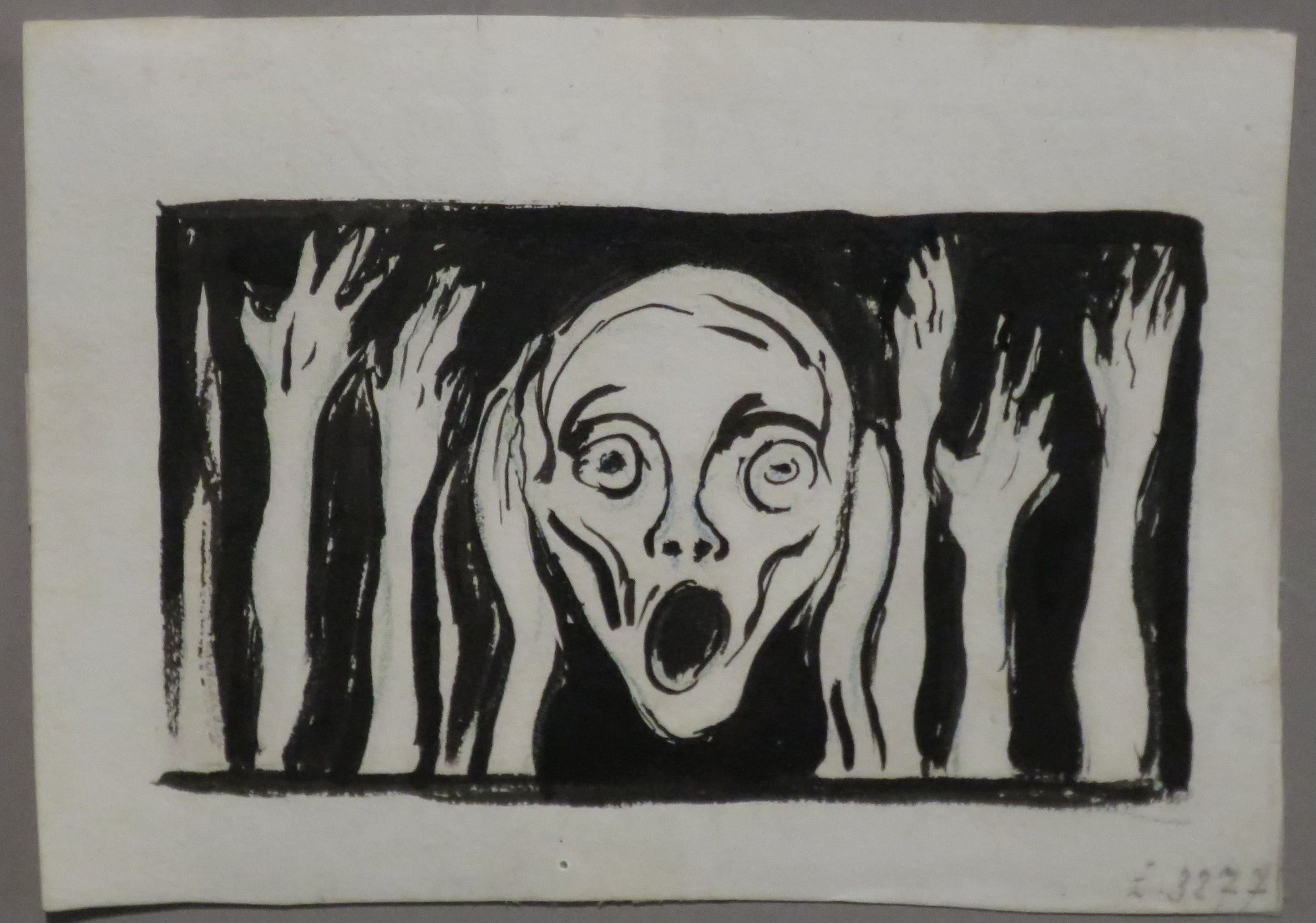
Some issues that are screamingly important are also … boring. Making it hard to get people to pay attention to them.
Let me give you a line published by the Associated Press yesterday: The U.S. government “has spent $827 billion so far this fiscal year to service the national debt, more than it has devoted to national defense.”
That is meaningful. And bad, very bad.
***
I’ve written an article about how elections are rigged—staged, faked—in dictatorships. I linked to a column published by Charles Krauthammer in 1987. “The higher the score rolled up by the ruling party in elections, the more tyrannous the regime,” he said.
Today, I’d like to talk about the column more broadly. It was mainly about pardons, not elections. In the Washington Post, the column was headed “The Pardon Is for Tyrants.”
Listen to Dr. K.: “The more lawless, capricious, and imperious a regime, the greater its propensity to make use of the pardon power.”
Listen to him some more:
In democracies, the pardon should be used as sparingly as possible. … Only on these rarest of occasions should it supplant the workings of ordinary justice. Free countries have another mechanism for dealing with that. It is called law.
The pardon is for tyrants.
Strong stuff, with recta ratio (right reason) beneath it. (Bill Buckley once published a collection under the title “Right Reason.”)
Maybe two more sentences, from Dr. K.:
The promiscuous dispensation of clemency is not a sign of political liberality. It is instead one of those valuable, identifying marks of tyranny.
George W. Bush would pardon people for doing things like turning back the odometer on their car, in their youth. The Trump presidency has made me think … well, along Charles Krauthammer’s lines.
I expect to have more to say about this matter in due course.
***
In my article about elections—elections in dictatorships such as Russia—I mentioned Boris Nemtsov, the Russian opposition leader, murdered in 2015 (about 200 yards from the Kremlin wall).
The day my article came out, I noticed this, from Reuters: “Moscow court orders arrest of slain Putin critic Boris Nemtsov’s daughter.” Zhanna Nemtsova is in exile, presiding over the Boris Nemtsov Foundation for Freedom.
Obviously, Zhanna and her organization are an offense unto Putin.
***
A few nights ago, I attended a concert that I will discuss in an upcoming issue of The New Criterion. Onstage was a youth orchestra, conducted by Mei-Ann Chen, an American born in Taiwan. She is a capable musician, with the intangible ingredients of warmth and vitality.
I would like to make a point about something in her bio. Chen is “chief conductor,” says the bio, “of Austria’s Recreation–Grosses Orchester Graz at Styriarte (the first Asian woman to hold this position).”
My point: We’re cutting our ethnic, racial, and sexual milestones awfully fine these days, aren’t we?
Do you know what I mean? Come on. Will there be a first Asian woman who is lefthanded to lead that ensemble in Graz (assuming Maestra Chen herself is not lefthanded)?
***
I have done several podcasts with Thomas Sowell, the economist, philosopher, and writer. In one of them, I asked him to discuss some of his least favorite phrases. One was “trickle-down theory.” Another was “the legacy of slavery.” He said something like, “You’re really testing my blood pressure today.”
I thought of him when looking at a clip of James Talarico, the Democratic senatorial nominee in Texas. Talarico said, “Trickle-down economics is not a theory, it is theft.”
He is certainly right in the first part of that sentence—more right than he knows.
You may be interested in looking at a 2012 paper by Sowell: “ ‘Trickle Down’ Theory and ‘Tax Cuts for the Rich.’ ” About “trickle down,” he writes, “No such theory has been found in even the most voluminous and learned histories of economic theories.” He goes on to say that “trickle down” is “a classic example of arguing against a caricature instead of confronting the argument actually made.”
***
Regular readers may know that I think a lot of Mario Vargas Llosa, both as a novelist and as a political writer. For a piece of mine about MVL, go here.
There is a new biography of him, and it was reviewed in the Guardian. The review says that Vargas Llosa went “from the hard left to the hard right.”
If you describe Mario Vargas Llosa, of all people, as “hard right,” what language have you left over for the hard right, or even the soft? MVL was a classical liberal if there ever was one.
Toward the end of his life, he wrote a book about all this: The Call of the Tribe. It is an intellectual autobiography, in which he pays tribute to the men who shaped him: Adam Smith, José Ortega y Gasset, Friedrich Hayek, Karl Popper, Raymond Aron, Isaiah Berlin, and Jean-François Revel.
He also hails, and thanks, such men as George Orwell, Arthur Koestler, and Albert Camus.
I expect more from the Guardian and its editors. They may be on the left, but they are serious, and not stupid.
***
Speaking of novels, or novelists: Henry Oliver, of The Common Reader, had an interesting article on the question, “Do you have to like the character, or characters, in order to like the novel, or story?”
I immediately thought of a biography—a great biography, one that belongs in some biographical hall of fame. I’m talking about Toscanini: Musician of Conscience, by Harvey Sachs (a friend of mine).
I wrote about this bio, this opus, in two parts: here and here. One can learn a lot about music—a lot—from Arturo Toscanini. I must say, however, that as I turned the pages—and turn them I did—I did not especially like the man.
A question: Could I write a biography of a man I did not especially care for? Sure, I guess—same as I could write a piece. But I would rather write a biography of someone I admire, at least on balance.
(I would like to write about George W. Bush.)
***
So, I was watching the Tiger game with my mom. I’m talking about the Detroit Tigers, our baseball team. We have a player named Outman—kind of a funny name for a baseball player, at least on offense? We also have a player named Waguespack—Jacob Waguespack.
I could not place the name. I could not discern its origins. A little Googling told me this: “Waguespack” was originally “Wagensbach,” in the Rhineland. “Wagensbach” means “Wagon Stream” or “Wagon Brook.” Somehow, in Louisiana, “Wagensbach” got changed into “Waguespack.”
(You know what Brahms said about Bach, don’t you? About Johann Sebastian Bach? “He was not a brook, he was an ocean!”)
***
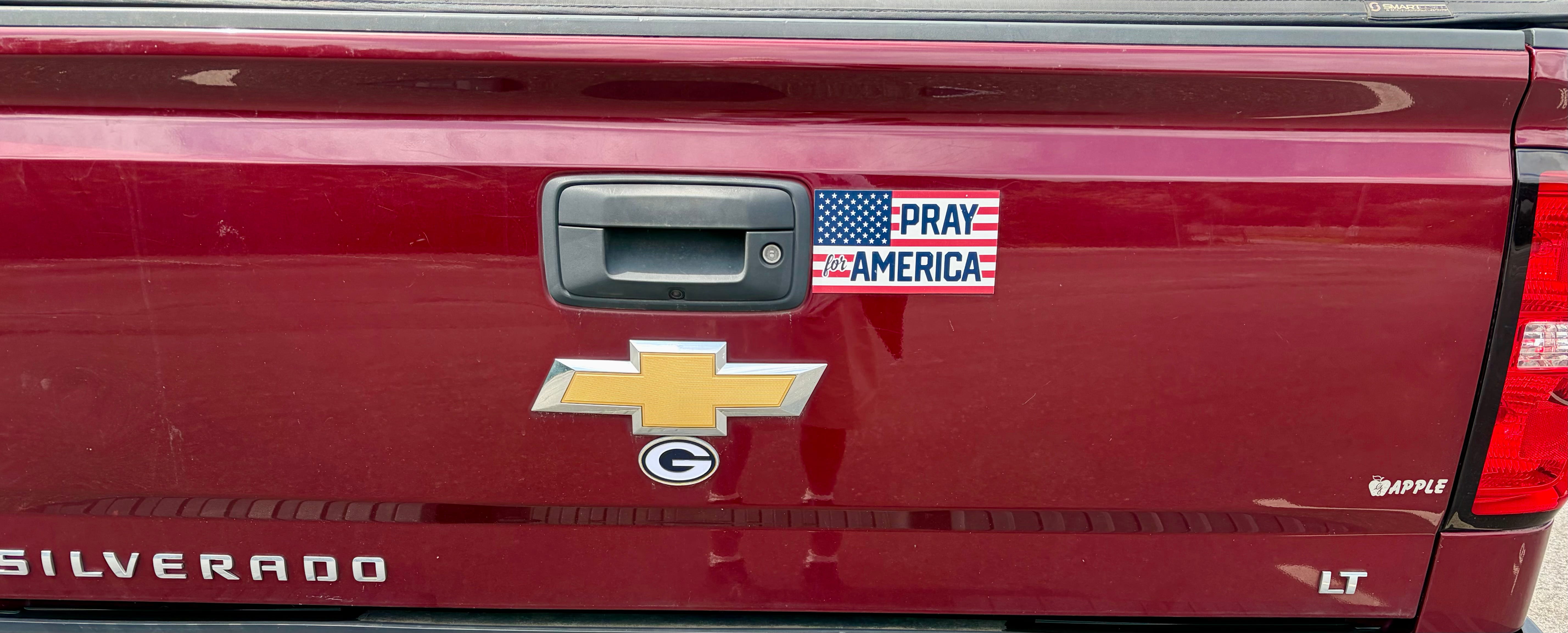
Here’s a bumper sticker I can get behind, and I’m not talking about the “G,” symbolizing the Green Bay Packers, under the Chevy logo:
***
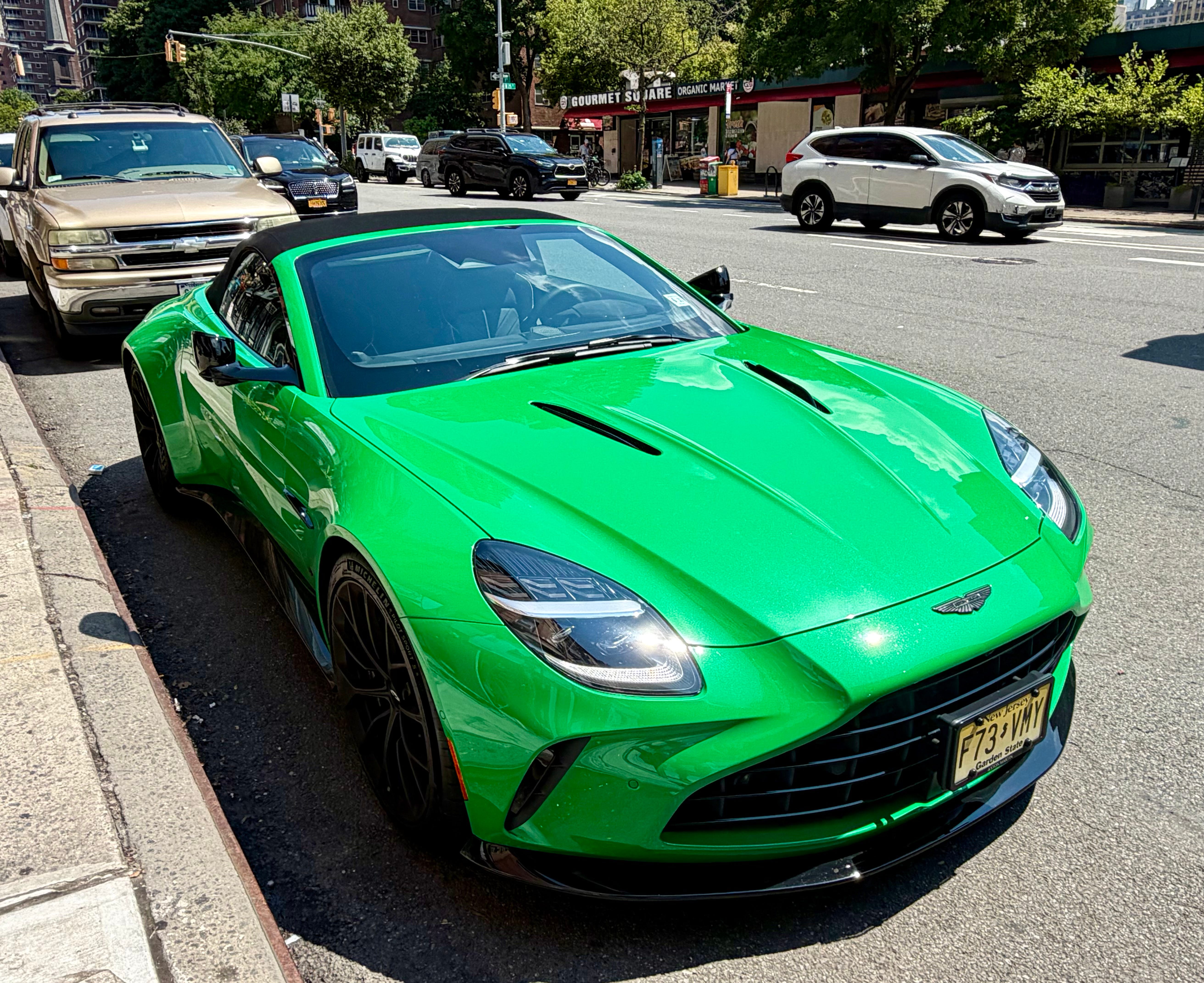
I’m not exactly sure what kelly green is. But I think this is a kelly-green Aston Martin. Sharp, in any case. Darn sharp.
***
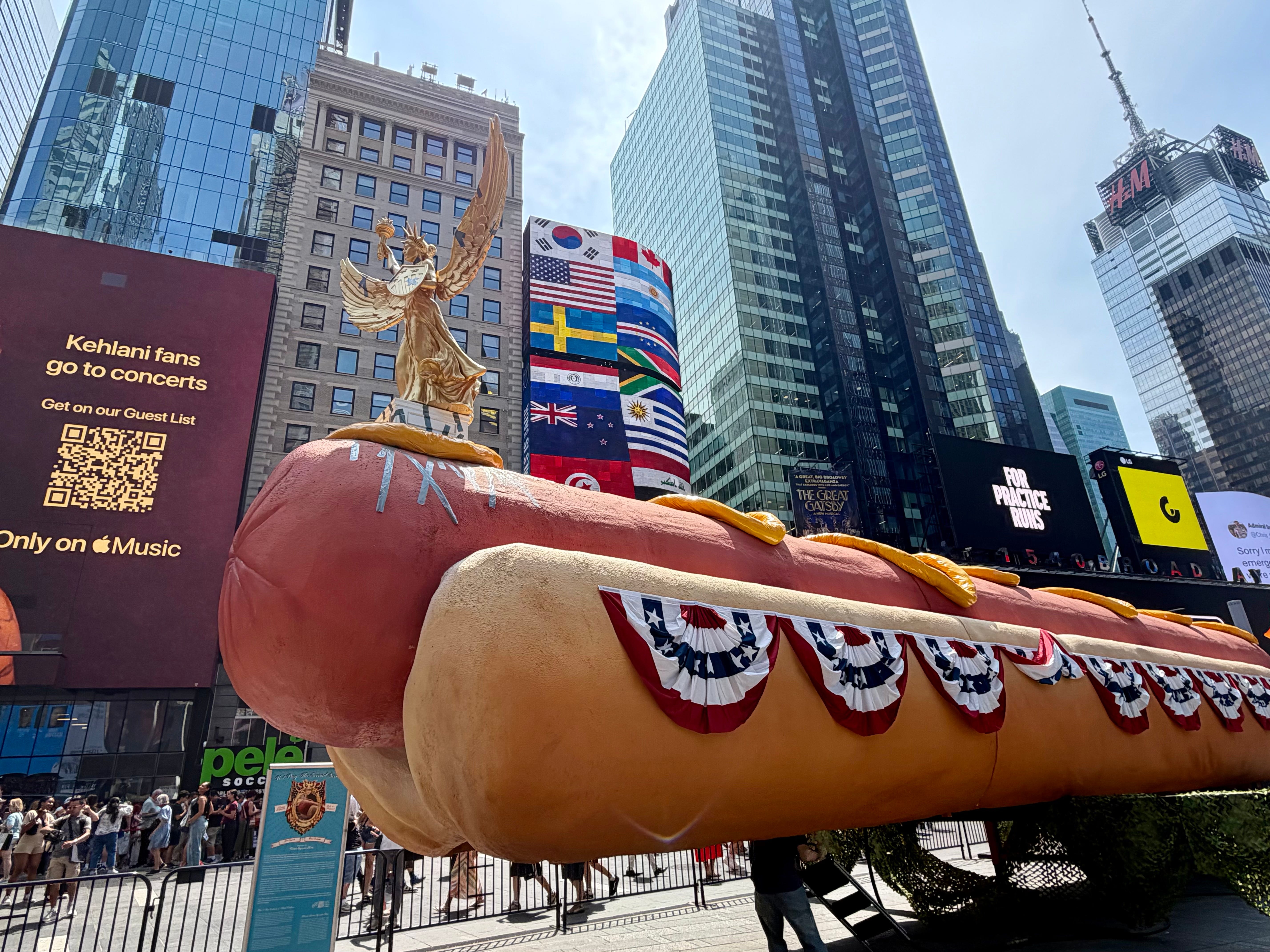
Check out this wiener, in Times Square yesterday!
***
See the small print on this sign here? “Not famous but known.” Hmmm. Kind of like … well, me?

***
At the movie house next to me, the first showing of The Odyssey is at 7:45. In the morning. I’ve lived in America for a long time. I had never heard of a movie starting at 7:45 a.m. Is this a good sign for culture? I’m going to count it as one.
I thank you for reading and subscribing, my friends. Really.
In regard to the U.S. debt, I know my household economy could not sustain that kind of spending for long.
If you write a biography of George W. Bush, I'll buy it. I think he is very unfairly rated. I disagreed with some of his decisions, but he told the American people what he was going to do and then did his best to do it. I think he may have overestimated the desire for democracy in Iraq and Afghanistan. I thought he could have done a better job of defending his policies, but he understood the value of alliances. His conduct in retirement has been exemplary.
"Not famous but known" = notorious?
1. On cutting it fine with milestones, my dad and I have been joking about waiting for the first left-handed paraplegic woman with Crohn's to climb Mount Everest for years. It was ever so, or at least for a very long time.
2. On liking characters to like novels: hmm, I don't care for Emma (from Jane Austen's book of the same name), and it's certainly not my favorite of Austen's books. But then, one of my favorite novels is Crime and Punishment and I wouldn't call Raskolnikov a likeable character.
3. Harvey Sachs is a lovely man who once accidentally got me in hot water with the president of a certain conservatory in Philadelphia when I worked there. Utterly and completely not his fault and he probably doesn't even know what happened or remember who I am. Excellent writer, too.